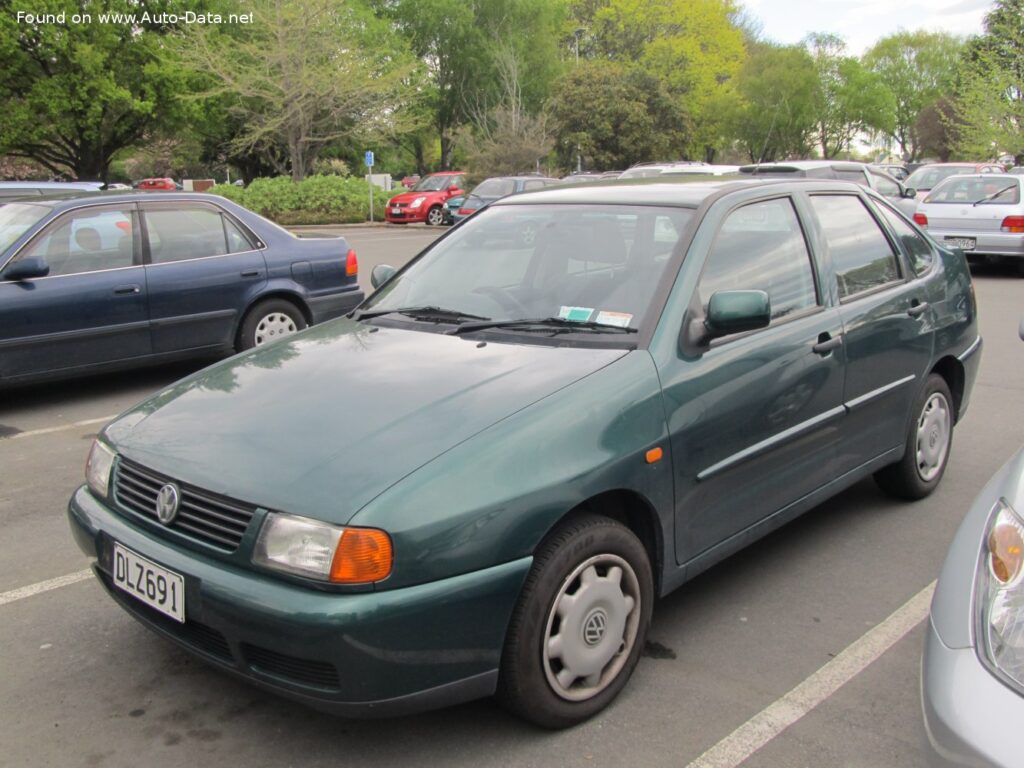
The Volkswagen Polo III Classic 1.9 SDI (64 Hp) represents a compelling example of Volkswagen’s commitment to practical, economical motoring. Introduced as part of the Typ 6N/6KV Polo generation in 1994, the Classic variant distinguished itself with a traditional four-door sedan body style, catering to markets where trunk space and a more formal appearance were highly valued. Powered by a 1.9-liter Suction Diesel Injection (SDI) engine producing 64 horsepower, this iteration of the Polo was primarily targeted towards European, Asian, and Latin American consumers seeking a durable, fuel-efficient, and affordable vehicle. It wasn’t designed for performance, but for dependable, everyday transportation.
The Volkswagen Polo III Classic: A Focus on Practicality
Produced from 1994 to 2000, the Polo III Classic filled a niche within the subcompact segment. While the standard Polo hatchback enjoyed widespread popularity, the Classic broadened the model’s appeal to buyers who preferred the convenience of a separate trunk and a more conventional sedan silhouette. This model wasn’t about making a statement; it was about providing a reliable and economical solution for families and individuals prioritizing utility and longevity.
Engine & Performance
The heart of the Polo III Classic 1.9 SDI is its 1.9-liter (1896 cm3) naturally aspirated diesel engine. Identified by engine codes like AEF, AGD, and ASX, this inline four-cylinder powerplant showcased Volkswagen’s early advancements in direct injection diesel technology. Unlike its turbocharged TDI counterparts, the SDI version eschewed forced induction, resulting in a simpler, more robust, and exceptionally durable engine. The engine features an Overhead Camshaft (OHC) valvetrain with two valves per cylinder.
This engine delivers 64 horsepower at 4200 rpm and 91.46 lb.-ft. of torque at 2200 rpm. The high 19.5:1 compression ratio, combined with the direct injection system, provides strong low-end power and impressive fuel economy. Acceleration from 0 to 60 mph takes approximately 15.9 seconds, with a top speed of 98.18 mph. These figures underscore the vehicle’s focus on efficiency rather than outright speed. However, its fuel consumption is a standout feature, achieving a combined 49 US mpg on a full tank of 11.89 US gallons. The front-wheel-drive layout and smooth-shifting 5-speed manual transmission contribute to a direct and engaging driving experience typical of European compacts.
Design & Features
The most significant design difference between the Polo III Classic and its hatchback siblings is the four-door sedan body style. While sharing the front end and interior with the hatchback, the Classic features an extended rear section, creating a dedicated trunk. This design was particularly appealing in markets where sedans were favored for their perceived prestige and enhanced cargo security.
The Polo III Classic measures 163.94 inches in length, 64.57 inches in width, and 55.67 inches in height, offering a compact footprint while maximizing interior space. The 96.1-inch wheelbase contributes to a stable ride and surprisingly ample passenger room. The trunk capacity is a key selling point, providing a minimum of 16.07 cubic feet, expandable to 26.91 cubic feet with the rear seats folded. The chassis utilizes a robust suspension system: wishbones at the front and traction connecting levers at the rear, delivering a comfortable and predictable ride. Braking is handled by front disc brakes and rear drum brakes, a common configuration for vehicles in this segment. An important safety feature for its time was the inclusion of ABS (Anti-lock Braking System). Hydraulic power steering, a rack and pinion setup, provides responsive handling. The vehicle rides on 185/60 R14 T tires mounted on 14-inch wheel rims, balancing ride comfort and handling.
Technical Specifications
| Category | Specification |
| Brand | Volkswagen |
| Model | Polo III Classic |
| Engine Type | 1.9 SDI (64 Hp) |
| Production Start | 1994 |
| Production End | 2000 |
| Body Type | Sedan |
| Seats | 5 |
| Doors | 4 |
| Fuel Type | Diesel |
| Fuel Consumption (Combined) | 49 US mpg (4.8 l/100 km) |
| Acceleration 0-60 mph | 15.9 seconds |
| Maximum Speed | 98.18 mph (158 km/h) |
| Power | 64 Hp @ 4200 rpm |
| Torque | 91.46 lb.-ft. @ 2200 rpm |
| Engine Displacement | 1.9 liters (1896 cm3 / 115.7 cu. in.) |
| Number of Cylinders | 4, Inline |
| Cylinder Bore | 3.13 inches (79.5 mm) |
| Piston Stroke | 3.76 inches (95.5 mm) |
| Compression Ratio | 19.5:1 |
| Valves per Cylinder | 2 |
| Fuel Injection System | Direct injection |
| Engine Aspiration | Naturally aspirated |
| Valvetrain | OHC |
| Engine Oil Capacity | 4.97 US quarts (4.7 liters) |
| Coolant Capacity | 6.87 US quarts (6.5 liters) |
| Kerb Weight | 2425.08 lbs. (1100 kg) |
| Maximum Weight | 3306.93 lbs. (1500 kg) |
| Maximum Load | 881.85 lbs. (400 kg) |
| Trunk Space (Minimum) | 16.07 cu. ft. (455 liters) |
| Trunk Space (Maximum) | 26.91 cu. ft. (762 liters) |
| Fuel Tank Capacity | 11.89 US gallons (45 liters) |
| Length | 163.94 inches (4164 mm) |
| Width | 64.57 inches (1640 mm) |
| Height | 55.67 inches (1414 mm) |
| Wheelbase | 96.1 inches (2441 mm) |
| Front Track | 56.26 inches (1429 mm) |
| Rear Track | 54.88 inches (1394 mm) |
| Drivetrain Architecture | Front-wheel drive |
| Gearbox | 5 gears, manual transmission |
| Front Suspension | Wishbone |
| Rear Suspension | Suspension with traction connecting levers |
| Front Brakes | Disc |
| Rear Brakes | Drum |
| Assisting Systems | ABS (Anti-lock braking system) |
| Steering Type | Steering rack and pinion |
| Power Steering | Hydraulic Steering |
| Tires Size | 185/60 R14 T |
| Wheel Rims Size | 14 inches |
The Volkswagen Polo III Classic 1.9 SDI established itself as a dependable and economical vehicle in its target markets. While not sold in the United States, it played a crucial role in expanding Volkswagen’s reach in regions where sedan body styles were preferred. Its reputation was built on fuel efficiency, build quality, and a practical, no-nonsense approach to motoring. The Polo III Classic 1.9 SDI remains a testament to sensible engineering and market-responsive design, solidifying its place as a reliable and enduring vehicle.