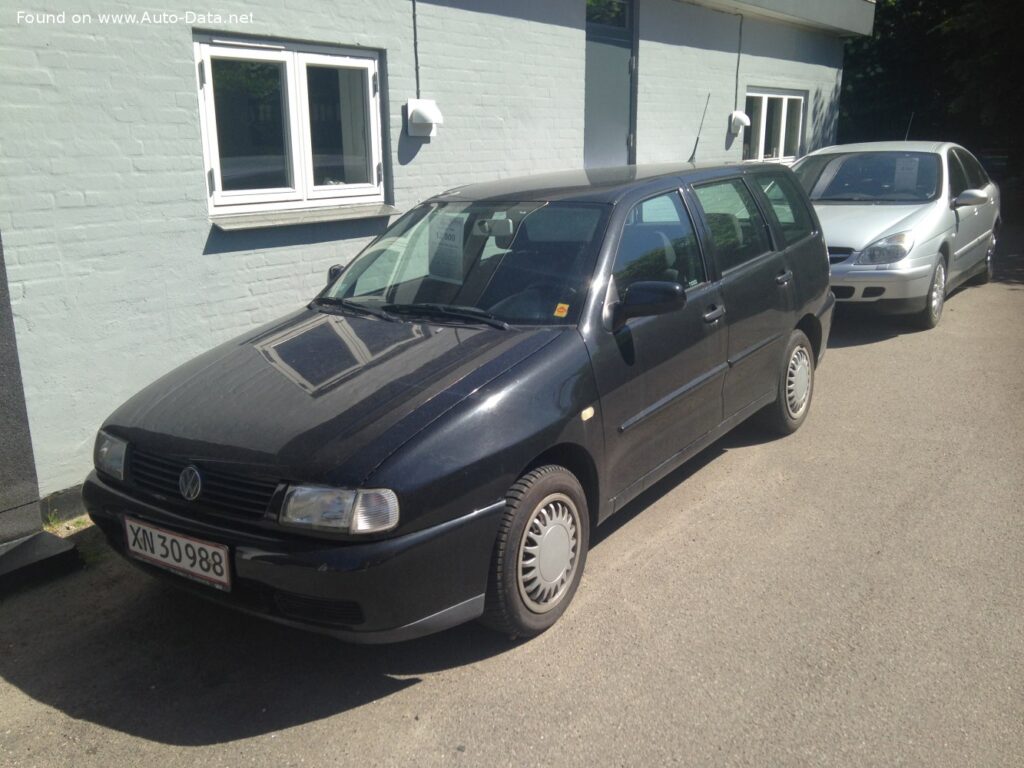
The Volkswagen Polo III Variant 1.4 (60 horsepower) represents a notable evolution in Volkswagen’s long-running Polo series, serving as a practical and affordable vehicle within the European subcompact market during the 1990s. Manufactured between 1994 and 2000, this version of the third-generation Polo introduced a station wagon, or “estate” as it was commonly known in Europe, body style. This broadened the Polo’s appeal beyond its traditional hatchback configuration. While the Polo itself has been a key component of Volkswagen’s global strategy, particularly in Europe, Asia, and South America, the Variant specifically addressed the need for increased cargo space and family practicality in those regions, where smaller, fuel-efficient vehicles were highly valued. The Polo III Variant wasn’t officially sold in the United States, but understanding its role in Europe provides insight into the demands of that market and Volkswagen’s response to them.
The Volkswagen Polo III Variant: A European Perspective
The Polo III, launched in 1994, was a significant redesign of Volkswagen’s supermini. It built upon the success of the Polo II, offering improved refinement, safety, and a more modern aesthetic. The introduction of the Variant body style was a direct response to consumer demand for a more versatile Polo. European buyers, particularly those in countries with smaller roads and higher fuel costs, often prioritize practicality and efficiency. The Variant offered both, providing a compelling alternative to larger, more expensive family cars. It competed with other small station wagons like the Ford Fiesta Estate, Opel/Vauxhall Corsa Estate, and Renault Clio Estate. The Polo III Variant wasn’t intended to be a performance car; its focus was on providing reliable, economical transportation for families and individuals.
Evolution of the Polo Lineage
The Polo’s history dates back to 1975, when it was introduced as a modern replacement for the Volkswagen Beetle. Each successive generation of the Polo has aimed to balance affordability, practicality, and Volkswagen’s renowned build quality. The Polo III represented a step forward in terms of design and engineering, incorporating features that were becoming increasingly common in larger vehicles. The Variant, in particular, benefited from this evolution, offering a level of space and versatility that was previously unavailable in the Polo range. The Polo’s consistent presence in the European market demonstrates its adaptability and enduring appeal.
Engine & Performance
The Polo III Variant 1.4 was typically powered by a 1.4-liter, inline-four cylinder gasoline engine. This engine produced 60 horsepower (44 kW) and approximately 84 lb-ft (114 Nm) of torque. While not a powerhouse, the engine provided adequate performance for everyday driving, particularly when considering the vehicle’s light weight and compact dimensions. The engine was known for its reliability and fuel efficiency, key attributes for buyers in the target market. Power was delivered to the front wheels via a five-speed manual transmission, although a four-speed automatic transmission was also available as an option. Acceleration from 0 to 60 mph (0 to 97 km/h) was typically around 14-15 seconds, and top speed was approximately 99 mph (160 km/h). The focus wasn’t on outright speed, but on providing smooth, predictable performance in a variety of driving conditions. The 1.4-liter engine was a common choice in the Polo III range, offering a good balance between performance and economy.
Design & Features
The Polo III Variant’s design was characterized by its clean lines and functional aesthetic. The station wagon body style extended the roofline rearward, creating a significantly larger cargo area compared to the hatchback version. This increased cargo capacity made the Variant ideal for families, outdoor enthusiasts, and anyone who needed to transport larger items. The interior of the Polo III Variant was relatively simple but well-built, with durable materials and a focus on practicality. Features typically included power steering, central locking, and electric windows, although these were often optional extras depending on the trim level. Safety features were relatively basic by modern standards, but included seatbelts and a reinforced safety cell. The Polo III Variant’s design reflected its intended purpose: a practical, reliable, and affordable family car. The exterior styling was understated but modern for its time, with a focus on functionality rather than extravagance. The Variant’s larger cargo area was a key selling point, offering a significant advantage over the hatchback version.
Interior Comfort and Practicality
The interior of the Polo III Variant prioritized functionality and durability. The seats were typically upholstered in cloth, and the dashboard was made from hard-wearing plastics. While not luxurious, the interior was comfortable and well-laid-out, with all controls within easy reach of the driver. The rear seats could be folded down to further increase cargo capacity, making the Variant even more versatile. Storage space was adequate, with door pockets, a glovebox, and a small center console. The overall impression was one of practicality and reliability, rather than luxury or sophistication.
Technical Specifications
| Engine Type | 1.4L Inline-4 Cylinder Gasoline |
| Displacement | 1390 cc (84.8 cu in) |
| Horsepower | 60 hp (44 kW) @ 5000 rpm |
| Torque | 84 lb-ft (114 Nm) @ 3600 rpm |
| Fuel System | Multi-point Fuel Injection |
| Transmission | 5-Speed Manual (available with 4-Speed Automatic) |
| Drivetrain | Front-Wheel Drive |
| Brakes | Front Disc, Rear Drum |
| Suspension (Front) | MacPherson Strut |
| Suspension (Rear) | Torsion Beam |
| Curb Weight | 2,320 lbs (1,052 kg) approximately |
| Top Speed | 99 mph (160 km/h) approximately |
| 0-60 mph | 14-15 seconds approximately |
| Fuel Economy (Combined) | 38-42 mpg (6.2-5.6 L/100km) approximately |
| Body Style | 5-Door Station Wagon |
| Production Years | 1994-2000 |
The Volkswagen Polo III Variant 1.4 (60 hp) remains a testament to Volkswagen’s ability to create practical, reliable, and affordable vehicles. While not a performance icon, it played a significant role in the European subcompact market, providing a versatile and economical option for families and individuals. Its enduring appeal lies in its simplicity, durability, and focus on meeting the everyday needs of its owners. The Polo III Variant represents a key chapter in the Polo’s history, demonstrating the model’s adaptability and its continued relevance in a changing automotive landscape.