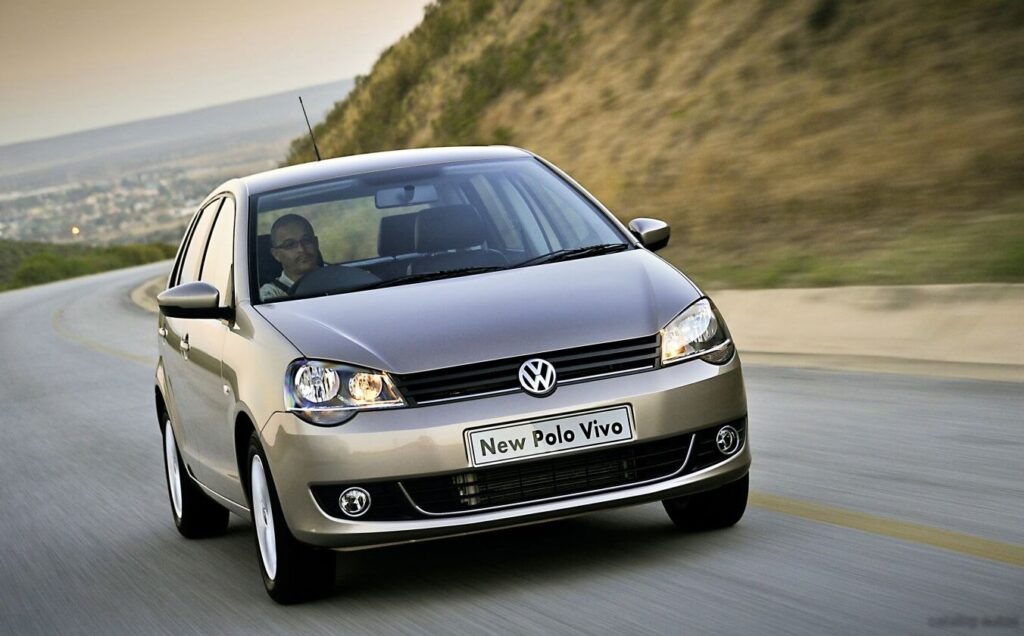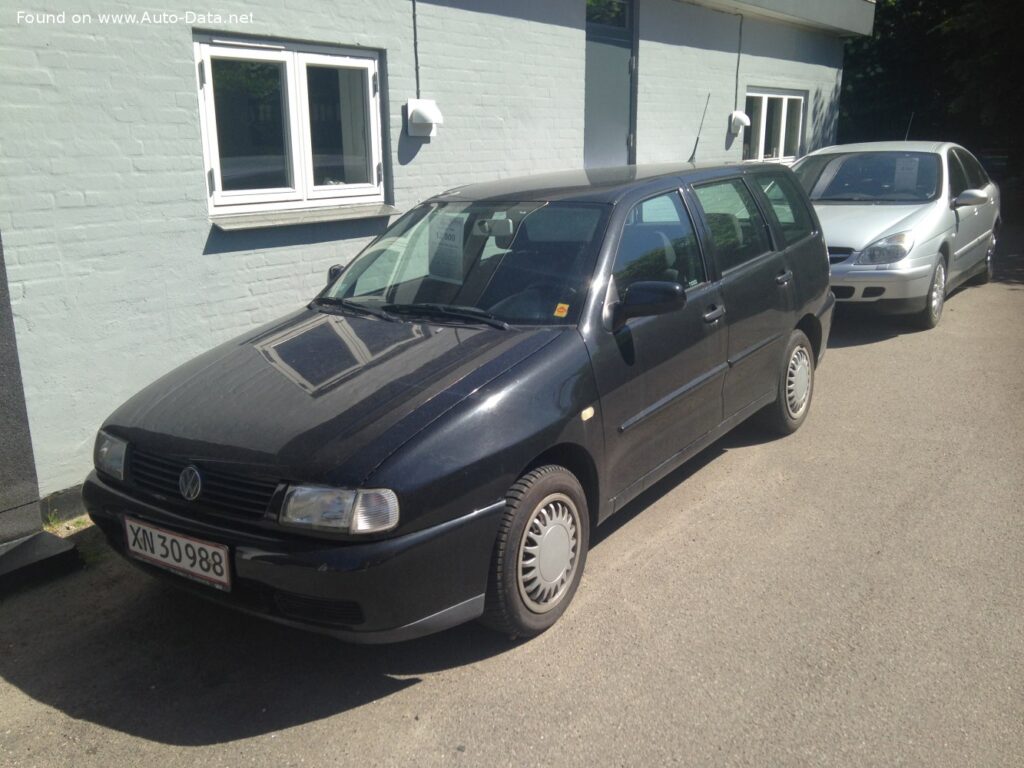
The Volkswagen Polo III Variant 1.6 (75 Hp) represents a notable chapter in Volkswagen’s history of compact cars, particularly within the European market. Introduced in 1994 as part of the third-generation Polo (Typ 6N for the hatchback, Typ 6KV for the sedan and Variant), this model broadened the Polo’s appeal beyond its traditional hatchback configuration. While the Polo series consistently performed well in Europe, the Variant – a station wagon or estate car – offered a unique combination of compact size and increased cargo capacity, appealing to families and individuals needing more space than a standard hatchback but preferring a subcompact vehicle’s agility. This iteration, produced from 1994 to 2000, demonstrated Volkswagen’s dedication to solid engineering and practical design, reinforcing the brand’s reputation for reliability and everyday usability.
Engine & Performance of the Volkswagen Polo III Variant
The Volkswagen Polo III Variant 1.6 (75 Hp) was powered by Volkswagen’s well-regarded 1.6-liter (1598 cm3 or 97.52 cu. in.) naturally aspirated inline-four engine, identified by the AEE engine code. This engine was designed for efficiency and dependable performance, typical of European subcompacts of the period. Producing 75 horsepower at 5200 revolutions per minute and 99.57 lb.-ft. (135 Nm) of torque at 2800 rpm, the engine provided sufficient power for city driving and occasional highway use. Its multi-port fuel injection system and overhead camshaft (OHC) valvetrain contributed to smooth operation and respectable fuel economy.
Coupled with a 5-speed manual transmission, the front-wheel-drive layout ensured predictable handling and efficient power delivery. While not exceptionally quick by contemporary standards, the Polo III Variant 1.6 offered competitive performance for its class. Acceleration from 0 to 60 mph was achieved in approximately 12.6 seconds, with a top speed of 103.77 mph (167 km/h). Fuel efficiency was a key consideration for European buyers, and the Polo III Variant delivered commendable figures: 23.8 US mpg (9.9 l/100 km) in urban conditions and an impressive 41.3 US mpg (5.7 l/100 km) on the open road. This blend of modest power, reliable mechanics, and good fuel economy made it an economical choice for daily commuting, particularly in regions with high fuel costs.
Design & Features of the Volkswagen Polo III Variant
The design of the Volkswagen Polo III Variant was characteristic of Volkswagen in the mid-1990s: understated, functional, and focused on practicality. As a 5-door station wagon, it offered a significant increase in cargo space compared to the hatchback version. Measuring 162.87 inches (4137 mm) in length, 64.57 inches (1640 mm) in width, and 56.42 inches (1433 mm) in height, with a 96.06-inch (2440 mm) wheelbase, the Variant achieved a good balance between exterior compactness and interior roominess.
The interior was designed to comfortably seat five passengers, emphasizing durability and ergonomic simplicity. The primary advantage of the Variant body style was its cargo versatility. With the rear seats up, it provided 13.77 cubic feet (390 liters) of trunk space. Folding the rear seats expanded this to 44.14 cubic feet (1250 liters), transforming the compact wagon into a capable load carrier, suitable for small businesses, families, or individuals with active lifestyles.
The Polo III Variant included essential technologies for its time. Safety features included an Anti-lock Braking System (ABS), which helped prevent wheel lock-up during hard braking. The vehicle utilized a coil spring front suspension and a wishbone rear suspension, providing a comfortable ride and stable handling. Steering was handled by a hydraulic rack and pinion system, offering responsive feedback. The car rode on 185/60 R14 tires mounted on 14-inch wheels, striking a balance between grip and ride comfort.
Technical Specifications
| Category | Specification |
| General Information | |
| Brand | Volkswagen |
| Model | Polo |
| Generation | Polo III Variant |
| Type (Engine) | 1.6 (75 Hp) |
| Production Start | 1994 |
| Production End | 2000 |
| Powertrain Architecture | Internal Combustion Engine |
| Body type | Station wagon (estate) |
| Seats | 5 |
| Doors | 5 |
| Performance Specs | |
| Fuel Consumption (Urban) | 9.9 l/100 km (23.8 US mpg) |
| Fuel Consumption (Extra Urban) | 5.7 l/100 km (41.3 US mpg) |
| Fuel Type | Petrol (Gasoline) |
| Acceleration 0-60 mph | 12.6 seconds |
| Acceleration 0-62 mph (0-100 km/h) | 13.3 seconds |
| Maximum Speed | 103.77 mph (167 km/h) |
| Weight-to-power ratio | 14.1 kg/Hp, 71.1 Hp/tonne |
| Weight-to-torque ratio | 7.8 kg/Nm, 128 Nm/tonne |
| Engine Specs | |
| Power | 75 Hp @ 5200 rpm |
| Power per liter | 46.9 Hp/l |
| Torque | 99.57 lb.-ft. (135 Nm) @ 2800 rpm |
| Engine Layout | Front, Transverse |
| Engine Model/Code | AEE |
| Engine Displacement | 1598 cm3 (97.52 cu. in.) |
| Number of Cylinders | 4 |
| Engine Configuration | Inline |
| Cylinder Bore | 3.01 in. (76.5 mm) |
| Piston Stroke | 3.42 in. (86.9 mm) |
| Compression Ratio | 9.3:1 |
| Valves per Cylinder | 2 |
| Fuel Injection System | Multi-port manifold injection |
| Engine Aspiration | Naturally aspirated |
| Valvetrain | OHC |
| Engine Oil Capacity | 3.7 US qt (3.5 l) |
| Coolant Capacity | 5.81 US qt (5.5 l) |
| Dimensions & Weights | |
| Kerb Weight | 2325.88 lbs. (1055 kg) |
| Maximum Weight | 3340 lbs. (1515 kg) |
| Maximum Load | 1014.13 lbs. (460 kg) |
| Trunk Space (Minimum) | 13.77 cu. ft. (390 l) |
| Trunk Space (Maximum) | 44.14 cu. ft. (1250 l) |
| Fuel Tank Capacity | 11.89 US gal (45 l) |
| Length | 162.87 in. (4137 mm) |
| Width | 64.57 in. (1640 mm) |
| Height | 56.42 in. (1433 mm) |
| Wheelbase | 96.06 in. (2440 mm) |
| Front Track | 56.26 in. (1429 mm) |
| Rear Track | 54.49 in. (1384 mm) |
| Drivetrain, Brakes & Suspension | |
| Drivetrain Architecture | Front-wheel drive, Internal Combustion Engine |
| Drive Wheel | Front-wheel drive |
| Gearbox Type | 5 gears, manual transmission |
| Front Suspension | Coil spring |
| Rear Suspension | Wishbone |
| Front Brakes | Disc |
| Rear Brakes | Drum |
| Assisting Systems | ABS (Anti-lock braking system) |
| Steering Type | Steering rack and pinion |
| Power Steering | Hydraulic Steering |
| Tires Size | 185/60 R14 |
| Wheel Rims Size | 14 inches |
Legacy & Market Impact of the Volkswagen Polo III Variant
The Volkswagen Polo III Variant established a strong presence in the competitive European subcompact segment during its 1994-2000 production run. While the Polo hatchback competed with models like the Ford Fiesta, Opel Corsa, Renault Clio, and Peugeot 206, the Variant offered a distinct advantage. Its station wagon body style positioned it uniquely, often competing with smaller estate versions of compact cars or utilitarian van-based models like the Opel Combo or Skoda Felicia Combi.
The Polo III Variant was particularly successful in markets prioritizing space, practicality, and affordability. It provided families with an efficient alternative to larger, more expensive station wagons without sacrificing the maneuverability of a smaller car. Its robust construction and Volkswagen’s reputation for reliability contributed to its positive image. Owners appreciated its build quality, comfortable ride, and the versatility of its cargo area.
Although the Volkswagen Polo has not been officially sold in the United States, the European success of models like the Polo III Variant demonstrates Volkswagen’s expertise in segment diversification. This generation of the Polo, and especially its Variant derivative, solidified Volkswagen’s image as a manufacturer capable of delivering practical, well-engineered vehicles for a wide range of needs. Its legacy is one of quiet competence and enduring practicality, proving that sometimes, the most effective innovation is simply offering more space in a familiar and well-regarded package. The Polo III Variant remains a classic example of European automotive design focused on efficiency, utility, and everyday usability.