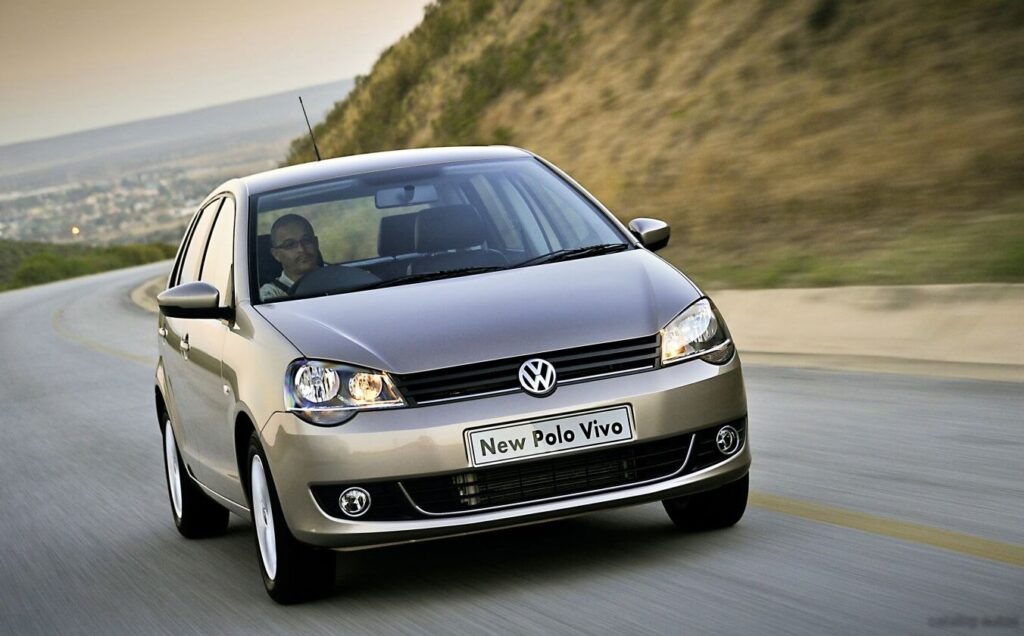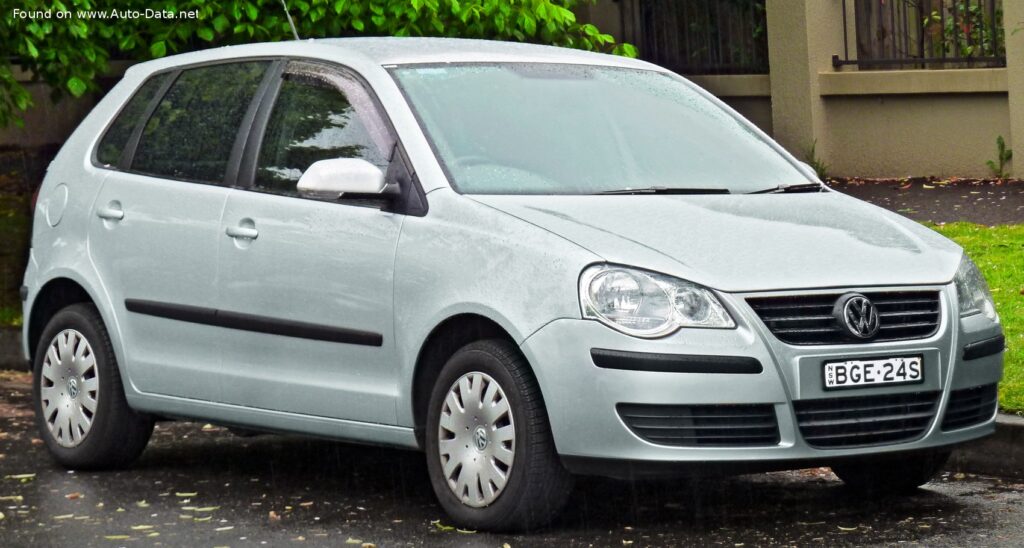
The Volkswagen Polo IV, specifically the 9N generation, represents a significant chapter in the evolution of Volkswagen’s long-running subcompact car lineage. Introduced in 2001, this generation carried the torch of practicality and refined German engineering to the competitive European B-segment. The model under scrutiny, the Volkswagen Polo IV (9N, facelift 2005) 1.6 (105 Hp) Tiptronic 3-d, emerged in 2005 as part of a mid-cycle refresh, bringing updated aesthetics, improved features, and a slightly revised powertrain lineup. As a vehicle primarily marketed outside of the United States, the Polo carved out a niche as a reliable, economical, and well-built small car, appealing to a broad spectrum of buyers from first-time drivers to urban commuters and small families across Europe and other international markets. Its reputation for solid build quality and a mature driving experience often set it apart from its rivals.
The Volkswagen Polo IV (9N, facelift 2005): A European Compact Staple
The Volkswagen Polo has consistently been a cornerstone of the brand’s global strategy, particularly in markets where compact and subcompact vehicles dominate. The fourth generation, internally designated 9N, built upon the success of its predecessors by offering a more sophisticated platform shared with other Volkswagen Group vehicles like the Škoda Fabia and SEAT Ibiza. The 2005 facelift, often referred to as the 9N3, introduced a more angular and aggressive front fascia, drawing inspiration from the larger Golf V, along with revised taillights and interior enhancements. This refresh aimed to keep the Polo competitive against a burgeoning class of rivals, including the Ford Fiesta, Renault Clio, and Opel Corsa. The 3-door hatchback configuration, as seen in the Volkswagen Polo IV (9N, facelift 2005) 1.6 (105 Hp) Tiptronic 3-d, was particularly popular among younger buyers and those seeking a sportier aesthetic, while still offering the practical benefits of a compact five-seater.
Market Positioning and Evolution
The Polo’s position within Volkswagen’s lineup was crucial. It served as an entry point into the brand, offering a more affordable and accessible alternative to the Golf, while still upholding Volkswagen’s standards for quality and engineering. The 9N generation represented a move upmarket for the Polo, with improved interior materials, more sophisticated technology, and a more refined driving experience. The facelift in 2005 further enhanced this positioning, aligning the Polo’s design language with the newer Golf V and giving it a more contemporary appearance. This strategic positioning allowed the Polo to attract a wider range of buyers, including those who might have previously considered larger or more expensive vehicles.
Engine & Performance of the Volkswagen Polo IV (9N, facelift 2005) 1.6 (105 Hp) Tiptronic 3-d
At the heart of this particular Polo variant is a naturally aspirated 1.6-liter (1598 cm³ or 97.52 cubic inches) inline four-cylinder petrol engine, identified by the BTS engine code. This robust unit is configured with a DOHC (Double Overhead Camshaft) valvetrain and features multi-port manifold injection, a common and reliable fuel delivery system for its era. The engine produces a respectable 105 horsepower at 5700 rpm, delivering a power-to-liter ratio of 65.7 Hp/liter. Torque output stands at 148 Nm, or approximately 109.16 lb.-ft., available at 4500 rpm. This power is routed through a sophisticated 6-speed Tiptronic automatic transmission to the front wheels, providing a balance of convenience and efficiency, especially in urban driving conditions.
Powertrain and Driving Dynamics
The Tiptronic transmission offered drivers the option of fully automatic operation or manual gear selection, providing greater control when desired. The 6-speed configuration helped to optimize fuel efficiency and reduce engine noise at highway speeds. The engine itself was known for its smooth operation and relatively quiet refinement, contributing to a comfortable driving experience. The Polo’s suspension, tuned for comfort and stability, provided a balanced ride quality that absorbed bumps and imperfections in the road while maintaining good handling characteristics. The vehicle’s relatively light weight further enhanced its agility and responsiveness, making it enjoyable to drive in both city and highway environments. Performance figures demonstrate its capabilities: 0 to 60 mph in a calculated 10.7 seconds, and 0 to 62 mph (100 km/h) in 11.3 seconds. Its top speed is rated at 116.2 mph (187 km/h). Fuel economy figures reflect its design as an efficient compact car: it achieves an estimated 23.5 US mpg in urban settings, 39.9 US mpg on extra-urban cycles, and a combined average of 31.8 US mpg (7.4 liters per 100 km). With a 11.89 US gallon (45-liter) fuel tank, the Polo offers a reasonable cruising range. The vehicle’s kerb weight of 2414.06 lbs (1095 kg) contributes to a favorable weight-to-power ratio of 10.4 kg/Hp, or 95.9 Hp/tonne, ensuring a responsive feel for a car of its size.
Design & Features
The Volkswagen Polo IV (9N, facelift 2005) 1.6 (105 Hp) Tiptronic 3-d is characterized by its compact yet sturdy hatchback body style. Measuring 153.43 inches (3897 mm) in length, 64.96 inches (1650 mm) in width, and 57.68 inches (1465 mm) in height, it is perfectly proportioned for navigating congested city streets and tight parking spaces. The 96.85-inch (2460 mm) wheelbase provides a stable ride and contributes to a surprisingly spacious interior for its class. The 3-door configuration, while offering a sleeker profile, still allows for comfortable seating for five occupants, making it a versatile choice for individuals or small families. Luggage capacity is practical, with a minimum trunk space of 9.53 cubic feet (270 liters) which can expand significantly to 36.37 cubic feet (1030 liters) with the rear seats folded down, enhancing its utility for transporting larger items.
Exterior and Interior Design
The 2005 facelift brought a more modern and refined aesthetic to the Polo. The front end featured a redesigned grille, headlights, and bumper, giving it a more assertive appearance. The interior was also updated with improved materials and a more ergonomic layout. Standard features included power windows, central locking, and an audio system. Higher trim levels offered options such as air conditioning, alloy wheels, and a sunroof. The interior design prioritized functionality and practicality, with a focus on creating a comfortable and user-friendly environment for both driver and passengers.
Safety and Convenience
In line with European automotive standards of its time, the 2005 Polo IV was equipped with essential safety features. The braking system utilized ventilated discs at the front and disc brakes at the rear, supported by an Anti-lock Braking System (ABS) for enhanced control during emergency stops. Steering was handled by a hydraulic rack and pinion system, providing direct feedback and a connected driving experience, a hallmark of German engineering. The suspension setup featured coil springs at the front and a trailing arm design at the rear, offering a comfortable ride quality balanced with agile handling. Standard 165/70 R14 tires on 14-inch wheel rims provided adequate grip and comfort. These features, combined with Volkswagen’s reputation for structural integrity, contributed to the Polo’s solid safety credentials within its segment.
TECHNICAL SPECIFICATIONS
| Brand | Volkswagen |
| Model | Polo |
| Generation | Polo IV (9N, facelift 2005) |
| Type (Engine) | 1.6 (105 Hp) Tiptronic 3-d |
| Start of production | 2005 year |
| End of production | 2009 year |
| Powertrain Architecture | Internal Combustion engine |
| Body type | Hatchback |
| Seats | 5 |
| Doors | 3 |
| Fuel consumption (economy) – urban | 10 l/100 km (23.5 US mpg) |
| Fuel consumption (economy) – extra urban | 5.9 l/100 km (39.9 US mpg) |
| Fuel consumption (economy) – combined | 7.4 l/100 km (31.8 US mpg) |
| Fuel Type | Petrol (Gasoline) |
| Acceleration 0 – 60 mph | 10.7 sec |
| Acceleration 0 – 62 mph (0 – 100 km/h) | 11.3 sec |
| Maximum speed | 116.2 mph (187 km/h) |
| Weight-to-power ratio | 10.4 kg/Hp (95.9 Hp/tonne) |
| Weight-to-torque ratio | 7.4 kg/Nm (135.2 Nm/tonne) |
| Power | 105 Hp @ 5700 rpm |
| Power per liter | 65.7 Hp/l |
| Torque | 148 Nm (109.16 lb.-ft.) @ 4500 rpm |
| Engine layout | Front, Transverse |
| Engine Model/Code | BTS |
| Engine displacement | 1598 cm³ (1.6 liters / 97.52 cu. in.) |
| Number of cylinders | 4 |
| Engine configuration | Inline |
| Cylinder Bore | 76.5 mm (3.01 in.) |
| Piston Stroke | 86.9 mm (3.42 in.) |
| Compression ratio | 11:1 |
| Number of valves per cylinder | 4 |
| Fuel injection system | Multi-port manifold injection |
| Engine aspiration | Naturally aspirated engine |
| Valvetrain | DOHC |
| Engine oil capacity | 3.6 l (3.8 US qt) |
| Coolant | 6 l (6.34 US qt) |
| Kerb Weight | 1095 kg (2414.06 lbs) |
| Max. weight | 1650 kg (3637.63 lbs) |
| Max load | 555 kg (1223.57 lbs) |
| Trunk (boot) space – minimum | 270 l (9.53 cu. ft.) |
| Trunk (boot) space – maximum | 1030 l (36.37 cu. ft.) |
| Fuel tank capacity | 45 l (11.89 US gal) |
| Length | 3897 mm (153.43 in.) |
| Width | 1650 mm (64.96 in.) |
| Height | 1465 mm (57.68 in.) |
| Wheelbase | 2460 mm (96.85 in.) |
Legacy and Market Impact
The Volkswagen Polo IV (9N, facelift 2005) 1.6 (105 Hp) Tiptronic 3-d, like its siblings, enjoyed a strong reputation for reliability, build quality, and a “big car” feel despite its compact dimensions. In the European market, it was often regarded as a more premium offering compared to direct competitors such as the Ford Fiesta, Renault Clio, Opel Corsa (Vauxhall Corsa in the UK), Peugeot 206, and Fiat Punto. While some rivals might have offered slightly more dynamic handling or lower price points, the Polo consistently delivered a refined driving experience, comfortable interior, and a sense of solidity that buyers associated with the Volkswagen brand. Its relatively low running costs, especially with the efficient 1.6-liter engine, and high resale value further cemented its position as a desirable choice in the subcompact segment. The Polo IV generation, and particularly the facelifted 2005 model, played a crucial role in maintaining Volkswagen’s dominance in the compact car segment. It bridged the gap between the smaller Lupo (where sold) and the larger Golf, offering a compelling package of size, efficiency, and quality. While never officially imported to the United States, its influence was felt globally as a benchmark for compact car engineering and design. It continued the Polo’s tradition of being a practical, dependable, and subtly stylish vehicle that appealed to a wide demographic. The success of the 9N generation laid a strong foundation for subsequent Polo models, ensuring its continued relevance and popularity in key markets around the world for years to come, solidifying its place as one of Volkswagen’s most enduring and successful nameplates.