
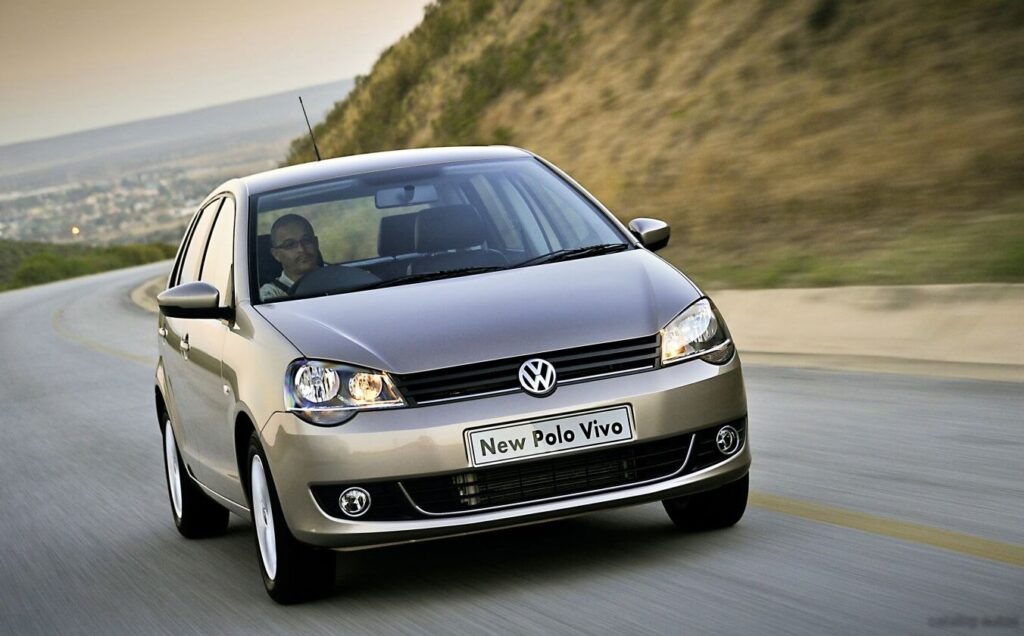
The Volkswagen Polo Vivo I 1.4, producing 86 horsepower, was a key variant in the South African market from 2010 to 2017. Positioned as an entry-level offering within the Polo Vivo range, it represented a significant step up from the older Polo Classic it replaced, offering a modern hatchback with a focus on affordability and practicality. The Vivo was designed specifically for the South African market, built to withstand local road conditions and cater to the preferences of budget-conscious buyers. It was based on the Volkswagen Polo Mk5 (Type 6R) platform, but with localized content and adjustments to suit the region. This variant, with its 1.4-liter engine and typically a five-speed manual transmission (though an automatic was available), aimed to provide reliable transportation with reasonable fuel efficiency.
Technical Specifications
| Brand | Volkswagen |
| Model | Polo Vivo |
| Generation | Polo Vivo I |
| Type (Engine) | 1.4 (86 Hp) |
| Start of production | 2010 |
| End of production | 2017 |
| Powertrain Architecture | Internal Combustion engine |
| Body type | Hatchback |
| Seats | 5 |
| Doors | 5 |
| Fuel consumption (urban) | 8.1 l/100 km (29 US mpg, 34.9 UK mpg, 12.3 km/l) |
| Fuel consumption (extra urban) | 5.1 l/100 km (46.1 US mpg, 55.4 UK mpg, 19.6 km/l) |
| Fuel consumption (combined) | 6.2 l/100 km (37.9 US mpg, 45.6 UK mpg, 16.1 km/l) |
| CO2 emissions | 147 g/km |
| Fuel Type | Petrol (Gasoline) |
| Acceleration 0 – 100 km/h | 12.2 sec |
| Acceleration 0 – 62 mph | 12.2 sec |
| Acceleration 0 – 60 mph | 11.6 sec |
| Maximum speed | 177 km/h (109.98 mph) |
| Weight-to-power ratio | 12.3 kg/Hp, 81.3 Hp/tonne |
| Weight-to-torque ratio | 8 kg/Nm, 124.8 Nm/tonne |
| Power | 86 Hp @ 5000 rpm |
| Power per litre | 61.5 Hp/l |
| Torque | 132 Nm @ 3600 rpm (97.36 lb.-ft. @ 3600 rpm) |
| Engine layout | Front, Transverse |
| Engine Model/Code | CLPA |
| Engine displacement | 1398 cm3 (85.31 cu. in.) |
| Number of cylinders | 4 |
| Engine configuration | Inline |
| Cylinder Bore | 76.5 mm (3.01 in.) |
| Piston Stroke | 75.6 mm (2.98 in.) |
| Compression ratio | 10.5:1 |
| Number of valves per cylinder | 4 |
| Fuel injection system | Multi-port manifold injection |
| Engine aspiration | Naturally aspirated engine |
| Valvetrain | DOHC |
| Engine oil capacity | 3.2 l (3.38 US qt | 2.82 UK qt) |
| Kerb Weight | 1058 kg (2332.49 lbs.) |
| Trunk (boot) space – minimum | 270 l (9.53 cu. ft.) |
| Trunk (boot) space – maximum | 635 l (22.42 cu. ft.) |
| Fuel tank capacity | 45 l (11.89 US gal | 9.9 UK gal) |
| Length | 3916 mm (154.17 in.) |
| Width | 1650 mm (64.96 in.) |
| Height | 1467 mm (57.76 in.) |
| Wheelbase | 2462 mm (96.93 in.) |
| Front track | 1434 mm (56.46 in.) |
| Rear (Back) track | 1426 mm (56.14 in.) |
| Ride height (ground clearance) | 115 mm (4.53 in.) |
| Minimum turning circle | 10.6 m (34.78 ft.) |
| Drivetrain Architecture | Front wheel drive |
| Number of gears | 5 |
| Gearbox type | Manual transmission |
| Front suspension | Spring Strut, Wishbone |
| Rear suspension | Spring Strut, Trailing arm, Torsion |
| Front brakes | Disc |
| Rear brakes | Drum |
| Assisting systems | ABS (Anti-lock braking system) |
| Steering type | Steering rack and pinion |
| Power steering | Hydraulic Steering |
| Tires size | 195/55 R15 |
| Wheel rims size | 6J x 15 |
INTRODUCTION
The Volkswagen Polo Vivo I 1.4 (86 Hp) was introduced in 2010 as a replacement for the Polo Classic in South Africa. It was designed to be a locally-relevant, affordable hatchback, built at Volkswagen South Africa’s plant in Uitenhage. The Vivo represented a significant investment in the South African automotive industry and was intended to cater to a broad spectrum of buyers. It was based on the Mk5 Polo platform (1HX0/A3), but with modifications to the interior, exterior, and suspension to better suit local conditions and preferences. The 1.4-liter engine and five-speed manual transmission combination was the mainstay of the range, offering a balance between fuel economy and acceptable performance for everyday driving.
Powertrain & Engine Architecture
The heart of the Polo Vivo I 1.4 is the CLPA engine code, a 1.4-liter inline-four cylinder petrol engine. This engine utilizes a multi-point fuel injection system, delivering fuel directly into the intake manifold. The engine features a double overhead camshaft (DOHC) valvetrain, operating four valves per cylinder, which helps to optimize breathing and improve efficiency. The 86 horsepower output is achieved at 5000 rpm, while peak torque of 132 Nm (97.36 lb-ft) is delivered at 3600 rpm. The engine is naturally aspirated, meaning it doesn’t rely on a turbocharger or supercharger for forced induction. The typical transmission paired with this engine was a five-speed manual gearbox, providing a direct and engaging driving experience. A four-speed automatic transmission was also offered, though it was less common and generally resulted in slightly reduced fuel economy and performance.
Driving Characteristics
The Polo Vivo I 1.4 with the manual transmission offered a reasonably engaging driving experience, although it wasn’t particularly sporty. The gear ratios were tuned for fuel efficiency and everyday usability rather than outright acceleration. Acceleration from 0 to 100 km/h (0-62 mph) took around 12.2 seconds, which was adequate for urban and highway driving. Compared to higher-output versions of the Polo Vivo, such as those equipped with the 1.6-liter engine, the 1.4 felt noticeably slower, especially when fully loaded or climbing hills. The automatic transmission further dulled performance, with slower gear changes and a less responsive feel. However, the 1.4’s lighter weight and efficient engine contributed to good fuel economy, making it a practical choice for daily commuting.
Equipment & Trim Levels
The Polo Vivo I 1.4 typically came with a basic but functional equipment list. Standard features generally included power steering, central locking, air conditioning, and an integrated audio system. Interior upholstery was typically cloth, with a durable and practical design. Higher trim levels, such as the Trendline and Comfortline, offered additional features like alloy wheels, electric windows, and upgraded audio systems. Optional extras included features like park distance control, a trip computer, and various cosmetic enhancements. The dashboard layout was straightforward and user-friendly, with clearly labeled controls and a functional design.
Chassis & Braking
The Polo Vivo I 1.4 utilized a MacPherson strut front suspension and a torsion beam rear suspension. This setup provided a comfortable ride quality, suitable for the often-rough road conditions found in South Africa. The front brakes were disc brakes, offering good stopping power, while the rear brakes were drum brakes, a cost-saving measure common in entry-level vehicles. Anti-lock Braking System (ABS) was standard, enhancing safety by preventing wheel lockup during hard braking. The steering was a hydraulic power steering system, providing a responsive and predictable feel.
Market Reception & Comparison
The Polo Vivo I 1.4 was well-received in the South African market, largely due to its affordability, reliability, and practicality. Critics praised its robust build quality and its ability to withstand the challenges of local roads. Compared to other entry-level hatchbacks available at the time, the Vivo offered a good balance of features and value. The 1.6-liter Polo Vivo offered more performance but came at a higher price point. The 1.4 TDI diesel version provided superior fuel economy but was more expensive to maintain due to the complexities of its diesel engine and emissions control systems. The 1.4 petrol version struck a sweet spot for many buyers, offering a reliable and economical option without sacrificing too much in terms of comfort or convenience.
Legacy
The Polo Vivo I 1.4 has proven to be a remarkably reliable and durable vehicle. In the used car market, these models continue to be popular due to their affordability and low running costs. The CLPA engine is known for its robustness and relatively simple maintenance requirements. While some age-related issues, such as worn suspension components and minor electrical faults, may arise, the overall reliability of the powertrain is generally very good. The Polo Vivo I 1.4 remains a practical and economical choice for budget-conscious buyers seeking a dependable hatchback.