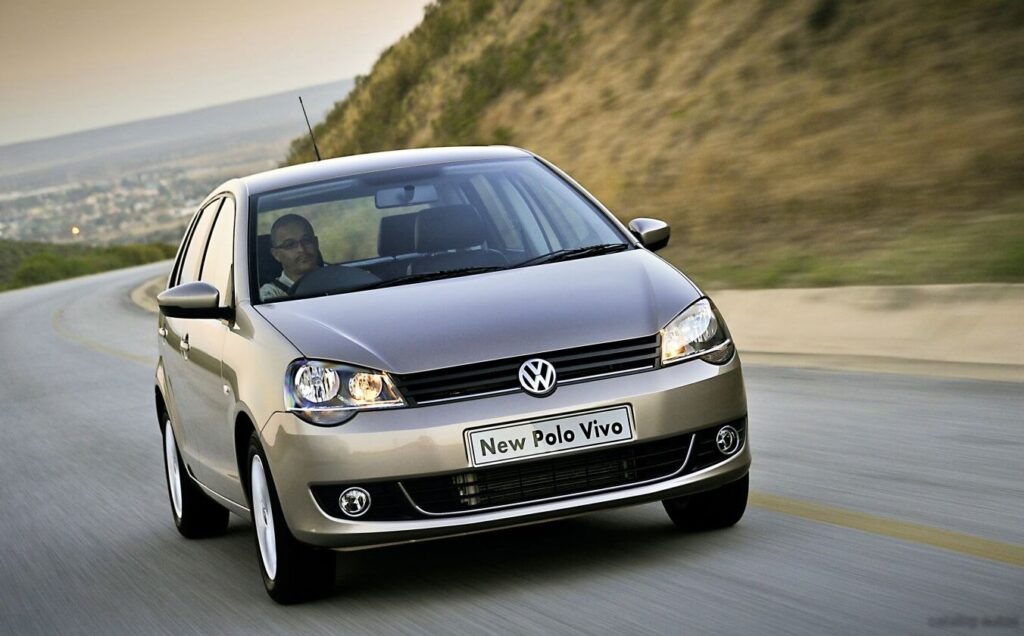
The Volkswagen Polo Vivo I Sedan 1.6, producing 105 horsepower, was a key model in Volkswagen’s South African lineup from 2010 to 2017. Developed specifically for the South African market and other emerging economies, the Vivo represented a continuation of the Polo Classic sedan after the fifth-generation Polo (6R) was introduced globally. It served as an affordable and practical sedan option, bridging the gap between the smaller, hatchback-only Polo and more expensive offerings. The 1.6-liter engine with 105 hp, paired with a five-speed manual transmission, positioned itself as a mid-range offering within the Vivo lineup, balancing fuel efficiency with acceptable performance for everyday driving.
Technical Specifications
| Brand | Volkswagen |
| Model | Polo Vivo |
| Generation | Polo Vivo I Sedan |
| Type (Engine) | 1.6 (105 Hp) |
| Start of production | 2010 |
| End of production | 2017 |
| Powertrain Architecture | Internal Combustion engine |
| Body type | Sedan |
| Seats | 5 |
| Doors | 4 |
| Fuel consumption (urban) | 9 l/100 km (26.1 US mpg, 31.4 UK mpg, 11.1 km/l) |
| Fuel consumption (extra urban) | 5.2 l/100 km (45.2 US mpg, 54.3 UK mpg, 19.2 km/l) |
| Fuel consumption (combined) | 6.6 l/100 km (35.6 US mpg, 42.8 UK mpg, 15.2 km/l) |
| CO2 emissions | 156 g/km |
| Fuel Type | Petrol (Gasoline) |
| Acceleration 0 – 100 km/h | 10.6 sec |
| Acceleration 0 – 62 mph | 10.6 sec |
| Acceleration 0 – 60 mph | 10.1 sec |
| Maximum speed | 187 km/h (116.2 mph) |
| Weight-to-power ratio | 10.2 kg/Hp, 97.7 Hp/tonne |
| Weight-to-torque ratio | 6.9 kg/Nm, 144.2 Nm/tonne |
| Power | 105 Hp @ 5250 rpm |
| Torque | 155 Nm @ 3500 rpm (114.32 lb.-ft. @ 3500 rpm) |
| Engine layout | Front, Transverse |
| Engine Model/Code | CLSA |
| Engine displacement | 1598 cm3 (97.52 cu. in.) |
| Number of cylinders | 4 |
| Engine configuration | Inline |
| Cylinder Bore | 76.5 mm (3.01 in.) |
| Piston Stroke | 86.9 mm (3.42 in.) |
| Compression ratio | 10.5:1 |
| Number of valves per cylinder | 4 |
| Fuel injection system | Multi-port manifold injection |
| Engine aspiration | Naturally aspirated engine |
| Valvetrain | DOHC |
| Engine oil capacity | 3.6 l (3.8 US qt | 3.17 UK qt) |
| Kerb Weight | 1075 kg (2369.97 lbs.) |
| Trunk (boot) space – minimum | 432 l (15.26 cu. ft.) |
| Trunk (boot) space – maximum | 737 l (26.03 cu. ft.) |
| Fuel tank capacity | 45 l (11.89 US gal | 9.9 UK gal) |
| Length | 4198 mm (165.28 in.) |
| Width | 1650 mm (64.96 in.) |
| Height | 1467 mm (57.76 in.) |
| Wheelbase | 2462 mm (96.93 in.) |
| Front track | 1434 mm (56.46 in.) |
| Rear (Back) track | 1426 mm (56.14 in.) |
| Ride height (ground clearance) | 115 mm (4.53 in.) |
| Minimum turning circle | 10.6 m (34.78 ft.) |
| Drivetrain Architecture | Front wheel drive |
| Number of gears and type of gearbox | 5 gears, manual transmission |
| Front suspension | Spring Strut, Wishbone, Transverse stabilizer |
| Rear suspension | Spring Strut, Trailing arm, Torsion |
| Front brakes | Disc |
| Rear brakes | Drum |
| Assisting systems | ABS (Anti-lock braking system) |
| Steering type | Steering rack and pinion |
| Power steering | Hydraulic Steering |
| Tires size | 175/65 R14 |
| Wheel rims size | 5J x 14 |
INTRODUCTION
The Volkswagen Polo Vivo I Sedan 1.6 (105 Hp) was produced from 2010 to 2017, serving as a crucial model in Volkswagen South Africa’s portfolio. It was based on the older Polo Classic platform (derived from the Mk4 Polo, 9N) and designed to offer a budget-friendly sedan option. The Vivo filled a niche in markets where sedan body styles were preferred, offering a more spacious and practical alternative to the hatchback Polo. This variant, with its 1.6-liter engine and five-speed manual transmission, was positioned as a mainstream offering, appealing to a broad customer base seeking reliable and economical transportation.
Powertrain & Engine Architecture
The heart of the Polo Vivo 1.6 is the CLSA engine code, a 1.6-liter inline-four cylinder petrol engine. This engine is a naturally aspirated unit utilizing a multi-port fuel injection system. The engine features a double overhead camshaft (DOHC) valvetrain with four valves per cylinder, contributing to its relatively efficient operation. The 105 horsepower output is achieved at 5250 rpm, while peak torque of 155 Nm (114.32 lb.-ft.) is delivered at 3500 rpm. The five-speed manual transmission provides a straightforward driving experience. Gear ratios are tuned for a balance of fuel economy and acceptable acceleration. The transmission is a conventional design, known for its durability and relatively low maintenance requirements. Compared to the later Polo models, the CLSA engine is simpler in design, lacking features like direct injection or turbocharging, which contributes to its reliability but also limits its overall performance potential.
Driving Characteristics
The Polo Vivo 1.6 with a manual transmission delivers a predictable and user-friendly driving experience. Acceleration from 0 to 100 km/h takes approximately 10.6 seconds, which is adequate for everyday commuting and urban driving. The engine feels responsive enough for overtaking maneuvers, but it does require downshifting to access its full power band. Compared to higher-output versions of the Vivo, or those equipped with a more modern engine, the 1.6-liter feels less powerful, particularly when fully loaded with passengers and cargo. The five-speed manual transmission allows for precise control over gear selection, and the gear ratios are well-matched to the engine’s characteristics. The suspension provides a comfortable ride, absorbing bumps and imperfections in the road surface effectively. However, it’s not particularly sporty, with a noticeable amount of body roll during cornering.
Equipment & Trim Levels
The Polo Vivo 1.6 typically came with a fairly basic level of standard equipment, reflecting its position as a value-oriented model. Standard features generally included power steering, air conditioning, central locking, and an immobilizer. Interior upholstery was typically cloth, and the dashboard featured a functional but relatively simple design. Optional extras included power windows, an upgraded audio system, and alloy wheels. Higher trim levels, such as the Comfortline, offered additional features like remote central locking, electric mirrors, and a multi-function steering wheel. The interior plastics were durable but not particularly luxurious, prioritizing practicality and longevity over aesthetics.
Chassis & Braking
The Polo Vivo 1.6 utilizes a MacPherson strut front suspension with a transverse stabilizer bar, providing a good balance of ride comfort and handling. The rear suspension employs a torsion beam setup, which is a cost-effective and space-efficient solution. The braking system consists of disc brakes on the front wheels and drum brakes on the rear wheels. Anti-lock Braking System (ABS) was standard, enhancing safety by preventing wheel lockup during hard braking. The steering is a rack and pinion system with hydraulic power assistance, providing a responsive and precise steering feel. The 175/65 R14 tires offer a good compromise between comfort and grip.
Market Reception & Comparison
The Polo Vivo 1.6 was generally well-received in the South African market as a reliable and affordable sedan. Critics praised its practicality, fuel efficiency, and low running costs. Compared to other trims in the Vivo lineup, the 1.6-liter model offered a good balance between performance and economy. The higher-output 1.9 TDI diesel version provided better fuel economy and more torque, but it came at a higher price point. The 1.4-liter engine offered even greater fuel efficiency but lacked the power of the 1.6-liter. The Vivo also competed with other budget-friendly sedans from brands like Toyota and Ford, but it often stood out due to its Volkswagen badge and reputation for quality.
Legacy
The Volkswagen Polo Vivo 1.6 has proven to be a durable and reliable vehicle, and it remains a popular choice in the used car market. The CLSA engine is known for its longevity and relatively simple maintenance requirements. Common issues are typically related to wear and tear, such as worn suspension components and brake pads. The availability of spare parts is generally good, and the cost of maintenance is relatively low. The Vivo’s enduring popularity is a testament to its practicality, affordability, and Volkswagen’s reputation for building well-engineered vehicles. It continues to be a viable option for buyers seeking a dependable and economical sedan.