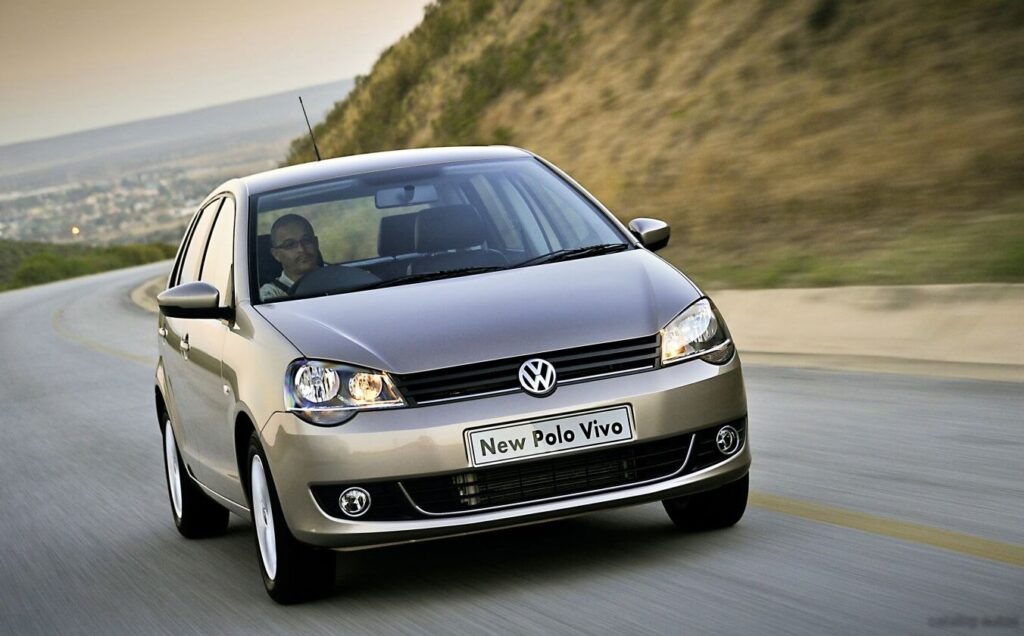
The Volkswagen Polo Vivo II 1.0 TSI (110 hp) is a front-wheel-drive hatchback produced by Volkswagen from 2018 onwards, primarily targeted at the South African market. It represents a significant update to the original Polo Vivo, which itself was based on the older Polo Mk5 (6R) platform. The Vivo II, while retaining the core practicality of its predecessor, introduced a more modern engine lineup, including this turbocharged 1.0-liter three-cylinder engine. This variant occupied a mid-range position within the Vivo II lineup, offering a balance between fuel efficiency, performance, and affordability. It aimed to appeal to buyers seeking a contemporary hatchback with a degree of refinement without the higher price tag of more powerful or feature-rich trims.
Technical Specifications
| Brand | Volkswagen |
| Model | Polo Vivo |
| Generation | Polo Vivo II |
| Type (Engine) | 1.0 TSI (110 Hp) |
| Start of production | 2018 |
| Powertrain Architecture | Internal Combustion engine |
| Body type | Hatchback |
| Seats | 5 |
| Doors | 5 |
| Fuel consumption (urban) | 5.5 l/100 km (42.8 US mpg, 51.4 UK mpg, 18.2 km/l) |
| Fuel consumption (extra urban) | 4 l/100 km (58.8 US mpg, 70.6 UK mpg, 25 km/l) |
| Fuel consumption (combined) | 4.8 l/100 km (49 US mpg, 58.9 UK mpg, 20.8 km/l) |
| CO2 emissions | 114 g/km |
| Fuel Type | Petrol (Gasoline) |
| Maximum speed | 196 km/h (121.79 mph) |
| Weight-to-power ratio | 9.9 kg/Hp, 100.7 Hp/tonne |
| Weight-to-torque ratio | 5.5 kg/Nm, 183.2 Nm/tonne |
| Power | 110 Hp @ 5000 rpm |
| Power per litre | 110.1 Hp/l |
| Torque | 200 Nm @ 2000 rpm (147.51 lb.-ft. @ 2000 rpm) |
| Engine layout | Front, Transverse |
| Engine Model/Code | CHZC |
| Engine displacement | 999 cm3 (60.96 cu. in.) |
| Number of cylinders | 3 |
| Engine configuration | Inline |
| Cylinder Bore | 74.5 mm (2.93 in.) |
| Piston Stroke | 76.4 mm (3.01 in.) |
| Number of valves per cylinder | 4 |
| Fuel injection system | Direct injection |
| Engine aspiration | Turbocharger, Intercooler |
| Valvetrain | DOHC |
| Engine oil capacity | 4 l (4.23 US qt | 3.52 UK qt) |
| Kerb Weight | 1092 kg (2407.45 lbs.) |
| Max. weight | 1530 kg (3373.07 lbs.) |
| Max load | 438 kg (965.62 lbs.) |
| Trunk (boot) space – minimum | 280 l (9.89 cu. ft.) |
| Trunk (boot) space – maximum | 952 l (33.62 cu. ft.) |
| Fuel tank capacity | 45 l (11.89 US gal | 9.9 UK gal) |
| Permitted trailer load with brakes (12%) | 1000 kg (2204.62 lbs.) |
| Permitted trailer load without brakes | 580 kg (1278.68 lbs.) |
| Length | 3972 mm (156.38 in.) |
| Width | 1682 mm (66.22 in.) |
| Height | 1447 mm (56.97 in.) |
| Wheelbase | 2470 mm (97.24 in.) |
| Front track | 1463 mm (57.6 in.) |
| Rear (Back) track | 1456 mm (57.32 in.) |
| Ride height (ground clearance) | 128 mm (5.04 in.) |
| Minimum turning circle (turning diameter) | 10.6 m (34.78 ft.) |
| Drivetrain Architecture | The Internal combustion engine (ICE) drives the front wheels of the vehicle. |
| Drive wheel | Front wheel drive |
| Number of gears and type of gearbox | 6 gears, manual transmission |
| Front suspension | Spring Strut, Wishbone |
| Rear suspension | Spring Strut, Trailing arm, Torsion |
| Front brakes | Disc |
| Rear brakes | Drum |
| Assisting systems | ABS (Anti-lock braking system) |
| Steering type | Steering rack and pinion |
| Power steering | Hydraulic Steering |
| Tires size | 215/40 R17 |
| Wheel rims size | 7J x 17 |
INTRODUCTION
The Volkswagen Polo Vivo II 1.0 TSI (110 hp) was introduced in 2018 as part of the second generation of the Polo Vivo, a model specifically developed for the South African market and other emerging economies. The Vivo II represented a significant step up from the original Vivo, which was essentially a rebadged version of the older Polo Mk5. The 1.0 TSI variant was positioned as a modern and efficient option, offering a turbocharged engine in a traditionally budget-conscious segment. It aimed to provide a more refined driving experience and improved fuel economy compared to the naturally aspirated engines previously offered in the Vivo range. The vehicle is a five-door hatchback designed to accommodate five passengers.
Powertrain & Engine Architecture
At the heart of the Polo Vivo II 1.0 TSI is the CHZC engine code, a 999cc inline three-cylinder petrol engine. This engine utilizes direct fuel injection and is equipped with a turbocharger and intercooler to boost power and efficiency. The engine’s design incorporates a DOHC (Dual Overhead Camshaft) valvetrain, contributing to its responsive nature. The 1.0 TSI engine is part of Volkswagen’s EA211 engine family, known for its compact size and lightweight construction. The engine produces 110 horsepower at 5000 rpm and 200 Nm (147.51 lb-ft) of torque at 2000 rpm. The engine is paired with a six-speed manual transmission, which was the standard offering for this variant. The transmission’s gear ratios are tuned to provide a balance between acceleration and fuel economy, with a relatively long final drive to aid in highway cruising.
Driving Characteristics
The Polo Vivo II 1.0 TSI offers a surprisingly lively driving experience for a car in its class. While not a performance-oriented vehicle, the turbocharger provides a noticeable boost in power, making overtaking and merging onto highways relatively effortless. The six-speed manual transmission allows drivers to keep the engine in its optimal power band. Compared to the lower-powered naturally aspirated versions of the Vivo II, the 1.0 TSI feels significantly more responsive. However, it doesn’t offer the same level of outright performance as the higher-spec Polo models with larger engines. The suspension setup is tuned for comfort, providing a reasonably smooth ride over typical road surfaces. The steering is light and precise, making it easy to maneuver in urban environments.
Equipment & Trim Levels
The 1.0 TSI variant of the Polo Vivo II typically came equipped with a reasonable level of standard features. These included air conditioning, power windows, central locking, and an audio system with USB connectivity. Safety features such as ABS (Anti-lock Braking System) and dual front airbags were also standard. Higher trim levels offered optional extras such as alloy wheels, a multi-function steering wheel, and a more advanced infotainment system. Interior upholstery was typically cloth, with a functional and durable design. The dashboard layout was straightforward and easy to use, with clearly labeled controls.
Chassis & Braking
The Polo Vivo II 1.0 TSI utilizes a front strut and rear torsion beam suspension setup. This configuration provides a good balance between ride comfort and handling. The front brakes are disc brakes, while the rear brakes are drum brakes. This combination is typical for vehicles in this price range and weight class. The steering system is a hydraulic rack and pinion setup, offering a direct and responsive feel. The vehicle’s relatively lightweight construction contributes to its agility and handling characteristics.
Market Reception & Comparison
The Polo Vivo II 1.0 TSI was generally well-received by critics and consumers in South Africa. It was praised for its fuel efficiency, responsive engine, and relatively affordable price. Compared to other vehicles in its segment, such as the Toyota Corolla and Ford Fiesta, the Vivo II 1.0 TSI offered a compelling combination of features and performance. The 1.0 TSI variant provided a noticeable upgrade in driving experience compared to the lower-spec naturally aspirated models within the Vivo II range, while remaining more accessible than the higher-powered options. Fuel economy figures of around 4.8 l/100 km (49 US mpg) were considered competitive for its class.
Legacy
The Volkswagen Polo Vivo II 1.0 TSI has established itself as a reliable and fuel-efficient option in the used car market. The EA211 engine family, of which the CHZC engine is a part, has proven to be relatively durable and maintenance costs are generally reasonable. The availability of spare parts is good, thanks to the widespread use of this engine in other Volkswagen models. The Vivo II 1.0 TSI continues to be a popular choice for buyers seeking an affordable and practical hatchback with a modern engine and a decent level of equipment. Its reputation for reliability and fuel efficiency ensures its continued appeal in the years to come.