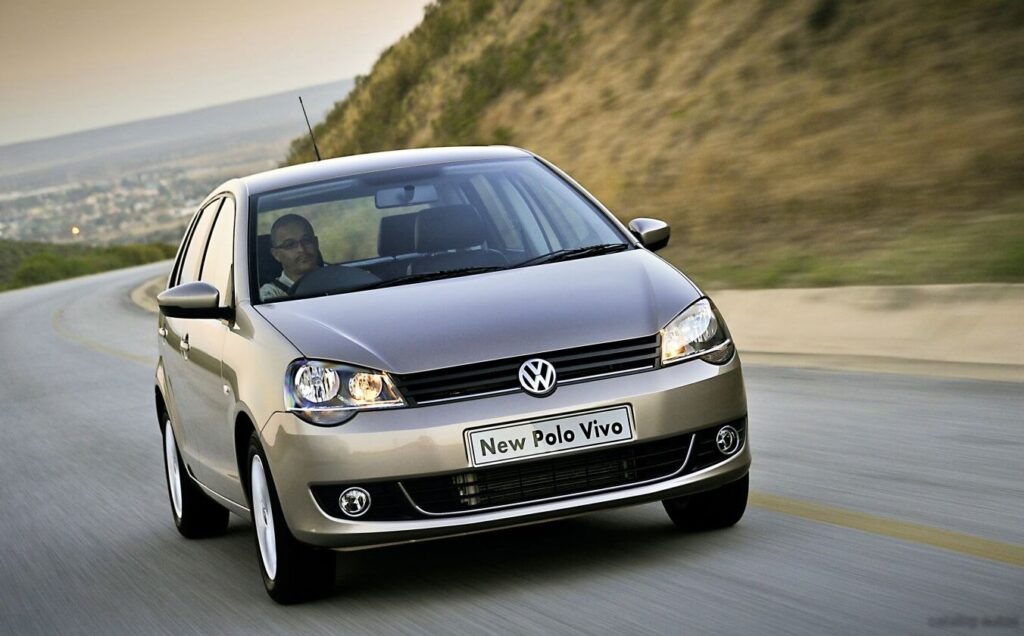
The Volkswagen Polo Vivo II 1.6 (105 hp) Tiptronic, launched in 2018, represents a significant iteration within the Polo Vivo lineage, specifically tailored for the South African market. The Vivo, a rebadged and refined version of the Mk5 Polo produced from 2002-2009 in Europe, was designed to offer a modern, affordable, and reliable vehicle to a broader customer base. This 1.6-liter Tiptronic variant occupied a middle ground in the Vivo II range, providing a balance between fuel efficiency, ease of use, and a relatively accessible price point. It was positioned as a practical choice for urban commuters and families seeking a comfortable and dependable hatchback.
Technical Specifications
| Brand | Volkswagen |
| Model | Polo Vivo |
| Generation | Polo Vivo II |
| Type (Engine) | 1.6 (105 Hp) Tiptronic |
| Start of production | 2018 |
| Powertrain Architecture | Internal Combustion engine |
| Body type | Hatchback |
| Seats | 5 |
| Doors | 5 |
| Fuel consumption (urban) | 8.2 l/100 km (28.7 US mpg) |
| Fuel consumption (extra urban) | 4.9 l/100 km (48 US mpg) |
| Fuel consumption (combined) | 6.1 l/100 km (38.6 US mpg) |
| CO2 emissions | 144 g/km |
| Fuel Type | Petrol (Gasoline) |
| Maximum speed | 188 km/h (116.82 mph) |
| Weight-to-power ratio | 10.5 kg/Hp |
| Weight-to-torque ratio | 7.2 kg/Nm |
| Power | 105 Hp @ 5250 rpm |
| Torque | 153 Nm @ 3800 rpm (112.85 lb.-ft. @ 3800 rpm) |
| Engine layout | Front, Transverse |
| Engine Model/Code | CLSA |
| Engine displacement | 1598 cm3 (97.52 cu. in.) |
| Number of cylinders | 4 |
| Engine configuration | Inline |
| Cylinder Bore | 76.5 mm (3.01 in.) |
| Piston Stroke | 86.9 mm (3.42 in.) |
| Compression ratio | 10.5:1 |
| Number of valves per cylinder | 4 |
| Fuel injection system | Multi-port manifold injection |
| Engine aspiration | Naturally aspirated |
| Valvetrain | DOHC |
| Engine oil capacity | 3.6 l (3.8 US qt | 3.17 UK qt) |
| Kerb Weight | 1102 kg (2429.49 lbs.) |
| Max. weight | 1570 kg (3461.26 lbs.) |
| Max load | 468 kg (1031.76 lbs.) |
| Trunk (boot) space – minimum | 280 l (9.89 cu. ft.) |
| Trunk (boot) space – maximum | 952 l (33.62 cu. ft.) |
| Fuel tank capacity | 45 l (11.89 US gal | 9.9 UK gal) |
| Permitted trailer load with brakes (12%) | 1000 kg (2204.62 lbs.) |
| Permitted trailer load without brakes | 580 kg (1278.68 lbs.) |
| Length | 3972 mm (156.38 in.) |
| Width | 1682 mm (66.22 in.) |
| Height | 1462 mm (57.56 in.) |
| Wheelbase | 2470 mm (97.24 in.) |
| Front track | 1463 mm (57.6 in.) |
| Rear (Back) track | 1456 mm (57.32 in.) |
| Ride height (ground clearance) | 143 mm (5.63 in.) |
| Minimum turning circle (turning diameter) | 10.6 m (34.78 ft.) |
| Drivetrain Architecture | Front wheel drive |
| Number of gears and type of gearbox | 6 gears, automatic transmission Tiptronic |
| Front suspension | Spring Strut, Wishbone |
| Rear suspension | Spring Strut, Trailing arm, Torsion |
| Front brakes | Disc |
| Rear brakes | Drum |
| Assisting systems | ABS (Anti-lock braking system) |
| Steering type | Steering rack and pinion |
| Power steering | Hydraulic Steering |
| Tires size | 175/70 R14 |
| Wheel rims size | 5J x 14 |
INTRODUCTION
The Volkswagen Polo Vivo II, launched in 2018, continued the success of the Vivo line, a model specifically developed for the South African market. Building upon the foundation of the Mk5 Polo platform (1HX0/A3), the Vivo II offered a cost-effective and reliable transportation solution. The 1.6-liter engine with the Tiptronic automatic transmission was a key variant, aimed at buyers who prioritized convenience and ease of driving over outright performance. This combination provided a comfortable and accessible entry point into the Polo Vivo range, appealing to a broad demographic.
Powertrain & Engine Architecture
The heart of the Polo Vivo II 1.6 Tiptronic is the CLSA engine code, a 1.6-liter inline-four cylinder petrol engine. This engine is a naturally aspirated unit, utilizing a multi-port fuel injection system for precise fuel delivery. The engine features a double overhead camshaft (DOHC) valvetrain, operating with four valves per cylinder, contributing to improved breathing and efficiency. The Tiptronic transmission is a six-speed automatic, offering both fully automatic operation and the ability for the driver to manually select gears for greater control. This transmission is known for its smooth shifts and reliability. The engine’s relatively simple design contributes to its durability and ease of maintenance, important factors in the target market.
Driving Characteristics
The 105 hp output and 153 Nm of torque delivered by the 1.6-liter engine, coupled with the six-speed Tiptronic transmission, resulted in a driving experience focused on practicality and comfort rather than sporty performance. Acceleration was adequate for everyday driving, but not particularly brisk. The Tiptronic transmission’s gear ratios were tuned for fuel efficiency and smooth cruising, prioritizing comfortable highway driving over rapid acceleration. Compared to the manual transmission versions of the 1.6, the Tiptronic offered a more relaxed driving experience, particularly in congested urban environments. It lacked the responsiveness of the manual, and the higher-output versions (like those with larger engines) offered significantly more performance, but at a higher price point.
Equipment & Trim Levels
The Polo Vivo II 1.6 Tiptronic typically came equipped with a reasonable level of standard features. These generally included air conditioning, power steering, central locking, electric front windows, and an audio system with USB connectivity. Safety features such as ABS (Anti-lock Braking System) were standard. Interior upholstery was typically cloth, with a functional and durable design. Optional extras could include alloy wheels, a more advanced audio system, and parking sensors. The trim level was generally considered mid-range within the Vivo II lineup, offering a good balance of features and affordability.
Chassis & Braking
The Polo Vivo II utilized a MacPherson strut front suspension and a trailing arm torsion beam rear suspension. This setup provided a comfortable ride quality, well-suited for the often-challenging road conditions found in South Africa. The front brakes were disc brakes, providing adequate stopping power, while the rear brakes were drum brakes, a cost-saving measure common in this segment. The steering was a hydraulic power steering system, offering a good balance of assistance and feel. The chassis was designed to be robust and durable, capable of withstanding the demands of everyday use.
Market Reception & Comparison
The Polo Vivo II 1.6 Tiptronic was generally well-received in the South African market. Critics praised its affordability, reliability, and comfortable ride. Fuel economy was a strong point, making it an attractive option for budget-conscious buyers. Compared to other trims in the lineup, the 1.6 Tiptronic offered a compelling value proposition for those who prioritized convenience and ease of driving. While the higher-output engines provided more performance, they also came with a higher price tag and potentially increased fuel consumption. The Tiptronic transmission was seen as a significant advantage for drivers who frequently encountered stop-and-go traffic.
Legacy
The Polo Vivo II 1.6 Tiptronic has proven to be a reliable and durable vehicle, maintaining a good reputation in the used car market. The CLSA engine is known for its longevity, and the Tiptronic transmission, while not as sporty as some alternatives, has generally proven to be dependable. Parts availability is good, and maintenance costs are relatively low, making it an attractive option for buyers seeking an affordable and practical used car. The Vivo II, and this variant in particular, solidified Volkswagen’s position as a leading automotive brand in South Africa, offering a well-rounded and dependable vehicle for a wide range of customers.