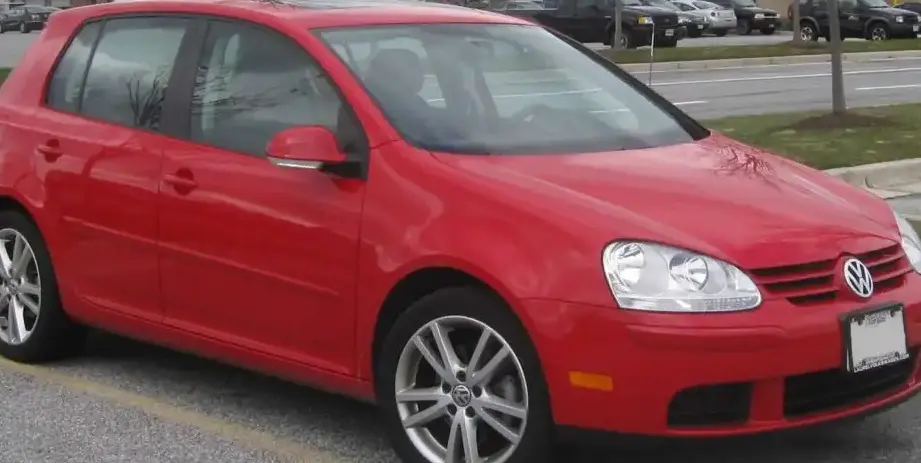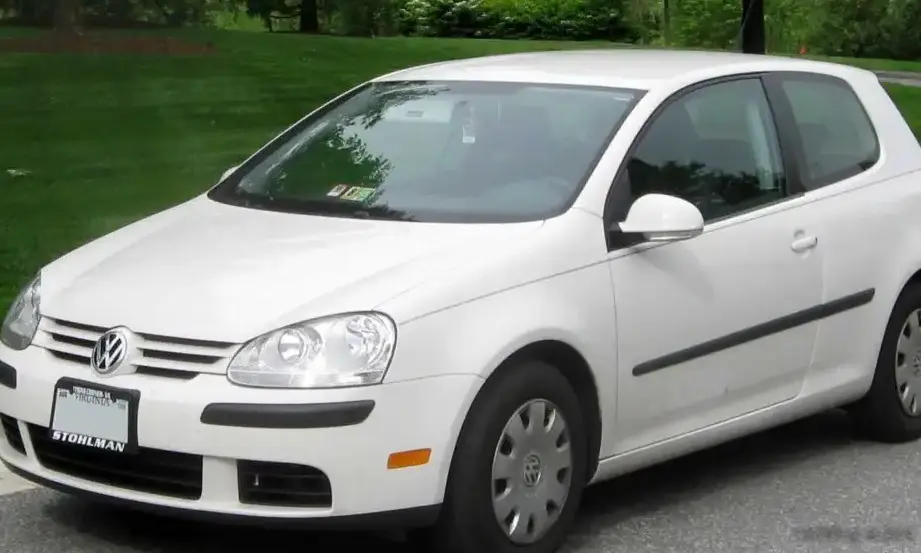
The Volkswagen Rabbit (A5) 3-door 2.5, produced from 2006 to 2007, represented a key iteration of Volkswagen’s iconic hatchback within the fifth generation (A5) of the Golf/Rabbit lineage. Sold primarily in North America, this variant aimed to offer a balance of practicality, affordability, and a more engaging driving experience than the base models. It occupied a mid-range position in the A5 Rabbit lineup, slotting between the entry-level 2.0-liter models and the performance-oriented GTI. The 3-door configuration further emphasized its sporty intentions, appealing to buyers seeking a more compact and driver-focused vehicle.
Technical Specifications
| Brand | Volkswagen |
| Model | Rabbit |
| Generation | Rabbit (A5) 3-door |
| Type (Engine) | 2.5 (150 Hp) |
| Start of production | 2006 |
| End of production | 2007 |
| Powertrain Architecture | Internal Combustion engine |
| Body type | Hatchback |
| Seats | 5 |
| Doors | 3 |
| Fuel consumption (economy) – urban (EPA) | 10.7 l/100 km (22 US mpg, 26.4 UK mpg, 9.3 km/l) |
| Fuel consumption (economy) – extra urban (EPA) | 7.8 l/100 km (30.2 US mpg, 36.2 UK mpg, 12.8 km/l) |
| Fuel Type | Petrol (Gasoline) |
| Weight-to-power ratio | 9 kg/Hp, 111.2 Hp/tonne |
| Weight-to-torque ratio | 5.9 kg/Nm, 169 Nm/tonne |
| Power | 150 Hp @ 5000 rpm |
| Power per litre | 60.5 Hp/l |
| Torque | 228 Nm @ 3750 rpm (168.16 lb.-ft. @ 3750 rpm) |
| Engine layout | Front, Transverse |
| Engine Model/Code | BGP, BGQ |
| Engine displacement | 2480 cm3 (151.34 cu. in.) |
| Number of cylinders | 5 |
| Engine configuration | Inline |
| Cylinder Bore | 82.5 mm (3.25 in.) |
| Piston Stroke | 92.8 mm (3.65 in.) |
| Number of valves per cylinder | 4 |
| Fuel injection system | Multi-port manifold injection |
| Engine aspiration | Naturally aspirated engine |
| Valvetrain | DOHC |
| Engine oil capacity | 5.5 l (5.81 US qt, 4.84 UK qt) |
| Coolant | 9.5 l (10.04 US qt, 8.36 UK qt) |
| Kerb Weight | 1349 kg (2974.04 lbs.) |
| Max. weight | 1789 kg (3944.07 lbs.) |
| Max load | 440 kg (970.03 lbs.) |
| Trunk (boot) space – minimum | 400 l (14.13 cu. ft.) |
| Trunk (boot) space – maximum | 1303 l (46.02 cu. ft.) |
| Fuel tank capacity | 55 l (14.53 US gal, 12.1 UK gal) |
| Length | 4210 mm (165.75 in.) |
| Width | 1759 mm (69.25 in.) |
| Height | 1479 mm (58.23 in.) |
| Wheelbase | 2578 mm (101.5 in.) |
| Front track | 1540 mm (60.63 in.) |
| Rear (Back) track | 1518 mm (59.76 in.) |
| Ride height (ground clearance) | 137 mm (5.39 in.) |
| Drag coefficient (Cd) | 0.32 |
| Drivetrain Architecture | The Internal combustion engine (ICE) drives the front wheels of the vehicle. |
| Drive wheel | Front wheel drive |
| Number of gears and type of gearbox | 5 gears, manual transmission |
| Front suspension | Independent, type McPherson with coil spring and anti-roll bar |
| Rear suspension | Independent multi-link spring suspension with stabilizer |
| Front brakes | Ventilated discs, 288×25 mm |
| Rear brakes | Disc, 260×12 mm |
| Assisting systems | ABS (Anti-lock braking system) |
| Steering type | Steering rack and pinion |
| Power steering | Electric Steering |
| Tires size | 195/65 R15; 205/55 R16 |
| Wheel rims size | 6J x 15; 6.5J x 16 |
Powertrain & Engine Architecture
The heart of the A5 Rabbit 2.5 was the 2.5-liter inline-five cylinder engine, designated as either the BGP or BGQ code depending on minor variations and emissions configurations. This engine represented a departure from the traditional four-cylinder layouts common in the compact class, offering a unique sound and a slightly smoother power delivery. The engine utilized multi-port fuel injection, a relatively conventional system for the time, and a double overhead camshaft (DOHC) valvetrain to optimize breathing and efficiency. The 2.5L engine produced 150 horsepower at 5000 rpm and 168 lb-ft of torque at 3750 rpm. This power was delivered to the front wheels through a standard five-speed manual transmission. A six-speed automatic transmission was also available, though it impacted fuel economy and slightly diminished acceleration.
Driving Characteristics
The 2.5-liter Rabbit offered a respectable, if not exhilarating, driving experience. The inline-five engine provided adequate power for everyday driving, with sufficient torque for merging onto highways and passing maneuvers. The five-speed manual transmission allowed for a more engaging driving experience, while the optional automatic, while convenient, felt somewhat less responsive. Compared to the higher-performance GTI, the 2.5-liter model was noticeably slower, but it offered a more fuel-efficient and affordable alternative. The gear ratios in the manual transmission were well-spaced, providing good acceleration in the lower gears and comfortable cruising at highway speeds. The automatic transmission, while smooth, had a tendency to hunt for gears under hard acceleration.
Equipment & Trim Levels
The A5 Rabbit 2.5 typically came standard with features such as air conditioning, power windows and locks, a CD player with MP3 compatibility, and alloy wheels. Safety features included ABS brakes and front airbags. Optional extras included a sunroof, upgraded audio system, and a cold weather package with heated front seats. Interior upholstery was typically cloth, with the option of leatherette available on higher trim levels. The dashboard layout was functional and straightforward, with easy-to-read gauges and intuitive controls.
Chassis & Braking
The A5 Rabbit utilized an independent McPherson strut suspension in the front and an independent multi-link suspension in the rear, providing a comfortable ride and good handling characteristics. The front suspension featured a stabilizer bar to reduce body roll during cornering. Braking duties were handled by ventilated discs in the front and solid discs in the rear. ABS (Anti-lock Braking System) was standard, enhancing braking performance and stability in adverse conditions. The suspension tuning was geared towards providing a balance between comfort and handling, making it suitable for both daily commuting and spirited driving.
Market Reception & Comparison
The A5 Rabbit 2.5 was generally well-received by automotive critics as a practical and affordable hatchback. It was praised for its comfortable ride, spacious interior, and decent fuel economy. However, some critics noted that the engine lacked the refinement and power of its competitors, and the interior materials were somewhat basic. Compared to the GTI, the 2.5-liter model offered a more economical option, but it sacrificed performance. Fuel economy figures averaged around 22 mpg city and 30 mpg highway, making it a relatively efficient choice for its class. Reliability was generally good, with few major issues reported.
Legacy
The A5 Rabbit 2.5, while not the most powerful or technologically advanced version of the Rabbit, remains a popular choice among used car buyers. The inline-five engine, while somewhat unusual, is known for its durability and relatively low maintenance costs. Parts availability is generally good, and the vehicle’s simple design makes it relatively easy to repair. Today, well-maintained examples of the A5 Rabbit 2.5 can be found for reasonable prices, offering a practical and reliable transportation option for those seeking a classic Volkswagen hatchback.