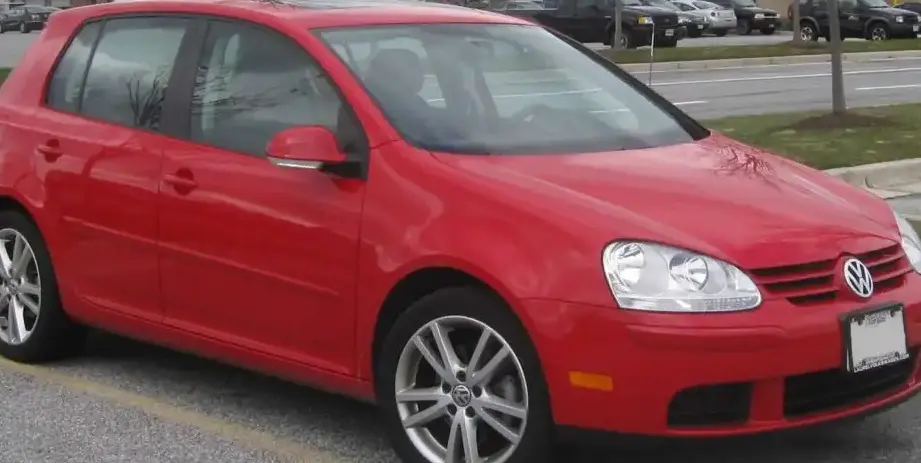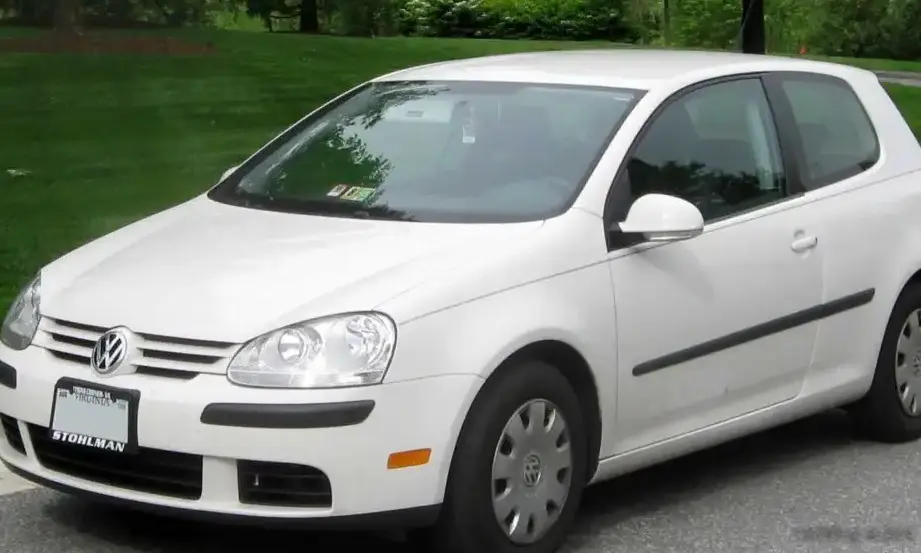
The Volkswagen Rabbit (A5) 2.5-liter Tiptronic, produced for the 2006 and 2007 model years, represented a mid-range offering within the fifth generation of Volkswagen’s iconic hatchback. Positioned between the base 2.0-liter models and the performance-oriented GTI, the 2.5-liter variant aimed to provide a balance of fuel efficiency, practicality, and acceptable performance for the North American market. This three-door hatchback was part of the larger A5 platform strategy, shared with other Volkswagen Group vehicles like the Golf and Jetta, and represented Volkswagen’s continued effort to establish a stronger foothold in the competitive compact car segment in the United States.
Technical Specifications
| Brand | Volkswagen |
| Model | Rabbit |
| Generation | Rabbit (A5) 3-door |
| Type (Engine) | 2.5 (150 Hp) Tiptronic |
| Start of production | 2006 |
| End of production | 2007 |
| Powertrain Architecture | Internal Combustion engine |
| Body type | Hatchback |
| Seats | 5 |
| Doors | 3 |
| Fuel consumption (economy) – urban (EPA) | 10.7 l/100 km (22 US mpg, 26.4 UK mpg, 9.3 km/l) |
| Fuel consumption (economy) – extra urban (EPA) | 7.8 l/100 km (30.2 US mpg, 36.2 UK mpg, 12.8 km/l) |
| Fuel Type | Petrol (Gasoline) |
| Weight-to-power ratio | 9.2 kg/Hp, 108.8 Hp/tonne |
| Weight-to-torque ratio | 6 kg/Nm, 165.3 Nm/tonne |
| Power | 150 Hp @ 5000 rpm |
| Power per litre | 60.5 Hp/l |
| Torque | 228 Nm @ 3750 rpm (168.16 lb.-ft. @ 3750 rpm) |
| Engine layout | Front, Transverse |
| Engine Model/Code | BGP, BGQ |
| Engine displacement | 2480 cm3 (151.34 cu. in.) |
| Number of cylinders | 5 |
| Engine configuration | Inline |
| Cylinder Bore | 82.5 mm (3.25 in.) |
| Piston Stroke | 92.8 mm (3.65 in.) |
| Number of valves per cylinder | 4 |
| Fuel injection system | Multi-port manifold injection |
| Engine aspiration | Naturally aspirated engine |
| Valvetrain | DOHC |
| Engine oil capacity | 5.5 l (5.81 US qt, 4.84 UK qt) |
| Coolant | 9.5 l (10.04 US qt, 8.36 UK qt) |
| Kerb Weight | 1379 kg (3040.17 lbs.) |
| Max. weight | 1819 kg (4010.21 lbs.) |
| Max load | 440 kg (970.03 lbs.) |
| Trunk (boot) space – minimum | 400 l (14.13 cu. ft.) |
| Trunk (boot) space – maximum | 1303 l (46.02 cu. ft.) |
| Fuel tank capacity | 55 l (14.53 US gal, 12.1 UK gal) |
| Length | 4210 mm (165.75 in.) |
| Width | 1759 mm (69.25 in.) |
| Height | 1479 mm (58.23 in.) |
| Wheelbase | 2578 mm (101.5 in.) |
| Front track | 1540 mm (60.63 in.) |
| Rear (Back) track | 1518 mm (59.76 in.) |
| Ride height (ground clearance) | 137 mm (5.39 in.) |
| Drag coefficient (Cd) | 0.32 |
| Drivetrain Architecture | The Internal combustion engine (ICE) drives the front wheels of the vehicle. |
| Drive wheel | Front wheel drive |
| Number of gears and type of gearbox | 6 gears, automatic transmission Tiptronic |
| Front suspension | Independent, type McPherson with coil spring and anti-roll bar |
| Rear suspension | Independent multi-link spring suspension with stabilizer |
| Front brakes | Ventilated discs, 288×25 mm |
| Rear brakes | Disc, 260×12 mm |
| Assisting systems | ABS (Anti-lock braking system) |
| Steering type | Steering rack and pinion |
| Power steering | Electric Steering |
| Tires size | 195/65 R15; 205/55 R16 |
| Wheel rims size | 6J x 15; 6.5J x 16 |
Powertrain & Engine Architecture
The heart of the 2006-2007 Rabbit 2.5 was the 2.5-liter inline-five cylinder engine, designated as either the BGP or BGQ engine code depending on specific calibration and emissions equipment. This engine was a departure from the earlier four-cylinder Rabbits and offered a noticeable increase in power and torque. The engine featured multi-port fuel injection and a double overhead camshaft (DOHC) valvetrain, contributing to its relatively smooth operation. The Tiptronic automatic transmission was a six-speed unit, offering both fully automatic operation and the ability for the driver to manually select gears. This transmission was designed to provide a balance between fuel efficiency and responsive shifting. The engine’s transverse mounting and front-wheel-drive configuration were standard for this class of vehicle.
Driving Characteristics
The 2.5-liter engine paired with the Tiptronic transmission delivered adequate, though not exhilarating, performance. Acceleration from 0 to 60 mph was typically in the 8-9 second range. The Tiptronic transmission, while offering manual control, wasn’t as sporty or quick-shifting as a dedicated manual gearbox. The gear ratios were tuned for everyday drivability and fuel economy rather than outright performance. Compared to the GTI, which offered a turbocharged engine and a more aggressive transmission tuning, the 2.5-liter Rabbit felt noticeably less powerful. However, it provided a more relaxed and comfortable driving experience, particularly in urban environments. The automatic transmission made it a more accessible option for drivers unfamiliar or uninterested in manual transmissions.
Equipment & Trim Levels
The 2.5-liter Rabbit typically came standard with features such as air conditioning, power windows and locks, a CD player with MP3 compatibility, and anti-lock brakes (ABS). Optional extras included a sunroof, alloy wheels, and a premium sound system. Interior upholstery was typically cloth, with the option for leatherette upgrades. The dashboard layout was functional and straightforward, prioritizing ease of use over stylistic flair. The three-door configuration meant slightly less rear passenger access compared to the five-door model, but it also contributed to a sportier appearance.
Chassis & Braking
The Rabbit 2.5 utilized an independent McPherson strut suspension in the front and an independent multi-link suspension in the rear. This setup provided a comfortable ride quality while maintaining reasonable handling characteristics. Front brakes were ventilated discs, while rear brakes were solid discs. The ABS system was standard, enhancing braking performance and stability, especially in adverse conditions. Stabilizer bars were included both front and rear to reduce body roll during cornering. The suspension tuning was geared towards providing a balance between comfort and handling, making it suitable for daily commuting and occasional spirited driving.
Market Reception & Comparison
Critics generally viewed the 2.5-liter Rabbit as a competent and practical hatchback, but it often received lukewarm reviews compared to the GTI. The 2.5-liter engine was considered adequate for most driving situations, but it lacked the excitement and responsiveness of the GTI’s turbocharged engine. Fuel economy was respectable, averaging around 22 mpg in the city and 30 mpg on the highway. Reliability was generally good, although some owners reported minor issues with the automatic transmission. Compared to competitors like the Honda Civic and Toyota Corolla, the Rabbit offered a more European driving experience but often came with a slightly higher price tag.
Legacy
The 2.5-liter Rabbit, while not the most iconic version of the model, remains a relatively affordable and reliable used car option. The inline-five engine, while not known for exceptional longevity, is generally durable with proper maintenance. The Tiptronic transmission, if well-maintained, can provide years of service. Today, these Rabbits are often sought after by enthusiasts looking for a practical and reasonably priced European hatchback. Parts availability is generally good, and the relatively simple mechanical design makes them relatively easy to maintain and repair. The 2.5-liter Rabbit represents a transitional period for Volkswagen in the US market, bridging the gap between older, more basic models and the more sophisticated vehicles that would follow.