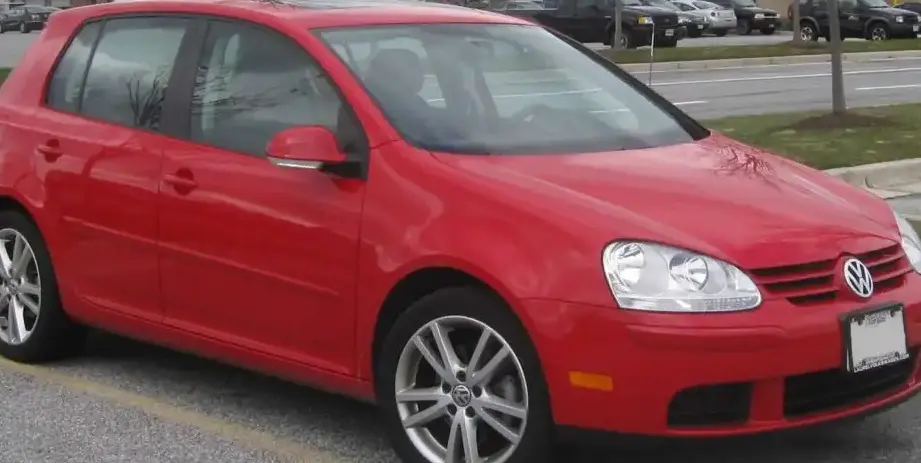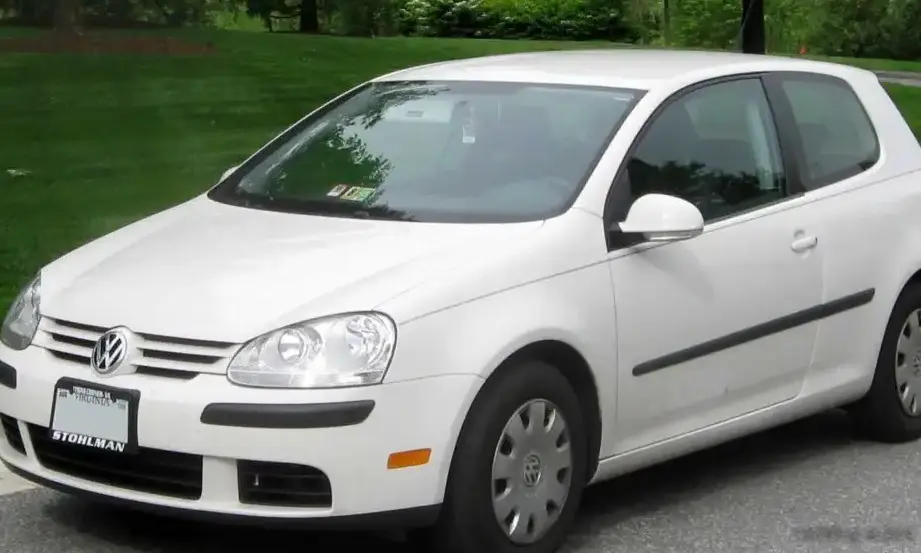
The Volkswagen Rabbit (A5) 3-door 2.5, produced from 2007 to 2009, represented a significant iteration of Volkswagen’s iconic hatchback. Positioned as a sporty and practical offering within the A5 Rabbit lineup – which itself was based on the Volkswagen Group’s A5 (PQ35) platform shared with models like the Audi A3 and Skoda Octavia – the 2.5-liter variant aimed to bridge the gap between the base 2.0-liter engine and the performance-oriented GTI. This 3-door configuration specifically targeted a younger demographic seeking a stylish and relatively affordable entry point into the Volkswagen brand. It was primarily sold in the North American market, where the Rabbit nameplate had been successfully reintroduced after a hiatus as the Golf.
Technical Specifications
| Brand | Volkswagen |
| Model | Rabbit |
| Generation | Rabbit (A5) 3-door |
| Type (Engine) | 2.5 (170 Hp) |
| Start of production | 2007 |
| End of production | 2009 |
| Powertrain Architecture | Internal Combustion engine |
| Body type | Hatchback |
| Seats | 5 |
| Doors | 3 |
| Fuel consumption (economy) – urban (EPA) | 11.2 l/100 km (21 US mpg, 25.2 UK mpg, 8.9 km/l) |
| Fuel consumption (economy) – extra urban (EPA) | 7.8 l/100 km (30.2 US mpg, 36.2 UK mpg, 12.8 km/l) |
| Fuel Type | Petrol (Gasoline) |
| Acceleration 0 – 60 mph | 7.8 sec |
| Maximum speed | 210 km/h (130.49 mph), Electronically limited |
| Weight-to-power ratio | 7.9 kg/Hp, 126 Hp/tonne |
| Weight-to-torque ratio | 5.6 kg/Nm, 177.9 Nm/tonne |
| Power | 170 Hp @ 5700 rpm |
| Power per litre | 68.5 Hp/l |
| Torque | 240 Nm @ 4250 rpm (177.01 lb.-ft. @ 4250 rpm) |
| Engine layout | Front, Transverse |
| Engine Model/Code | CBTA, CBUA |
| Engine displacement | 2480 cm3 (151.34 cu. in.) |
| Number of cylinders | 5 |
| Engine configuration | Inline |
| Cylinder Bore | 82.5 mm (3.25 in.) |
| Piston Stroke | 92.8 mm (3.65 in.) |
| Compression ratio | 9.5:1 |
| Number of valves per cylinder | 4 |
| Fuel injection system | Multi-port manifold injection |
| Engine aspiration | Naturally aspirated engine |
| Valvetrain | DOHC |
| Engine oil capacity | 5.5 l (5.81 US qt | 4.84 UK qt) |
| Coolant | 9.5 l (10.04 US qt | 8.36 UK qt) |
| Kerb Weight | 1349 kg (2974.04 lbs.) |
| Max. weight | 1789 kg (3944.07 lbs.) |
| Max load | 440 kg (970.03 lbs.) |
| Trunk (boot) space – minimum | 400 l (14.13 cu. ft.) |
| Trunk (boot) space – maximum | 1303 l (46.02 cu. ft.) |
| Fuel tank capacity | 55 l (14.53 US gal | 12.1 UK gal) |
| Length | 4210 mm (165.75 in.) |
| Width | 1759 mm (69.25 in.) |
| Height | 1479 mm (58.23 in.) |
| Wheelbase | 2578 mm (101.5 in.) |
| Front track | 1540 mm (60.63 in.) |
| Rear (Back) track | 1518 mm (59.76 in.) |
| Ride height (ground clearance) | 137 mm (5.39 in.) |
| Drag coefficient (Cd) | 0.32 |
| Minimum turning circle (turning diameter) | 10.9 m (35.76 ft.) |
| Drivetrain Architecture | The Internal combustion engine (ICE) drives the front wheels of the vehicle. |
| Drive wheel | Front wheel drive |
| Number of gears and type of gearbox | 5 gears, manual transmission |
| Front suspension | Independent, type McPherson with coil spring and anti-roll bar |
| Rear suspension | Independent multi-link spring suspension with stabilizer |
| Front brakes | Ventilated discs, 288×25 mm |
| Rear brakes | Disc, 260×12 mm |
| Assisting systems | ABS (Anti-lock braking system) |
| Steering type | Steering rack and pinion |
| Power steering | Electric Steering |
| Tires size | 195/65 R15; 205/55 R16 |
| Wheel rims size | 6J x 15; 6.5J x 16 |
Powertrain & Engine Architecture
The heart of the Rabbit 2.5 was the 2.5-liter inline-five cylinder engine, designated as either CBTA or CBUA depending on minor variations and production year. This engine was a departure from the more common four-cylinder configurations and offered a unique exhaust note. It featured multi-port fuel injection and a double overhead camshaft (DOHC) valvetrain, contributing to its respectable power output. The engine’s 9.5:1 compression ratio was a compromise between performance and the ability to run on readily available 87 octane gasoline. The 2.5-liter engine produced 170 horsepower at 5700 rpm and 177 lb-ft of torque at 4250 rpm. The standard transmission was a five-speed manual, but a six-speed automatic transmission was also available, and this is the configuration this article focuses on. The automatic transmission was designed to provide smooth shifts and enhance the vehicle’s everyday usability.
Driving Characteristics
The 2.5-liter Rabbit with the automatic transmission offered a comfortable and predictable driving experience. While not as overtly sporty as the GTI, it provided adequate acceleration for daily commuting and highway merging. The automatic transmission, while smooth, did slightly diminish the engine’s responsiveness compared to the manual version. Gear ratios were tuned for fuel efficiency and relaxed cruising, rather than outright performance. The 0-60 mph time of around 7.8 seconds was respectable for its class, but noticeably slower than the GTI. The engine’s torque curve was relatively flat, providing usable power across a wide range of engine speeds, making it forgiving to drive in various conditions. The automatic transmission’s shift points were programmed to prioritize fuel economy, sometimes requiring a deliberate kickdown for quicker acceleration.
Equipment & Trim Levels
The Rabbit 2.5 3-door typically came standard with features such as air conditioning, power windows and locks, a CD player with MP3 compatibility, and alloy wheels. Safety features included anti-lock brakes (ABS) and front airbags. Optional extras included a sunroof, upgraded audio system, and a cold weather package with heated front seats. Interior upholstery was typically cloth, with the option of leatherette available on some trims. The dashboard layout was functional and straightforward, with a focus on ease of use. The 3-door configuration meant rear seat access was slightly less convenient than the 5-door model, but it contributed to a more coupe-like appearance.
Chassis & Braking
The Rabbit 2.5 utilized an independent McPherson strut suspension in the front and an independent multi-link suspension in the rear. This setup provided a good balance between ride comfort and handling. The front suspension featured a stabilizer bar to reduce body roll during cornering. Braking duties were handled by ventilated discs in the front and solid discs in the rear. ABS was standard, enhancing braking performance and stability in emergency situations. The chassis was relatively lightweight, contributing to the vehicle’s agility. The steering was rack-and-pinion with electric power assistance, providing precise and responsive steering feel.
Market Reception & Comparison
The Rabbit 2.5 3-door was generally well-received by automotive critics as a practical and stylish hatchback. However, some reviewers noted that the automatic transmission could feel somewhat sluggish and that the engine lacked the outright punch of the GTI. Fuel economy was considered average for its class. Compared to the base 2.0-liter Rabbit, the 2.5 offered a noticeable performance upgrade. Compared to the GTI, it provided a more affordable entry point into the Volkswagen lineup, albeit with less performance. Reliability was generally good, with the 2.5-liter engine proving to be durable and relatively maintenance-free.
Legacy
The Volkswagen Rabbit 2.5 3-door, while not as iconic as the GTI, remains a popular choice among used car buyers seeking a reliable and affordable hatchback. The 2.5-liter engine and automatic transmission combination has proven to be reasonably durable over time, although regular maintenance is essential. Parts availability is generally good, and the vehicle’s relatively simple design makes it relatively easy to repair. Today, these Rabbits are often found in the hands of enthusiasts and commuters alike, representing a practical and enjoyable driving experience from the late 2000s.