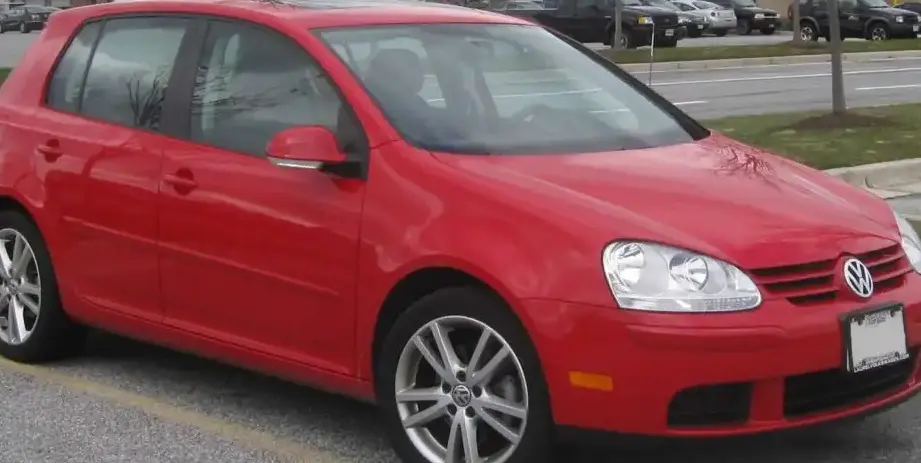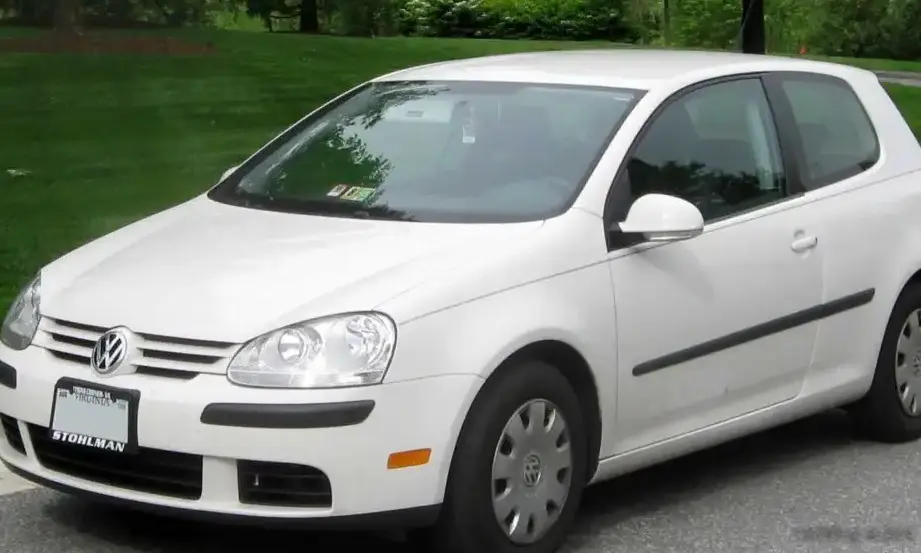
The Volkswagen Rabbit (A5) 2.5, specifically the 3-door model equipped with the 170 horsepower engine and Tiptronic automatic transmission, was a key offering in the fifth generation of Volkswagen’s iconic hatchback. Produced from 2007 through 2009, this variant occupied a middle ground in the A5 Rabbit lineup, bridging the gap between the base 2.0-liter models and the performance-oriented GTI. It was primarily marketed in North America, where the Rabbit name was retained, while in Europe and other markets, it was known as the Golf Mk5. This particular configuration aimed to provide a balance of practicality, fuel efficiency, and acceptable performance for the average commuter.
Technical Specifications
| Brand | Volkswagen |
| Model | Rabbit |
| Generation | Rabbit (A5) 3-door |
| Type (Engine) | 2.5 (170 Hp) Tiptronic |
| Start of production | 2007 |
| End of production | 2009 |
| Powertrain Architecture | Internal Combustion engine |
| Body type | Hatchback |
| Seats | 5 |
| Doors | 3 |
| Fuel consumption (economy) – urban (EPA) | 11.8 l/100 km (19.9 US mpg) |
| Fuel consumption (economy) – extra urban (EPA) | 8.1 l/100 km (29 US mpg) |
| Fuel Type | Petrol (Gasoline) |
| Acceleration 0 – 60 mph | 8 sec |
| Maximum speed | 210 km/h (130.49 mph) |
| Weight-to-power ratio | 8.1 kg/Hp |
| Weight-to-torque ratio | 5.7 kg/Nm |
| Power | 170 Hp @ 5700 rpm |
| Torque | 240 Nm @ 4250 rpm (177.01 lb.-ft. @ 4250 rpm) |
| Engine layout | Front, Transverse |
| Engine Model/Code | CBTA, CBUA |
| Engine displacement | 2480 cm3 (151.34 cu. in.) |
| Number of cylinders | 5 |
| Engine configuration | Inline |
| Cylinder Bore | 82.5 mm (3.25 in.) |
| Piston Stroke | 92.8 mm (3.65 in.) |
| Compression ratio | 9.5:1 |
| Number of valves per cylinder | 4 |
| Fuel injection system | Multi-port manifold injection |
| Engine aspiration | Naturally aspirated engine |
| Valvetrain | DOHC |
| Engine oil capacity | 5.5 l (5.81 US qt | 4.84 UK qt) |
| Coolant | 9.5 l (10.04 US qt | 8.36 UK qt) |
| Kerb Weight | 1379 kg (3040.17 lbs.) |
| Max. weight | 1819 kg (4010.21 lbs.) |
| Max load | 440 kg (970.03 lbs.) |
| Trunk (boot) space – minimum | 400 l (14.13 cu. ft.) |
| Trunk (boot) space – maximum | 1303 l (46.02 cu. ft.) |
| Fuel tank capacity | 55 l (14.53 US gal | 12.1 UK gal) |
| Length | 4210 mm (165.75 in.) |
| Width | 1759 mm (69.25 in.) |
| Height | 1479 mm (58.23 in.) |
| Wheelbase | 2578 mm (101.5 in.) |
| Front track | 1540 mm (60.63 in.) |
| Rear (Back) track | 1518 mm (59.76 in.) |
| Ride height (ground clearance) | 137 mm (5.39 in.) |
| Drag coefficient (Cd) | 0.32 |
| Minimum turning circle (turning diameter) | 10.9 m (35.76 ft.) |
| Drivetrain Architecture | The Internal combustion engine (ICE) drives the front wheels of the vehicle. |
| Drive wheel | Front wheel drive |
| Number of gears and type of gearbox | 6 gears, automatic transmission Tiptronic |
| Front suspension | Independent, type McPherson with coil spring and anti-roll bar |
| Rear suspension | Independent multi-link spring suspension with stabilizer |
| Front brakes | Ventilated discs, 288×25 mm |
| Rear brakes | Disc, 260×12 mm |
| Assisting systems | ABS (Anti-lock braking system) |
| Steering type | Steering rack and pinion |
| Power steering | Electric Steering |
| Tires size | 195/65 R15; 205/55 R16 |
| Wheel rims size | 6J x 15; 6.5J x 16 |
INTRODUCTION
The 2007-2009 Volkswagen Rabbit A5 2.5 with the Tiptronic transmission represented a significant update to Volkswagen’s popular compact hatchback. Built on the A5 platform (also known as the 1HX0/A3 platform), this generation marked a return to the Rabbit name in North America after a brief period as the Golf. The 2.5-liter engine and automatic transmission combination was positioned as a mainstream offering, appealing to buyers who prioritized ease of use and comfort over outright performance. It aimed to provide a more refined driving experience compared to the base 2.0-liter models, while remaining more accessible than the sportier GTI.
Powertrain & Engine Architecture
At the heart of this Rabbit variant lies the 2.5-liter inline-five cylinder engine, designated as either the CBTA or CBUA engine code depending on specific production details. This engine featured multi-port fuel injection and a double overhead camshaft (DOHC) valvetrain. The five-cylinder configuration, while unusual, offered a good balance of smoothness and power delivery. The engine produced 170 horsepower at 5700 rpm and 177 lb-ft of torque at 4250 rpm. The Tiptronic automatic transmission was a six-speed unit, offering both fully automatic operation and the ability for the driver to manually select gears. This transmission utilized torque converter technology and provided relatively smooth shifts, although it wasn’t as quick or sporty as a dual-clutch transmission (DCT).
Driving Characteristics
The 2.5-liter engine and Tiptronic transmission combination delivered adequate, but not exhilarating, performance. Acceleration from 0 to 60 mph took around 8 seconds, and the top speed was electronically limited to 130.49 mph. The Tiptronic transmission’s gear ratios were tuned for comfortable cruising and fuel efficiency rather than aggressive acceleration. While the manual shift mode offered some control, it lacked the responsiveness of a dedicated sports transmission. Compared to the manual transmission versions of the 2.5-liter engine, the Tiptronic models felt slightly less lively due to the transmission’s inherent power loss. The power delivery was linear, making it easy to modulate, but the engine didn’t offer a strong surge of power at higher RPMs. It was a practical choice for daily commuting and highway driving.
Equipment & Trim Levels
The 2.5-liter Tiptronic Rabbit typically came with a reasonable level of standard equipment. This included air conditioning, power windows and locks, a CD player with MP3 compatibility, and alloy wheels. Higher trim levels offered options such as a sunroof, upgraded audio system, heated front seats, and leather upholstery. Interior upholstery was typically cloth, although leather was available as an upgrade. The dashboard layout was functional and straightforward, with easy-to-read gauges and intuitive controls. Optional extras often included a navigation system and a premium sound system.
Chassis & Braking
The Rabbit A5 featured an independent suspension system, with a McPherson strut setup at the front and a multi-link setup at the rear. This provided a comfortable ride quality and decent handling characteristics. The front brakes were ventilated discs, while the rear brakes were solid discs. Anti-lock braking system (ABS) was standard. The suspension was tuned for comfort, prioritizing ride quality over sharp handling. Stabilizer bars were included at both the front and rear to reduce body roll during cornering. The 3-door model, being lighter than the 5-door version, offered slightly more agile handling.
Market Reception & Comparison
Critics generally viewed the 2.5-liter Tiptronic Rabbit as a competent and practical hatchback. However, it wasn’t often praised for its performance or driving excitement. Fuel economy was considered average for its class, with EPA estimates of 19.9 mpg in the city and 29 mpg on the highway. Reliability was generally good, although some owners reported minor issues with the automatic transmission. Compared to the more powerful GTI, the 2.5-liter Rabbit offered a more affordable entry point into the Volkswagen lineup, but at the cost of performance. Compared to the 2.0-liter base model, the 2.5 offered a noticeable improvement in power and refinement.
Legacy
The Volkswagen Rabbit A5 2.5 Tiptronic has become a relatively affordable and reliable used car option. The 2.5-liter engine, while not known for its exceptional longevity, is generally durable with proper maintenance. The Tiptronic transmission, if serviced regularly, can provide years of trouble-free operation. Today, these Rabbits are often sought after by those looking for a practical and economical compact hatchback with a touch of European refinement. Parts availability is generally good, and the car’s relatively simple mechanical design makes it relatively easy to maintain and repair. While it may not be a collector’s item, it remains a popular choice for budget-conscious buyers.