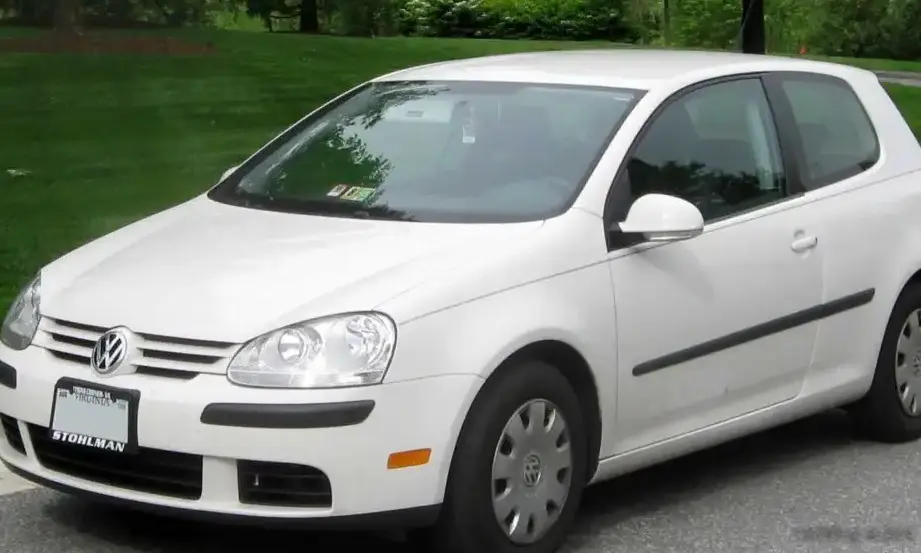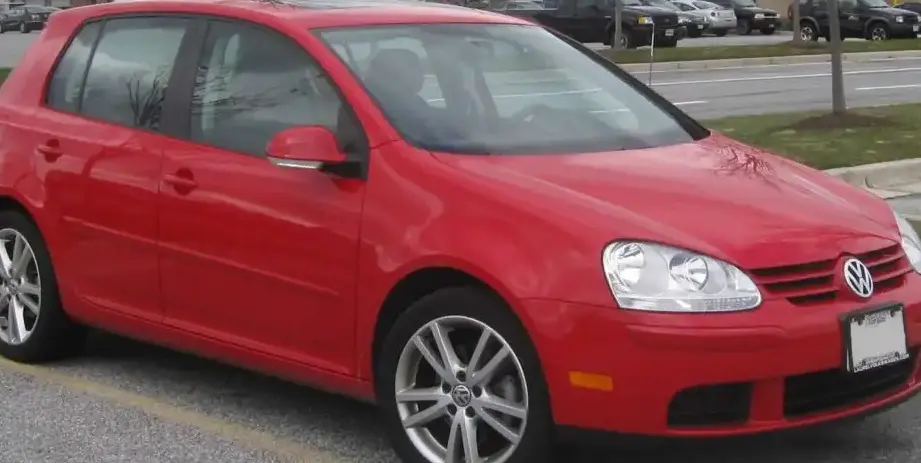
The Volkswagen Rabbit (A5) 2.5, equipped with the Tiptronic automatic transmission, represented a significant offering in the North American compact hatchback market from 2006 to 2007. Positioned as a mid-range trim within the A5 Rabbit lineup, it bridged the gap between the base 2.0L models and the performance-oriented GTI. This variant aimed to provide a balance of practicality, comfort, and reasonable performance for everyday driving. The A5 generation, built on the Volkswagen Group’s A5 (PQ35) platform – also underpinning the Audi A3 and various other models – sought to modernize the Rabbit nameplate and appeal to a broader customer base. It was a key model in Volkswagen’s attempt to regain market share in the US.
Technical Specifications
| Brand | Volkswagen |
| Model | Rabbit |
| Generation | Rabbit (A5) 5-door |
| Type (Engine) | 2.5 (150 Hp) Tiptronic |
| Start of production | 2006 |
| End of production | 2007 |
| Powertrain Architecture | Internal Combustion engine |
| Body type | Hatchback |
| Seats | 5 |
| Doors | 5 |
| Fuel consumption (economy) – urban (EPA) | 10.7 l/100 km (22 US mpg, 26.4 UK mpg, 9.3 km/l) |
| Fuel consumption (economy) – extra urban (EPA) | 7.8 l/100 km (30.2 US mpg, 36.2 UK mpg, 12.8 km/l) |
| Fuel Type | Petrol (Gasoline) |
| Weight-to-power ratio | 9.5 kg/Hp, 105.4 Hp/tonne |
| Weight-to-torque ratio | 6.2 kg/Nm, 160.2 Nm/tonne |
| Power | 150 Hp @ 5000 rpm |
| Power per litre | 60.5 Hp/l |
| Torque | 228 Nm @ 3750 rpm (168.16 lb.-ft. @ 3750 rpm) |
| Engine layout | Front, Transverse |
| Engine Model/Code | BGP, BGQ |
| Engine displacement | 2480 cm3 (151.34 cu. in.) |
| Number of cylinders | 5 |
| Engine configuration | Inline |
| Cylinder Bore | 82.5 mm (3.25 in.) |
| Piston Stroke | 92.8 mm (3.65 in.) |
| Number of valves per cylinder | 4 |
| Fuel injection system | Multi-port manifold injection |
| Engine aspiration | Naturally aspirated engine |
| Valvetrain | DOHC |
| Engine oil capacity | 5.5 l (5.81 US qt, 4.84 UK qt) |
| Coolant | 9.5 l (10.04 US qt, 8.36 UK qt) |
| Kerb Weight | 1423 kg (3137.18 lbs.) |
| Max. weight | 1870 kg (4122.64 lbs.) |
| Max load | 447 kg (985.47 lbs.) |
| Trunk (boot) space – minimum | 400 l (14.13 cu. ft.) |
| Trunk (boot) space – maximum | 1303 l (46.02 cu. ft.) |
| Fuel tank capacity | 55 l (14.53 US gal, 12.1 UK gal) |
| Length | 4210 mm (165.75 in.) |
| Width | 1759 mm (69.25 in.) |
| Height | 1479 mm (58.23 in.) |
| Wheelbase | 2578 mm (101.5 in.) |
| Front track | 1540 mm (60.63 in.) |
| Rear (Back) track | 1518 mm (59.76 in.) |
| Ride height (ground clearance) | 137 mm (5.39 in.) |
| Drag coefficient (Cd) | 0.32 |
| Drivetrain Architecture | The Internal combustion engine (ICE) drives the front wheels of the vehicle. |
| Drive wheel | Front wheel drive |
| Number of gears and type of gearbox | 6 gears, automatic transmission Tiptronic |
| Front suspension | Independent, type McPherson with coil spring and anti-roll bar |
| Rear suspension | Independent multi-link spring suspension with stabilizer |
| Front brakes | Ventilated discs, 288×25 mm |
| Rear brakes | Disc, 260×12 mm |
| Assisting systems | ABS (Anti-lock braking system) |
| Steering type | Steering rack and pinion |
| Power steering | Electric Steering |
| Tires size | 195/65 R15; 205/55 R16 |
| Wheel rims size | 6J x 15; 6.5J x 16 |
Powertrain & Engine Architecture
The heart of the Rabbit 2.5 Tiptronic is the 2.5-liter inline five-cylinder engine, designated as either the BGP or BGQ code depending on minor variations. This engine represented a departure from the earlier 1.8L four-cylinder engines commonly found in previous Rabbit generations. The 2.5L engine utilizes multi-port fuel injection, delivering fuel directly into the intake ports rather than directly into the combustion chamber. It features a double overhead camshaft (DOHC) valvetrain, optimizing airflow for improved performance. The Tiptronic automatic transmission is a six-speed unit, offering both fully automatic operation and a manual shift mode allowing the driver some control over gear selection. This transmission utilizes torque converter technology for smooth shifts and launch characteristics. The engine’s relatively high displacement for its class contributed to its usable low-end torque, making it well-suited for daily driving.
Driving Characteristics
The 150 horsepower and 168 lb-ft of torque produced by the 2.5L engine, when paired with the six-speed Tiptronic transmission, resulted in a comfortable and predictable driving experience. Acceleration was adequate for merging onto highways and passing slower traffic, but it wasn’t particularly sporty. The Tiptronic transmission, while offering smooth shifts, wasn’t as responsive as a traditional manual gearbox. Gear ratios were tuned for fuel efficiency and relaxed cruising rather than outright performance. Compared to the manual transmission versions of the 2.5L Rabbit, the Tiptronic models experienced a slight reduction in fuel economy due to the inherent losses within the torque converter. Against the higher-performance GTI, with its turbocharged engine, the 2.5 Tiptronic felt noticeably slower and less engaging.
Equipment & Trim Levels
The 2.5 Tiptronic Rabbit typically came standard with features such as air conditioning, power windows and locks, a CD player with MP3 compatibility, and alloy wheels. Safety features included ABS brakes and front airbags. Optional extras included a sunroof, upgraded audio system, and cold weather package (heated seats, heated mirrors). Interior upholstery was typically cloth, with the option of leatherette available as an upgrade. The dashboard layout was functional and straightforward, prioritizing ease of use over stylistic flair. The trim level sat between the base model and the more luxurious trims, offering a good balance of features for the price.
Chassis & Braking
The A5 Rabbit utilized an independent McPherson strut suspension in the front and an independent multi-link suspension in the rear, providing a comfortable ride quality. Stabilizer bars were fitted to both axles to reduce body roll during cornering. Braking duties were handled by ventilated discs in the front and solid discs in the rear. ABS (Anti-lock Braking System) was standard, enhancing braking performance and stability, particularly on slippery surfaces. The suspension tuning was geared towards comfort and everyday usability, rather than aggressive handling. The chassis was designed to provide a stable and predictable platform for the engine’s power output.
Market Reception & Comparison
Critics generally viewed the Rabbit 2.5 Tiptronic as a competent and practical compact hatchback. However, it often received criticism for its lack of sporty character compared to rivals like the Mazda3 or Honda Civic. Fuel economy was considered average for its class. The Tiptronic transmission, while smooth, was sometimes criticized for feeling sluggish. Compared to the manual transmission version of the same engine, the Tiptronic offered slightly lower fuel economy and a less engaging driving experience. Reliability was generally good, with the 2.5L engine proving to be relatively durable. However, some owners reported issues with the Tiptronic transmission over the long term.
Legacy
The Volkswagen Rabbit 2.5 Tiptronic, while not a standout performer, remains a reasonably popular choice in the used car market. The 2.5L engine is known for its durability, and parts availability is generally good. However, potential buyers should be aware of the possibility of transmission issues. The A5 Rabbit represented a transitional period for Volkswagen, attempting to blend European engineering with American market preferences. It laid the groundwork for the subsequent Golf/Rabbit generations, which continued to refine the formula of practicality, comfort, and understated style.