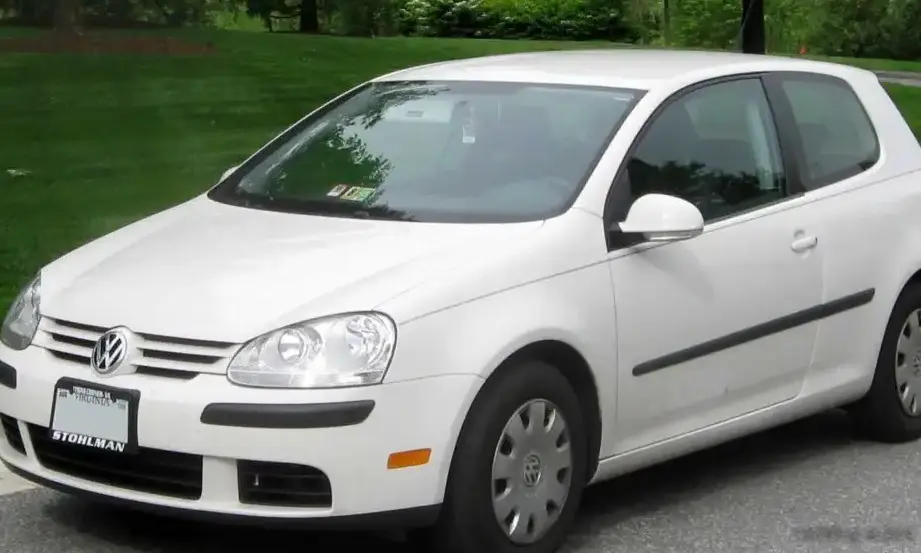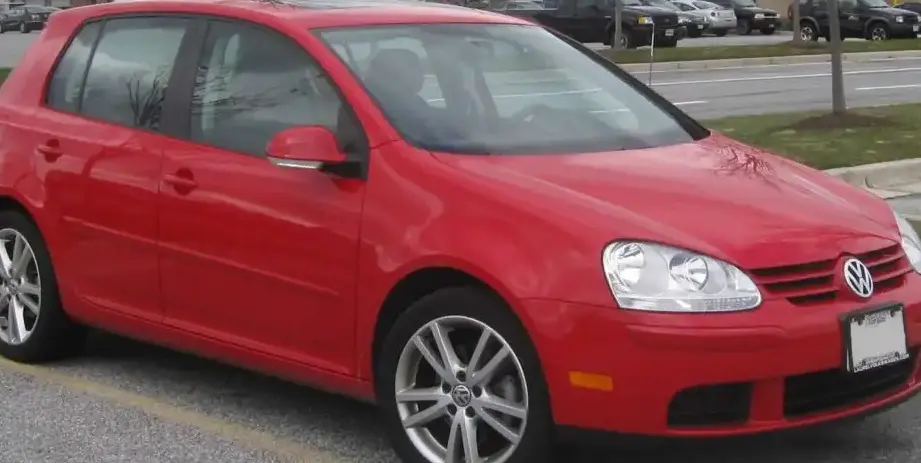
The Volkswagen Rabbit (A5) 2.5, equipped with the Tiptronic automatic transmission, represented a significant offering in the North American compact car market from 2007 to 2009. Positioned as a mid-range trim within the A5 Rabbit lineup, it bridged the gap between the base 2.0L models and the performance-oriented GTI. Built on the Volkswagen Group’s A5 (PQ35) platform – also known as the 1HX0/A3 platform – this variant aimed to provide a balance of practicality, comfort, and reasonable performance for everyday driving. The A5 generation marked a return to the Rabbit nameplate in the US and Canada after a brief period using the Golf moniker.
Technical Specifications
| Brand | Volkswagen |
| Model | Rabbit |
| Generation | Rabbit (A5) 5-door |
| Type (Engine) | 2.5 (170 Hp) Tiptronic |
| Start of production | 2007 |
| End of production | 2009 |
| Powertrain Architecture | Internal Combustion engine |
| Body type | Hatchback |
| Seats | 5 |
| Doors | 5 |
| Fuel consumption (economy) – urban (EPA) | 11.8 l/100 km (19.9 US mpg) |
| Fuel consumption (economy) – extra urban (EPA) | 8.1 l/100 km (29 US mpg) |
| Fuel Type | Petrol (Gasoline) |
| Acceleration 0 – 60 mph | 8 sec |
| Maximum speed | 210 km/h (130.49 mph) |
| Weight-to-power ratio | 8.4 kg/Hp |
| Weight-to-torque ratio | 5.9 kg/Nm |
| Power | 170 Hp @ 5700 rpm |
| Torque | 240 Nm @ 4250 rpm (177.01 lb.-ft. @ 4250 rpm) |
| Engine layout | Front, Transverse |
| Engine Model/Code | CBTA, CBUA |
| Engine displacement | 2480 cm3 (151.34 cu. in.) |
| Number of cylinders | 5 |
| Engine configuration | Inline |
| Cylinder Bore | 82.5 mm (3.25 in.) |
| Piston Stroke | 92.8 mm (3.65 in.) |
| Compression ratio | 9.5:1 |
| Number of valves per cylinder | 4 |
| Fuel injection system | Multi-port manifold injection |
| Engine aspiration | Naturally aspirated engine |
| Valvetrain | DOHC |
| Engine oil capacity | 5.5 l (5.81 US qt | 4.84 UK qt) |
| Coolant | 9.5 l (10.04 US qt | 8.36 UK qt) |
| Kerb Weight | 1423 kg (3137.18 lbs.) |
| Max. weight | 1870 kg (4122.64 lbs.) |
| Max load | 447 kg (985.47 lbs.) |
| Trunk (boot) space – minimum | 400 l (14.13 cu. ft.) |
| Trunk (boot) space – maximum | 1303 l (46.02 cu. ft.) |
| Fuel tank capacity | 55 l (14.53 US gal | 12.1 UK gal) |
| Length | 4210 mm (165.75 in.) |
| Width | 1759 mm (69.25 in.) |
| Height | 1479 mm (58.23 in.) |
| Wheelbase | 2578 mm (101.5 in.) |
| Front track | 1540 mm (60.63 in.) |
| Rear (Back) track | 1518 mm (59.76 in.) |
| Ride height (ground clearance) | 137 mm (5.39 in.) |
| Drag coefficient (Cd) | 0.32 |
| Minimum turning circle (turning diameter) | 10.9 m (35.76 ft.) |
| Drivetrain Architecture | The Internal combustion engine (ICE) drives the front wheels of the vehicle. |
| Drive wheel | Front wheel drive |
| Number of gears and type of gearbox | 6 gears, automatic transmission Tiptronic |
| Front suspension | Independent, type McPherson with coil spring and anti-roll bar |
| Rear suspension | Independent multi-link spring suspension with stabilizer |
| Front brakes | Ventilated discs, 288×25 mm |
| Rear brakes | Disc, 260×12 mm |
| Assisting systems | ABS (Anti-lock braking system) |
| Steering type | Steering rack and pinion |
| Power steering | Electric Steering |
| Tires size | 195/65 R15; 205/55 R16 |
| Wheel rims size | 6J x 15; 6.5J x 16 |
Powertrain & Engine Architecture
The heart of the Rabbit 2.5 Tiptronic is the 2.5-liter inline-five cylinder engine, designated as either the CBTA or CBUA engine code depending on specific production dates and emissions configurations. This engine is a naturally aspirated unit featuring multi-port fuel injection and a double overhead camshaft (DOHC) valvetrain. The 2.5L engine was a departure from the earlier 1.8L four-cylinder engines commonly found in Rabbits and Golfs, offering increased displacement and torque. The Tiptronic automatic transmission is a six-speed unit that allows for both fully automatic operation and driver-selectable gear changes, providing a degree of control without the need for a manual clutch. The transmission’s gear ratios were tuned for a balance of fuel efficiency and acceptable acceleration.
Driving Characteristics
The 2.5L engine with the Tiptronic transmission delivered a comfortable and predictable driving experience. Acceleration from 0 to 60 mph took approximately 8 seconds, which was adequate for daily commuting but noticeably slower than the GTI or even the base 2.0L Rabbit with a manual transmission. The Tiptronic transmission, while smooth, did exhibit some of the inherent inefficiencies of torque converter automatics, resulting in a slight loss of power compared to a manual gearbox. The gear ratios were spaced to prioritize fuel economy, meaning the engine often operated at lower RPMs during cruising, but required downshifts for quicker overtaking maneuvers. The steering was light and precise, making the Rabbit easy to maneuver in urban environments.
Equipment & Trim Levels
The 2.5 trim level of the Rabbit typically included standard features such as air conditioning, power windows and locks, a CD player with MP3 compatibility, and alloy wheels. Safety features included ABS brakes, front and side airbags, and side curtain airbags. Optional extras included a sunroof, upgraded audio system, and leather upholstery. The interior generally featured cloth upholstery and a functional, if somewhat basic, dashboard layout. The Tiptronic transmission added shift paddles on the steering wheel for more engaging control.
Chassis & Braking
The Rabbit A5 utilized an independent McPherson strut suspension in the front and an independent multi-link suspension in the rear. This setup provided a comfortable ride quality while maintaining reasonable handling characteristics. The front brakes were ventilated discs, while the rear brakes were solid discs. ABS (Anti-lock Braking System) was standard. The suspension tuning was geared towards comfort rather than outright sportiness, with a focus on absorbing bumps and providing a stable ride. Stabilizer bars were included at both the front and rear to reduce body roll during cornering.
Market Reception & Comparison
Critics generally viewed the Rabbit 2.5 Tiptronic as a competent and practical compact car, but often noted its lack of excitement compared to the GTI. Fuel economy was considered average for its class, with EPA estimates of 19.9 mpg in the city and 29 mpg on the highway. Reliability was generally good, although some owners reported issues with the automatic transmission over the long term. Compared to the 2.0L Rabbit, the 2.5 offered more power and torque, but at a higher price point. The GTI, with its turbocharged engine and sport-tuned suspension, provided a significantly more engaging driving experience but came with a higher price tag and increased running costs.
Legacy
The 2.5L engine and Tiptronic transmission combination in the A5 Rabbit has proven to be reasonably durable, with many examples still on the road today. However, as with any older vehicle, regular maintenance is crucial to ensure longevity. The Tiptronic transmission, in particular, requires fluid changes at the recommended intervals to prevent premature wear. In the used car market, the Rabbit 2.5 Tiptronic represents a relatively affordable and practical option for those seeking a reliable and comfortable compact car. While it may not offer the performance of the GTI, it provides a good balance of features, fuel economy, and dependability.