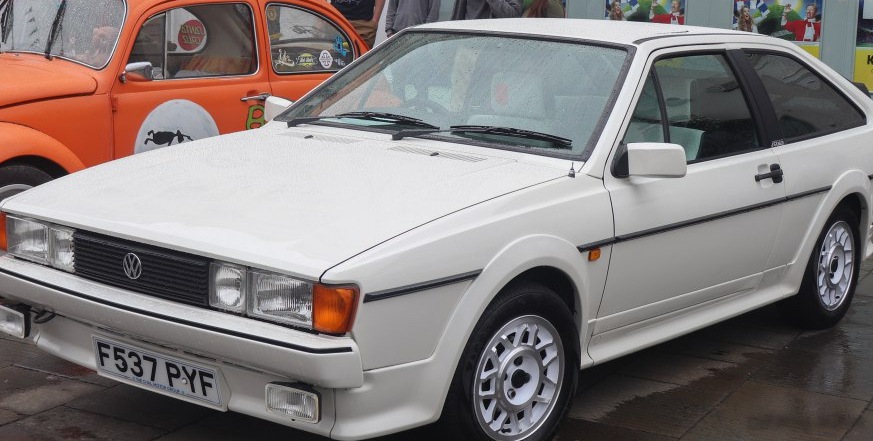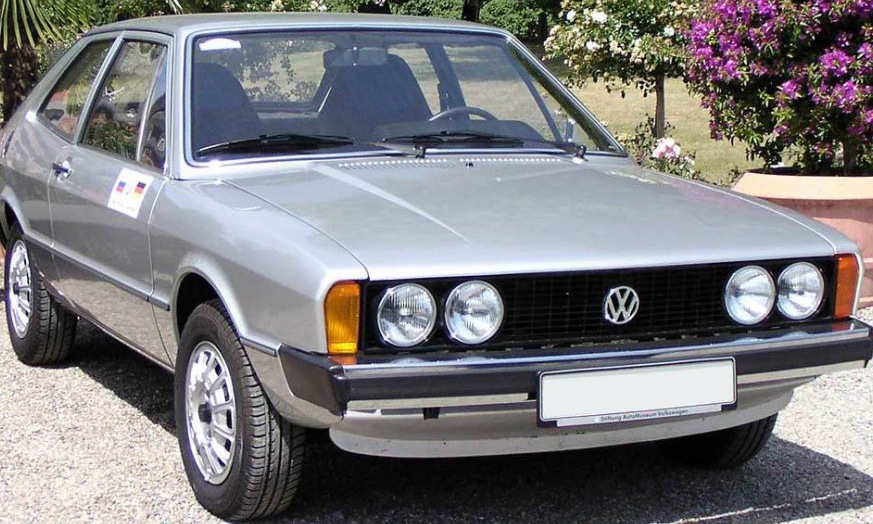
The Volkswagen Scirocco I, specifically the 1.5-liter (75 hp) variant, represents an early and accessible entry point into the iconic first generation of this sporty coupe. Produced between 1974 and 1975, this model played a crucial role in establishing the Scirocco’s reputation as a stylish and relatively affordable performance car, particularly within the European market. It was built on the Volkswagen Golf Mk1 platform (internally designated 53), sharing many mechanical components but offering a more dramatic, wedge-shaped silhouette penned by Giorgetto Giugiaro. This variant served as the base model, offering a balance between economy and the sporty image the Scirocco aimed to project.
Technical Specifications
| Brand | Volkswagen |
| Model | Scirocco |
| Generation | Scirocco I (53) |
| Type (Engine) | 1.5 (75 Hp) |
| Start of production | 1974 |
| End of production | 1975 |
| Powertrain Architecture | Internal Combustion engine |
| Body type | Coupe |
| Seats | 4 |
| Doors | 3 |
| Fuel consumption (combined) | 8.5 l/100 km |
| Fuel consumption (US mpg) | 27.7 US mpg |
| Fuel consumption (UK mpg) | 33.2 UK mpg |
| Fuel consumption (km/l) | 11.8 km/l |
| Fuel Type | Petrol (Gasoline) |
| Acceleration 0 – 100 km/h | 11.5 sec |
| Acceleration 0 – 62 mph | 11.5 sec |
| Acceleration 0 – 60 mph | 10.9 sec |
| Maximum speed | 165 km/h (102.53 mph) |
| Weight-to-power ratio | 10.3 kg/Hp |
| Weight-to-torque ratio | 6.7 kg/Nm |
| Power | 75 Hp @ 5800 rpm |
| Power per litre | 51 Hp/l |
| Torque | 116 Nm @ 3200 rpm (85.56 lb.-ft. @ 3200 rpm) |
| Engine layout | Front, Transverse |
| Engine Model/Code | FB |
| Engine displacement | 1471 cm3 (89.77 cu. in.) |
| Number of cylinders | 4 |
| Engine configuration | Inline |
| Cylinder Bore | 76.5 mm (3.01 in.) |
| Piston Stroke | 80 mm (3.15 in.) |
| Compression ratio | 9.7:1 |
| Number of valves per cylinder | 2 |
| Fuel injection system | Carburettor |
| Engine aspiration | Naturally aspirated engine |
| Valvetrain | SOHC |
| Kerb Weight | 775 kg (1708.58 lbs.) |
| Max. weight | 1150 kg (2535.32 lbs.) |
| Max load | 375 kg (826.73 lbs.) |
| Trunk (boot) space – minimum | 280 l (9.89 cu. ft.) |
| Trunk (boot) space – maximum | 820 l (28.96 cu. ft.) |
| Fuel tank capacity | 55 l (14.53 US gal | 12.1 UK gal) |
| Max. roof load | 50 kg (110.23 lbs.) |
| Permitted trailer load with brakes (12%) | 800 kg (1763.7 lbs.) |
| Permitted trailer load without brakes | 400 kg (881.85 lbs.) |
| Length | 3874 mm (152.52 in.) |
| Width | 1624 mm (63.94 in.) |
| Height | 1309 mm (51.54 in.) |
| Wheelbase | 2400 mm (94.49 in.) |
| Front track | 1390 mm (54.72 in.) |
| Rear (Back) track | 1350 mm (53.15 in.) |
| Ride height (ground clearance) | 125 mm (4.92 in.) |
| Minimum turning circle (turning diameter) | 9.8 m (32.15 ft.) |
| Drivetrain Architecture | The Internal combustion engine (ICE) drives the front wheels of the vehicle. |
| Drive wheel | Front wheel drive |
| Number of gears and type of gearbox | 4 gears, manual transmission |
| Front suspension | Independent, type McPherson with coil spring and anti-roll bar |
| Rear suspension | Spring Strut, Transverse stabilizer, Trailing arm |
| Front brakes | Disc |
| Rear brakes | Drum |
| Steering type | Steering rack and pinion |
| Tires size | Front wheel tires: 175/70 R13Rear wheel tires: 175/70 R13 |
| Wheel rims size | Front wheel rims: 5J x 13Rear wheel rims: 5J x 13 |
Powertrain & Engine Architecture
The heart of this Scirocco variant is the Volkswagen FB engine, a 1.5-liter inline-four cylinder unit. This engine, part of the EA111 family, was known for its simplicity and durability. It featured a single overhead camshaft (SOHC) valvetrain operating two valves per cylinder. Fuel delivery was managed by a Solex carburetor, a common setup for the time, prioritizing affordability over the precision of fuel injection. The engine produced 75 horsepower at 5800 rpm and 116 Nm (85.56 lb-ft) of torque at 3200 rpm. The engine was transversely mounted, a layout that became a hallmark of front-wheel-drive Volkswagen designs. The transmission was a four-speed manual gearbox, chosen for its cost-effectiveness and suitability for the engine’s power output. This configuration was a deliberate choice to keep the base model accessible to a wider range of buyers.
Driving Characteristics
The 1.5-liter Scirocco, with its 75 hp and four-speed manual transmission, offered a driving experience focused on practicality and fuel efficiency rather than outright performance. Acceleration to 60 mph took around 10.9 seconds, and the top speed was approximately 102.53 mph. While not particularly quick by modern standards, it provided adequate performance for everyday driving. The gear ratios were tuned for economy, meaning the engine needed to be revved to extract its full potential. Compared to the later 1.6-liter versions or the more powerful GTI models, this variant felt noticeably slower. However, the lighter weight of the 1.5-liter engine contributed to nimble handling, making it enjoyable to drive on winding roads. The steering, utilizing a rack and pinion system, was responsive and provided good feedback.
Equipment & Trim Levels
As the entry-level Scirocco, the 1.5-liter model was equipped with a relatively basic level of standard features. The interior typically featured cloth upholstery, simple plastic trim, and a straightforward dashboard layout. Standard equipment included front disc brakes, rear drum brakes, and basic instrumentation. Options were available, such as a sunroof, upgraded audio systems, and more comfortable seats. The trim level was generally characterized by its functional design, prioritizing durability and affordability over luxury. The focus was on providing a stylish and practical coupe at a competitive price point.
Chassis & Braking
The Scirocco I utilized a McPherson strut front suspension with coil springs and an anti-roll bar, providing a comfortable ride and decent handling. The rear suspension employed a trailing arm setup with a transverse stabilizer. This configuration was a compromise between cost and performance, offering a reasonable balance for a front-wheel-drive coupe. The braking system consisted of disc brakes on the front wheels and drum brakes on the rear. While adequate for normal driving conditions, the braking performance was not as strong as that of the higher-spec models with four-wheel disc brakes. The car’s relatively light weight helped to mitigate the limitations of the drum brakes.
Market Reception & Comparison
The 1.5-liter Scirocco was generally well-received as an affordable and stylish coupe. Critics praised its Giorgetto Giugiaro-designed body and its handling characteristics. However, the engine’s modest power output was often noted as a drawback, particularly when compared to the more powerful GTI variants. Fuel economy was considered good for the time, averaging around 27.7 US mpg. Compared to other coupes in its class, such as the Ford Capri, the Scirocco offered a more modern design and a more refined driving experience. However, the Capri often provided more power and a wider range of engine options. The 1.5-liter Scirocco appealed to buyers who prioritized style and fuel efficiency over outright performance.
Legacy
The 1.5-liter Scirocco I, while not the most powerful or sought-after variant, holds a significant place in Volkswagen history. It established the Scirocco as a desirable and attainable sports coupe. The FB engine proved to be remarkably durable, and many examples are still on the road today. In the used car market, these early Sciroccos are becoming increasingly collectible, particularly those in original and well-maintained condition. While maintenance can be challenging due to the age of the vehicle, the simplicity of the engine and the availability of spare parts make it a viable option for enthusiasts. The 1.5-liter Scirocco represents a charming and affordable entry point into the world of classic Volkswagen sports cars.