Technical Specifications
| Brand | Volkswagen |
| Model | Scirocco |
| Generation | Scirocco III |
| Type (Engine) | R 2.0 TSI (265 Hp) |
| Start of production | 2009 |
| End of production | 2014 |
| Powertrain Architecture | Internal Combustion engine |
| Body type | Coupe |
| Seats | 4 |
| Doors | 3 |
| Fuel consumption (economy) – urban (NEDC) | 11.3 l/100 km (20.8 US mpg, 25 UK mpg, 8.8 km/l) |
| Fuel consumption (economy) – extra urban (NEDC) | 6.2 l/100 km (37.9 US mpg, 45.6 UK mpg, 16.1 km/l) |
| Fuel consumption (economy) – combined (NEDC) | 8.1 l/100 km (29 US mpg, 34.9 UK mpg, 12.3 km/l) |
| CO2 emissions (NEDC) | 189 g/km |
| Fuel Type | Petrol (Gasoline) |
| Acceleration 0 – 100 km/h | 6 sec |
| Acceleration 0 – 62 mph | 6 sec |
| Acceleration 0 – 60 mph | 5.7 sec |
| Maximum speed | 250 km/h (155.34 mph) – Electronically limited |
| Emission standard | Euro 5 |
| Weight-to-power ratio | 5.1 kg/Hp, 197.2 Hp/tonne |
| Weight-to-torque ratio | 3.8 kg/Nm, 260.4 Nm/tonne |
| Power | 265 Hp @ 6000 rpm |
| Power per litre | 133.6 Hp/l |
| Torque | 350 Nm @ 2500-5000 rpm (258.15 lb.-ft. @ 2500-5000 rpm) |
| Engine layout | Front, Transverse |
| Engine Model/Code | CDLA |
| Engine displacement | 1984 cm3 (121.07 cu. in.) |
| Number of cylinders | 4 |
| Engine configuration | Inline |
| Cylinder Bore | 82.5 mm (3.25 in.) |
| Piston Stroke | 92.8 mm (3.65 in.) |
| Compression ratio | 10.5:1 |
| Number of valves per cylinder | 4 |
| Fuel injection system | Direct injection |
| Engine aspiration | Turbocharger, Intercooler |
| Valvetrain | DOHC |
| Engine oil capacity | 4.6 l (4.86 US qt | 4.05 UK qt) |
| Kerb Weight | 1344 kg (2963.01 lbs.) |
| Max. weight | 1770 kg (3902.18 lbs.) |
| Max load | 426 kg (939.17 lbs.) |
| Trunk (boot) space – minimum | 312 l (11.02 cu. ft.) |
| Trunk (boot) space – maximum | 1006 l (35.53 cu. ft.) |
| Fuel tank capacity | 55 l (14.53 US gal | 12.1 UK gal) |
| Max. roof load | 75 kg (165.35 lbs.) |
| Length | 4248 mm (167.24 in.) |
| Width | 1820 mm (71.65 in.) |
| Width including mirrors | 2080 mm (81.89 in.) |
| Height | 1394 mm (54.88 in.) |
| Wheelbase | 2578 mm (101.5 in.) |
| Front track | 1553 mm (61.14 in.) |
| Rear (Back) track | 1561 mm (61.46 in.) |
| Ride height (ground clearance) | 132 mm (5.2 in.) |
| Minimum turning circle (turning diameter) | 11 m (36.09 ft.) |
| Front suspension | Coil spring, Wishbone, Transverse stabilizer |
| Rear suspension | Independent multi-link suspension, Transverse stabilizer |
| Front brakes | Ventilated discs |
| Rear brakes | Disc |
| Assisting systems | ABS (Anti-lock braking system) |
| Steering type | Steering rack and pinion |
| Power steering | Electric Steering |
| Tires size | 235/40 R18 |
| Wheel rims size | 8J x 18 |
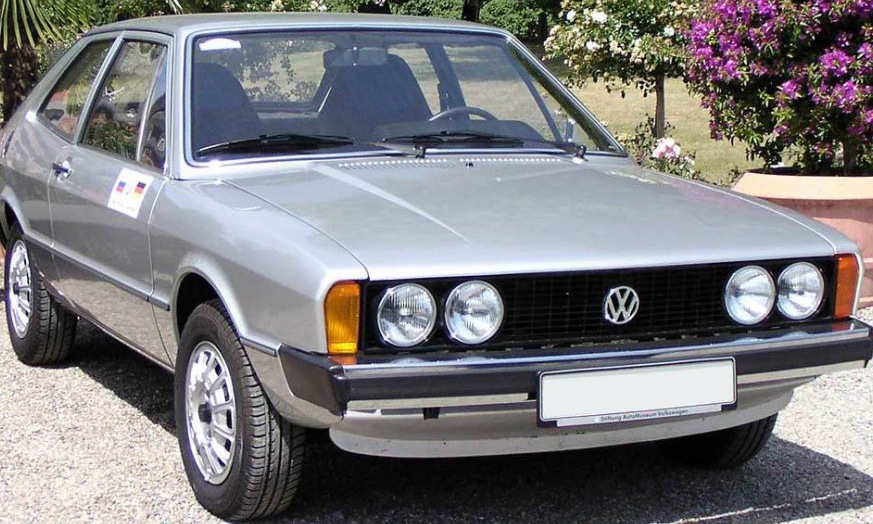
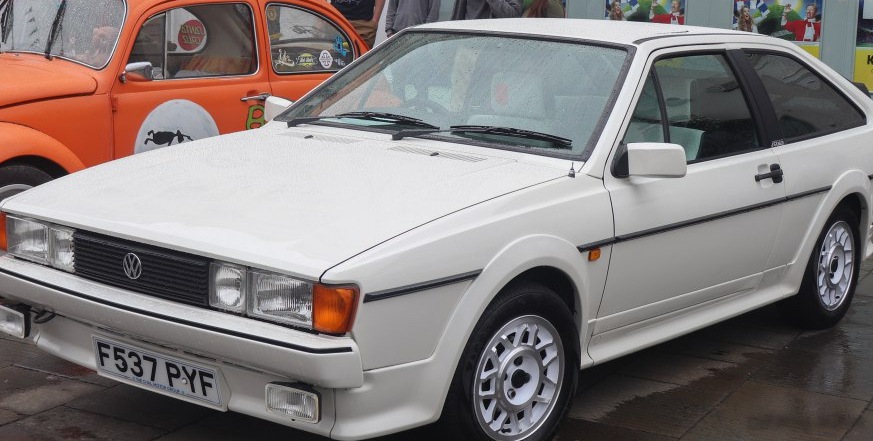
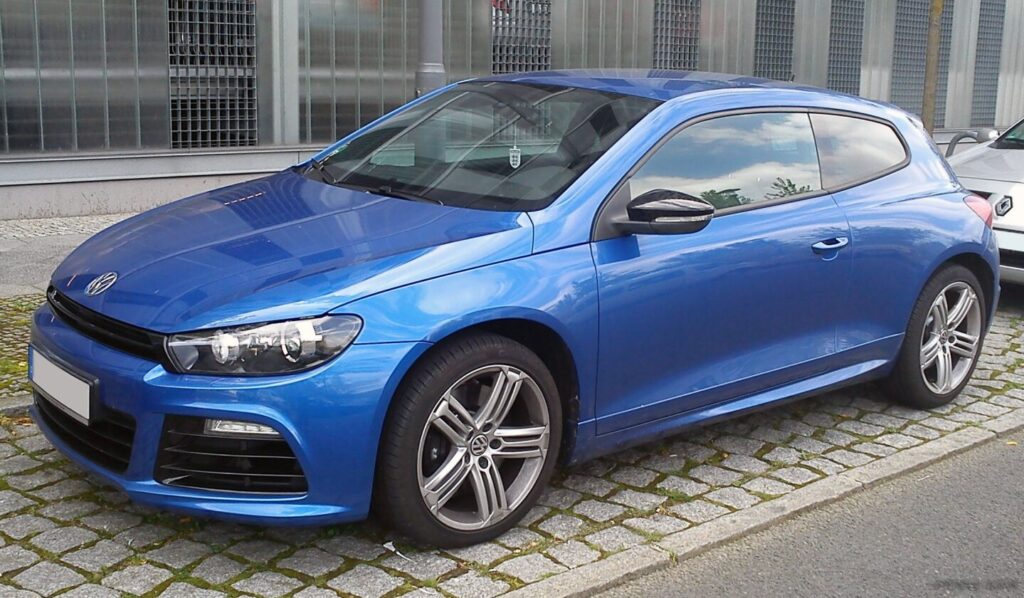
The Volkswagen Scirocco III R, produced between 2009 and 2014, represented the performance pinnacle of the third-generation Scirocco (Type 137). Positioned as the flagship model, the “R” variant aimed to recapture the spirit of the original Scirocco performance models, offering a compelling blend of sporty styling, engaging handling, and potent power. It was a key model in Volkswagen’s strategy to appeal to a younger, more enthusiast-focused demographic, competing with rivals like the Renault Megane RS and Ford Focus ST. The Scirocco III itself was built on the Volkswagen Group’s A5 platform, shared with the Golf Mk5 and Mk6, Audi A3, and SEAT León.
Powertrain & Engine Architecture
The heart of the Scirocco R is the CDLA engine, a 2.0-liter turbocharged inline-four cylinder gasoline engine. This engine is a member of the Volkswagen Group’s EA888 family, known for its robust design and tuning potential. The CDLA specifically features direct fuel injection (FSI) and a sophisticated turbocharging system with an intercooler, allowing it to produce 265 horsepower at 6,000 rpm and 350 Nm (258 lb-ft) of torque between 2,500 and 5,000 rpm. The engine utilizes a dual overhead camshaft (DOHC) valvetrain with four valves per cylinder, optimizing airflow for increased performance. The engine oil capacity is 4.6 liters, and Volkswagen specified a particular oil grade for optimal lubrication.
While a six-speed manual transmission was standard, a six-speed dual-clutch transmission (DSG) was also available as an option. The DSG offered quicker shifts and a more automated driving experience, further enhancing the car’s performance credentials. The front-wheel-drive configuration, while not ideal for outright traction compared to all-wheel drive, was kept to manage weight and cost.
Driving Characteristics
The Scirocco R, even in front-wheel-drive configuration, delivered a surprisingly engaging driving experience. The 265 hp output, combined with the readily available torque, resulted in brisk acceleration – 0 to 60 mph in around 5.7 seconds and a limited top speed of 155 mph. The standard sports suspension, featuring stiffer springs and dampers, minimized body roll and provided a more connected feel to the road. The steering was precise and well-weighted, although some drivers found it lacked a bit of feedback. The DSG transmission, when equipped, offered seamless gear changes and allowed the driver to keep the engine in its optimal power band. Compared to the base 1.4 TSI models, the R offered a dramatically different experience, prioritizing performance over fuel economy. The manual transmission provided a more raw and engaging experience, while the DSG offered convenience and quicker acceleration.
Equipment & Trim Levels
The Scirocco R came generously equipped as standard. Key features included sport seats upholstered in “Vienna” leather, a leather-wrapped steering wheel, automatic climate control, and a touchscreen infotainment system. Exterior styling cues included unique front and rear bumpers, side skirts, a rear spoiler, and 18-inch alloy wheels. Optional extras included bi-xenon headlights, a panoramic sunroof, and a premium sound system. The interior trim was generally dark-themed, with accents in silver or red depending on the specific options chosen.
Chassis & Braking
The Scirocco R’s chassis was tuned for sporty handling. The front suspension utilized coil springs, wishbones, and a transverse stabilizer bar, while the rear featured an independent multi-link suspension with a transverse stabilizer bar. This setup provided a good balance between ride comfort and handling precision. The braking system consisted of ventilated discs at the front and solid discs at the rear, equipped with ABS (Anti-lock Braking System) as standard. The brakes provided ample stopping power for spirited driving.
Market Reception & Comparison
The Scirocco R was generally well-received by automotive critics. It was praised for its stylish design, strong performance, and engaging driving dynamics. However, some reviewers noted the front-wheel-drive configuration could limit traction, particularly when exiting corners aggressively. Compared to the standard Scirocco models, the R offered a significant performance upgrade, but at a higher price point. The 1.4 TSI models focused on fuel efficiency and affordability, while the 2.0 TDI variants prioritized torque and economy. The R occupied the top spot, appealing to drivers seeking a genuine hot hatch experience.
Legacy
The Scirocco III R, while not a massive sales success, has gained a following among enthusiasts. The EA888 engine is known for its durability and tunability, making it a popular choice for modifications. The Scirocco R remains a relatively affordable performance coupe on the used car market, offering a compelling combination of style, performance, and practicality. However, potential buyers should be aware of the importance of regular maintenance, particularly regarding the turbocharger and DSG transmission (if equipped). Well-maintained examples continue to provide an enjoyable and rewarding driving experience, cementing the Scirocco R’s place as a modern classic.