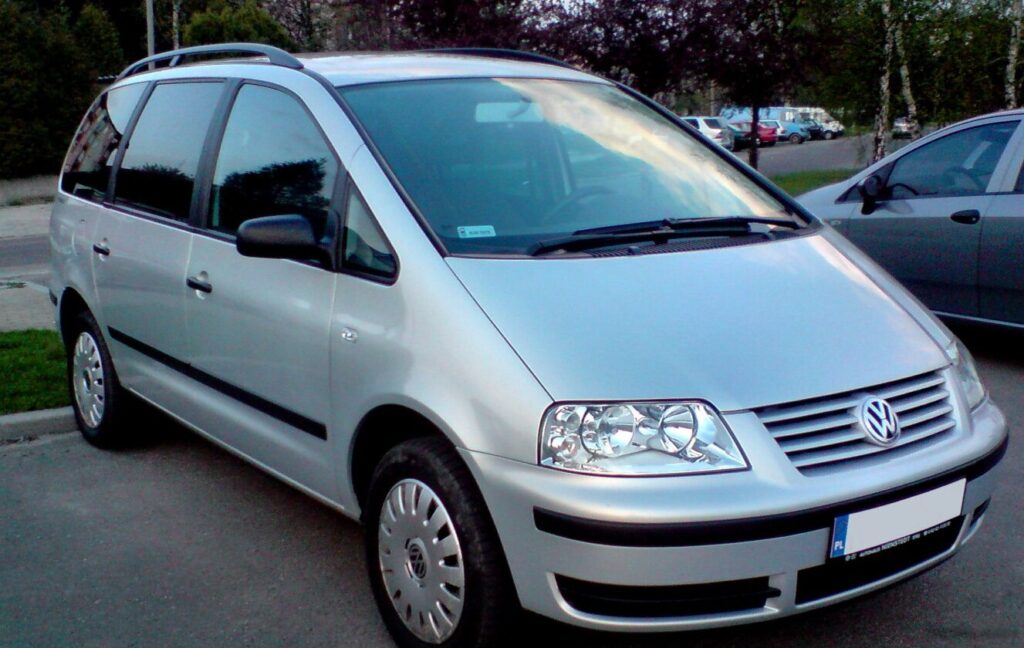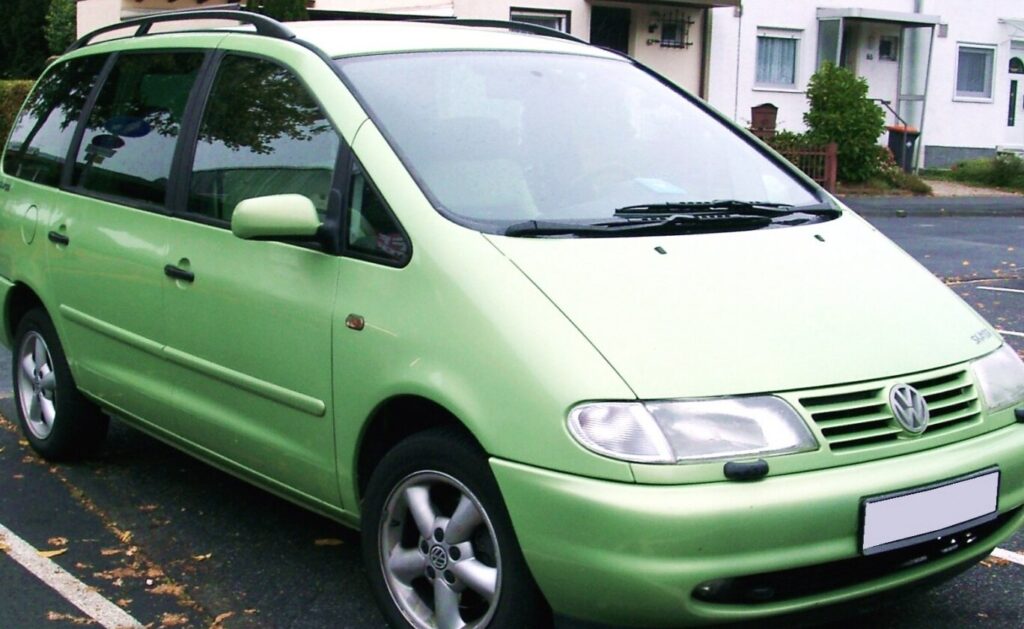
The Volkswagen Sharan I 1.9 TDI (110 hp) was a popular variant of the first-generation Sharan, produced between December 1996 and February 2000. Positioned as a mid-range offering within the Sharan lineup, it catered to buyers seeking a practical, fuel-efficient, and spacious seven-seater MPV. The Sharan I, co-developed with Ford (resulting in the Ford Galaxy and SEAT Alhambra), represented Volkswagen’s entry into the growing European minivan market, offering a compelling alternative to established players like the Renault Espace and Chrysler Voyager. This particular 1.9 TDI engine and transmission combination aimed to balance performance with economy, making it a common choice for families and those requiring a versatile vehicle.
Technical Specifications
| Brand | Volkswagen |
| Model | Sharan |
| Generation | Sharan I |
| Type (Engine) | 1.9 TDI (110 Hp) |
| Start of production | December, 1996 |
| End of production | February, 2000 |
| Powertrain Architecture | Internal Combustion engine |
| Body type | Minivan, MPV |
| Seats | 7 |
| Doors | 5 |
| Fuel consumption (urban) | 8.6 l/100 km (27.4 US mpg) |
| Fuel consumption (extra urban) | 5.3 l/100 km (44.4 US mpg) |
| Fuel Type | Diesel |
| Acceleration 0 – 100 km/h | 16.4 sec |
| Acceleration 0 – 62 mph | 16.4 sec |
| Acceleration 0 – 60 mph | 15.6 sec |
| Maximum speed | 172 km/h (106.88 mph) |
| Weight-to-power ratio | 15.1 kg/Hp |
| Weight-to-torque ratio | 7.1 kg/Nm |
| Power | 110 Hp @ 4150 rpm |
| Torque | 235 Nm @ 1900 rpm (173.33 lb.-ft. @ 1900 rpm) |
| Engine layout | Front, Longitudinal |
| Engine Model/Code | AFN |
| Engine displacement | 1896 cm3 (115.7 cu. in.) |
| Number of cylinders | 4 |
| Engine configuration | Inline |
| Cylinder Bore | 79.5 mm (3.13 in.) |
| Piston Stroke | 95.5 mm (3.76 in.) |
| Compression ratio | 19.5:1 |
| Number of valves per cylinder | 2 |
| Fuel injection system | Direct injection |
| Engine aspiration | Turbocharger, Intercooler |
| Valvetrain | OHC |
| Engine oil capacity | 4.3 l (4.54 US qt | 3.78 UK qt) |
| Coolant | 6.8 l (7.19 US qt | 5.98 UK qt) |
| Kerb Weight | 1665 kg (3670.7 lbs.) |
| Max. weight | 2400 kg (5291.09 lbs.) |
| Max load | 735 kg (1620.4 lbs.) |
| Trunk (boot) space – minimum | 256 l (9.04 cu. ft.) |
| Trunk (boot) space – maximum | 2610 l (92.17 cu. ft.) |
| Fuel tank capacity | 70 l (18.49 US gal | 15.4 UK gal) |
| Length | 4620 mm (181.89 in.) |
| Width | 1810 mm (71.26 in.) |
| Height | 1730 mm (68.11 in.) |
| Wheelbase | 2835 mm (111.61 in.) |
| Front track | 1510 mm (59.45 in.) |
| Rear (Back) track | 1500 mm (59.06 in.) |
| Drivetrain Architecture | Front wheel drive |
| Number of gears | 5 gears, manual transmission |
| Front suspension | Spring Strut |
| Rear suspension | Coil spring |
| Front brakes | Ventilated discs |
| Rear brakes | Disc |
| Assisting systems | ABS (Anti-lock braking system) |
| Steering type | Steering rack and pinion |
| Power steering | Hydraulic Steering |
| Tires size | 195/65 R15 |
| Wheel rims size | 6J x 15 |
Powertrain & Engine Architecture
The heart of the Sharan I 1.9 TDI was the 1.9-liter, four-cylinder diesel engine, specifically the AFN engine code. This engine was a member of Volkswagen’s well-regarded TDI (Turbocharged Direct Injection) family. The direct injection system, coupled with a turbocharger and intercooler, allowed for a good balance of power and fuel efficiency. The engine featured an overhead camshaft (OHC) valvetrain with two valves per cylinder. The AFN engine was known for its robust construction and relatively simple mechanical design. The 110 horsepower output was achieved at 4150 rpm, while peak torque of 235 Nm (173 lb-ft) was available from a low 1900 rpm, providing good pulling power for a family vehicle. The engine was mounted longitudinally in the front of the vehicle, driving the front wheels. The five-speed manual transmission was the standard offering for this variant, providing a good spread of gears for both urban and highway driving.
Driving Characteristics
The 1.9 TDI 110 hp Sharan offered a practical, if not particularly sporty, driving experience. Acceleration was adequate, with a 0-60 mph time of around 15.6 seconds, but it wasn’t designed for rapid acceleration. The strength of this powertrain lay in its mid-range torque, making it easy to maintain speed on highways and when fully loaded with passengers and luggage. The manual transmission allowed for good control over the engine’s power, and the gear ratios were well-suited to the vehicle’s weight and intended use. Compared to the more powerful 2.8-liter VR6 version, the 1.9 TDI felt noticeably slower, but it offered significantly better fuel economy. Against the 1.8-liter gasoline engine, the TDI provided superior torque and fuel efficiency, albeit with a slightly more agricultural engine note.
Equipment & Trim Levels
The 1.9 TDI variant of the Sharan I typically came with a reasonable level of standard equipment. This included central locking, power windows, power steering, and an anti-lock braking system (ABS). Interior upholstery was typically cloth, with a functional, if somewhat basic, dashboard layout. Optional extras included air conditioning, alloy wheels, a sunroof, and upgraded audio systems. Trim levels varied slightly depending on the market, but the 1.9 TDI generally occupied a mid-range position, offering a good balance of features and affordability. The focus was on practicality and functionality rather than luxury.
Chassis & Braking
The Sharan I utilized a front-wheel-drive layout with a relatively simple suspension setup. The front suspension consisted of MacPherson strut springs, while the rear employed coil springs. This setup provided a comfortable ride, although it wasn’t particularly sporty. Braking was handled by ventilated discs on the front wheels and solid discs on the rear. The ABS system helped to maintain control during emergency braking situations. The Sharan’s weight, particularly when fully loaded, placed a significant demand on the braking system, but it generally performed adequately for its intended purpose.
Market Reception & Comparison
The Volkswagen Sharan I 1.9 TDI was well-received in the European market as a practical and versatile MPV. Critics praised its spacious interior, comfortable ride, and fuel-efficient engine. The 1.9 TDI engine was particularly appreciated for its torque and economy. Compared to the VR6 version, the TDI offered a more affordable entry point and significantly better fuel consumption, making it a popular choice for families and those covering long distances. However, some critics noted that the 1.9 TDI lacked the outright performance of the VR6 and that the interior trim was somewhat basic. Reliability was generally good, although diesel engines of this era could be susceptible to issues with the turbocharger and fuel injection system if not properly maintained.
Legacy
The Volkswagen Sharan I 1.9 TDI remains a relatively common sight on European roads today, testament to its durability and practicality. The AFN engine, while not without its potential issues, is generally considered to be a robust and reliable unit when properly maintained. In the used car market, these vehicles are often sought after by those looking for an affordable and spacious MPV. The Sharan I helped establish Volkswagen as a major player in the MPV segment, paving the way for subsequent generations of the Sharan and related models like the Ford Galaxy and SEAT Alhambra. The 1.9 TDI engine, in particular, became a popular choice for those seeking a balance of performance, economy, and reliability in a family vehicle.