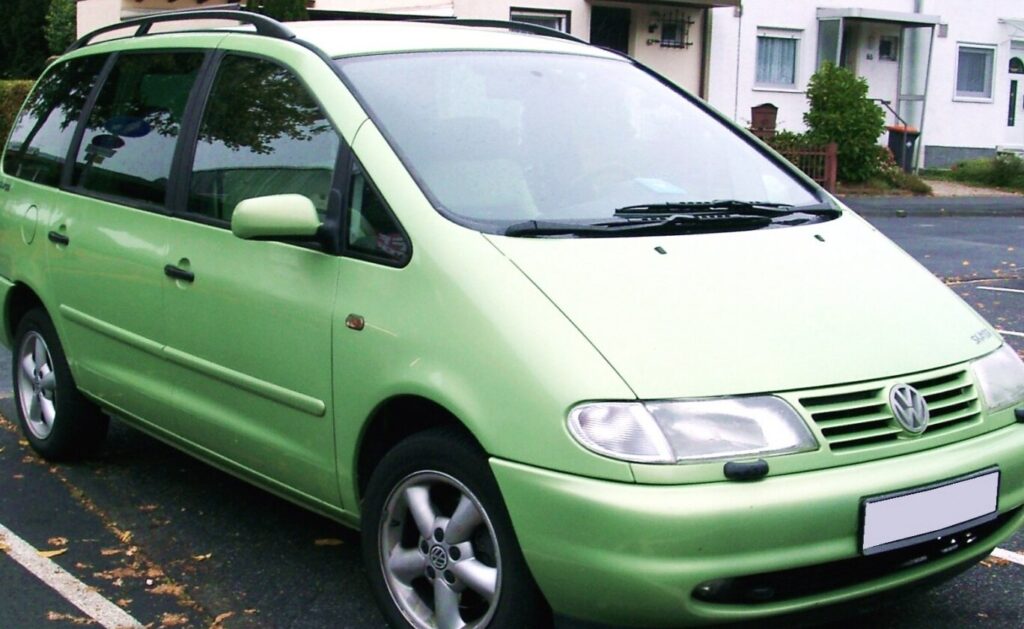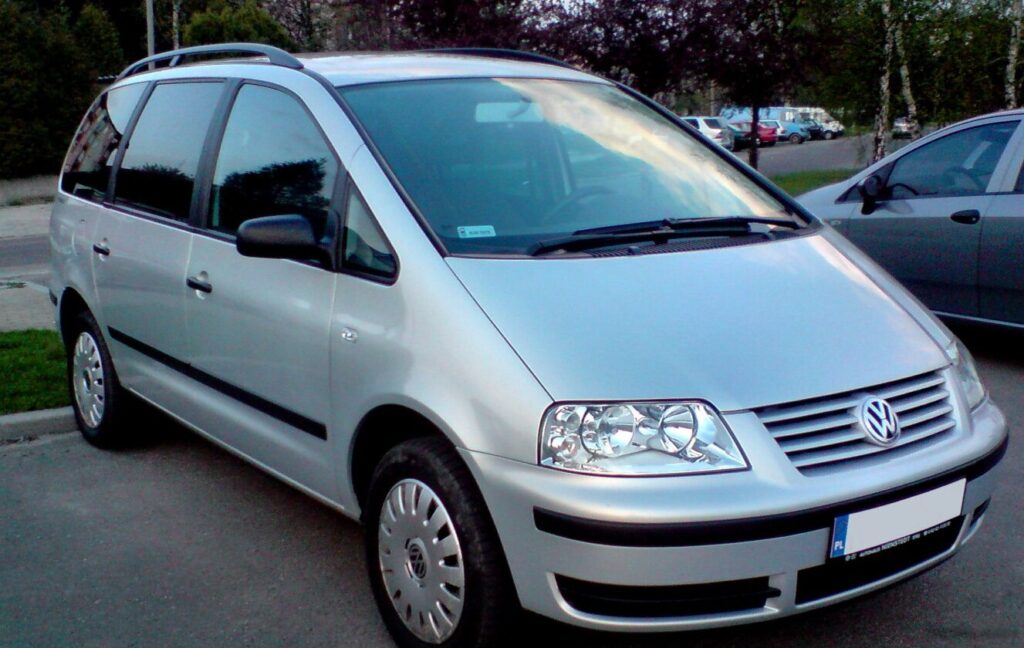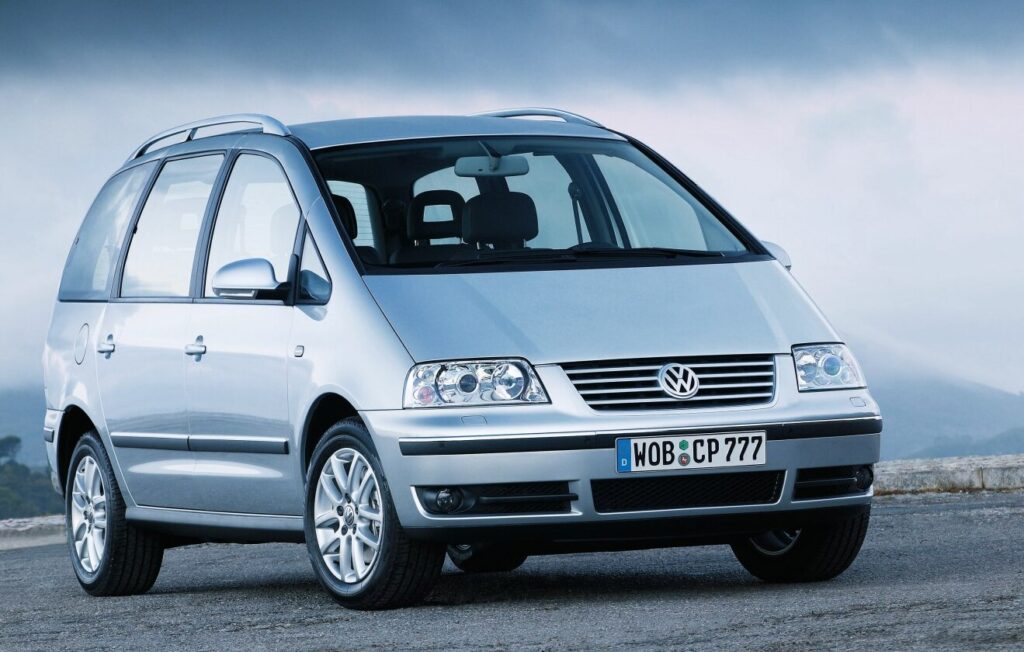
The Volkswagen Sharan I (facelift, produced from 2004 to 2010) 1.8 T, equipped with a 150 horsepower turbocharged engine, represented a mid-range offering within the first generation Sharan lineup. Positioned between the base models and the more powerful VR6 variants, this version aimed to balance performance with fuel efficiency and affordability for families seeking a spacious and versatile minivan. The facelift brought styling updates and refinements to the original Sharan, which was co-developed with Ford and sold as the Ford Galaxy. The Sharan, in general, was Volkswagen’s entry into the burgeoning European MPV (Multi-Purpose Vehicle) market, designed to compete with models like the Renault Espace and Citroën Evasion.
Technical Specifications
| Brand | Volkswagen |
| Model | Sharan |
| Generation | Sharan I (facelift 2004) |
| Type (Engine) | 1.8 T (150 Hp) |
| Start of production | 2004 |
| End of production | 2010 |
| Powertrain Architecture | Internal Combustion engine |
| Body type | Minivan, MPV |
| Seats | 7 |
| Doors | 5 |
| Fuel consumption (urban) | 13 l/100 km (18.1 US mpg, 21.7 UK mpg) |
| Fuel consumption (extra urban) | 7.4 l/100 km (31.8 US mpg, 38.2 UK mpg) |
| Fuel consumption (combined) | 9.4 l/100 km (25 US mpg, 30.1 UK mpg) |
| CO2 emissions | 225 g/km |
| Fuel Type | Petrol (Gasoline) |
| Acceleration 0 – 100 km/h | 10.9 sec |
| Acceleration 0 – 62 mph | 10.9 sec |
| Acceleration 0 – 60 mph | 10.4 sec |
| Maximum speed | 199 km/h (123.65 mph) |
| Emission standard | Euro 4 |
| Weight-to-power ratio | 11.3 kg/Hp |
| Weight-to-torque ratio | 7.7 kg/Nm |
| Power | 150 Hp @ 5800 rpm |
| Power per litre | 84.2 Hp/l |
| Torque | 220 Nm @ 1800-4300 rpm (162.26 lb.-ft.) |
| Engine layout | Front, Transverse |
| Engine Model/Code | AWC |
| Engine displacement | 1781 cm3 (108.68 cu. in.) |
| Number of cylinders | 4 |
| Engine configuration | Inline |
| Cylinder Bore | 81 mm (3.19 in.) |
| Piston Stroke | 86.4 mm (3.4 in.) |
| Compression ratio | 9.5:1 |
| Number of valves per cylinder | 5 |
| Fuel injection system | Multi-port manifold injection |
| Engine aspiration | Turbocharger, Intercooler |
| Valvetrain | DOHC |
| Engine oil capacity | 4 l (4.23 US qt | 3.52 UK qt) |
| Coolant capacity | 6.3 l (6.66 US qt | 5.54 UK qt) |
| Kerb Weight | 1697 kg (3741.24 lbs.) |
| Max. weight | 2450 kg (5401.33 lbs.) |
| Max load | 753 kg (1660.08 lbs.) |
| Trunk (boot) space – minimum | 256 l (9.04 cu. ft.) |
| Trunk (boot) space – maximum | 2610 l (92.17 cu. ft.) |
| Fuel tank capacity | 70 l (18.49 US gal | 15.4 UK gal) |
| Max. roof load | 75 kg (165.35 lbs.) |
| Permitted trailer load (braked) | 1900 kg (4188.78 lbs.) |
| Permitted trailer load (unbraked) | 700 kg (1543.24 lbs.) |
| Permitted towbar download | 85 kg (187.39 lbs.) |
| Length | 4634 mm (182.44 in.) |
| Width | 1810 mm (71.26 in.) |
| Width including mirrors | 2142 mm (84.33 in.) |
| Height | 1730 mm (68.11 in.) |
| Wheelbase | 2835 mm (111.61 in.) |
| Front track | 1530 mm (60.24 in.) |
| Rear track | 1524 mm (60 in.) |
| Minimum turning circle | 10.9 m (35.76 ft.) |
| Front suspension | Independent type McPherson, Transverse stabilizer |
| Rear suspension | Trailing arm, Coil spring, Transverse stabilizer |
| Front brakes | Ventilated discs |
| Rear brakes | Disc |
| Assisting systems | ABS (Anti-lock braking system) |
| Steering type | Steering rack and pinion |
| Power steering | Hydraulic |
| Tires size | 215/55 R16 |
| Wheel rims size | 7J x 16 |
Powertrain & Engine Architecture
The 1.8 T engine, identified by the AWC engine code, is a 1781cc inline-four cylinder gasoline engine featuring a single overhead camshaft (SOHC) design per cylinder bank (DOHC overall). It utilizes multi-port fuel injection and is equipped with a turbocharger and intercooler to boost power output. This engine was a staple in the Volkswagen Group’s lineup during the early 2000s, appearing in various models like the Golf, Passat, and Audi A3. The turbocharger provides significant improvements in power and torque compared to naturally aspirated engines of similar displacement. The 1.8T engine’s design prioritized a broad torque curve, making it well-suited for the Sharan’s role as a family vehicle needing to carry passengers and cargo. The transmission paired with this engine was typically a five-speed automatic, although a six-speed manual was also available. The automatic transmission was chosen by many buyers for its ease of use in city driving and during long journeys.
Driving Characteristics
The 1.8 T engine in the Sharan offered a reasonable balance of performance and fuel economy. While not as quick as the VR6-powered models, the 150 horsepower and 220 Nm (162 lb-ft) of torque provided adequate power for everyday driving and highway cruising. Acceleration from 0-60 mph took around 10.4 seconds, which was competitive for a minivan of its size. The automatic transmission, while smooth, could sometimes feel hesitant during quick acceleration or when attempting to overtake. The gear ratios were tuned for fuel efficiency rather than outright performance. Compared to the manual transmission version, the automatic offered less driver engagement but greater convenience. The Sharan’s weight, exceeding 1700 kg, did impact its overall agility, but the suspension provided a comfortable ride, absorbing bumps and imperfections in the road effectively.
Equipment & Trim Levels
The 1.8 T Sharan typically came with a good level of standard equipment. This included air conditioning, power windows, central locking, and an audio system. Higher trim levels added features such as alloy wheels, upgraded upholstery, a sunroof, and parking sensors. Interior upholstery was usually cloth, with leather options available as an upgrade. The dashboard layout was functional and straightforward, with easy-to-read gauges and controls. Optional extras included a navigation system, rear entertainment system, and upgraded sound systems. Safety features included ABS brakes, airbags, and seatbelt pretensioners.
Chassis & Braking
The Sharan I utilized a front-wheel-drive layout with an independent McPherson strut suspension at the front and a trailing arm suspension at the rear. This setup provided a comfortable ride and decent handling characteristics. The front brakes were ventilated discs, while the rear brakes were solid discs. ABS (Anti-lock Braking System) was standard, enhancing braking performance and stability. Stabilizer bars were fitted to both the front and rear axles to reduce body roll during cornering. The steering was hydraulic power-assisted, providing light and easy steering feel.
Market Reception & Comparison
The Sharan 1.8 T was generally well-received by automotive critics as a practical and versatile family vehicle. It was praised for its spacious interior, comfortable ride, and reasonable fuel economy. However, some critics noted that the automatic transmission could be slow to respond and that the engine lacked the punch of the VR6 models. Compared to the VR6, the 1.8 T offered better fuel economy and lower running costs, making it a more attractive option for budget-conscious buyers. The 1.9 TDI diesel version was also a popular alternative, offering even better fuel economy but with less outright power. The Sharan competed directly with other MPVs like the Renault Espace, Citroën Evasion, and Ford Galaxy.
Legacy
The Volkswagen Sharan I 1.8 T has proven to be a relatively reliable vehicle, with many examples still on the road today. The 1.8T engine is known for its durability, although regular maintenance is essential to prevent issues such as oil leaks and turbocharger failure. The automatic transmission can be prone to wear and tear, so it’s important to ensure it’s serviced regularly. In the used car market, the Sharan 1.8 T represents a good value proposition for buyers seeking a spacious and practical minivan. Its affordability, combined with its relatively good reliability, makes it a popular choice for families and those needing a versatile vehicle for work or leisure.