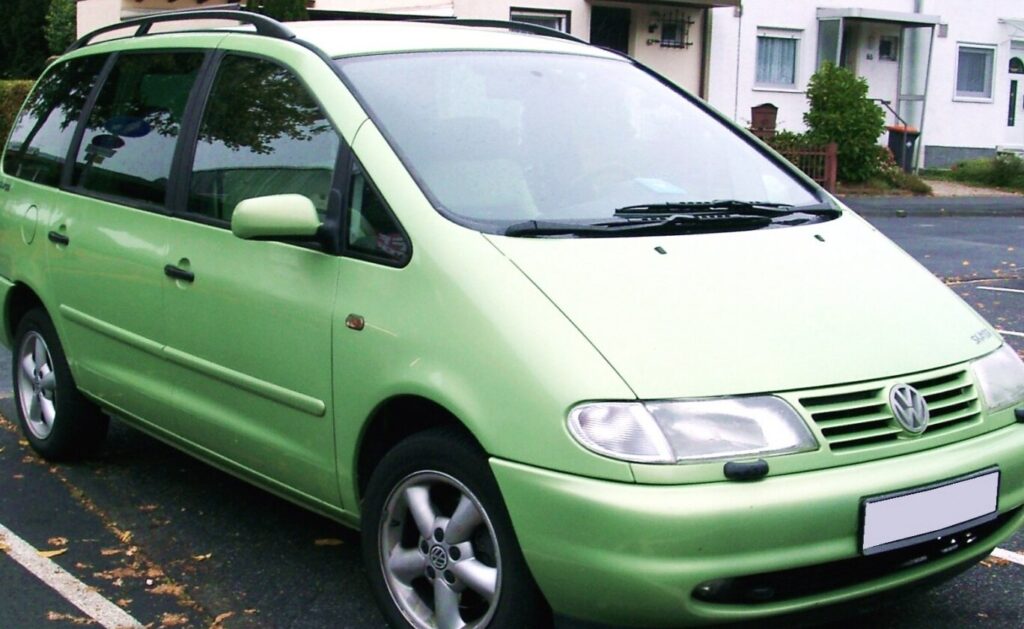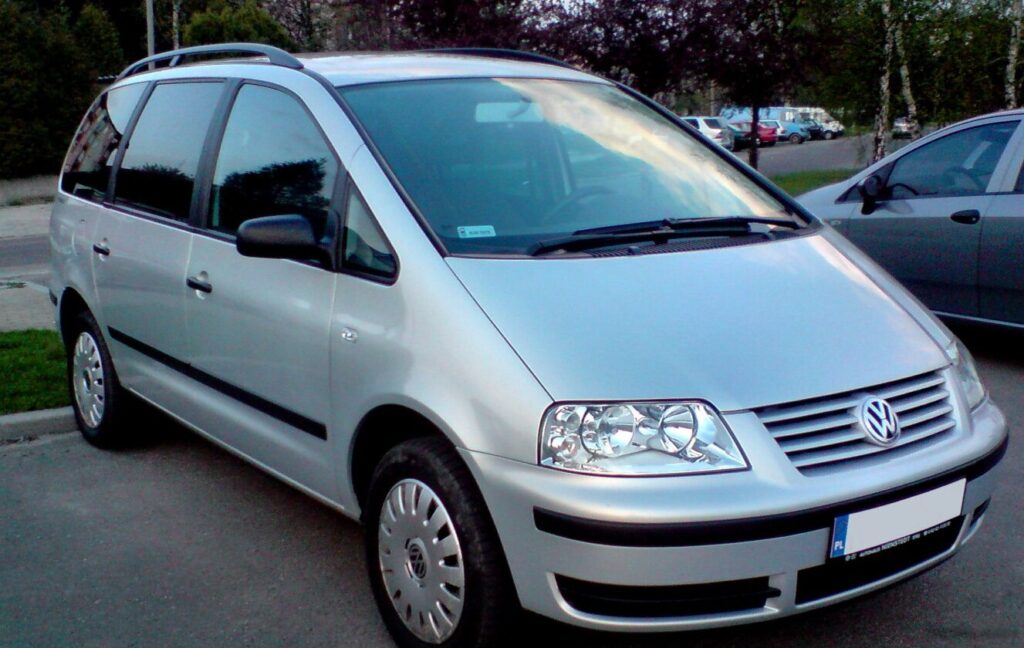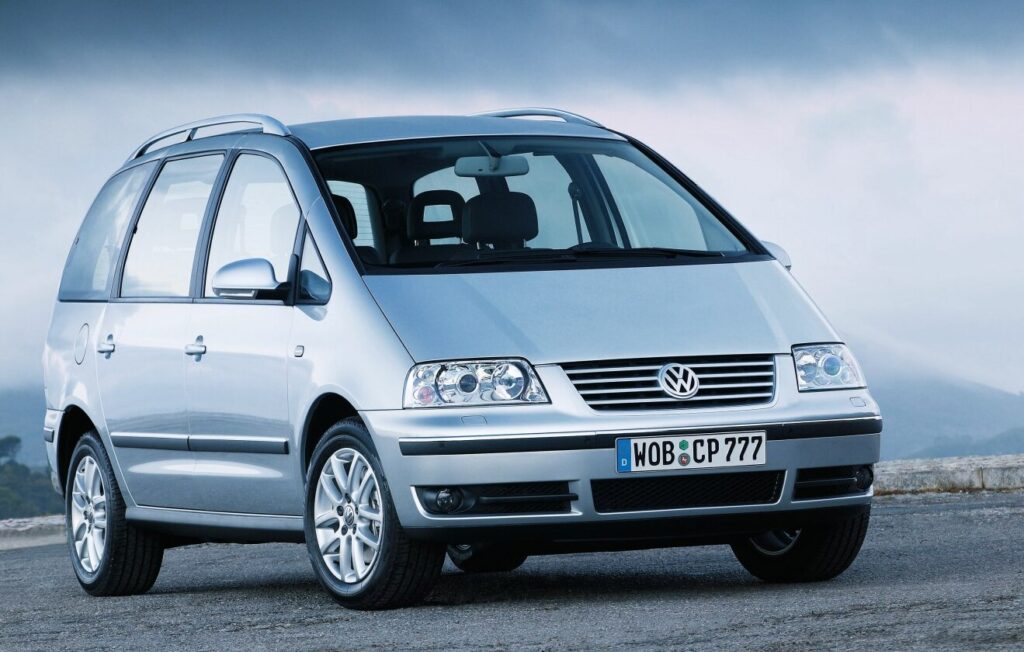
The Volkswagen Sharan I (facelift, produced 2005-2007) equipped with the 1.9 TDI 150 horsepower engine represents a significant iteration of Volkswagen’s popular minivan. Introduced as part of the facelift for the first-generation Sharan (Typ 7M), this variant aimed to balance fuel efficiency with respectable performance for family transportation. Positioned as a mid-range offering within the Sharan lineup, it slotted between the lower-powered TDI engines and the more expensive, higher-specification models. The Sharan, jointly developed with Ford (resulting in the Ford Galaxy and Seat Alhambra), was Volkswagen’s entry into the increasingly popular European MPV (Multi-Purpose Vehicle) segment, offering a spacious and versatile alternative to traditional station wagons.
Technical Specifications
| Brand | Volkswagen |
| Model | Sharan |
| Generation | Sharan I (facelift 2004) |
| Type (Engine) | 1.9 TDI (150 Hp) |
| Start of production | 2005 |
| End of production | 2007 |
| Powertrain Architecture | Internal Combustion engine |
| Body type | Minivan, MPV |
| Seats | 7 |
| Doors | 5 |
| Fuel consumption (urban) | 8.1 l/100 km (29 US mpg, 34.9 UK mpg) |
| Fuel consumption (extra urban) | 5.2 l/100 km (45.2 US mpg, 54.3 UK mpg) |
| Fuel consumption (combined) | 6.3 l/100 km (37.3 US mpg, 44.8 UK mpg) |
| CO2 emissions | 170 g/km |
| Fuel Type | Diesel |
| Acceleration 0 – 100 km/h | 11.9 sec |
| Acceleration 0 – 62 mph | 11.9 sec |
| Acceleration 0 – 60 mph | 11.3 sec |
| Maximum speed | 199 km/h (123.65 mph) |
| Emission standard | Euro 3 |
| Power | 150 Hp @ 4000 rpm |
| Torque | 310 Nm @ 1900 rpm (228.64 lb.-ft. @ 1900 rpm) |
| Engine layout | Front, Transverse |
| Engine Model/Code | BTB |
| Engine displacement | 1896 cm3 (115.7 cu. in.) |
| Number of cylinders | 4 |
| Engine configuration | Inline |
| Cylinder Bore | 79.5 mm (3.13 in.) |
| Piston Stroke | 95.5 mm (3.76 in.) |
| Compression ratio | 18.5:1 |
| Number of valves per cylinder | 2 |
| Fuel injection system | Pump-nozzle (Unit Injector) |
| Engine aspiration | Turbocharger, Intercooler |
| Valvetrain | SOHC |
| Engine oil capacity | 4.3 l (4.54 US qt, 3.78 UK qt) |
| Coolant capacity | 6.8 l (7.19 US qt, 5.98 UK qt) |
| Max. weight | 2510 kg (5533.6 lbs.) |
| Trunk (boot) space – minimum | 256 l (9.04 cu. ft.) |
| Trunk (boot) space – maximum | 2610 l (92.17 cu. ft.) |
| Fuel tank capacity | 70 l (18.49 US gal, 15.4 UK gal) |
| Length | 4634 mm (182.44 in.) |
| Width | 1810 mm (71.26 in.) |
| Height | 1759 mm (69.25 in.) |
| Wheelbase | 2841 mm (111.85 in.) |
| Front track | 1530 mm (60.24 in.) |
| Rear track | 1524 mm (60 in.) |
| Minimum turning circle | 10.9 m (35.76 ft.) |
| Drivetrain | Front wheel drive |
| Number of gears | 6 |
| Gearbox type | Manual transmission |
| Front suspension | Independent type McPherson, Transverse stabilizer |
| Rear suspension | Transverse stabilizer, Trailing arm, Coil spring |
| Front brakes | Ventilated discs |
| Rear brakes | Disc |
| Assisting systems | ABS (Anti-lock braking system) |
| Steering type | Steering rack and pinion |
| Power steering | Hydraulic |
| Tires size | 215/55 R16 |
| Wheel rims size | 7J x 16 |
Powertrain & Engine Architecture
The heart of this Sharan variant is the 1.9-liter (1896 cc) inline-four cylinder diesel engine, designated the BTB code. This engine is a member of Volkswagen’s well-regarded TDI (Turbocharged Direct Injection) family. The BTB utilizes a pump-nozzle (unit injector) fuel injection system, a technology known for its high injection pressures and precise fuel delivery, contributing to both performance and fuel economy. The engine features a single overhead camshaft (SOHC) valvetrain operating two valves per cylinder. A turbocharger with an intercooler is employed to boost power output, delivering 150 horsepower at 4000 rpm and 310 Nm (228.64 lb-ft) of torque at a relatively low 1900 rpm. The engine’s high compression ratio of 18.5:1 is typical for diesel engines, maximizing thermal efficiency. The engine is transversely mounted in the front of the vehicle. The six-speed manual transmission was the standard offering, providing a good balance between fuel efficiency and driver control.
Driving Characteristics
The 1.9 TDI 150 hp Sharan offered a practical and reasonably sprightly driving experience. While not a performance vehicle, the engine’s torque output provided ample power for everyday driving and hauling a full load of passengers and luggage. Acceleration from 0-100 km/h (0-62 mph) took approximately 11.9 seconds, and top speed was rated at 199 km/h (123.65 mph). Compared to the lower-powered TDI variants, the 150 hp engine offered noticeably improved responsiveness, particularly when overtaking or climbing hills. However, it didn’t possess the outright acceleration of the more powerful gasoline engines available in the Sharan range. The six-speed manual transmission allowed for efficient cruising at highway speeds, while the gear ratios were well-suited to maximizing the engine’s torque. The Sharan’s weight, however, did impact overall agility, making it feel less nimble than smaller vehicles.
Equipment & Trim Levels
The 1.9 TDI 150 hp Sharan typically came equipped with a respectable level of standard features. These included air conditioning, power windows, central locking, and an audio system. Interior upholstery was generally cloth, although leather options were available. Dashboard configuration was functional and straightforward, prioritizing usability over luxury. Optional extras included features like alloy wheels, a sunroof, parking sensors, and upgraded audio systems. Higher trim levels added features such as automatic climate control, rain-sensing wipers, and more premium interior materials. The Sharan’s modular seating arrangement, allowing for various configurations with up to seven passengers, was a key selling point.
Chassis & Braking
The Sharan I utilized a McPherson strut independent suspension setup at the front, providing a comfortable ride and reasonable handling. The rear suspension employed a trailing arm configuration with coil springs and a transverse stabilizer bar. Braking duties were handled by ventilated discs at the front and solid discs at the rear. Anti-lock Braking System (ABS) was standard, enhancing safety. The suspension was tuned to prioritize ride comfort, reflecting the Sharan’s role as a family vehicle. Stabilizer bars helped to reduce body roll during cornering, but the Sharan’s high center of gravity limited its dynamic capabilities.
Market Reception & Comparison
The 1.9 TDI 150 hp Sharan was generally well-received by automotive critics as a practical and fuel-efficient MPV. It offered a good compromise between performance, economy, and space. Compared to the lower-powered TDI versions, the 150 hp engine was praised for its improved drivability. However, some critics noted that the Sharan’s interior, while functional, lacked the refinement of some competitors. Fuel economy was a strong point, with combined figures around 6.3 l/100 km (37.3 US mpg), making it an attractive option for families covering long distances. Reliability was generally good, although the pump-nozzle injection system could be prone to issues if not properly maintained.
Legacy
The Volkswagen Sharan I 1.9 TDI 150 hp remains a popular choice in the used car market, particularly for those seeking a spacious and reliable MPV. The 1.9 TDI engine, while aging, is known for its durability and relatively low running costs, provided it receives regular maintenance. The pump-nozzle injection system requires careful attention to fuel quality and regular oil changes to prevent issues. Today, these Sharans represent a good value proposition for families needing a versatile and practical vehicle, though potential buyers should be aware of the age-related maintenance that may be required.