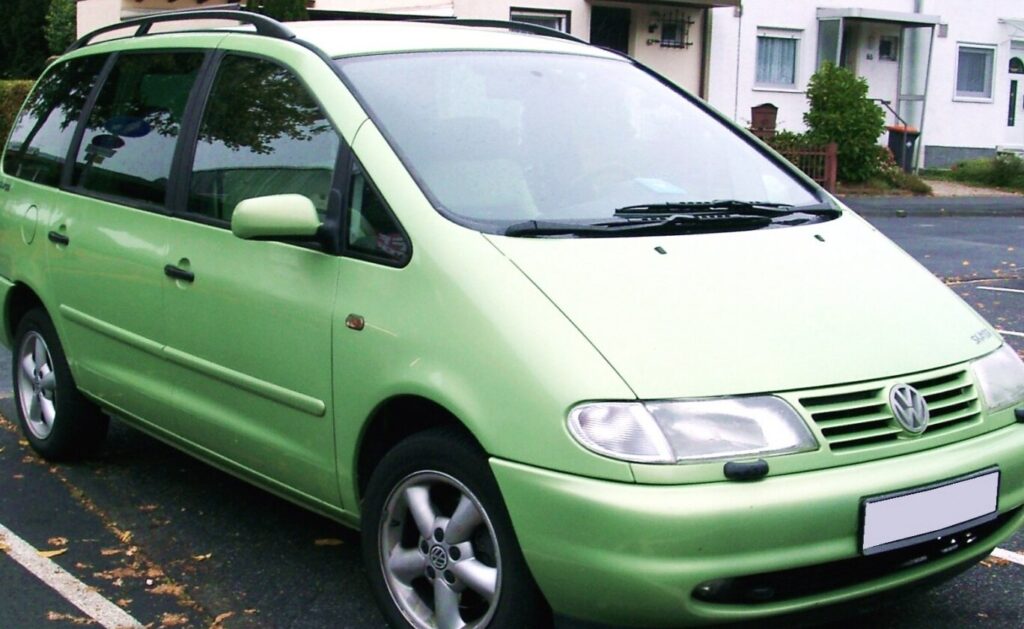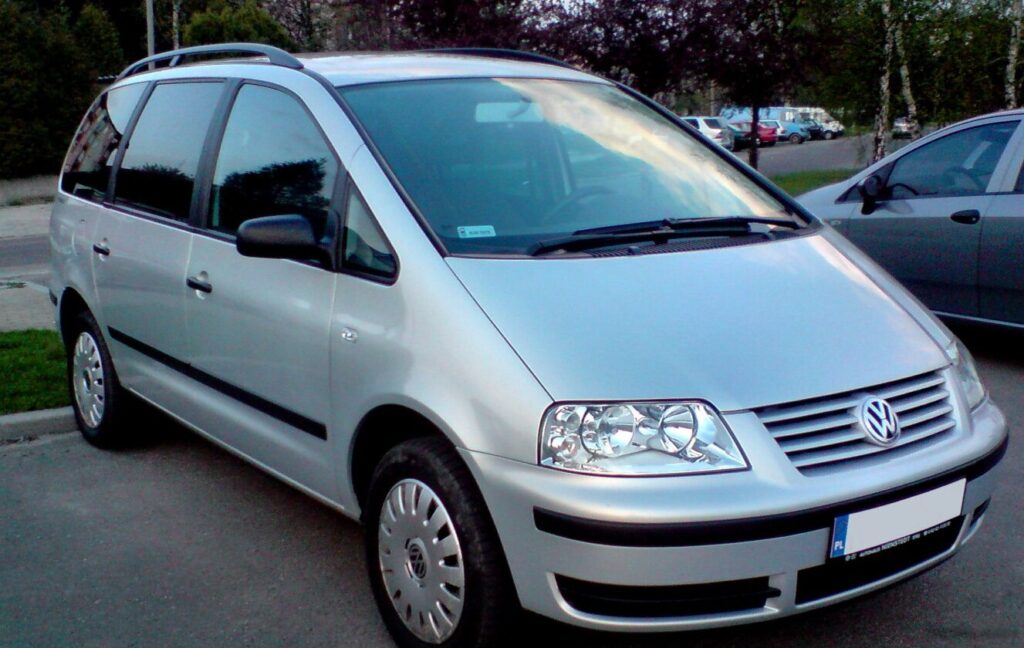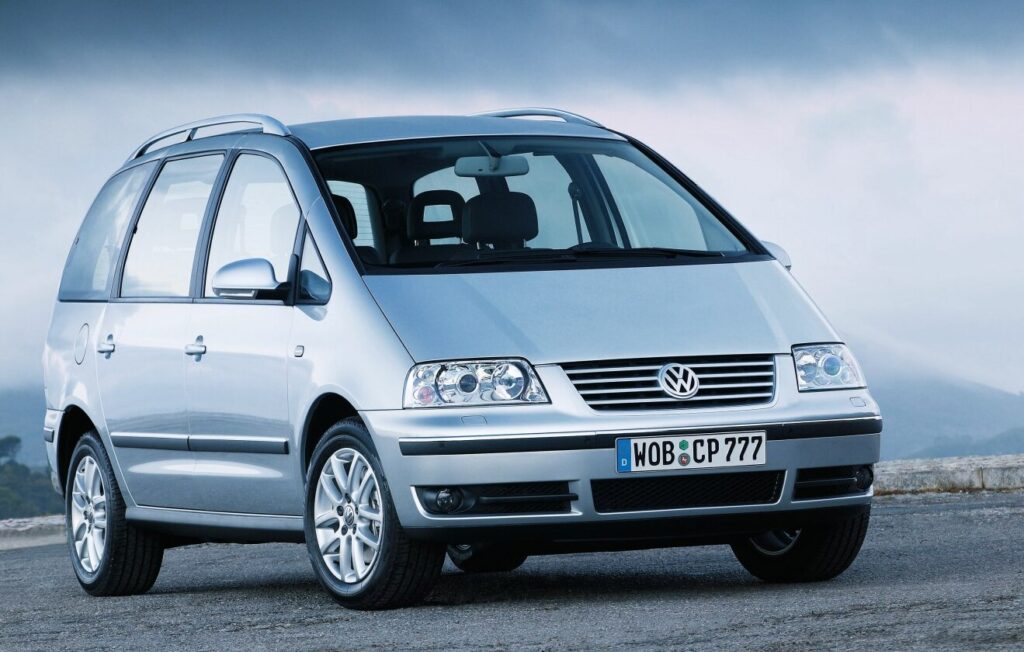
The Volkswagen Sharan I (facelift, introduced in 2004) 2.0 TDI 140 hp model represents a significant iteration of Volkswagen’s popular people carrier. Produced from 2005 to 2010, this variant occupied a middle ground within the Sharan lineup, offering a balance between fuel efficiency, performance, and practicality. It was designed to appeal to families and those requiring a versatile vehicle for both daily commuting and longer journeys. The Sharan I, co-developed with Ford (resulting in the Ford Galaxy and Seat Alhambra), aimed to provide a spacious and comfortable alternative to traditional station wagons and smaller MPVs, primarily targeting the European market.
Technical Specifications
| Brand | Volkswagen |
| Model | Sharan |
| Generation | Sharan I (facelift 2004) |
| Type (Engine) | 2.0 TDI (140 Hp) |
| Start of production | 2005 |
| End of production | 2010 |
| Powertrain Architecture | Internal Combustion engine |
| Body type | Minivan, MPV |
| Seats | 7 |
| Doors | 5 |
| Fuel consumption (economy) – urban (NEDC) | 8.3 l/100 km (28.3 US mpg, 34 UK mpg, 12 km/l) |
| Fuel consumption (economy) – extra urban (NEDC) | 5.7 l/100 km (41.3 US mpg, 49.6 UK mpg, 17.5 km/l) |
| Fuel consumption (economy) – combined (NEDC) | 6.6 l/100 km (35.6 US mpg, 42.8 UK mpg, 15.2 km/l) |
| CO2 emissions (NEDC) | 175 g/km |
| Fuel Type | Diesel |
| Acceleration 0 – 100 km/h | 12.2 sec |
| Acceleration 0 – 62 mph | 12.2 sec |
| Acceleration 0 – 60 mph | 11.6 sec |
| Maximum speed | 192 km/h (119.3 mph) |
| Emission standard | Euro 4 |
| Weight-to-power ratio | 12.3 kg/Hp, 81.3 Hp/tonne |
| Weight-to-torque ratio | 5.6 kg/Nm, 180 Nm/tonne |
| Power | 140 Hp @ 4000 rpm |
| Power per litre | 71.1 Hp/l |
| Torque | 310 Nm @ 1900-2500 rpm (228.64 lb.-ft. @ 1900-2500 rpm) |
| Engine layout | Front, Transverse |
| Engine Model/Code | EA188 / BRT |
| Engine displacement | 1968 cm3 (120.09 cu. in.) |
| Number of cylinders | 4 |
| Engine configuration | Inline |
| Cylinder Bore | 81 mm (3.19 in.) |
| Piston Stroke | 95.5 mm (3.76 in.) |
| Compression ratio | 18.5:1 |
| Number of valves per cylinder | 2 |
| Fuel injection system | Pump-nozzle (Unit Injector) |
| Engine aspiration | Turbocharger, Intercooler |
| Valvetrain | SOHC |
| Engine oil capacity | 4 l (4.23 US qt, 3.52 UK qt) |
| Coolant | 6.8 l (7.19 US qt, 5.98 UK qt) |
| Kerb Weight | 1722 kg (3796.36 lbs.) |
| Max. weight | 2510 kg (5533.6 lbs.) |
| Max load | 788 kg (1737.24 lbs.) |
| Trunk (boot) space – minimum | 256 l (9.04 cu. ft.) |
| Trunk (boot) space – maximum | 2610 l (92.17 cu. ft.) |
| Fuel tank capacity | 70 l (18.49 US gal, 15.4 UK gal) |
| Max. roof load | 75 kg (165.35 lbs.) |
| Permitted trailer load with brakes (12%) | 2000 kg (4409.25 lbs.) |
| Permitted trailer load without brakes | 700 kg (1543.24 lbs.) |
| Permitted towbar download | 85 kg (187.39 lbs.) |
| Length | 4634 mm (182.44 in.) |
| Width | 1810 mm (71.26 in.) |
| Width including mirrors | 2142 mm (84.33 in.) |
| Height | 1730 mm (68.11 in.) |
| Wheelbase | 2835 mm (111.61 in.) |
| Front track | 1530 mm (60.24 in.) |
| Rear (Back) track | 1524 mm (60 in.) |
| Minimum turning circle | 10.9 m (35.76 ft.) |
| Front suspension | Independent type McPherson, Transverse stabilizer |
| Rear suspension | Transverse stabilizer, Trailing arm, Coil spring |
| Front brakes | Ventilated discs |
| Rear brakes | Disc |
| Assisting systems | ABS (Anti-lock braking system) |
| Steering type | Steering rack and pinion |
| Power steering | Hydraulic Steering |
| Tires size | 195/60 R16; 215/55 R16 |
| Wheel rims size | 6J x 16; 7J x 16 |
| Drivetrain | Front wheel drive |
| Number of gears and type of gearbox | 6 gears, manual transmission |
Powertrain & Engine Architecture
The heart of the Sharan I 2.0 TDI 140 hp is the EA188 engine family, specifically the BRT code. This 1968cc, four-cylinder diesel engine utilizes a transverse mounting configuration. It employs a pump-nozzle (unit injector) fuel injection system, a technology known for its precision and efficiency in delivering fuel directly into the combustion chamber. The engine features a single overhead camshaft (SOHC) valvetrain operating two valves per cylinder. A turbocharger with an intercooler is integral to the engine’s design, boosting power output and improving torque delivery. The 18.5:1 compression ratio is typical for direct injection diesel engines, contributing to thermal efficiency. This engine was known for its relatively robust construction, though the pump-nozzle injectors could be a point of potential maintenance concern over time.
Driving Characteristics
The 140 hp 2.0 TDI Sharan offered a respectable, if not exhilarating, driving experience. Acceleration from 0-60 mph took around 11.6 seconds, and top speed was approximately 119 mph. The engine’s 310 Nm (228.64 lb-ft) of torque, available from 1900-2500 rpm, provided adequate pulling power for a fully loaded vehicle. Compared to the more powerful variants, such as those with larger displacement engines, this version felt less strained during highway overtaking maneuvers. The six-speed manual transmission, standard on this model, offered a good balance between fuel economy and drivability. The gear ratios were tuned for relaxed cruising, prioritizing comfort over outright performance. While not sporty, the Sharan 2.0 TDI provided a smooth and composed ride, making it well-suited for long-distance travel.
Equipment & Trim Levels
The 2.0 TDI 140 hp Sharan typically came equipped with a reasonable level of standard features. These included power windows, central locking, air conditioning, and an audio system. Interior upholstery was generally cloth, with options for upgraded materials available. Trim levels varied depending on the market, but common options included alloy wheels, parking sensors, and a more sophisticated infotainment system. Safety features such as ABS and driver/passenger airbags were standard. The Sharan was designed to be a practical family vehicle, and its equipment reflected this focus.
Chassis & Braking
The Sharan I utilized a McPherson strut independent suspension setup at the front, providing a comfortable ride and predictable handling. The rear suspension employed a trailing arm configuration with coil springs and a transverse stabilizer bar. This setup aimed to balance ride comfort with stability, particularly when carrying a full load. Braking duties were handled by ventilated discs at the front and solid discs at the rear. The ABS system provided enhanced braking control, especially in adverse conditions. The chassis was designed to accommodate the vehicle’s weight and provide a stable platform for passengers and cargo.
Market Reception & Comparison
The Sharan I 2.0 TDI 140 hp was generally well-received by automotive critics as a practical and versatile MPV. It was praised for its spacious interior, comfortable ride, and relatively good fuel economy. Compared to the higher-powered variants, it offered a more affordable entry point into the Sharan range. However, some critics noted that the engine could feel underpowered when fully loaded or when tackling steep inclines. The 1.9 TDI models were often seen as a more economical choice, while the petrol-powered variants offered more performance but at the cost of fuel efficiency. The Sharan competed with other MPVs such as the Renault Espace and Citroën C8.
Legacy
The Volkswagen Sharan I 2.0 TDI 140 hp has proven to be a relatively reliable vehicle, although, like any diesel engine, the pump-nozzle injectors can be prone to failure over time. Regular maintenance, including oil changes and injector cleaning, is crucial for ensuring longevity. In the used car market, these models are often sought after for their practicality and affordability. They represent a good value proposition for families needing a spacious and versatile vehicle. While not a performance icon, the Sharan I 2.0 TDI 140 hp remains a popular choice for those prioritizing functionality and reliability.