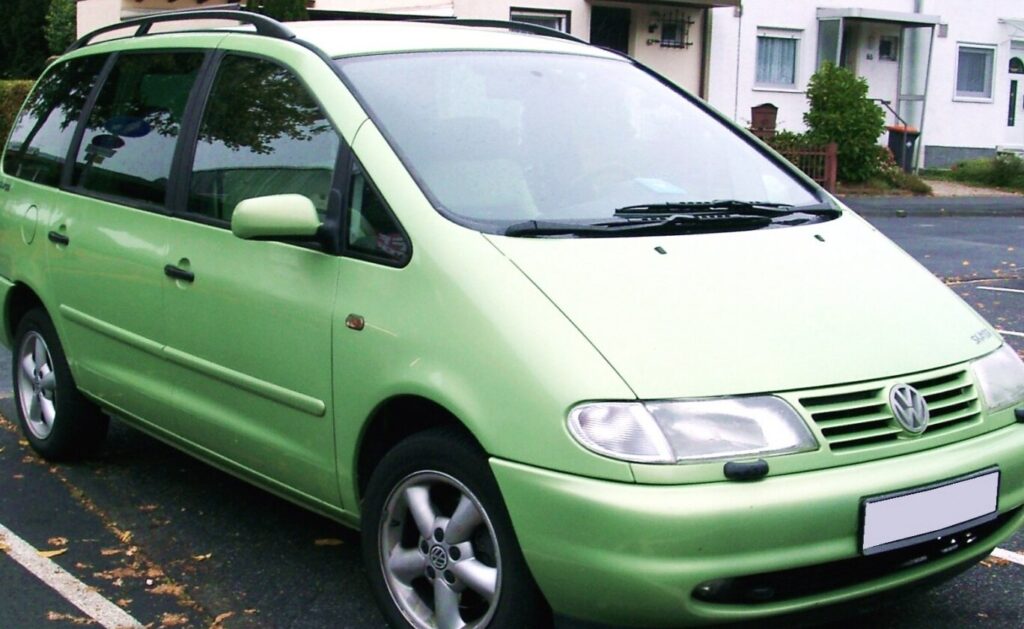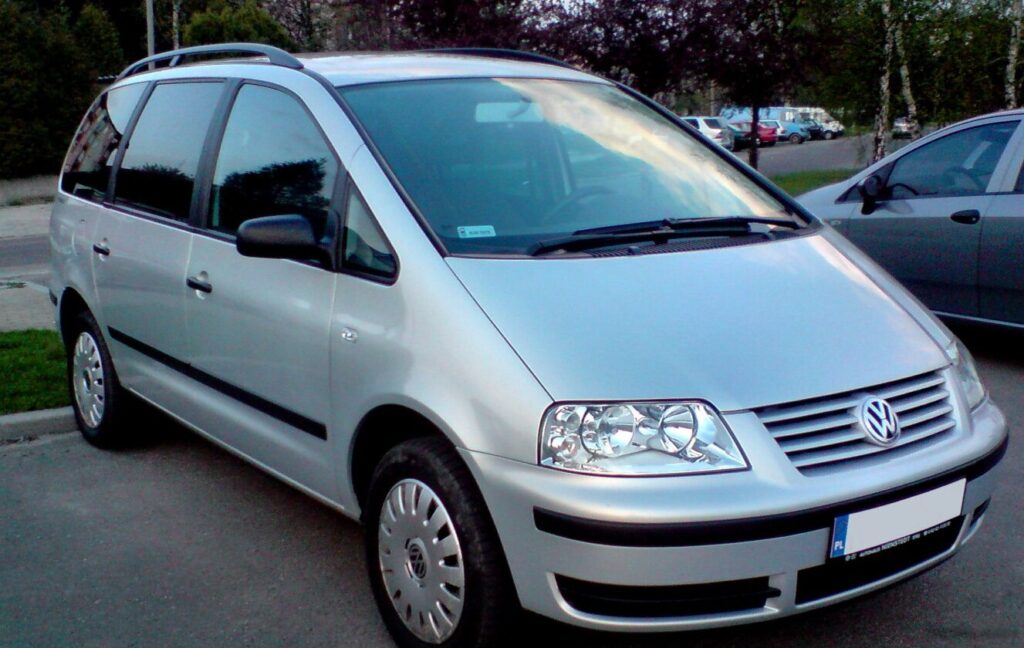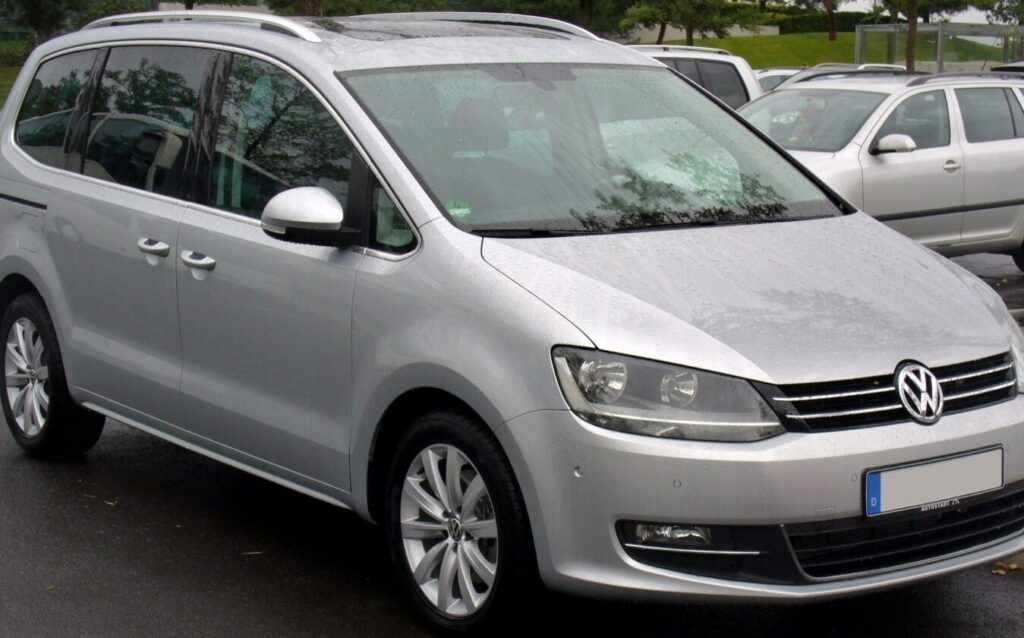
The Volkswagen Sharan II 1.4 TSI (150 hp) was a front-wheel-drive minivan produced between 2010 and 2015. Positioned as a mid-range offering within the Sharan II lineup, it aimed to balance fuel efficiency with adequate performance for family transportation. This generation of the Sharan, built on the PQ46 platform (also known as the 1HX0/A3 platform), represented a significant redesign from its predecessor, focusing on increased space, improved safety features, and a more modern driving experience. The 1.4 TSI engine was a key component of Volkswagen’s strategy to offer a downsized, turbocharged engine option in a segment traditionally dominated by larger displacement engines.
Technical Specifications
| Brand | Volkswagen |
| Model | Sharan |
| Generation | Sharan II |
| Type (Engine) | 1.4 TSI (150 Hp) |
| Start of production | 2010 |
| End of production | 2015 |
| Powertrain Architecture | Internal Combustion engine |
| Body type | Minivan, MPV |
| Seats | 5 |
| Doors | 5 |
| Fuel consumption (urban) | 9.2 l/100 km (25.6 US mpg) |
| Fuel consumption (extra urban) | 6.1 l/100 km (38.6 US mpg) |
| Fuel consumption (combined) | 7.2 l/100 km (32.7 US mpg) |
| CO2 emissions | 167 g/km |
| Fuel Type | Petrol (Gasoline) |
| Acceleration 0 – 100 km/h | 10.7 sec |
| Acceleration 0 – 62 mph | 10.7 sec |
| Acceleration 0 – 60 mph | 10.2 sec |
| Maximum speed | 197 km/h (122.41 mph) |
| Emission standard | Euro 5 |
| Weight-to-power ratio | 11.5 kg/Hp |
| Weight-to-torque ratio | 7.2 kg/Nm |
| Power | 150 Hp @ 5800 rpm |
| Torque | 240 Nm @ 1750-4000 rpm (177.01 lb.-ft.) |
| Engine layout | Front, Transverse |
| Engine Model/Code | CAVA, CNWB, CTHA |
| Engine displacement | 1390 cm3 (84.82 cu. in.) |
| Number of cylinders | 4 |
| Engine configuration | Inline |
| Number of valves per cylinder | 4 |
| Fuel injection system | Direct injection |
| Engine aspiration | Turbocharging and Supercharger, Intercooler |
| Engine oil capacity | 4 l (4.23 US qt | 3.52 UK qt) |
| Coolant capacity | 5.6 l (5.92 US qt | 4.93 UK qt) |
| Kerb Weight | 1723 kg (3798.56 lbs.) |
| Max. weight | 2290 kg (5048.59 lbs.) |
| Max load | 567 kg (1250.02 lbs.) |
| Trunk (boot) space – minimum | 885 l (31.25 cu. ft.) |
| Trunk (boot) space – maximum | 2430 l (85.81 cu. ft.) |
| Fuel tank capacity | 70 l (18.49 US gal | 15.4 UK gal) |
| Length | 4854 mm (191.1 in.) |
| Width | 1904 mm (74.96 in.) |
| Height | 1720 mm (67.72 in.) |
| Wheelbase | 2919 mm (114.92 in.) |
| Front track | 1569 mm (61.77 in.) |
| Rear (Back) track | 1617 mm (63.66 in.) |
| Minimum turning circle | 11.9 m (39.04 ft.) |
| Drivetrain Architecture | Front wheel drive |
| Number of gears | 6 gears, manual transmission |
| Front brakes | Ventilated discs |
| Assisting systems | ABS (Anti-lock braking system) |
| Steering type | Steering rack and pinion |
| Tires size | 205/60 R16; 215/60 R16; 225/50 R17 |
| Wheel rims size | 6.5J x 16; 7J x 17 |
Powertrain & Engine Architecture
The heart of the Sharan II 1.4 TSI was the CAVA, CNWB, or CTHA engine code, a 1.4-liter inline-four cylinder gasoline engine. This engine was notable for its combination of turbocharging and supercharging – a relatively uncommon setup. The supercharger provided immediate boost at low engine speeds, eliminating turbo lag, while the turbocharger took over at higher RPMs for sustained power delivery. This dual-charging system, coupled with direct fuel injection, allowed for a good balance of responsiveness and efficiency. The engine produced 150 horsepower at 5800 rpm and 240 Nm (177 lb-ft) of torque between 1750 and 4000 rpm. The six-speed manual transmission was the standard offering, providing a reasonable spread of gears for both city and highway driving. The transmission was chosen to balance fuel economy and performance.
Driving Characteristics
The 1.4 TSI engine in the Sharan II provided adequate, though not exhilarating, performance. Acceleration from 0-60 mph took around 10.2 seconds, and top speed was rated at 122.41 mph. In real-world driving, the engine felt responsive around town, thanks to the supercharger. However, when fully loaded with passengers and luggage, or when tackling steep inclines, the engine could feel strained. Compared to the more powerful 2.0 TDI diesel variants, the 1.4 TSI offered less low-end torque, requiring more frequent downshifts. The manual transmission was generally well-matched to the engine, but some drivers found the shift action to be slightly notchy. The Sharan’s suspension was tuned for comfort, providing a relatively smooth ride, even on uneven surfaces.
Equipment & Trim Levels
The 1.4 TSI trim of the Sharan II typically included standard features such as air conditioning, power windows, power mirrors, a CD/radio system, and basic safety equipment like ABS and airbags. Higher trim levels, often available as optional packages, added features like alloy wheels, a multi-function steering wheel, cruise control, parking sensors, and upgraded infotainment systems. Interior upholstery was typically cloth, with the option of leather upgrades. The dashboard layout was functional and straightforward, prioritizing usability over flashy design. The Sharan II was designed with family practicality in mind, offering numerous storage compartments and flexible seating arrangements.
Chassis & Braking
The Sharan II utilized a MacPherson strut front suspension and a multi-link rear suspension. This setup provided a good balance of ride comfort and handling. The front brakes were ventilated discs, while the rear brakes were typically solid discs, although some earlier models may have featured drum brakes depending on the specific market and trim level. The steering was a rack-and-pinion system, providing reasonably precise steering feel. Stabilizer bars were fitted to both the front and rear axles to reduce body roll during cornering. The Sharan II’s chassis was designed to accommodate the vehicle’s weight and provide a stable platform for carrying passengers and cargo.
Market Reception & Comparison
The Sharan II 1.4 TSI was generally well-received by automotive critics as a practical and versatile family vehicle. However, some reviewers noted that the 1.4 TSI engine could feel underpowered when the vehicle was fully loaded. Fuel economy was a strong point, with combined fuel consumption figures around 32.7 US mpg. Compared to the 2.0 TDI diesel variants, the 1.4 TSI offered lower running costs in terms of fuel, but potentially higher maintenance costs due to the complexity of the dual-charging system. The 1.4 TSI was positioned as an entry-level or mid-range option, appealing to buyers who prioritized fuel efficiency and affordability over outright performance.
Legacy
The Volkswagen Sharan II 1.4 TSI, while not the most powerful variant, remains a popular choice in the used car market due to its practicality, spaciousness, and relatively good fuel economy. The 1.4 TSI engine, despite its complexity, has proven to be reasonably reliable when properly maintained. Common issues include carbon buildup on the intake valves (a known issue with direct injection engines) and potential problems with the turbocharger or supercharger. Regular oil changes and adherence to the manufacturer’s maintenance schedule are crucial for ensuring the long-term reliability of this powertrain. Today, the Sharan II 1.4 TSI represents a good value proposition for families seeking a versatile and affordable minivan.