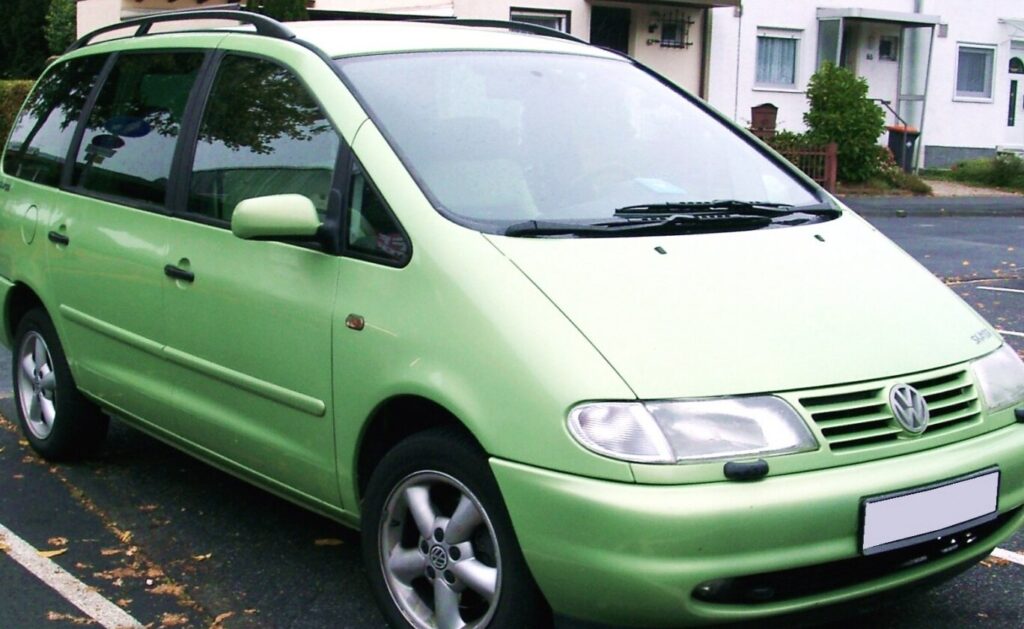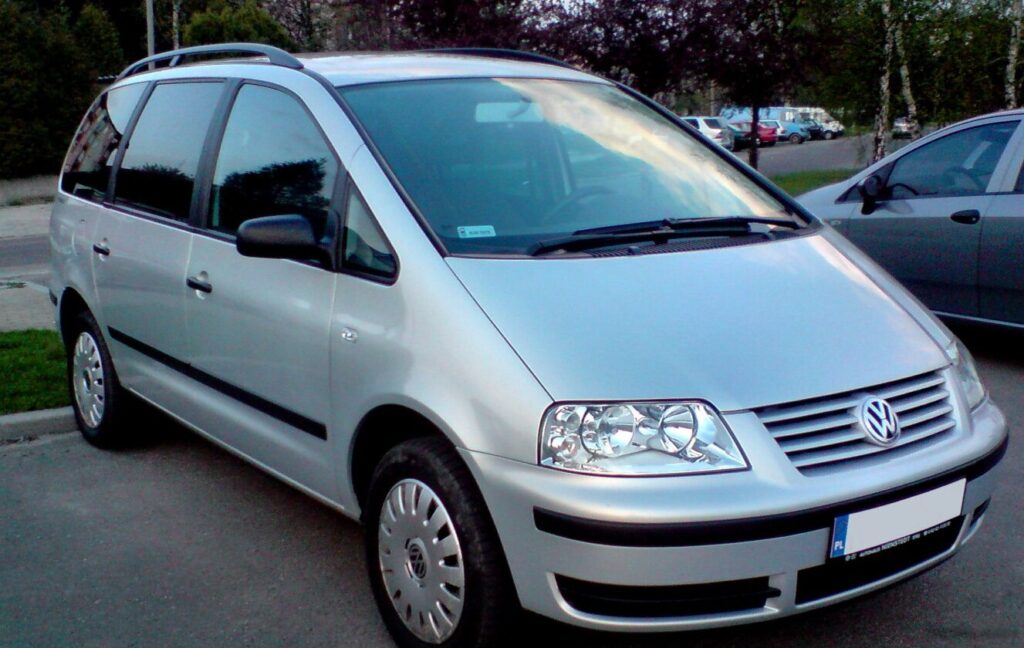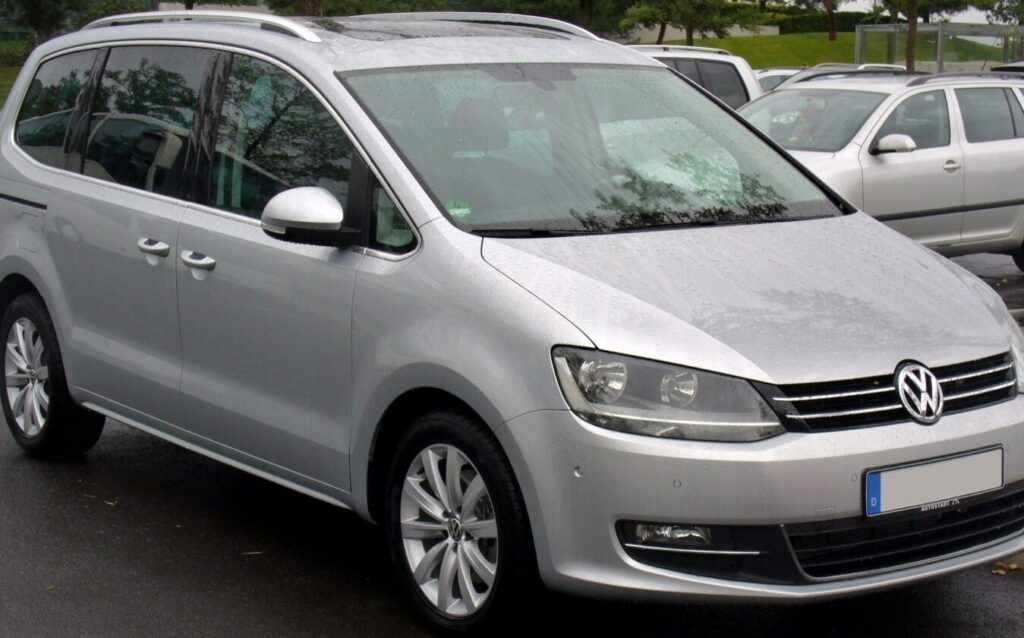
The Volkswagen Sharan II 1.4 TSI 150 hp 7-seat configuration was a popular variant of the second-generation Sharan, produced from 2010 to 2015. Positioned as a mid-range offering within the Sharan lineup, it aimed to balance fuel efficiency, practicality, and a reasonable level of performance for family transport. The Sharan II, built on the Volkswagen Group’s PQ46 platform (also known as the 1HX0/A3 platform), represented a significant evolution over its predecessor, offering increased space, improved safety features, and a more refined driving experience. This particular engine and transmission combination was primarily sold in Europe, where MPVs (Multi-Purpose Vehicles) like the Sharan held a strong market share.
Technical Specifications
| Brand | Volkswagen |
| Model | Sharan |
| Generation | Sharan II |
| Type | 1.4 TSI (150 Hp) 7 Seat |
| Start of production | 2010 |
| End of production | 2015 |
| Powertrain Architecture | Internal Combustion engine |
| Body type | Minivan, MPV |
| Seats | 7 |
| Doors | 5 |
| Fuel consumption (urban) | 9.2 l/100 km (25.6 US mpg) |
| Fuel consumption (extra urban) | 6.1 l/100 km (38.6 US mpg) |
| Fuel consumption (combined) | 7.2 l/100 km (32.7 US mpg) |
| CO2 emissions | 167 g/km |
| Fuel Type | Petrol (Gasoline) |
| Acceleration 0 – 100 km/h | 10.7 sec |
| Acceleration 0 – 62 mph | 10.7 sec |
| Acceleration 0 – 60 mph | 10.2 sec |
| Maximum speed | 197 km/h (122.41 mph) |
| Emission standard | Euro 5 |
| Weight-to-power ratio | 11.5 kg/Hp |
| Weight-to-torque ratio | 7.2 kg/Nm |
| Power | 150 Hp @ 5800 rpm |
| Torque | 240 Nm @ 1750-4000 rpm (177.01 lb.-ft.) |
| Engine layout | Front, Transverse |
| Engine Model/Code | CAVA, CNWB, CTHA |
| Engine displacement | 1390 cm3 (84.82 cu. in.) |
| Number of cylinders | 4 |
| Engine configuration | Inline |
| Number of valves per cylinder | 4 |
| Fuel injection system | Direct injection |
| Engine aspiration | Turbocharging and Supercharger, Intercooler |
| Engine oil capacity | 4 l (4.23 US qt | 3.52 UK qt) |
| Coolant capacity | 5.6 l (5.92 US qt | 4.93 UK qt) |
| Kerb Weight | 1723 kg (3798.56 lbs.) |
| Max. weight | 2290 kg (5048.59 lbs.) |
| Max load | 567 kg (1250.02 lbs.) |
| Trunk (boot) space – minimum | 300 l (10.59 cu. ft.) |
| Trunk (boot) space – maximum | 2297 l (81.12 cu. ft.) |
| Fuel tank capacity | 70 l (18.49 US gal | 15.4 UK gal) |
| Length | 4854 mm (191.1 in.) |
| Width | 1904 mm (74.96 in.) |
| Height | 1720 mm (67.72 in.) |
| Wheelbase | 2919 mm (114.92 in.) |
| Front track | 1569 mm (61.77 in.) |
| Rear track | 1617 mm (63.66 in.) |
| Minimum turning circle | 11.9 m (39.04 ft.) |
| Drivetrain | Front wheel drive |
| Number of gears | 6 |
| Gearbox type | Manual transmission |
| Front brakes | Ventilated discs |
| Assisting systems | ABS (Anti-lock braking system) |
| Steering type | Steering rack and pinion |
| Tires size | 205/60 R16; 215/60 R16; 225/50 R17 |
| Wheel rims size | 6.5J x 16; 7J x 17 |
Powertrain & Engine Architecture
The heart of the Sharan II 1.4 TSI was the EA111 engine family, specifically the 1.4-liter turbocharged and supercharged four-cylinder gasoline engine. Engine codes CAVA, CNWB, and CTHA were commonly found in this variant. This engine was notable for its use of both a turbocharger and a supercharger – a relatively uncommon configuration. The supercharger provided instant boost at low engine speeds, eliminating turbo lag, while the turbocharger took over at higher RPMs for sustained power delivery. Direct fuel injection (FSI) further enhanced efficiency and performance. The engine produced 150 horsepower at 5800 rpm and 240 Nm (177 lb-ft) of torque between 1750 and 4000 rpm. The six-speed manual transmission was the standard offering, providing a good balance between fuel economy and driver control.
Driving Characteristics
The 1.4 TSI engine, paired with the manual transmission, offered a respectable driving experience for a large MPV. Acceleration from 0-60 mph took around 10.2 seconds, which was adequate for everyday driving and highway merging. While not particularly sporty, the engine provided sufficient power for fully loaded family trips. The combined supercharger and turbocharger setup ensured a relatively linear power delivery, making it easy to modulate throttle response. Compared to the more powerful 2.0 TDI diesel variants, the 1.4 TSI felt less effortless when fully loaded, requiring more downshifting on inclines. However, it offered a smoother and quieter driving experience than the diesel, and its gasoline nature was preferred by some drivers.
Equipment & Trim Levels
The 1.4 TSI 7-seat Sharan typically came with a good level of standard equipment. This included air conditioning, electric windows, central locking, a CD/radio system, and alloy wheels. Safety features such as ABS, ESP (Electronic Stability Program), and multiple airbags were also standard. Higher trim levels, such as the ‘Highline’ package, added features like climate control, parking sensors, a touchscreen infotainment system, and upgraded interior upholstery. Optional extras included a panoramic sunroof, leather seats, and a navigation system. Interior materials were generally of good quality, reflecting the Sharan’s position as a premium MPV.
Chassis & Braking
The Sharan II featured a MacPherson strut front suspension and a multi-link rear suspension, providing a comfortable and controlled ride. The suspension was tuned to prioritize comfort over sporty handling, making it well-suited for long journeys. Front brakes were ventilated discs, while rear brakes were typically solid discs, providing adequate stopping power for the vehicle’s weight. The steering was a rack and pinion system, offering precise and responsive control. Stabilizer bars were fitted to both the front and rear axles to reduce body roll during cornering.
Market Reception & Comparison
The Sharan II 1.4 TSI was generally well-received by automotive critics. It was praised for its spacious interior, comfortable ride, and fuel-efficient engine. However, some reviewers noted that the engine could feel strained when the vehicle was fully loaded. Compared to the 2.0 TDI diesel variants, the 1.4 TSI offered lower running costs in terms of fuel, but the diesel models provided superior torque and fuel economy, particularly on long distances. The 1.4 TSI was often seen as a good choice for drivers who primarily used the Sharan for shorter trips and prioritized a smoother, quieter driving experience.
Legacy
The Volkswagen Sharan II 1.4 TSI has proven to be a relatively reliable vehicle, although the complex engine with its combined turbocharger and supercharger system can require more specialized maintenance. Common issues include occasional problems with the turbocharger and supercharger, as well as potential issues with the direct injection system. However, with regular servicing and preventative maintenance, the engine can provide many years of reliable service. On the used car market, the Sharan II 1.4 TSI remains a popular choice for families seeking a spacious, practical, and relatively affordable MPV. Its blend of comfort, practicality, and reasonable running costs continues to make it a compelling option in the used car segment.