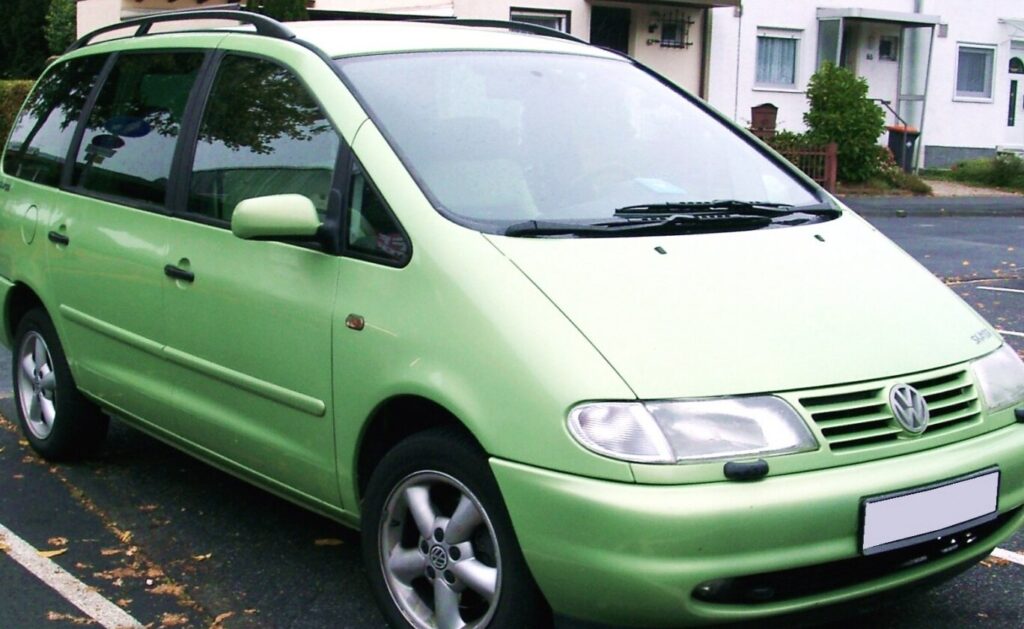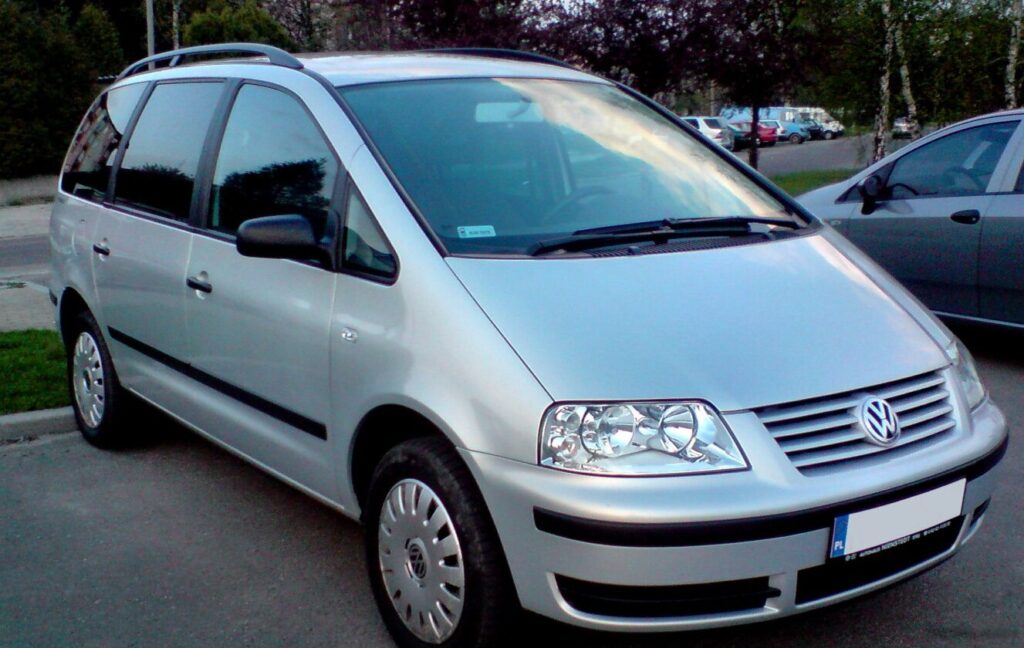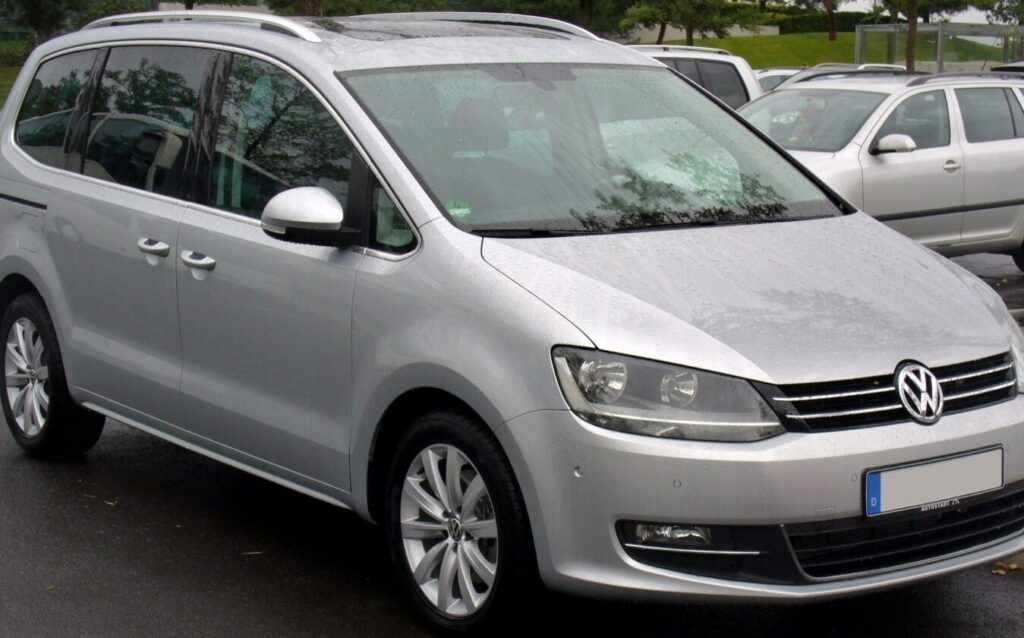
The Volkswagen Sharan II 1.4 TSI (150 hp) DSG represents a significant iteration of Volkswagen’s popular minivan, produced between 2010 and 2015. Positioned as a mid-range offering within the Sharan II lineup, this variant aimed to balance fuel efficiency with adequate performance for family transport. It was a key model in the European market, where MPVs (Multi-Purpose Vehicles) remained highly sought after for their practicality and versatility. The Sharan II, built on the PQ46 platform (also known as the 1HX0/A3 platform), offered a spacious interior and a range of modern features, making it a competitive choice in its segment.
Technical Specifications
| Brand | Volkswagen |
| Model | Sharan |
| Generation | Sharan II |
| Type (Engine) | 1.4 TSI (150 Hp) DSG |
| Start of production | 2010 |
| End of production | 2015 |
| Powertrain Architecture | Internal Combustion engine |
| Body type | Minivan, MPV |
| Seats | 5 |
| Doors | 5 |
| Fuel consumption (urban) | 9.4 l/100 km (25 US mpg, 30.1 UK mpg, 10.6 km/l) |
| Fuel consumption (extra urban) | 6.6 l/100 km (35.6 US mpg, 42.8 UK mpg, 15.2 km/l) |
| Fuel consumption (combined) | 7.6 l/100 km (30.9 US mpg, 37.2 UK mpg, 13.2 km/l) |
| CO2 emissions | 178 g/km |
| Fuel Type | Petrol (Gasoline) |
| Acceleration 0 – 100 km/h | 9.9 sec |
| Acceleration 0 – 62 mph | 9.9 sec |
| Acceleration 0 – 60 mph | 9.4 sec |
| Maximum speed | 197 km/h (122.41 mph) |
| Emission standard | Euro 5 |
| Weight-to-power ratio | 11.6 kg/Hp, 86.1 Hp/tonne |
| Weight-to-torque ratio | 7.3 kg/Nm, 137.8 Nm/tonne |
| Power | 150 Hp @ 5800 rpm |
| Power per litre | 107.9 Hp/l |
| Torque | 240 Nm @ 1750-4000 rpm (177.01 lb.-ft. @ 1750-4000 rpm) |
| Engine layout | Front, Transverse |
| Engine Model/Code | CAVA, CNWB, CTHA |
| Engine displacement | 1390 cm3 (84.82 cu. in.) |
| Number of cylinders | 4 |
| Engine configuration | Inline |
| Number of valves per cylinder | 4 |
| Fuel injection system | Direct injection |
| Engine aspiration | Turbocharging and Supercharger, Intercooler |
| Engine oil capacity | 4 l (4.23 US qt | 3.52 UK qt) |
| Coolant | 5.6 l (5.92 US qt | 4.93 UK qt) |
| Kerb Weight | 1742 kg (3840.45 lbs.) |
| Max. weight | 2310 kg (5092.68 lbs.) |
| Max load | 568 kg (1252.23 lbs.) |
| Trunk (boot) space – minimum | 885 l (31.25 cu. ft.) |
| Trunk (boot) space – maximum | 2430 l (85.81 cu. ft.) |
| Fuel tank capacity | 70 l (18.49 US gal | 15.4 UK gal) |
| Length | 4854 mm (191.1 in.) |
| Width | 1904 mm (74.96 in.) |
| Height | 1720 mm (67.72 in.) |
| Wheelbase | 2919 mm (114.92 in.) |
| Front track | 1569 mm (61.77 in.) |
| Rear (Back) track | 1617 mm (63.66 in.) |
| Minimum turning circle | 11.9 m (39.04 ft.) |
| Drivetrain Architecture | The Internal combustion engine (ICE) drives the front wheels of the vehicle. |
| Drive wheel | Front wheel drive |
| Number of gears and type of gearbox | 6 gears, automatic transmission DSG |
| Front brakes | Ventilated discs |
| Assisting systems | ABS (Anti-lock braking system) |
| Steering type | Steering rack and pinion |
| Tires size | 205/60 R16; 215/60 R16; 225/50 R17 |
| Wheel rims size | 6.5J x 16; 7J x 17 |
INTRODUCTION
The Volkswagen Sharan II 1.4 TSI (150 hp) DSG, launched in 2010, represented a move towards downsizing and efficiency within the Sharan range. The second generation Sharan, introduced in 2000, continued the tradition of providing a practical and spacious family vehicle. This particular variant, powered by the 1.4-liter TSI engine paired with a dual-clutch DSG transmission, was designed to appeal to buyers seeking a balance between running costs and usability. It occupied a middle ground in the Sharan II lineup, offering a more affordable alternative to the more powerful 2.0-liter TDI and TSI models, while providing a more refined experience than the base 1.6-liter petrol engine.
Powertrain & Engine Architecture
At the heart of the Sharan II 1.4 TSI DSG lies the CAVA, CNWB, or CTHA engine code, a 1390cc inline-four cylinder petrol engine. This engine is notable for its combination of turbocharging and supercharging – a relatively uncommon setup. The supercharger provides immediate boost at low engine speeds, eliminating turbo lag, while the turbocharger takes over at higher RPMs for sustained power delivery. Direct fuel injection further enhances efficiency and performance. The engine produces 150 horsepower at 5800 rpm and 240 Nm (177 lb-ft) of torque between 1750 and 4000 rpm. The dual-clutch DSG (Direct-Shift Gearbox) transmission, typically a 6-speed unit, provides quick and smooth gear changes, contributing to a more engaging driving experience compared to a traditional automatic. The DSG’s programming is tuned for a balance of fuel economy and responsiveness.
Driving Characteristics
The 1.4 TSI engine, while not exceptionally powerful, provides adequate performance for everyday driving and typical family loads. Acceleration from 0-100 km/h (0-62 mph) takes around 9.9 seconds. The DSG transmission effectively manages the engine’s powerband, keeping the engine in its optimal torque range. Compared to the more powerful 2.0 TSI, the 1.4 TSI feels less urgent, particularly when fully loaded or tackling steep inclines. However, the supercharger helps to mitigate the effects of turbo lag, providing a more linear power delivery than a purely turbocharged engine. The DSG transmission offers both automatic and manual shift modes, allowing drivers to take more control when desired. Gear ratios are optimized for both fuel efficiency and reasonable acceleration.
Equipment & Trim Levels
The Sharan II 1.4 TSI DSG typically came equipped with a respectable level of standard features. These included air conditioning, electric windows, central locking, and a basic audio system. Higher trim levels, such as ‘Trendline’ and ‘Highline’, added features like alloy wheels, parking sensors, a more advanced infotainment system, and upgraded interior trim. Interior upholstery was typically cloth, with leather options available as an upgrade. Optional extras included a panoramic sunroof, navigation system, and rear entertainment system. The Sharan’s modular seating system allowed for flexible configuration of the interior space, accommodating up to seven passengers with the optional third-row seats.
Chassis & Braking
The Sharan II’s chassis is a conventional MacPherson strut front suspension and a multi-link rear suspension. This setup provides a comfortable ride quality, well-suited for long journeys. The 1.4 TSI variant typically featured ventilated disc brakes at the front and drum brakes at the rear. ABS (Anti-lock Braking System) was standard. Stabilizer bars were fitted to both the front and rear axles to reduce body roll during cornering. The suspension tuning was geared towards comfort rather than sporty handling, prioritizing a smooth and stable ride.
Market Reception & Comparison
The Sharan II 1.4 TSI DSG was generally well-received by automotive critics as a practical and efficient family vehicle. Its fuel economy, averaging around 7.6 l/100 km (30.9 US mpg), was a key selling point. Compared to the 2.0 TDI, the 1.4 TSI offered lower purchase price but sacrificed some fuel efficiency and outright performance. The 2.0 TSI provided significantly more power but at a higher cost and with increased fuel consumption. Reliability was generally good, although some owners reported issues with the DSG transmission, particularly early units. Regular maintenance, including DSG fluid changes, was crucial to ensure long-term reliability.
Legacy
The Volkswagen Sharan II 1.4 TSI DSG remains a popular choice in the used car market, particularly for families seeking a spacious and versatile vehicle. The 1.4 TSI engine, while not the most powerful in the range, has proven to be relatively reliable when properly maintained. The DSG transmission, while potentially requiring more attention than a traditional automatic, offers a more engaging driving experience. The Sharan II’s spacious interior, flexible seating configuration, and practical features continue to make it a compelling option for those needing a large family vehicle. However, prospective buyers should be aware of the potential for DSG transmission issues and ensure that the vehicle has been regularly serviced.