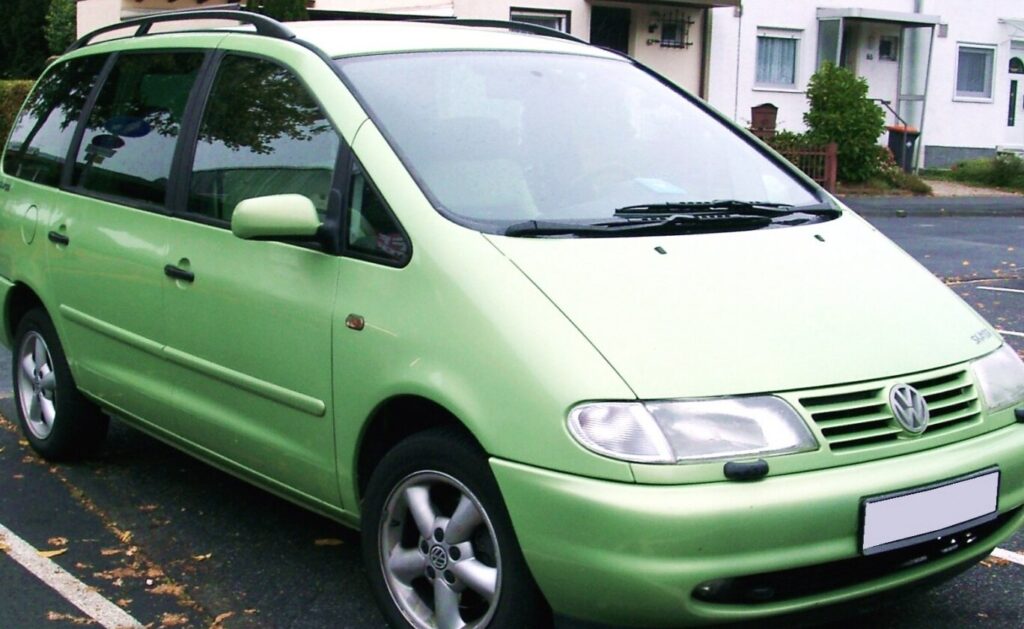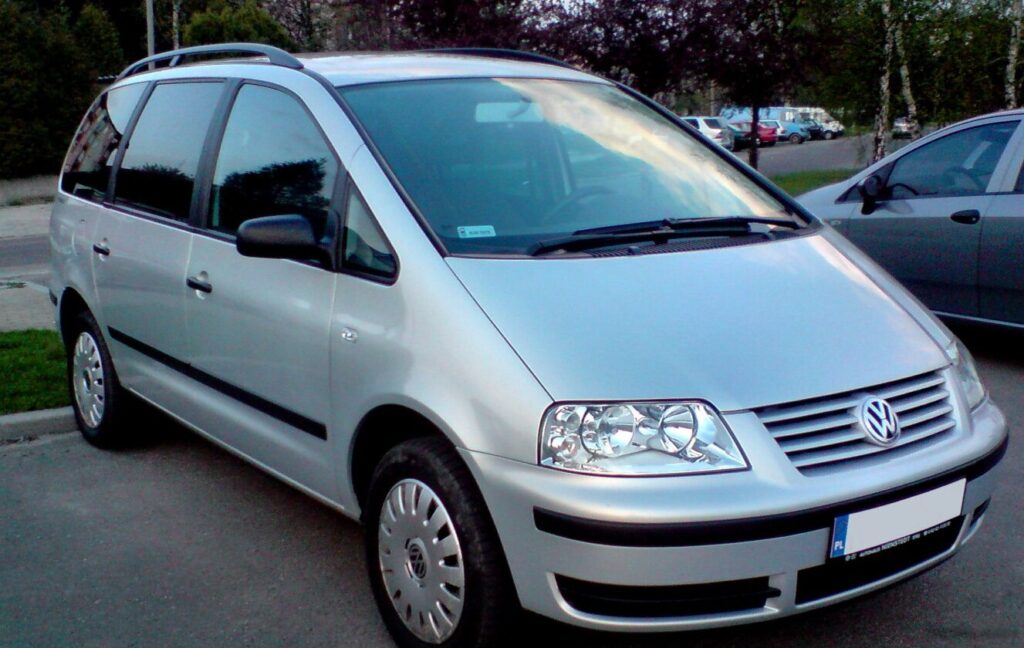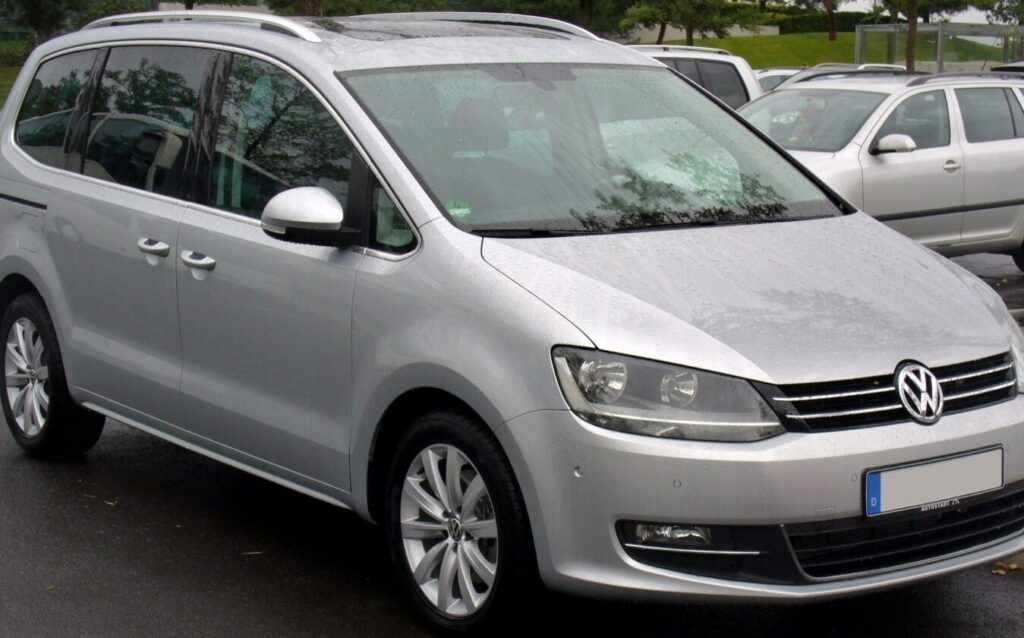
The Volkswagen Sharan II 2.0 TDI BMT, producing 170 horsepower, represents a significant iteration of Volkswagen’s popular minivan, sold from 2010 to 2012. Positioned as a mid-range offering within the Sharan II lineup, it aimed to balance fuel efficiency with respectable performance for family transport. This generation Sharan (Typ 2C) was co-developed with SEAT, resulting in the closely related SEAT Alhambra. The Sharan II, and specifically this 2.0 TDI variant, was primarily marketed in Europe as a practical and versatile MPV, competing with models like the Ford Galaxy and Renault Espace. It built upon the success of the original Sharan, offering increased space, improved refinement, and modern technology.
Technical Specifications
| Brand | Volkswagen |
| Model | Sharan |
| Generation | Sharan II |
| Type (Engine) | 2.0 TDI BMT (170 Hp) |
| Start of production | 2010 |
| End of production | 2012 |
| Powertrain Architecture | Internal Combustion engine |
| Body type | Minivan, MPV |
| Seats | 5 |
| Doors | 5 |
| Fuel consumption (economy) – urban (NEDC) | 7.3 l/100 km (32.2 US mpg, 38.7 UK mpg, 13.7 km/l) |
| Fuel consumption (economy) – extra urban (NEDC) | 5 l/100 km (47 US mpg, 56.5 UK mpg, 20 km/l) |
| Fuel consumption (economy) – combined (NEDC) | 5.8 l/100 km (40.6 US mpg, 48.7 UK mpg, 17.2 km/l) |
| CO2 emissions (NEDC) | 152 g/km |
| Fuel Type | Diesel |
| Acceleration 0 – 100 km/h | 9.5 sec |
| Acceleration 0 – 62 mph | 9.5 sec |
| Acceleration 0 – 60 mph | 9 sec |
| Maximum speed | 207 km/h (128.62 mph) |
| Emission standard | Euro 5 |
| Weight-to-power ratio | 10.1 kg/Hp, 98.9 Hp/tonne |
| Weight-to-torque ratio | 4.9 kg/Nm, 203.6 Nm/tonne |
| Power | 170 Hp @ 4200 rpm |
| Power per litre | 86.4 Hp/l |
| Torque | 350 Nm @ 1750-2500 rpm (258.15 lb.-ft. @ 1750-2500 rpm) |
| Engine layout | Front, Transverse |
| Engine Model/Code | CFGB |
| Engine displacement | 1968 cm3 (120.09 cu. in.) |
| Number of cylinders | 4 |
| Engine configuration | Inline |
| Cylinder Bore | 81 mm (3.19 in.) |
| Piston Stroke | 95.5 mm (3.76 in.) |
| Compression ratio | 18:1 |
| Number of valves per cylinder | 4 |
| Fuel injection system | Diesel Commonrail |
| Engine aspiration | Turbocharger, Intercooler |
| Valvetrain | DOHC |
| Engine oil capacity | 4.3 l (4.54 US qt | 3.78 UK qt) |
| Coolant | 8 l (8.45 US qt | 7.04 UK qt) |
| Kerb Weight | 1719 kg (3789.75 lbs.) |
| Max. weight | 2360 kg (5202.91 lbs.) |
| Max load | 641 kg (1413.16 lbs.) |
| Trunk (boot) space – minimum | 885 l (31.25 cu. ft.) |
| Trunk (boot) space – maximum | 2430 l (85.81 cu. ft.) |
| Fuel tank capacity | 70 l (18.49 US gal | 15.4 UK gal) |
| Max. roof load | 100 kg (220.46 lbs.) |
| Permitted trailer load with brakes (8%) | 2300 kg (5070.63 lbs.) |
| Permitted trailer load with brakes (12%) | 2200 kg (4850.17 lbs.) |
| Permitted trailer load without brakes | 750 kg (1653.47 lbs.) |
| Permitted towbar download | 100 kg (220.46 lbs.) |
| Length | 4854 mm (191.1 in.) |
| Width | 1904 mm (74.96 in.) |
| Width including mirrors | 2081 mm (81.93 in.) |
| Height | 1720 mm (67.72 in.) |
| Wheelbase | 2919 mm (114.92 in.) |
| Front track | 1569 mm (61.77 in.) |
| Rear (Back) track | 1617 mm (63.66 in.) |
| Ride height (ground clearance) | 163 mm (6.42 in.) |
| Minimum turning circle (turning diameter) | 11.9 m (39.04 ft.) |
| Approach angle | 13.7° |
| Departure angle | 14° |
| Ramp-over (brakeover) angle | 9.6° |
| Drivetrain Architecture | The Internal combustion engine (ICE) drives the front wheels of the vehicle. |
| Drive wheel | Front wheel drive |
| Number of gears and type of gearbox | 6 gears, manual transmission |
| Front suspension | Independent type McPherson, Transverse stabilizer |
| Rear suspension | Independent multi-link suspension, Transverse stabilizer |
| Front brakes | Ventilated discs |
| Rear brakes | Disc |
| Assisting systems | ABS (Anti-lock braking system) |
| Steering type | Steering rack and pinion |
| Power steering | Electric Steering |
| Tires size | 215/60 R16; 225/50 R17 |
| Wheel rims size | 6.5J x 16; 7J x 17 |
INTRODUCTION
The Volkswagen Sharan II 2.0 TDI BMT (170 Hp) was produced between 2010 and 2012 as part of the second-generation Sharan (Typ 2C) model range. This variant utilized the CFGB engine code, a 2.0-liter turbocharged diesel engine. The “BMT” designation stands for “BlueMotion Technologies,” indicating the inclusion of fuel-saving technologies. Within the Sharan II lineup, this engine and power output represented a solid mid-range option, offering a balance between performance and economy. It was designed to appeal to families needing a spacious and practical vehicle for both daily commutes and longer journeys.
Powertrain & Engine Architecture
The heart of this Sharan variant is the CFGB engine, a 1968cc inline-four cylinder diesel engine. It features a turbocharger with an intercooler to boost power and efficiency. The engine employs a common rail direct injection system, delivering fuel directly into the combustion chamber at extremely high pressure for optimized combustion. The valvetrain utilizes a double overhead camshaft (DOHC) configuration with four valves per cylinder, enhancing breathing and overall engine performance. The 170 horsepower peak is achieved at 4200 rpm, while the substantial 350 Nm (258 lb-ft) of torque is available from 1750 to 2500 rpm, providing strong pulling power. The engine is transversely mounted at the front of the vehicle. The Sharan II 2.0 TDI BMT typically came equipped with a 6-speed manual transmission, although a Direct-Shift Gearbox (DSG) was also available as an option. The manual gearbox was chosen to maximize fuel economy.
Driving Characteristics
The 170 hp 2.0 TDI BMT Sharan offers a comfortable and capable driving experience. While not a performance-oriented vehicle, the engine provides sufficient power for everyday driving and overtaking maneuvers. The broad torque curve means that strong acceleration is available from relatively low engine speeds. Compared to the higher-output 140 hp TDI variant, the 170 hp version offers noticeably more responsiveness, particularly when fully loaded with passengers and luggage. However, it doesn’t match the outright performance of the more expensive and less common petrol-powered Sharan models. The 6-speed manual transmission is well-matched to the engine, providing smooth gear changes and allowing the driver to keep the engine in its optimal power band. The gear ratios are geared towards fuel efficiency, rather than outright acceleration.
Equipment & Trim Levels
The Sharan II 2.0 TDI BMT typically came with a good level of standard equipment. This included features such as air conditioning, electric windows, central locking, and a basic audio system. Higher trim levels, such as the ‘Highline’ offered additional features like alloy wheels, upgraded upholstery, a multi-function steering wheel, and parking sensors. Optional extras included a panoramic sunroof, leather seats, a navigation system, and a rear entertainment system. Interior upholstery was typically cloth, with the option of leather upgrades. The dashboard layout was functional and user-friendly, with clear instrumentation and logically placed controls.
Chassis & Braking
The Sharan II utilizes an independent McPherson strut suspension at the front and an independent multi-link suspension at the rear, providing a comfortable ride and good handling characteristics. A transverse stabilizer bar is fitted to both the front and rear axles to reduce body roll during cornering. The braking system consists of ventilated discs at the front and solid discs at the rear. Anti-lock Braking System (ABS) is standard, enhancing braking performance and stability. The Sharan’s weight, typically around 1719 kg (3789.75 lbs), necessitates a robust braking system to ensure safe stopping distances.
Market Reception & Comparison
The Sharan II 2.0 TDI BMT was generally well-received by automotive critics. It was praised for its spacious interior, comfortable ride, and fuel efficiency. The 170 hp TDI engine was considered a good compromise between performance and economy. Compared to the lower-powered 140 hp TDI, the 170 hp version offered a more refined driving experience, particularly when carrying a full load. However, some critics noted that the Sharan’s size could make it challenging to maneuver in tight urban environments. Fuel economy figures of around 5.8 l/100 km (40.6 US mpg) were competitive for its class. Reliability was generally good, although some owners reported issues with the diesel particulate filter (DPF) system, a common problem with modern diesel engines.
Legacy
The Volkswagen Sharan II 2.0 TDI BMT remains a popular choice in the used car market, particularly for families seeking a spacious and practical MPV. The CFGB engine is generally considered to be reliable, provided it has been properly maintained. Regular servicing, including oil changes and DPF regeneration, is crucial to ensure long-term reliability. While the Sharan II is now an older vehicle, its versatility and practicality continue to appeal to buyers. The availability of spare parts is generally good, and the Sharan’s relatively simple mechanical design makes it relatively easy to repair. The 2.0 TDI BMT variant offers a good balance of performance, economy, and reliability, making it a solid choice for those seeking a used MPV.