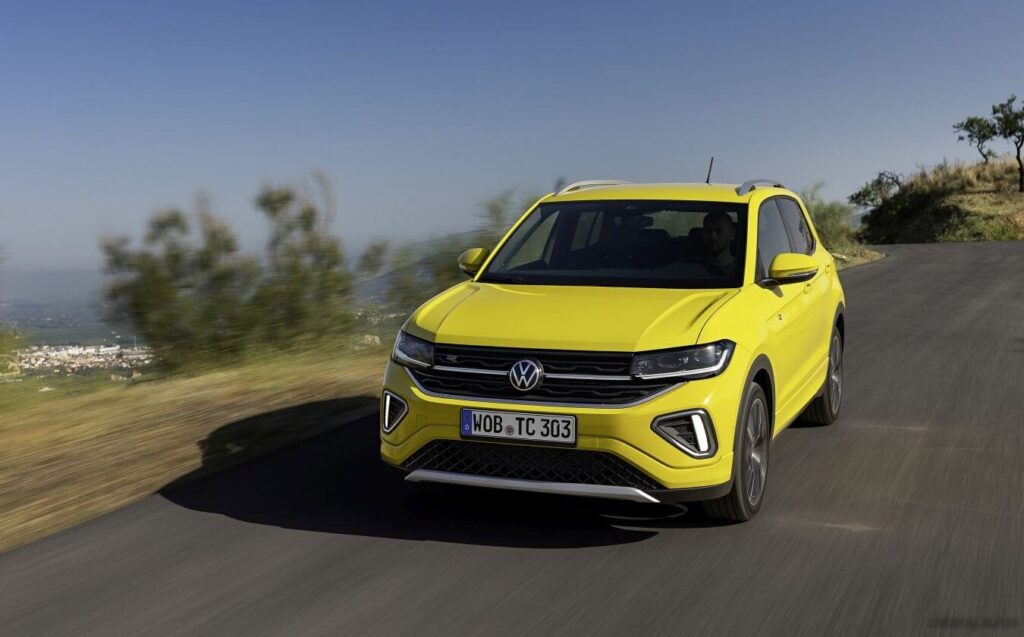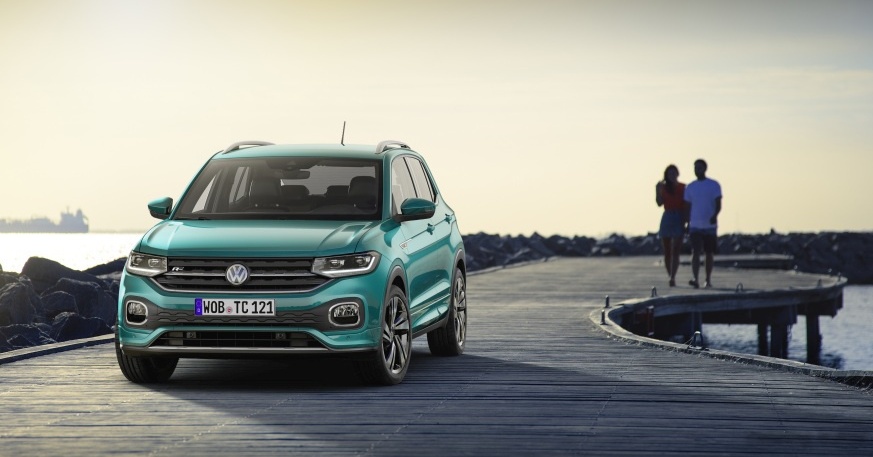
The Volkswagen T-Cross 1.0 TSI (110 hp) represents a key entry point into the T-Cross range, a subcompact crossover SUV introduced by Volkswagen in 2020. Positioned as a more affordable and fuel-efficient option within the lineup, it played a significant role in attracting buyers seeking a practical and modern vehicle in the highly competitive B-segment SUV market, particularly in Europe and Latin America. Production of this specific variant ran from 2020 through 2023, forming a core part of the initial T-Cross offering. The T-Cross itself is built on the Volkswagen Group’s MQB A0 platform, shared with models like the Volkswagen Polo and SEAT Ibiza.
Technical Specifications
| Brand | Volkswagen |
| Model | T-Cross |
| Generation | T-Cross |
| Type (Engine) | 1.0 TSI (110 Hp) |
| Start of production | 2020 |
| End of production | 2023 |
| Powertrain Architecture | Internal Combustion engine |
| Body type | SUV |
| Seats | 5 |
| Doors | 5 |
| Fuel consumption at Low speed (WLTP) | 7.2 l/100 km (32.7 US mpg, 39.2 UK mpg, 13.9 km/l) |
| Fuel consumption at Medium speed (WLTP) | 5.5 l/100 km (42.8 US mpg, 51.4 UK mpg, 18.2 km/l) |
| Fuel consumption at high speed (WLTP) | 4.9 l/100 km (48 US mpg, 57.6 UK mpg, 20.4 km/l) |
| Fuel consumption at very high speed (WLTP) | 6.1 l/100 km (38.6 US mpg, 46.3 UK mpg, 16.4 km/l) |
| Combined fuel consumption (WLTP) | 5.8 l/100 km (40.6 US mpg, 48.7 UK mpg, 17.2 km/l) |
| CO2 emissions (WLTP) | 131 g/km |
| Fuel consumption (economy) – urban | 5.8-6.0 l/100 km (40.6 – 39.2 US mpg, 48.7 – 47.1 UK mpg, 17.2 – 16.7 km/l) |
| Fuel consumption (economy) – extra urban | 4.3-4.5 l/100 km (54.7 – 52.3 US mpg, 65.7 – 62.8 UK mpg, 23.3 – 22.2 km/l) |
| Fuel consumption (economy) – combined | 4.8-5.1 l/100 km (49 – 46.1 US mpg, 58.9 – 55.4 UK mpg, 20.8 – 19.6 km/l) |
| CO2 emissions | 110-116 g/km |
| Fuel Type | Petrol (Gasoline) |
| Acceleration 0 – 100 km/h | 9.9 sec |
| Acceleration 0 – 62 mph | 9.9 sec |
| Acceleration 0 – 60 mph | 9.4 sec |
| Maximum speed | 189 km/h (117.44 mph) |
| Emission standard | Euro 6d-ISC-FCM |
| Weight-to-power ratio | 10.9 kg/Hp, 91.5 Hp/tonne |
| Weight-to-torque ratio | 6 kg/Nm, 166.4 Nm/tonne |
| Power | 110 Hp @ 5500 rpm |
| Power per litre | 110.1 Hp/l |
| Torque | 200 Nm @ 2000-3000 rpm (147.51 lb.-ft. @ 2000-3000 rpm) |
| Engine layout | Front, Transverse |
| Engine Model/Code | DLAA |
| Engine displacement | 999 cm3 (60.96 cu. in.) |
| Number of cylinders | 3 |
| Engine configuration | Inline |
| Number of valves per cylinder | 4 |
| Fuel injection system | Direct injection |
| Engine aspiration | Turbocharger, Intercooler |
| Engine oil capacity | 4 l (4.23 US qt | 3.52 UK qt) |
| Kerb Weight | 1202 kg (2649.96 lbs.) |
| Max. weight | 1750 kg (3858.09 lbs.) |
| Max load | 548 kg (1208.13 lbs.) |
| Trunk (boot) space – minimum | 455 l (16.07 cu. ft.) |
| Trunk (boot) space – maximum | 1281 l (45.24 cu. ft.) |
| Fuel tank capacity | 40 l (10.57 US gal | 8.8 UK gal) |
| Max. roof load | 75 kg (165.35 lbs.) |
| Permitted trailer load with brakes (8%) | 1200 kg (2645.55 lbs.) |
| Permitted trailer load with brakes (12%) | 1100 kg (2425.08 lbs.) |
| Permitted trailer load without brakes | 630 kg (1388.91 lbs.) |
| Permitted towbar download | 55 kg (121.25 lbs.) |
| Length | 4108-4235 mm (161.73 – 166.73 in.) |
| Width | 1760 mm (69.29 in.) |
| Width with mirrors folded | 1782 mm (70.16 in.) |
| Width including mirrors | 1977 mm (77.83 in.) |
| Height | 1584 mm (62.36 in.) |
| Wheelbase | 2551 mm (100.43 in.) |
| Front track | 1526-1534 mm (60.08 – 60.39 in.) |
| Rear (Back) track | 1504-1512 mm (59.21 – 59.53 in.) |
| Minimum turning circle (turning diameter) | 10.6 m (34.78 ft.) |
| Drivetrain Architecture | The Internal combustion engine (ICE) drives the front wheels of the vehicle. |
| Drive wheel | Front wheel drive |
| Number of gears and type of gearbox | 6 gears, manual transmission |
| Front suspension | Coil spring, Independent type McPherson |
| Rear suspension | Torsion |
| Front brakes | Ventilated discs |
| Rear brakes | Drum |
Powertrain & Engine Architecture
The heart of the T-Cross 1.0 TSI (110 hp) is the Volkswagen DLAA engine, a 1.0-liter, three-cylinder turbocharged gasoline engine. This engine is part of Volkswagen’s EA288 family, known for its compact size and efficiency. It utilizes direct fuel injection and a single scroll turbocharger with intercooling to deliver a balance of power and fuel economy. The engine produces 110 horsepower at 5500 rpm and 200 Nm (147.51 lb-ft) of torque between 2000 and 3000 rpm. The engine’s aluminum block and cylinder head contribute to its relatively lightweight design. The engine is paired with a 6-speed manual transmission, sending power to the front wheels. While a 7-speed DSG dual-clutch automatic transmission was available on other T-Cross trims, the 110 hp version was primarily offered with the manual gearbox.
Driving Characteristics
The 1.0 TSI (110 hp) T-Cross offers a comfortable and practical driving experience, geared towards urban and suburban use. Acceleration from 0 to 60 mph takes approximately 9.4 seconds, and it reaches a top speed of 117.44 mph. The turbocharger provides a noticeable boost in power, but the engine can feel somewhat strained when pushed hard, particularly when fully loaded. The 6-speed manual transmission is well-matched to the engine, offering precise shifts and allowing drivers to keep the engine in its optimal torque band. Compared to higher-output T-Cross variants, such as those with the 1.5 TSI engine, the 1.0 TSI feels less responsive and requires more gear changes during overtaking maneuvers. However, its lighter weight and efficient engine contribute to better fuel economy.
Equipment & Trim Levels
The T-Cross 1.0 TSI (110 hp) typically served as the entry-level trim, offering a good level of standard equipment. This generally included features like air conditioning, a touchscreen infotainment system with Apple CarPlay and Android Auto compatibility, Bluetooth connectivity, and a suite of safety features such as automatic emergency braking and lane departure warning. Interior upholstery was typically cloth, and the dashboard featured a functional, if somewhat minimalist, design. Optional extras included alloy wheels, a larger touchscreen display, a rearview camera, and parking sensors. Higher trim levels added features like climate control, upgraded upholstery, and more advanced driver-assistance systems.
Chassis & Braking
The T-Cross utilizes a McPherson strut front suspension and a torsion beam rear suspension. This setup provides a comfortable ride quality, well-suited for everyday driving. The front brakes are ventilated discs, while the rear brakes are drums. This configuration is typical for vehicles in this weight class and price range. The steering is electrically assisted, providing light and precise control. The T-Cross’s relatively compact size and nimble handling make it easy to maneuver in urban environments.
Market Reception & Comparison
The T-Cross 1.0 TSI (110 hp) was generally well-received by critics as a practical and affordable subcompact SUV. Its fuel efficiency and low running costs were particularly praised. However, some reviewers noted that the engine could feel underpowered, especially when carrying passengers or luggage. Compared to other trims in the T-Cross lineup, the 1.0 TSI offered the best fuel economy but the least amount of performance. It competed with other popular subcompact SUVs like the Renault Captur, Peugeot 2008, and SEAT Arona, offering a compelling combination of value, practicality, and style.
Legacy
The Volkswagen T-Cross 1.0 TSI (110 hp) has proven to be a reliable and durable vehicle. The EA288 engine family is known for its longevity, and the T-Cross’s relatively simple mechanical design contributes to its overall reliability. On the used car market, these models represent a good value proposition for buyers seeking an affordable and fuel-efficient subcompact SUV. While not the most powerful or luxurious option in its class, the T-Cross 1.0 TSI offers a practical and dependable transportation solution.