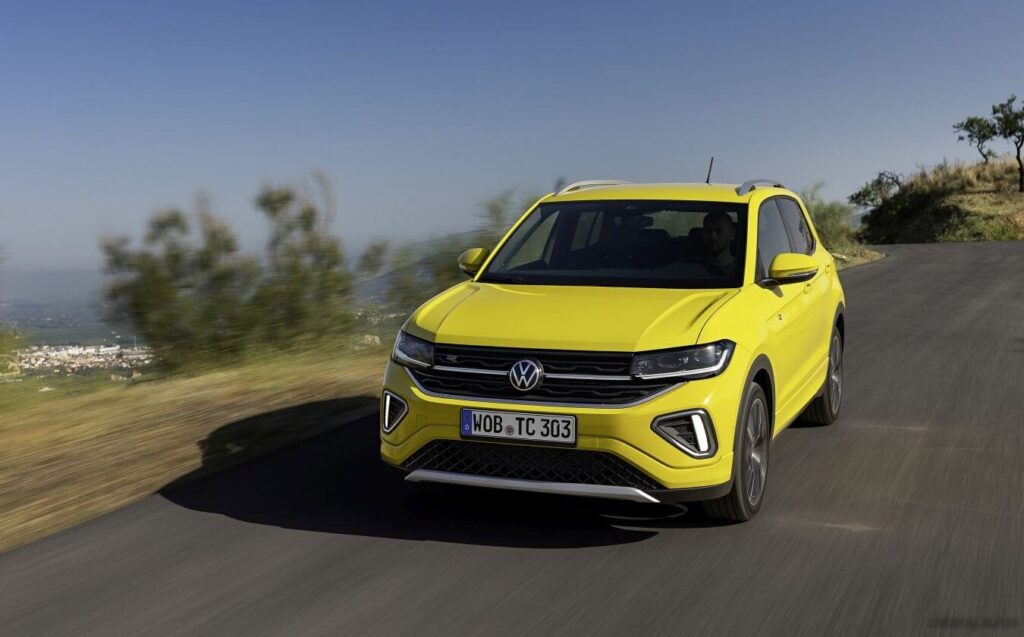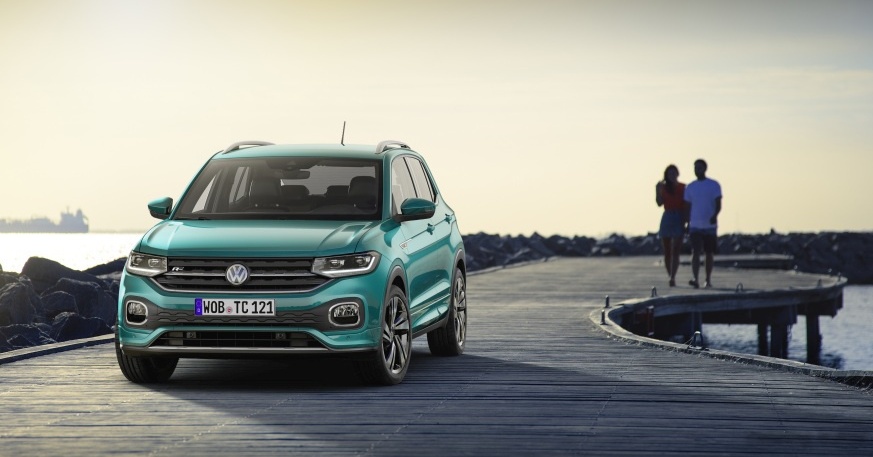
The Volkswagen T-Cross 1.0 TSI (115 hp) with OPF (Otto Particulate Filter) was a front-wheel-drive subcompact SUV produced from 2019 to 2020. Positioned as an entry-level to mid-range offering within the T-Cross lineup, it represented Volkswagen’s attempt to capture a significant share of the rapidly growing small SUV market, particularly in Europe. The T-Cross, built on the MQB A0 platform (shared with the Volkswagen Polo), aimed to provide a practical, affordable, and relatively fuel-efficient option for urban drivers and small families. This variant was notable for its combination of a downsized turbocharged engine and a manual transmission, offering a balance between performance and economy.
Technical Specifications
| Brand | Volkswagen |
| Model | T-Cross |
| Generation | T-Cross |
| Type (Engine) | 1.0 TSI (115 Hp) OPF |
| Start of production | 2019 |
| End of production | 2020 |
| Powertrain Architecture | Internal Combustion engine |
| Body type | SUV |
| Seats | 5 |
| Doors | 5 |
| Fuel consumption (urban) | 5.8 l/100 km (40.6 US mpg, 48.7 UK mpg, 17.2 km/l) |
| Fuel consumption (extra urban) | 4.4 l/100 km (53.5 US mpg, 64.2 UK mpg, 22.7 km/l) |
| Fuel consumption (combined) | 4.9 l/100 km (48 US mpg, 57.6 UK mpg, 20.4 km/l) |
| CO2 emissions | 112 g/km |
| Fuel Type | Petrol (Gasoline) |
| Acceleration 0 – 100 km/h | 10.2 sec |
| Acceleration 0 – 62 mph | 10.2 sec |
| Acceleration 0 – 60 mph | 9.7 sec |
| Maximum speed | 193 km/h (119.92 mph) |
| Emission standard | Euro 6d – TEMP |
| Weight-to-power ratio | 10.9 kg/Hp, 92 Hp/tonne |
| Weight-to-torque ratio | 6.3 kg/Nm, 160 Nm/tonne |
| Power | 115 Hp @ 5500 rpm |
| Power per litre | 115.1 Hp/l |
| Torque | 200 Nm @ 2000-3500 rpm (147.51 lb.-ft. @ 2000-3500 rpm) |
| Engine layout | Front, Transverse |
| Engine Model/Code | DKRA, DKRF |
| Engine displacement | 999 cm3 (60.96 cu. in.) |
| Number of cylinders | 3 |
| Engine configuration | Inline |
| Number of valves per cylinder | 4 |
| Fuel injection system | Direct injection |
| Engine aspiration | Turbocharger, Intercooler |
| Engine oil capacity | 4 l (4.23 US qt | 3.52 UK qt) |
| Kerb Weight | 1250 kg (2755.78 lbs.) |
| Max. weight | 1730 kg (3814 lbs.) |
| Max load | 480 kg (1058.22 lbs.) |
| Trunk (boot) space – minimum | 455 l (16.07 cu. ft.) |
| Trunk (boot) space – maximum | 1281 l (45.24 cu. ft.) |
| Fuel tank capacity | 40 l (10.57 US gal | 8.8 UK gal) |
| Max. roof load | 75 kg (165.35 lbs.) |
| Permitted trailer load with brakes (8%) | 1200 kg (2645.55 lbs.) |
| Permitted trailer load with brakes (12%) | 1100 kg (2425.08 lbs.) |
| Permitted trailer load without brakes | 620 kg (1366.87 lbs.) |
| Permitted towbar download | 55 kg (121.25 lbs.) |
| Length | 4108-4235 mm (161.73 – 166.73 in.) |
| Width | 1760 mm (69.29 in.) |
| Width with mirrors folded | 1782 mm (70.16 in.) |
| Height | 1584 mm (62.36 in.) |
| Wheelbase | 2551 mm (100.43 in.) |
| Front track | 1526-1534 mm (60.08 – 60.39 in.) |
| Rear (Back) track | 1504-1512 mm (59.21 – 59.53 in.) |
| Approach angle | 16.6° |
| Departure angle | 18.5° |
| Ramp-over (brakeover) angle | 14.0° |
| Drivetrain Architecture | The Internal combustion engine (ICE) drives the front wheels of the vehicle. |
| Drive wheel | Front wheel drive |
| Number of gears and type of gearbox | 6 gears, manual transmission |
| Front suspension | Double wishbone |
| Rear suspension | Torsion |
| Front brakes | Ventilated discs |
| Rear brakes | Disc |
| Assisting systems | ABS (Anti-lock braking system) |
| Steering type | Steering rack and pinion |
| Power steering | Electric Steering |
Powertrain & Engine Architecture
The heart of the T-Cross 1.0 TSI was the EA288 engine family, specifically the 1.0-liter three-cylinder turbocharged gasoline engine. Engine codes DKRA and DKRF were commonly used for this configuration. This engine utilized direct fuel injection, a technology that improves fuel efficiency and reduces emissions by injecting fuel directly into the combustion chamber. The engine also featured an intercooler to cool the intake air, further enhancing performance. The turbocharger, a key component, provided a boost in power despite the small displacement. The engine’s valvetrain employed four valves per cylinder, optimizing gas flow for improved efficiency and power output. The T-Cross 1.0 TSI was paired with a six-speed manual transmission, chosen for its affordability and driver engagement. This transmission was selected to maximize fuel economy and provide a reasonably responsive driving experience.
Driving Characteristics
The 115 hp 1.0 TSI engine in the T-Cross provided adequate, though not exhilarating, performance. Acceleration from 0-60 mph took approximately 9.7 seconds, and top speed was around 119.92 mph. The engine’s 200 Nm (147.51 lb-ft) of torque, available from 2000-3500 rpm, provided sufficient pulling power for everyday driving situations. The six-speed manual transmission allowed drivers to keep the engine in its optimal power band. Compared to higher-output versions of the T-Cross, such as those with the 1.5 TSI engine, the 1.0 TSI felt less powerful, particularly when fully loaded or tackling steep inclines. However, the 1.0 TSI offered a more economical driving experience, making it well-suited for urban commutes and shorter journeys. The gear ratios were tuned for fuel efficiency, resulting in a slightly less sporty feel than some competitors.
Equipment & Trim Levels
The T-Cross 1.0 TSI typically came with a reasonable level of standard equipment. This included air conditioning, a touchscreen infotainment system with Bluetooth connectivity, power windows, and central locking. Safety features such as ABS, electronic stability control, and multiple airbags were also standard. Higher trim levels offered additional features such as alloy wheels, a larger touchscreen display, a rearview camera, and parking sensors. Interior upholstery was typically cloth, with options for upgraded materials on higher trims. Optional extras included a panoramic sunroof, adaptive cruise control, and a premium sound system.
Chassis & Braking
The T-Cross utilized a front-wheel-drive configuration with a double wishbone suspension setup at the front and a torsion beam suspension at the rear. This suspension setup provided a comfortable ride quality, suitable for everyday driving. The front brakes were ventilated discs, offering good stopping power, while the rear brakes were solid discs. The electric power steering provided light and precise steering feel. The chassis was designed to balance handling with ride comfort, prioritizing stability and ease of driving over outright sportiness.
Market Reception & Comparison
The Volkswagen T-Cross 1.0 TSI was generally well-received by automotive critics. It was praised for its fuel efficiency, comfortable ride, and practical interior. However, some critics noted that the engine could feel underpowered, particularly when the vehicle was fully loaded. Compared to other subcompact SUVs in its class, such as the Renault Captur and Peugeot 2008, the T-Cross offered a competitive level of equipment and a refined driving experience. Its fuel economy was comparable to its rivals, and its reliability was generally considered to be good. The 1.0 TSI variant was often seen as a sensible choice for buyers prioritizing economy and practicality over outright performance.
Legacy
The 1.0 TSI engine, in general, has proven to be a relatively reliable powertrain, although some owners have reported issues with the timing chain. Regular maintenance, including oil changes and timing chain inspections, is crucial for ensuring long-term reliability. On the used car market, the T-Cross 1.0 TSI remains a popular choice due to its affordability, fuel efficiency, and practicality. Its compact size and easy maneuverability make it well-suited for urban environments. The combination of Volkswagen build quality and a relatively simple engine design contribute to its continued appeal.