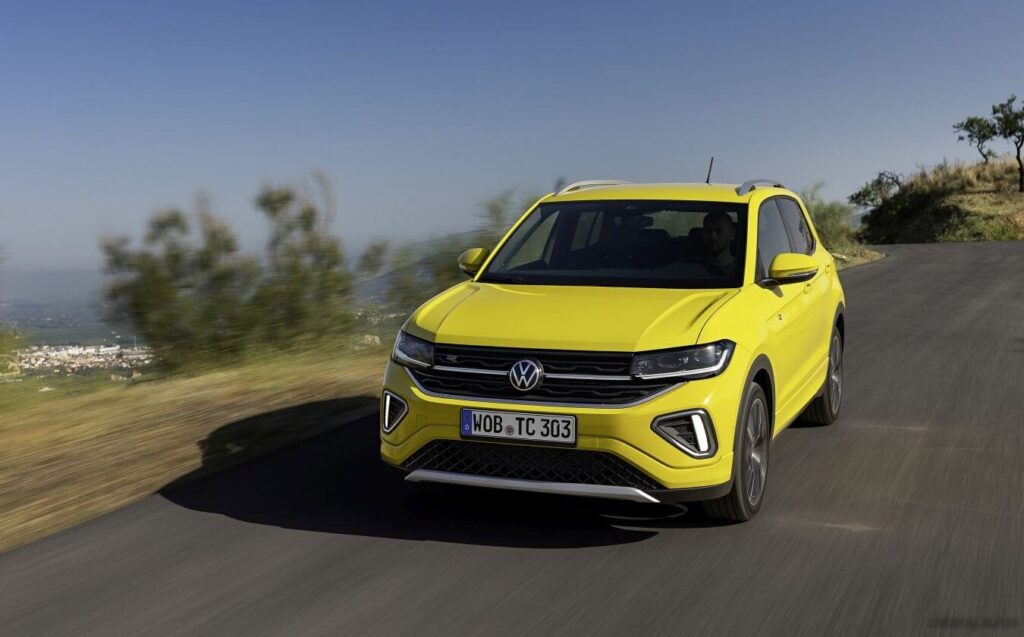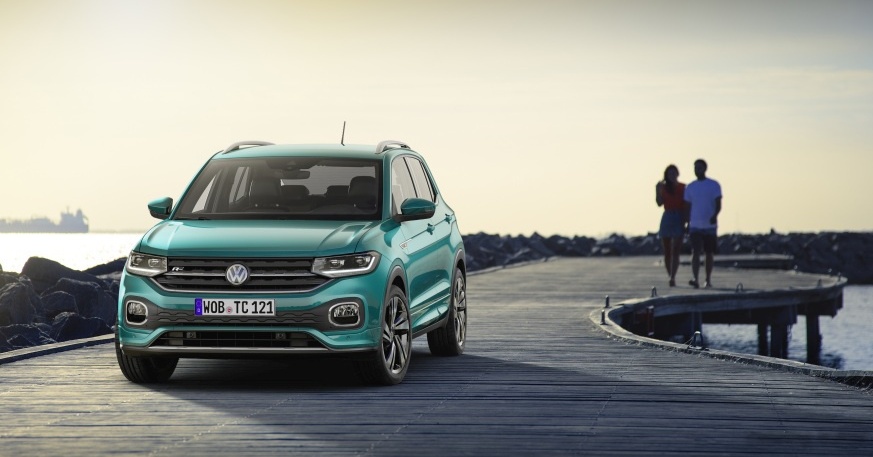
The Volkswagen T-Cross 1.6 TDI (95 hp) was a subcompact crossover SUV produced from 2019 to 2020, primarily aimed at the European market. Positioned as an entry-level offering within the T-Cross range, it provided a diesel-powered option for buyers seeking fuel efficiency and practicality in a small package. The T-Cross itself represented Volkswagen’s entry into the rapidly growing subcompact SUV segment, designed to appeal to younger buyers and those needing a versatile urban vehicle. It’s built on the MQB A0 platform, shared with the Volkswagen Polo and SEAT Ibiza.
Technical Specifications
| Brand | Volkswagen |
| Model | T-Cross |
| Generation | T-Cross |
| Type (Engine) | 1.6 TDI (95 Hp) |
| Start of production | 2019 |
| End of production | 2020 |
| Powertrain Architecture | Internal Combustion engine |
| Body type | SUV |
| Seats | 5 |
| Doors | 5 |
| Fuel consumption (economy) – urban | 4.9 l/100 km (48 US mpg, 57.6 UK mpg, 20.4 km/l) |
| Fuel consumption (economy) – extra urban | 3.7 l/100 km (63.6 US mpg, 76.3 UK mpg, 27 km/l) |
| Fuel consumption (economy) – combined | 4.2 l/100 km (56 US mpg, 67.3 UK mpg, 23.8 km/l) |
| CO2 emissions | 110 g/km |
| Fuel Type | Diesel |
| Acceleration 0 – 100 km/h | 11.9 sec |
| Acceleration 0 – 62 mph | 11.9 sec |
| Acceleration 0 – 60 mph | 11.3 sec |
| Maximum speed | 180 km/h (111.85 mph) |
| Emission standard | Euro 6d – TEMP – EVAP |
| Weight-to-power ratio | 14.4 kg/Hp, 69.3 Hp/tonne |
| Weight-to-torque ratio | 5.5 kg/Nm, 182.5 Nm/tonne |
| Power | 95 Hp |
| Power per litre | 59.4 Hp/l |
| Torque | 250 Nm @ 1500-2500 rpm (184.39 lb.-ft. @ 1500-2500 rpm) |
| Engine layout | Front, Transverse |
| Engine Model/Code | DGTD |
| Engine displacement | 1598 cm3 (97.52 cu. in.) |
| Number of cylinders | 4 |
| Engine configuration | Inline |
| Number of valves per cylinder | 4 |
| Fuel injection system | Diesel Commonrail |
| Engine aspiration | Turbocharger, Intercooler |
| Engine oil capacity | 4.7 l (4.97 US qt | 4.14 UK qt) |
| Kerb Weight | 1370 kg (3020.33 lbs.) |
| Max. weight | 1840 kg (4056.51 lbs.) |
| Max load | 470 kg (1036.17 lbs.) |
| Trunk (boot) space – minimum | 455 l (16.07 cu. ft.) |
| Trunk (boot) space – maximum | 1281 l (45.24 cu. ft.) |
| Fuel tank capacity | 40 l (10.57 US gal | 8.8 UK gal) |
| Max. roof load | 75 kg (165.35 lbs.) |
| Permitted trailer load with brakes (8%) | 1200 kg (2645.55 lbs.) |
| Permitted trailer load with brakes (12%) | 1100 kg (2425.08 lbs.) |
| Permitted trailer load without brakes | 680 kg (1499.14 lbs.) |
| Permitted towbar download | 55 kg (121.25 lbs.) |
| Length | 4108-4235 mm (161.73 – 166.73 in.) |
| Width | 1760 mm (69.29 in.) |
| Width with mirrors folded | 1782 mm (70.16 in.) |
| Height | 1584 mm (62.36 in.) |
| Wheelbase | 2551 mm (100.43 in.) |
| Front track | 1526-1534 mm (60.08 – 60.39 in.) |
| Rear (Back) track | 1504-1512 mm (59.21 – 59.53 in.) |
| Approach angle | 16.6° |
| Departure angle | 18.5° |
| Ramp-over (brakeover) angle | 14.0° |
| Drivetrain Architecture | The Internal combustion engine (ICE) drives the front wheels of the vehicle. |
| Drive wheel | Front wheel drive |
| Number of gears and type of gearbox | 5 gears, manual transmission |
| Front suspension | Double wishbone |
| Rear suspension | Torsion |
| Front brakes | Ventilated discs |
| Rear brakes | Disc |
| Assisting systems | ABS (Anti-lock braking system) |
| Steering type | Steering rack and pinion |
| Power steering | Electric Steering |
Powertrain & Engine Architecture
The T-Cross 1.6 TDI utilized the DGTD engine, a member of Volkswagen’s diesel engine family. This 1.6-liter inline-four cylinder engine featured a turbocharger with intercooling and a common rail direct fuel injection system. The engine code ‘DGTD’ signifies a specific calibration of this engine, optimized for efficiency and emissions compliance. The engine produced 95 horsepower and 250 Nm (184 lb-ft) of torque between 1500 and 2500 rpm. This torque curve provided reasonable low-end grunt for everyday driving. The engine incorporated a diesel particulate filter (DPF) to meet stringent Euro 6d emission standards. The engine was paired with a five-speed manual transmission, which was the only transmission option available for this variant.
Driving Characteristics
The 1.6 TDI 95 hp T-Cross offered adequate, but not exhilarating, performance. Acceleration from 0-60 mph took around 11.3 seconds, and top speed was limited to 111.85 mph. The five-speed manual transmission was well-matched to the engine’s characteristics, providing usable gearing for both city and highway driving. While not as quick as higher-powered T-Cross variants, the 1.6 TDI prioritized fuel economy. The turbocharger helped to mitigate turbo lag, delivering a reasonably responsive driving experience. The front-wheel-drive configuration provided predictable handling, although it lacked the all-weather capability of optional all-wheel-drive systems found on some competitors.
Equipment & Trim Levels
The 1.6 TDI typically served as the base trim level for the T-Cross. Standard equipment included air conditioning, a touchscreen infotainment system with Bluetooth connectivity, alloy wheels, and a suite of safety features such as ABS, electronic stability control, and multiple airbags. Higher trim levels added features like automatic climate control, parking sensors, a larger touchscreen display, and advanced driver-assistance systems. Interior upholstery was typically cloth, with options for upgraded materials on higher trims. The dashboard layout was modern and functional, with a focus on ease of use.
Chassis & Braking
The T-Cross featured a front-wheel-drive chassis with a double wishbone front suspension and a torsion beam rear suspension. This setup provided a comfortable ride quality, well-suited for urban environments. The front brakes were ventilated discs, while the rear brakes were solid discs. The electric power steering offered light and precise steering feel. The T-Cross’s relatively lightweight construction contributed to its nimble handling characteristics.
Market Reception & Comparison
The T-Cross 1.6 TDI was generally well-received by automotive critics for its fuel efficiency and practicality. However, some reviewers noted that the engine lacked outright power, particularly when fully loaded or on steep inclines. Compared to the 1.0-liter TSI gasoline engine offered in the T-Cross, the 1.6 TDI provided better fuel economy but less overall performance. The diesel variant appealed to drivers who prioritized low running costs and long-distance cruising. Its main competitors included the Renault Captur, Peugeot 2008, and SEAT Arona, all of which offered similar levels of practicality and fuel efficiency.
Legacy
The Volkswagen T-Cross 1.6 TDI, while a relatively short-lived variant, represents a significant step in Volkswagen’s expansion into the subcompact SUV market. The DGTD engine, while now superseded by newer diesel technologies, proved to be a reliable and fuel-efficient powerplant. On the used car market, these models are often sought after by buyers looking for an economical and practical urban vehicle. Maintenance costs are generally reasonable, although owners should be mindful of the potential for DPF-related issues, particularly if the vehicle has primarily been used for short trips. The T-Cross 1.6 TDI remains a viable option for those seeking a well-built and fuel-efficient subcompact SUV.