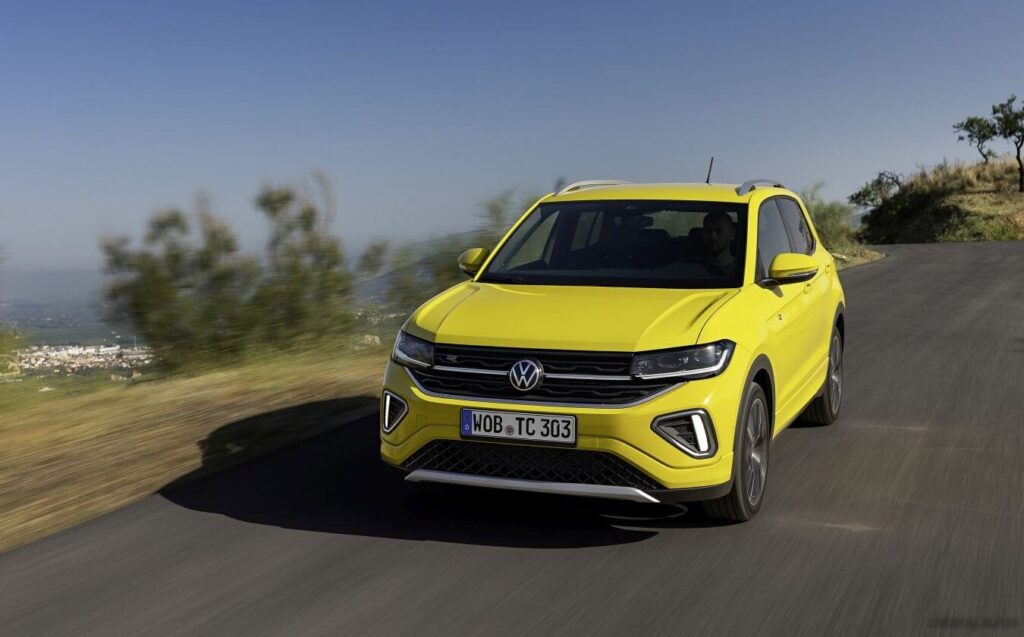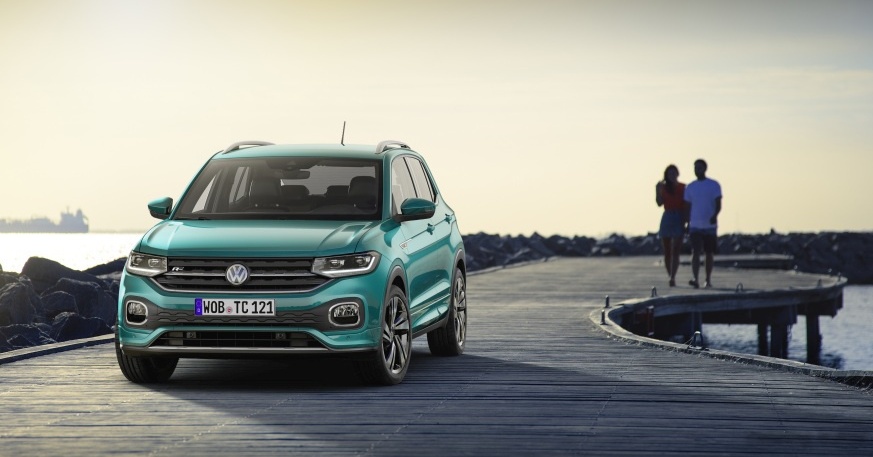
The Volkswagen T-Cross 1.6 TDI (95 hp) DSG was a front-wheel-drive subcompact SUV produced from 2019 to 2020. Positioned as an entry-level offering within the T-Cross range, it aimed to provide fuel efficiency and practicality for urban driving. This variant played a significant role in Volkswagen’s expansion into the rapidly growing subcompact SUV segment, particularly in European markets where diesel engines remained popular. It was built on the Volkswagen Group’s MQB A0 platform, shared with models like the SEAT Arona and Škoda Kamiq.
Technical Specifications
| Brand | Volkswagen |
| Model | T-Cross |
| Generation | T-Cross |
| Type (Engine) | 1.6 TDI (95 Hp) DSG |
| Start of production | 2019 |
| End of production | 2020 |
| Powertrain Architecture | Internal Combustion engine |
| Body type | SUV |
| Seats | 5 |
| Doors | 5 |
| Fuel consumption (urban) | 4.6 l/100 km (51.1 US mpg, 61.4 UK mpg, 21.7 km/l) |
| Fuel consumption (extra urban) | 3.9 l/100 km (60.3 US mpg, 72.4 UK mpg, 25.6 km/l) |
| Fuel consumption (combined) | 4.2 l/100 km (56 US mpg, 67.3 UK mpg, 23.8 km/l) |
| CO2 emissions | 110 g/km |
| Fuel Type | Diesel |
| Acceleration 0 – 100 km/h | 12.5 sec |
| Acceleration 0 – 62 mph | 12.5 sec |
| Acceleration 0 – 60 mph | 11.9 sec |
| Maximum speed | 180 km/h (111.85 mph) |
| Emission standard | Euro 6d – TEMP – EVAP |
| Weight-to-power ratio | 14.6 kg/Hp, 68.3 Hp/tonne |
| Weight-to-torque ratio | 5.6 kg/Nm, 179.9 Nm/tonne |
| Power | 95 Hp |
| Power per litre | 59.4 Hp/l |
| Torque | 250 Nm @ 1500-2500 rpm (184.39 lb.-ft. @ 1500-2500 rpm) |
| Engine layout | Front, Transverse |
| Engine Model/Code | DGTD |
| Engine displacement | 1598 cm3 (97.52 cu. in.) |
| Number of cylinders | 4 |
| Engine configuration | Inline |
| Number of valves per cylinder | 4 |
| Fuel injection system | Diesel Commonrail |
| Engine aspiration | Turbocharger, Intercooler |
| Engine oil capacity | 4.7 l (4.97 US qt | 4.14 UK qt) |
| Kerb Weight | 1390 kg (3064.43 lbs.) |
| Max. weight | 1860 kg (4100.6 lbs.) |
| Max load | 470 kg (1036.17 lbs.) |
| Trunk (boot) space – minimum | 455 l (16.07 cu. ft.) |
| Trunk (boot) space – maximum | 1281 l (45.24 cu. ft.) |
| Fuel tank capacity | 40 l (10.57 US gal | 8.8 UK gal) |
| Max. roof load | 75 kg (165.35 lbs.) |
| Permitted trailer load with brakes (8%) | 1200 kg (2645.55 lbs.) |
| Permitted trailer load with brakes (12%) | 1100 kg (2425.08 lbs.) |
| Permitted trailer load without brakes | 690 kg (1521.19 lbs.) |
| Permitted towbar download | 55 kg (121.25 lbs.) |
| Length | 4108-4235 mm (161.73 – 166.73 in.) |
| Width | 1760 mm (69.29 in.) |
| Width with mirrors folded | 1782 mm (70.16 in.) |
| Height | 1584 mm (62.36 in.) |
| Wheelbase | 2551 mm (100.43 in.) |
| Front track | 1526-1534 mm (60.08 – 60.39 in.) |
| Rear (Back) track | 1504-1512 mm (59.21 – 59.53 in.) |
| Approach angle | 16.6° |
| Departure angle | 18.5° |
| Ramp-over (brakeover) angle | 14.0° |
| Drivetrain Architecture | The Internal combustion engine (ICE) drives the front wheels of the vehicle. |
| Drive wheel | Front wheel drive |
| Number of gears and type of gearbox | 7 gears, automatic transmission DSG |
| Front suspension | Double wishbone |
| Rear suspension | Torsion |
| Front brakes | Ventilated discs |
| Rear brakes | Disc |
| Assisting systems | ABS (Anti-lock braking system) |
| Steering type | Steering rack and pinion |
| Power steering | Electric Steering |
Powertrain & Engine Architecture
The T-Cross 1.6 TDI utilized the DGTD engine, a 1.6-liter inline-four cylinder diesel engine. This engine was part of Volkswagen’s EA188 family, known for its relatively compact size and efficiency. It featured a turbocharger with an intercooler to boost power output and improve combustion. The engine employed a common rail direct injection system, delivering fuel directly into the cylinders at high pressure for optimized fuel atomization and combustion. The DGTD engine produced 95 horsepower and 250 Nm (184 lb-ft) of torque between 1500 and 2500 rpm. This torque curve provided good low-end responsiveness, suitable for everyday driving. The engine was paired with a 7-speed dual-clutch transmission (DSG), which offered quick and smooth gear changes. The DSG transmission contributed to both fuel efficiency and a more engaging driving experience compared to a traditional automatic.
Driving Characteristics
The 1.6 TDI DSG variant of the T-Cross offered a comfortable and economical driving experience. While not particularly sporty, the engine provided adequate power for urban and highway driving. Acceleration from 0 to 100 km/h (0-62 mph) took around 12.5 seconds. The DSG transmission helped to maximize the available power, providing seamless shifts and keeping the engine in its optimal power band. Compared to the more powerful gasoline engines available in the T-Cross lineup, the 1.6 TDI prioritized fuel economy over outright performance. The gear ratios were tuned for efficiency, resulting in lower engine speeds at cruising speeds. This contributed to reduced noise and vibration, enhancing comfort on long journeys. The front-wheel-drive configuration provided predictable handling, although it lacked the all-weather capability of all-wheel-drive systems.
Equipment & Trim Levels
The T-Cross 1.6 TDI DSG typically came with a reasonable level of standard equipment. This included air conditioning, a touchscreen infotainment system with Bluetooth connectivity, power windows, and central locking. Safety features such as ABS, electronic stability control, and multiple airbags were also standard. Higher trim levels offered additional features like alloy wheels, a larger touchscreen display, automatic climate control, and parking sensors. Interior upholstery was typically cloth, with options for upgraded materials available. The dashboard layout was modern and functional, with a focus on ease of use. Optional extras included a panoramic sunroof, navigation system, and adaptive cruise control.
Chassis & Braking
The T-Cross featured a MacPherson strut front suspension and a torsion beam rear suspension. This setup provided a good balance between ride comfort and handling. The front brakes were ventilated discs, while the rear brakes were solid discs. The steering was electric power-assisted, offering light and precise control. The chassis was tuned to prioritize comfort and stability, rather than sporty handling. The relatively lightweight construction of the T-Cross helped to contribute to its fuel efficiency and agility. Stabilizer bars were fitted to both the front and rear axles to reduce body roll during cornering.
Market Reception & Comparison
The Volkswagen T-Cross 1.6 TDI DSG was generally well-received by automotive critics for its fuel efficiency, practicality, and comfortable ride. However, some reviewers noted that the engine lacked the punch of the more powerful gasoline alternatives. Compared to other trims in the T-Cross lineup, the 1.6 TDI offered the best fuel economy but the slowest acceleration. It was often seen as a sensible choice for drivers who prioritized running costs over performance. In terms of reliability, the 1.6 TDI engine had a generally good reputation, although diesel engines can be more susceptible to issues with the diesel particulate filter (DPF) if not driven on longer journeys regularly.
Legacy
The Volkswagen T-Cross 1.6 TDI DSG, while only produced for a short period, remains a popular choice in the used car market, particularly for those seeking a fuel-efficient and practical subcompact SUV. The 1.6 TDI engine, while now superseded by newer engine technologies, is known for its durability and relatively low maintenance costs. The DSG transmission, when properly maintained, is also a reliable unit. As with any used car, potential buyers should check for a full service history and ensure that the DPF has been properly maintained. The T-Cross 1.6 TDI DSG represents a solid and dependable option for urban commuters and small families.