
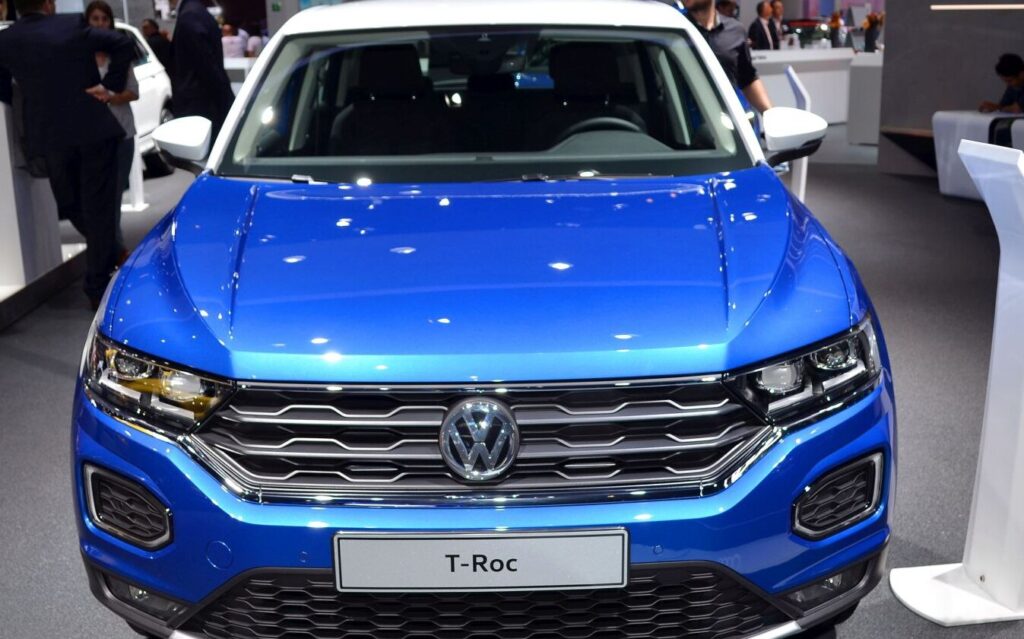
The Volkswagen T-Roc 1.6 TDI (116 hp) was a front-wheel-drive subcompact SUV produced between 2018 and 2019. Positioned as an entry-level offering within the first generation (T-Roc I) lineup, it aimed to provide a fuel-efficient and affordable option in the increasingly popular crossover segment. The T-Roc, launched in late 2017, represented Volkswagen’s attempt to capture a younger demographic with a stylish and practical vehicle, and the 1.6 TDI variant was key to achieving broader market penetration, particularly in Europe where diesel engines remained prevalent. It was built on the A05 (PQ25) platform, shared with the Volkswagen Polo, SEAT Ibiza, and Audi A1.
Technical Specifications
| Brand | Volkswagen |
| Model | T-Roc |
| Generation | T-Roc I |
| Type (Engine) | 1.6 TDI (116 Hp) |
| Start of production | 2018 |
| End of production | 2019 |
| Powertrain Architecture | Internal Combustion engine |
| Body type | SUV |
| Seats | 5 |
| Doors | 5 |
| Fuel consumption (urban) | 4.9 l/100 km (48 US mpg, 57.6 UK mpg, 20.4 km/l) |
| Fuel consumption (extra urban) | 3.9 l/100 km (60.3 US mpg, 72.4 UK mpg, 25.6 km/l) |
| Fuel consumption (combined) | 4.3 l/100 km (54.7 US mpg, 65.7 UK mpg, 23.3 km/l) |
| CO2 emissions | 113 g/km |
| Fuel Type | Diesel |
| Acceleration 0 – 100 km/h | 10.9 sec |
| Acceleration 0 – 62 mph | 10.9 sec |
| Acceleration 0 – 60 mph | 10.4 sec |
| Maximum speed | 187 km/h (116.2 mph) |
| Emission standard | Euro 6d-TEMP |
| Weight-to-power ratio | 12 kg/Hp, 83.2 Hp/tonne |
| Weight-to-torque ratio | 5.6 kg/Nm, 179.2 Nm/tonne |
| Power | 116 Hp |
| Power per litre | 72.6 Hp/l |
| Torque | 250 Nm @ 1750-3200 rpm (184.39 lb.-ft. @ 1750-3200 rpm) |
| Engine layout | Front, Transverse |
| Engine Model/Code | DGTE |
| Engine displacement | 1598 cm3 (97.52 cu. in.) |
| Number of cylinders | 4 |
| Engine configuration | Inline |
| Number of valves per cylinder | 4 |
| Fuel injection system | Diesel Commonrail |
| Engine aspiration | Turbocharger, Intercooler |
| Engine oil capacity | 4.7 l (4.97 US qt | 4.14 UK qt) |
| Kerb Weight | 1395 kg (3075.45 lbs.) |
| Max. weight | 1890 kg (4166.74 lbs.) |
| Max load | 495 kg (1091.29 lbs.) |
| Trunk (boot) space – minimum | 445 l (15.72 cu. ft.) |
| Trunk (boot) space – maximum | 1290 l (45.56 cu. ft.) |
| Fuel tank capacity | 50 l (13.21 US gal | 11 UK gal) |
| Max. roof load | 75 kg (165.35 lbs.) |
| Permitted trailer load with brakes (8%) | 1800 kg (3968.32 lbs.) |
| Permitted trailer load with brakes (12%) | 1500 kg (3306.93 lbs.) |
| Permitted trailer load without brakes | 690 kg (1521.19 lbs.) |
| Permitted towbar download | 80 kg (176.37 lbs.) |
| Length | 4234 mm (166.69 in.) |
| Width | 1819 mm (71.61 in.) |
| Height | 1573 mm (61.93 in.) |
| Wheelbase | 2590 mm (101.97 in.) |
| Front track | 1538-1546 mm (60.55 – 60.87 in.) |
| Rear (Back) track | 1533-1541 mm (60.35 – 60.67 in.) |
| Minimum turning circle | 11.1 m (36.42 ft.) |
| Drivetrain Architecture | Front wheel drive |
| Number of gears and type of gearbox | 6 gears, manual transmission |
| Front brakes | Ventilated discs |
| Rear brakes | Ventilated discs |
Powertrain & Engine Architecture
The T-Roc 1.6 TDI utilized the Volkswagen Group’s DGTE engine, a 1.6-liter inline-four cylinder diesel engine. This engine was part of the EA188 family, known for its relatively compact design and efficiency. The DGTE featured a turbocharger with an intercooler to boost power and improve combustion. Fuel was delivered via a common rail direct injection system, allowing for precise fuel metering and optimized combustion. The engine produced 116 horsepower and 250 Nm (184 lb-ft) of torque between 1750 and 3200 rpm. The engine employed four valves per cylinder and a single overhead camshaft. The 6-speed manual transmission was standard, chosen for its fuel efficiency and lower cost compared to the optional DSG (Direct-Shift Gearbox) available on higher trim levels.
Driving Characteristics
The 1.6 TDI-equipped T-Roc offered a practical and economical driving experience. Acceleration from 0-60 mph took approximately 10.4 seconds, and top speed was around 116 mph. While not particularly sporty, the engine provided adequate power for everyday driving situations. The manual transmission allowed for driver control, but the relatively long gearing emphasized fuel economy over outright performance. Compared to the more powerful 1.5 TSI petrol engine or the 2.0 TDI variants, the 1.6 TDI felt noticeably slower, particularly when fully loaded or tackling uphill climbs. However, its strength lay in its fuel efficiency and relaxed cruising ability.
Equipment & Trim Levels
The 1.6 TDI trim typically represented the base level of the T-Roc range. Standard equipment generally included air conditioning, a touchscreen infotainment system with Bluetooth connectivity, alloy wheels, and a suite of safety features such as ABS, ESC (Electronic Stability Control), and multiple airbags. Interior upholstery was typically cloth. Optional extras included features like parking sensors, a rearview camera, upgraded infotainment systems with navigation, and various styling packages. The interior design was modern and functional, prioritizing usability over luxury.
Chassis & Braking
The T-Roc’s chassis featured a MacPherson strut front suspension and a multi-link rear suspension, providing a good balance between ride comfort and handling. The 1.6 TDI models typically used ventilated disc brakes on all four wheels, offering adequate stopping power for the vehicle’s weight and performance. Electric power steering was standard, providing light and precise steering feel. Stabilizer bars were fitted front and rear to reduce body roll during cornering. The suspension tuning was geared towards comfort, making it well-suited for everyday driving on varied road surfaces.
Market Reception & Comparison
The T-Roc 1.6 TDI was generally well-received by automotive critics as a sensible and economical choice within the subcompact SUV segment. Its fuel economy was a major selling point, particularly in Europe where diesel fuel was often cheaper than petrol. However, some reviewers noted that the engine lacked the refinement and performance of its petrol counterparts. Compared to the 1.5 TSI, the 1.6 TDI offered lower running costs but a less engaging driving experience. The 2.0 TDI provided more power but at a higher price point. The T-Roc as a whole was praised for its stylish design and practical interior.
Legacy
The 1.6 TDI engine, while not known for being particularly exciting, proved to be relatively reliable. Common issues were generally related to the diesel particulate filter (DPF), which could become clogged with soot if the vehicle was primarily used for short trips. Proper maintenance, including regular oil changes and DPF regeneration, was crucial for ensuring long-term reliability. On the used car market, the T-Roc 1.6 TDI remains a popular choice for buyers seeking an affordable and fuel-efficient SUV. Its simplicity and relatively low running costs make it an attractive option for those prioritizing practicality over performance.
