
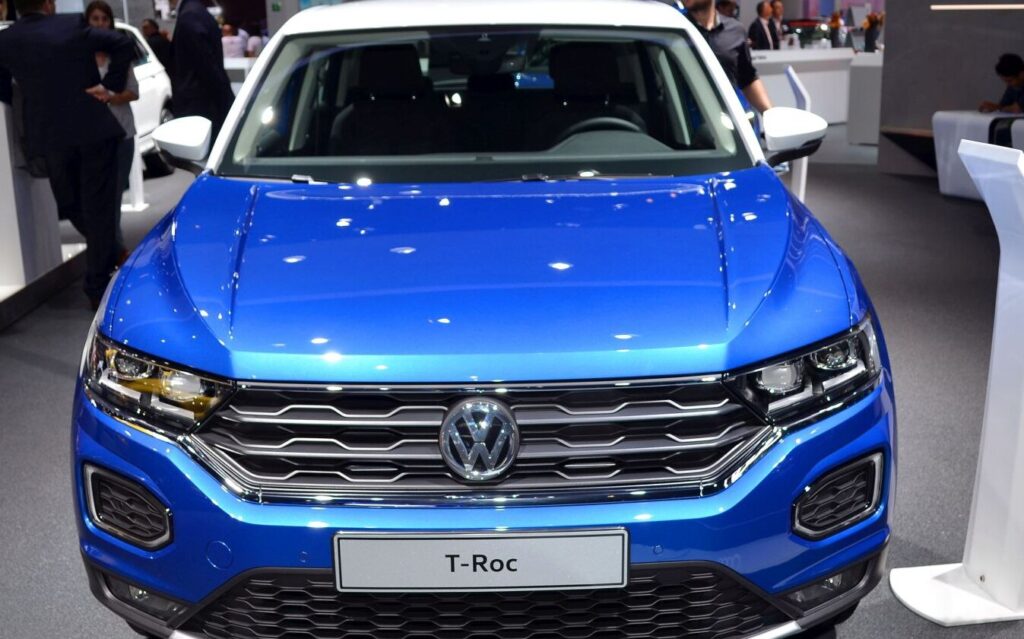
The Volkswagen T-Roc I 2.0 TDI (150 hp) 4MOTION was a compact SUV produced between 2017 and 2018, representing a key variant within the first generation of the T-Roc model line (A11). Positioned as a mid-range offering, it combined a potent diesel engine with Volkswagen’s 4MOTION all-wheel-drive system, targeting buyers seeking practicality, efficiency, and all-weather capability. This model played a significant role in establishing the T-Roc as a popular choice in the highly competitive European small SUV segment, offering a more sophisticated alternative to front-wheel-drive only options.
Technical Specifications
| Brand | Volkswagen |
| Model | T-Roc |
| Generation | T-Roc I |
| Type (Engine) | 2.0 TDI (150 Hp) 4MOTION |
| Start of production | 2017 |
| End of production | 2018 |
| Powertrain Architecture | Internal Combustion engine |
| Body type | SUV |
| Seats | 5 |
| Doors | 5 |
| Fuel consumption (urban) | 6 l/100 km (39.2 US mpg, 47.1 UK mpg, 16.7 km/l) |
| Fuel consumption (extra urban) | 4.5 l/100 km (52.3 US mpg, 62.8 UK mpg, 22.2 km/l) |
| Fuel consumption (combined) | 5 l/100 km (47 US mpg, 56.5 UK mpg, 20 km/l) |
| CO2 emissions | 131 g/km |
| Fuel Type | Diesel |
| Acceleration 0 – 100 km/h | 8.7 sec |
| Acceleration 0 – 62 mph | 8.7 sec |
| Acceleration 0 – 60 mph | 8.3 sec |
| Maximum speed | 200 km/h (124.27 mph) |
| Emission standard | Euro 6 |
| Weight-to-power ratio | 10 kg/Hp, 99.7 Hp/tonne |
| Weight-to-torque ratio | 4.4 kg/Nm, 225.9 Nm/tonne |
| Power | 150 Hp @ 3500-4000 rpm |
| Power per litre | 76.2 Hp/l |
| Torque | 340 Nm @ 1750-3000 rpm (250.77 lb.-ft. @ 1750-3000 rpm) |
| Engine layout | Front, Transverse |
| Engine Model/Code | DFFA |
| Engine displacement | 1968 cm3 (120.09 cu. in.) |
| Number of cylinders | 4 |
| Engine configuration | Inline |
| Number of valves per cylinder | 4 |
| Fuel injection system | Diesel Commonrail |
| Engine aspiration | Turbocharger, Intercooler |
| Engine oil capacity | 4.7 l (4.97 US qt | 4.14 UK qt) |
| Kerb Weight | 1505 kg (3317.96 lbs.) |
| Max. weight | 2020 kg (4453.34 lbs.) |
| Max load | 515 kg (1135.38 lbs.) |
| Fuel tank capacity | 55 l (14.53 US gal | 12.1 UK gal) |
| Max. roof load | 75 kg (165.35 lbs.) |
| Permitted trailer load with brakes (8%) | 1900 kg (4188.78 lbs.) |
| Permitted trailer load with brakes (12%) | 1700 kg (3747.86 lbs.) |
| Permitted trailer load without brakes | 750 kg (1653.47 lbs.) |
| Permitted towbar download | 80 kg (176.37 lbs.) |
| Length | 4234 mm (166.69 in.) |
| Width | 1819 mm (71.61 in.) |
| Height | 1573 mm (61.93 in.) |
| Wheelbase | 2593 mm (102.09 in.) |
| Front track | 1538-1546 mm (60.55 – 60.87 in.) |
| Rear track | 1539-1547 mm (60.59 – 60.91 in.) |
| Minimum turning circle | 11.1 m (36.42 ft.) |
| Drive wheel | All wheel drive (4×4) |
| Number of gears | 6 gears, manual transmission |
| Front brakes | Ventilated discs |
| Rear brakes | Ventilated discs |
INTRODUCTION
The Volkswagen T-Roc I 2.0 TDI (150 hp) 4MOTION, launched in 2017, was a significant addition to Volkswagen’s burgeoning SUV lineup. Built on the MQB platform (specifically the A11 variant shared with the Audi Q2), the T-Roc aimed to attract a younger demographic with its stylish design and available technology. The 2.0 TDI 4MOTION variant occupied a middle ground in the T-Roc range, offering a balance between performance, fuel economy, and all-weather capability. It was positioned above the entry-level 1.0 TSI models and below the more performance-oriented trims.
Powertrain & Engine Architecture
At the heart of the T-Roc 2.0 TDI 4MOTION lies the DFFA engine code, a 1968cc inline-four cylinder diesel engine. This engine is part of Volkswagen’s modular engine family and utilizes a common rail direct injection system, delivering fuel at extremely high pressures for optimized combustion. The engine features a turbocharger with an intercooler, boosting power output to 150 horsepower at 3500-4000 rpm and 340 Nm (250.77 lb-ft) of torque between 1750 and 3000 rpm. The engine also incorporates a diesel particulate filter (DPF) to meet stringent Euro 6 emission standards. The engine is transversely mounted in the front of the vehicle. The 4MOTION system is a sophisticated all-wheel-drive setup utilizing a multi-plate clutch to distribute torque between the front and rear axles as needed, providing enhanced traction in slippery conditions. This particular model was equipped with a 6-speed manual transmission, offering precise gear changes and driver engagement.
Driving Characteristics
The 2.0 TDI 4MOTION T-Roc delivers a composed and capable driving experience. While not overtly sporty, the 150 hp engine provides ample power for everyday driving and overtaking maneuvers. The 4MOTION system significantly enhances grip, particularly on loose surfaces or in inclement weather. The manual transmission allows for a greater degree of driver control, although the gear ratios are tuned more for fuel efficiency than outright acceleration. Compared to the lower-powered 1.0 TSI versions, the 2.0 TDI offers noticeably stronger acceleration and a more relaxed cruising experience. Against higher-output trims, the 2.0 TDI prioritizes fuel economy and torque delivery over peak horsepower, making it a more practical choice for long-distance driving and those who frequently tow or carry loads.
Equipment & Trim Levels
The T-Roc 2.0 TDI 4MOTION typically came equipped with a respectable level of standard features. These included air conditioning, a touchscreen infotainment system with Bluetooth connectivity, alloy wheels, and a suite of safety features such as ABS, ESC (Electronic Stability Control), and multiple airbags. Higher trim levels offered options such as automatic climate control, a larger touchscreen display with navigation, adaptive cruise control, park assist, and a panoramic sunroof. Interior upholstery was typically cloth, with leather options available as an upgrade. Dashboard design was modern and functional, with a focus on ergonomics and ease of use.
Chassis & Braking
The T-Roc I utilizes a MacPherson strut front suspension and a multi-link rear suspension, providing a comfortable ride and good handling characteristics. The 4MOTION variants often featured slightly stiffer suspension tuning compared to front-wheel-drive models to accommodate the added weight and improve stability. Braking duties were handled by ventilated discs on all four wheels, providing ample stopping power. The steering system is an electric power steering setup, offering light and precise steering feel. Stabilizer bars were fitted to both the front and rear axles to reduce body roll during cornering.
Market Reception & Comparison
The Volkswagen T-Roc 2.0 TDI 4MOTION was generally well-received by automotive critics. It was praised for its stylish design, comfortable ride, and capable all-wheel-drive system. Fuel economy was also a strong point, with the 2.0 TDI engine delivering competitive figures in its class. Compared to other small SUVs, the T-Roc offered a more refined driving experience and a higher-quality interior. However, some critics noted that the price was slightly higher than some of its competitors. In terms of reliability, the 2.0 TDI engine has proven to be generally robust, although regular maintenance, including DPF regeneration, is crucial.
Legacy
The Volkswagen T-Roc I 2.0 TDI (150 hp) 4MOTION remains a popular choice in the used car market. Its combination of practicality, efficiency, and all-weather capability continues to appeal to buyers. The 2.0 TDI engine is known for its durability, but potential buyers should be aware of the importance of maintaining the DPF and ensuring regular servicing. The T-Roc’s success helped establish Volkswagen as a major player in the compact SUV segment, paving the way for future iterations and variations of the model.
