
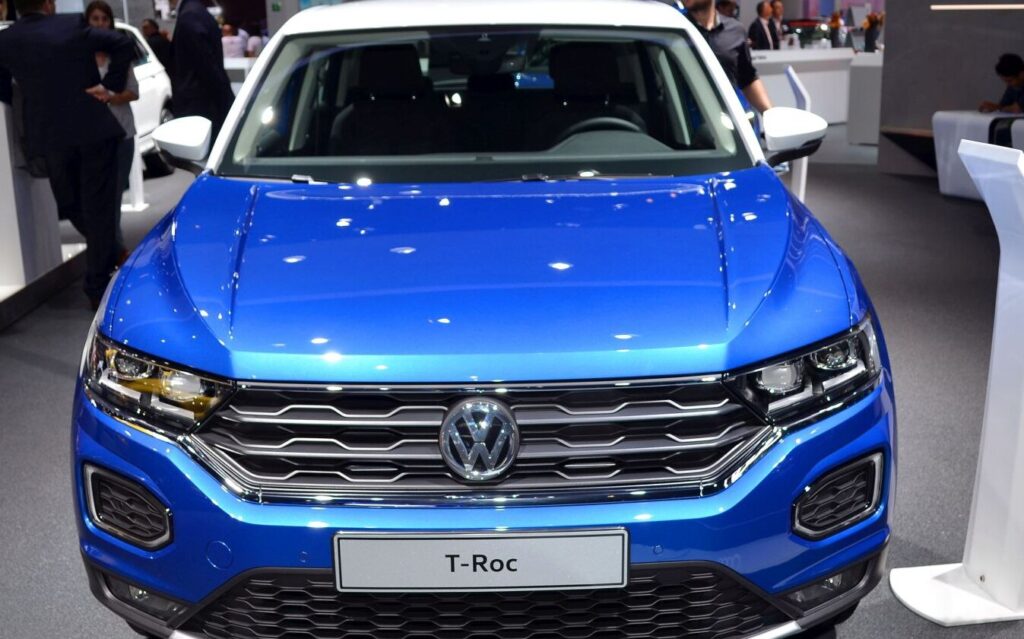
The Volkswagen T-Roc 2.0 TDI 190 hp 4MOTION DSG was a performance-oriented variant of the first-generation T-Roc (A110) compact SUV, produced from 2018 to 2019. Positioned as a near-top-of-the-line offering, it catered to buyers seeking a blend of practicality, style, and spirited driving dynamics within the burgeoning subcompact SUV segment. This model represented Volkswagen’s attempt to offer a more engaging driving experience compared to the base engine options, while still providing the all-weather capability of the 4MOTION all-wheel-drive system. It was primarily marketed in Europe, where compact SUVs were gaining significant popularity.
Technical Specifications
| Brand | Volkswagen |
| Model | T-Roc |
| Generation | T-Roc I |
| Type (Engine) | 2.0 TDI (190 Hp) 4MOTION DSG |
| Start of production | 2018 |
| End of production | 2019 |
| Powertrain Architecture | Internal Combustion engine |
| Body type | SUV |
| Seats | 5 |
| Doors | 5 |
| Fuel consumption (urban) | 5.9 l/100 km (39.9 US mpg, 47.9 UK mpg, 16.9 km/l) |
| Fuel consumption (extra urban) | 4.6 l/100 km (51.1 US mpg, 61.4 UK mpg, 21.7 km/l) |
| Fuel consumption (combined) | 5.1 l/100 km (46.1 US mpg, 55.4 UK mpg, 19.6 km/l) |
| CO2 emissions | 134 g/km |
| Fuel Type | Diesel |
| Acceleration 0 – 100 km/h | 7.2 sec |
| Acceleration 0 – 62 mph | 7.2 sec |
| Acceleration 0 – 60 mph | 6.8 sec |
| Maximum speed | 216 km/h (134.22 mph) |
| Emission standard | Euro 6d-TEMP-EVAP-ISC |
| Weight-to-power ratio | 7.8 kg/Hp, 128.4 Hp/tonne |
| Weight-to-torque ratio | 3.7 kg/Nm, 270.3 Nm/tonne |
| Power | 190 Hp |
| Power per litre | 96.5 Hp/l |
| Torque | 400 Nm @ 1900-3300 rpm (295.02 lb.-ft. @ 1900-3300 rpm) |
| Engine layout | Front, Transverse |
| Engine Model/Code | EA288 / DFHA |
| Engine displacement | 1968 cm3 (120.09 cu. in.) |
| Number of cylinders | 4 |
| Engine configuration | Inline |
| Fuel injection system | Diesel Commonrail |
| Engine aspiration | Turbocharger, Intercooler |
| Engine oil capacity | 4.7 l (4.97 US qt | 4.14 UK qt) |
| Kerb Weight | 1480 kg (3262.84 lbs.) |
| Max. weight | 2060 kg (4541.52 lbs.) |
| Max load | 580 kg (1278.68 lbs.) |
| Trunk (boot) space – minimum | 392 l (13.84 cu. ft.) |
| Trunk (boot) space – maximum | 1237 l (43.68 cu. ft.) |
| Fuel tank capacity | 55 l (14.53 US gal | 12.1 UK gal) |
| Max. roof load | 75 kg (165.35 lbs.) |
| Permitted trailer load with brakes (8%) | 2000 kg (4409.25 lbs.) |
| Permitted trailer load with brakes (12%) | 1800 kg (3968.32 lbs.) |
| Permitted trailer load without brakes | 750 kg (1653.47 lbs.) |
| Permitted towbar download | 80 kg (176.37 lbs.) |
| Length | 4234 mm (166.69 in.) |
| Width | 1819 mm (71.61 in.) |
| Height | 1573 mm (61.93 in.) |
| Wheelbase | 2593 mm (102.09 in.) |
| Drive wheel | All wheel drive (4×4) |
| Number of gears and type of gearbox | 7 gears, automatic transmission DSG |
INTRODUCTION
The Volkswagen T-Roc 2.0 TDI 4MOTION DSG, launched in 2018, was a key variant within the first generation of the T-Roc (A110) series. Built on the MQB platform – specifically the A110 variant shared with the SEAT Arona and Audi Q2 – the T-Roc aimed to attract a younger demographic with its modern styling and available technology. The 2.0 TDI 190 hp model occupied a premium position in the lineup, offering a significant performance upgrade over the lower-powered petrol and diesel engines. It was designed to appeal to drivers who desired a more dynamic driving experience without sacrificing the practicality and fuel efficiency expected of a compact SUV.
Powertrain & Engine Architecture
At the heart of the T-Roc 2.0 TDI 190 hp was the EA288 series four-cylinder diesel engine, specifically the DFHA code. This engine featured a common-rail direct injection system, delivering fuel at extremely high pressures for optimized combustion. A turbocharger with an intercooler further enhanced performance, boosting power output to 190 horsepower and 400 Nm (295 lb-ft) of torque, available from 1900 to 3300 rpm. The engine also incorporated a diesel particulate filter (DPF) to meet stringent Euro 6d-TEMP emission standards. The engine’s transverse mounting and front-wheel-drive bias were typical for Volkswagen’s compact models. Paired with the engine was a seven-speed dual-clutch transmission (DSG), known for its quick and smooth gear changes. This DSG unit was specifically tuned to handle the higher torque output of the 2.0 TDI engine.
Driving Characteristics
The 2.0 TDI 190 hp 4MOTION DSG offered a noticeably more engaging driving experience than the base T-Roc models. The increased power and torque, combined with the responsive DSG transmission, resulted in brisk acceleration – 0 to 62 mph in 7.2 seconds. The 4MOTION all-wheel-drive system provided excellent traction in various conditions, enhancing stability and confidence, particularly on wet or slippery roads. The DSG transmission’s gear ratios were optimized for both acceleration and fuel efficiency. While not a sports SUV, the T-Roc 2.0 TDI offered a composed and capable ride, making it suitable for both daily commuting and longer journeys. Compared to the lower-powered petrol versions, the diesel offered superior torque and fuel economy, albeit with a slightly more audible engine note.
Equipment & Trim Levels
The 2.0 TDI 190 hp 4MOTION DSG typically came with a generous level of standard equipment. This included features like air conditioning, a touchscreen infotainment system with Apple CarPlay and Android Auto compatibility, alloy wheels, and a suite of safety systems such as automatic emergency braking and lane departure warning. Higher trim levels offered options like leather upholstery, a panoramic sunroof, adaptive cruise control, and a premium sound system. Interior upholstery was generally a combination of cloth and leatherette, with a focus on modern design and functionality. The dashboard layout was clean and intuitive, with a driver-focused design.
Chassis & Braking
The T-Roc’s chassis was tuned to provide a balance between comfort and handling. The suspension consisted of MacPherson struts at the front and a multi-link setup at the rear. The 4MOTION system utilized a Haldex multi-plate clutch to distribute torque between the front and rear axles as needed. Braking duties were handled by disc brakes on all four wheels, providing ample stopping power. Stabilizer bars were fitted front and rear to reduce body roll during cornering. The weight distribution was reasonably balanced, contributing to the car’s stable handling characteristics.
Market Reception & Comparison
The T-Roc 2.0 TDI 190 hp 4MOTION DSG was generally well-received by automotive critics. It was praised for its strong performance, comfortable ride, and practical interior. However, some reviewers noted that the price was relatively high compared to other compact SUVs in the segment. Compared to the 1.0 TSI petrol version, the 2.0 TDI offered significantly more torque and better fuel economy, making it a more suitable choice for drivers who frequently cover long distances. Against competitors like the Nissan Qashqai and Peugeot 3008, the T-Roc stood out with its more engaging driving dynamics and stylish design.
Legacy
The EA288 engine, in its various iterations, has proven to be a robust and reliable powertrain. While diesel engines have faced increased scrutiny in recent years, the 2.0 TDI remains a popular choice in the used car market due to its fuel efficiency and longevity. The T-Roc 2.0 TDI 190 hp 4MOTION DSG, while only produced for a short period, has established itself as a desirable variant within the first-generation T-Roc lineup. Proper maintenance, including regular oil changes and DPF servicing, is crucial for ensuring the long-term reliability of this powertrain. Today, well-maintained examples continue to offer a compelling combination of performance, practicality, and value.
