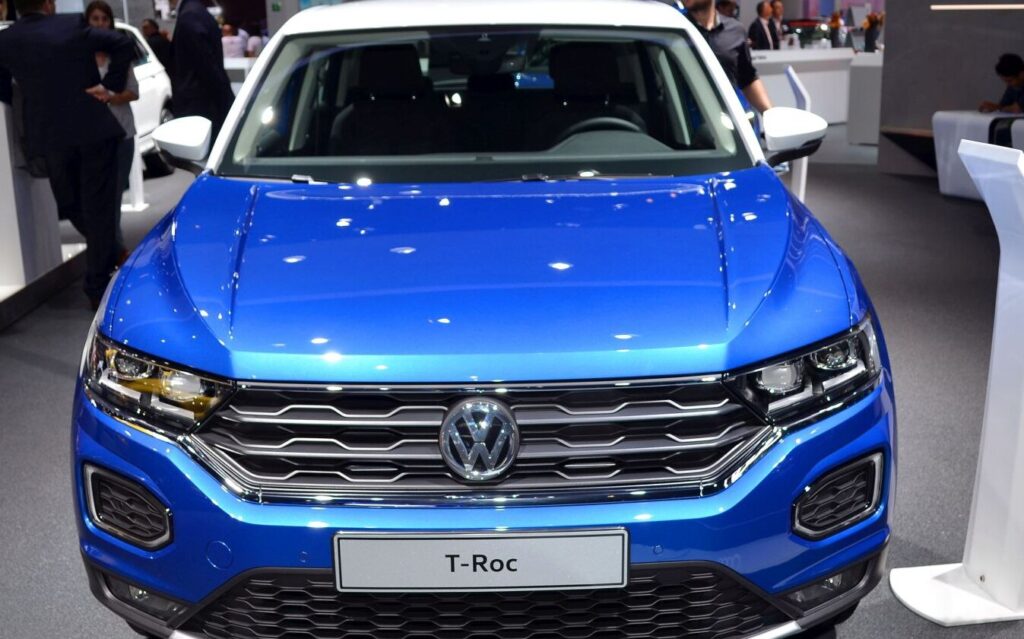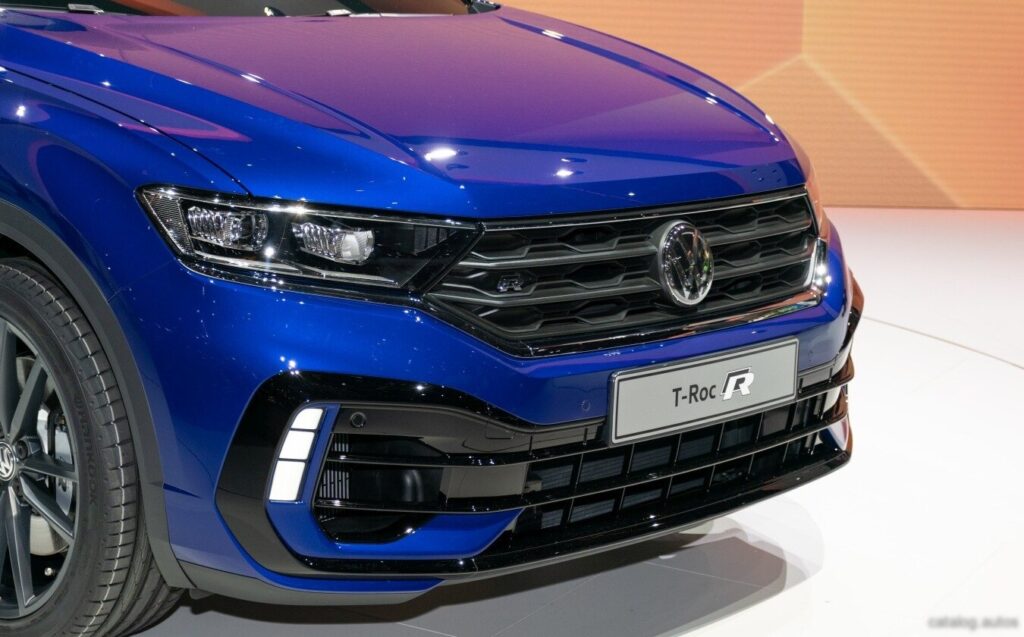
The Volkswagen T-Roc R 2.0 TSI (300 Hp) 4MOTION DSG is a high-performance variant of the T-Roc compact SUV, produced from 2019 to October 2021. Positioned as the flagship model within the first generation T-Roc (A1) lineup, it offered a significant performance upgrade over the standard T-Roc trims, targeting enthusiasts seeking a sporty and capable crossover. This model represented Volkswagen’s entry into the burgeoning market for performance-oriented compact SUVs, competing with vehicles like the Audi SQ2 and BMW X2 M35i. The “R” designation signifies Volkswagen’s performance division, similar to BMW’s “M” or Audi’s “S” models.
Technical Specifications
| Brand | Volkswagen |
| Model | T-Roc |
| Generation | T-Roc I |
| Type (Engine) | R 2.0 TSI (300 Hp) 4MOTION DSG |
| Start of production | 2019 |
| End of production | October, 2021 |
| Powertrain Architecture | Internal Combustion engine |
| Body type | SUV |
| Seats | 5 |
| Doors | 5 |
| Fuel consumption at Low speed (WLTP) | 11.9 l/100 km (19.8 US mpg, 23.7 UK mpg, 8.4 km/l) |
| Fuel consumption at Medium speed (WLTP) | 8.3 l/100 km (28.3 US mpg, 34 UK mpg, 12 km/l) |
| Fuel consumption at high speed (WLTP) | 7.4 l/100 km (31.8 US mpg, 38.2 UK mpg, 13.5 km/l) |
| Fuel consumption at very high speed (WLTP) | 8.6 l/100 km (27.4 US mpg, 32.8 UK mpg, 11.6 km/l) |
| Combined fuel consumption (WLTP) | 8.6 l/100 km (27.4 US mpg, 32.8 UK mpg, 11.6 km/l) |
| CO2 emissions (WLTP) | 196 g/km |
| Fuel consumption (economy) – urban (NEDC) | 9.1-9.5 l/100 km (25.8 – 24.8 US mpg, 31 – 29.7 UK mpg, 11 – 10.5 km/l) |
| Fuel consumption (economy) – extra urban (NEDC) | 6.5-6.6 l/100 km (36.2 – 35.6 US mpg, 43.5 – 42.8 UK mpg, 15.4 – 15.2 km/l) |
| Fuel consumption (economy) – combined (NEDC) | 7.5-7.7 l/100 km (31.4 – 30.5 US mpg, 37.7 – 36.7 UK mpg, 13.3 – 13 km/l) |
| CO2 emissions (NEDC) | 171 g/km |
| Fuel Type | Petrol (Gasoline) |
| Acceleration 0 – 100 km/h | 4.9 sec |
| Acceleration 0 – 62 mph | 4.9 sec |
| Acceleration 0 – 60 mph | 4.7 sec |
| Maximum speed | 250 km/h (155.34 mph) |
| Emission standard | Euro 6d-ISC-FCM |
| Weight-to-power ratio | 5 kg/Hp, 200.4 Hp/tonne |
| Weight-to-torque ratio | 3.7 kg/Nm, 267.2 Nm/tonne |
| Power | 300 Hp |
| Power per litre | 151.2 Hp/l |
| Torque | 400 Nm @ 2000-5200 rpm (295.02 lb.-ft. @ 2000-5200 rpm) |
| Engine layout | Front, Transverse |
| Engine Model/Code | DNUE |
| Engine displacement | 1984 cm3 (121.07 cu. in.) |
| Number of cylinders | 4 |
| Engine configuration | Inline |
| Number of valves per cylinder | 4 |
| Fuel injection system | Direct injection |
| Engine aspiration | Turbocharger, Intercooler |
| Engine oil capacity | 5.7 l (6.02 US qt | 5.02 UK qt) |
| Kerb Weight | 1497 kg (3300.32 lbs.) |
| Max. weight | 2080 kg (4585.62 lbs.) |
| Max load | 583 kg (1285.29 lbs.) |
| Trunk (boot) space – minimum | 392 l (13.84 cu. ft.) |
| Trunk (boot) space – maximum | 1237 l (43.68 cu. ft.) |
| Fuel tank capacity | 55 l (14.53 US gal | 12.1 UK gal) |
| Max. roof load | 75 kg (165.35 lbs.) |
| Permitted trailer load with brakes (8%) | 1900 kg (4188.78 lbs.) |
| Permitted trailer load with brakes (12%) | 1700 kg (3747.86 lbs.) |
| Permitted trailer load without brakes | 750 kg (1653.47 lbs.) |
| Permitted towbar download | 80 kg (176.37 lbs.) |
| Length | 4241 mm (166.97 in.) |
| Width | 1819 mm (71.61 in.) |
| Width including mirrors | 1992 mm (78.43 in.) |
| Height | 1562 mm (61.5 in.) |
| Wheelbase | 2595 mm (102.17 in.) |
| Front track | 1539-1547 mm (60.59 – 60.91 in.) |
| Rear (Back) track | 1547-1555 mm (60.91 – 61.22 in.) |
| Drivetrain Architecture | The Internal combustion engine (ICE) drives permanently the four wheels of the vehicle. |
| Drive wheel | All wheel drive (4×4) |
| Number of gears and type of gearbox | 7 gears, automatic transmission DSG |
| Front brakes | Ventilated discs |
| Rear brakes | Disc |
| Tires size | 215/50 R18 |
| Wheel rims size | 7J x 18 |
INTRODUCTION
The Volkswagen T-Roc R 2.0 TSI 4MOTION DSG, launched in 2019, represented a significant step up in performance for the T-Roc range. Built on the Volkswagen Group’s MQB platform (specifically the A1 variant), the T-Roc was designed to appeal to a younger demographic seeking a stylish and practical compact SUV. The “R” variant aimed to attract buyers desiring a more engaging driving experience without sacrificing the T-Roc’s everyday usability. Production continued until October 2021, when it was superseded by updated models.
Powertrain & Engine Architecture
At the heart of the T-Roc R lies the EA888 2.0-liter turbocharged four-cylinder engine, specifically the DNUE engine code. This engine is a direct-injection unit, utilizing a sophisticated fuel injection system to optimize combustion efficiency and power delivery. The engine features an aluminum alloy block and cylinder head, along with variable valve timing on both the intake and exhaust sides. The turbocharger is a twin-scroll unit, designed to minimize turbo lag and provide a more responsive throttle. The engine produces 300 horsepower and 400 Nm (295 lb-ft) of torque between 2000 and 5200 rpm. This power is channeled through a seven-speed dual-clutch transmission (DSG) and Volkswagen’s 4MOTION all-wheel-drive system. The 4MOTION system utilizes a multi-plate clutch to distribute torque between the front and rear axles as needed, enhancing traction and stability.
Driving Characteristics
The T-Roc R delivers a noticeably more spirited driving experience compared to lower-powered T-Roc variants. The 4.9-second 0-60 mph acceleration time is impressive for a compact SUV. The DSG transmission provides quick and seamless gear changes, contributing to the car’s responsiveness. The 4MOTION system offers excellent grip in various conditions, inspiring confidence during cornering and acceleration. While the suspension is firmer than on standard T-Rocs, it remains compliant enough for everyday driving. The steering is precise and well-weighted, providing good feedback to the driver. Compared to a manual transmission T-Roc, the DSG offers convenience and quicker shifts, but some enthusiasts may prefer the greater control of a manual gearbox.
Equipment & Trim Levels
The T-Roc R came generously equipped as standard. Key features included sport seats upholstered in fabric and Alcantara, a leather-wrapped steering wheel with paddle shifters, stainless steel pedal caps, and unique “R” badging both inside and out. Standard safety equipment included adaptive cruise control, lane assist, and front and rear parking sensors. Optional extras included a panoramic sunroof, a premium sound system, and upgraded interior trim materials. The interior design featured a modern and minimalist aesthetic, with a focus on functionality and user-friendliness. The infotainment system typically included an 8-inch touchscreen display with Apple CarPlay and Android Auto compatibility.
Chassis & Braking
The T-Roc R features a sport-tuned suspension with stiffer springs and dampers compared to other T-Roc models. The front suspension utilizes MacPherson struts, while the rear suspension employs a multi-link setup. Brakes are upgraded with larger ventilated discs at the front and solid discs at the rear, providing ample stopping power. The electronic stability control (ESC) system is calibrated to allow for a more dynamic driving experience, with a sport mode that reduces intervention. The standard tire size is 215/50 R18, providing a good balance between grip and ride comfort.
Market Reception & Comparison
The T-Roc R was generally well-received by automotive critics, who praised its performance, handling, and practicality. Some reviewers noted that the ride could be a bit firm for some tastes, but overall, the car was considered a compelling option in the compact SUV segment. Compared to the standard T-Roc 1.5 TSI, the R offered a significant performance boost, but at a higher price point. The R also provided a more engaging driving experience than the diesel-powered T-Roc models. Fuel economy, while respectable for a performance SUV, was lower than that of the more economical engine options.
Legacy
The Volkswagen T-Roc R 2.0 TSI 4MOTION DSG has established itself as a desirable used car, particularly among enthusiasts seeking a sporty and well-equipped compact SUV. The EA888 engine is known for its reliability and tunability, making it a popular choice for modifications. While regular maintenance is essential, the powertrain is generally considered robust. The T-Roc R’s combination of performance, practicality, and style has ensured its continued appeal in the used car market, and it remains a benchmark for performance-oriented compact SUVs.