
Technical Specifications
| Brand | Volkswagen |
| Model | Taro |
| Generation | Taro |
| Type (Engine) | 2.2 (94 Hp) |
| Start of production | 1989 |
| End of production | 1994 |
| Powertrain Architecture | Internal Combustion engine |
| Body type | Pick-up |
| Fuel Type | Petrol (Gasoline) |
| Power | 94 Hp |
| Engine Model/Code | 4Y |
| Engine aspiration | Naturally aspirated engine |
| Engine oil capacity | 3.5 l / 3.7 US qt / 3.08 UK qt |
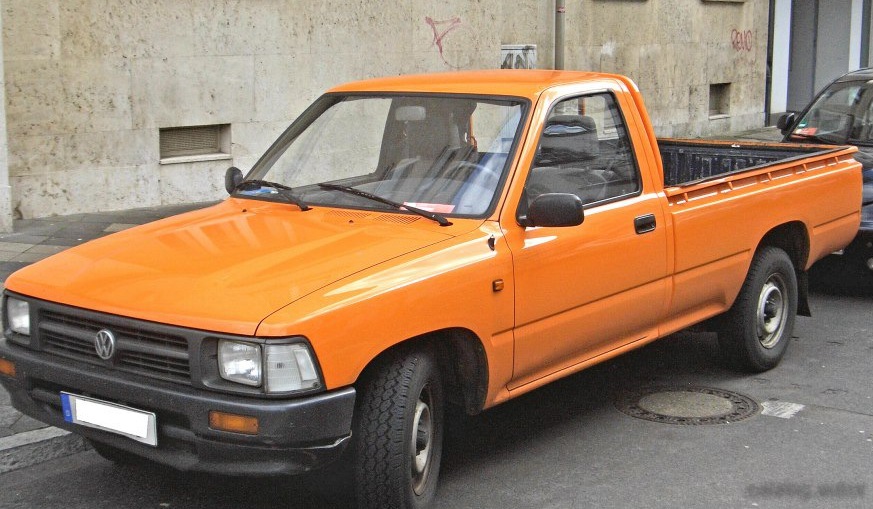
The Volkswagen Taro 2.2, producing 94 horsepower, was a compact pickup truck manufactured between 1989 and 1994. It represents Volkswagen’s foray into the small pickup segment, primarily aimed at the European market, and was a direct result of a cooperative agreement with Toyota. The Taro was essentially a rebadged Toyota Hilux, offering Volkswagen buyers a pickup option without the substantial development costs associated with creating a completely new platform. This variant, with its 2.2-liter gasoline engine and available five-speed manual or four-speed automatic transmission, occupied a middle ground in the Taro lineup, offering a balance between affordability and capability. It was positioned as a workhorse vehicle, suitable for both commercial and personal use, appealing to those needing a practical and durable vehicle.
Powertrain & Engine Architecture
The Volkswagen Taro 2.2 was powered by the Toyota 4Y engine, a 2.2-liter inline-four cylinder gasoline engine. This engine was well-regarded for its inherent simplicity and durability, qualities highly valued in a work-oriented vehicle. The 4Y is a naturally aspirated engine, meaning it doesn’t rely on forced induction like a turbocharger or supercharger. It features a single overhead camshaft (SOHC) design, operating two valves per cylinder. Fuel delivery was managed by a throttle body injection system, a relatively basic setup compared to the multi-point fuel injection systems becoming increasingly common during that era. While less efficient than more modern alternatives, this system contributed significantly to the engine’s reliability and ease of maintenance. The engine produced 94 horsepower at approximately 4,600 rpm and 130 lb-ft of torque at 3,200 rpm. While not a high-performance engine, this output was considered adequate for the Taro’s intended purpose of light to medium-duty hauling and general transportation. Transmission options included a five-speed manual, which was the more prevalent choice, and a four-speed automatic transmission offered in certain markets. The automatic transmission, while providing convenience, did result in a slight decrease in both fuel economy and overall performance.
Driving Characteristics
The Taro 2.2, particularly when equipped with the five-speed manual transmission, offered a reasonably engaging driving experience for a pickup truck. The 4Y engine provided sufficient low-end torque for everyday driving and hauling moderate loads. However, it wasn’t particularly quick, and acceleration was best described as modest. The gear ratios in the manual transmission were well-spaced, allowing the driver to keep the engine operating within its optimal power band. The automatic transmission, while smooth in operation, resulted in noticeable performance degradation, especially when the vehicle was fully loaded. The Taro’s suspension, directly inherited from the Toyota Hilux, was engineered for durability and load-carrying capacity rather than prioritizing outright comfort. The ride quality was firm, and the handling was predictable but not particularly sporty. The steering was relatively direct, providing adequate feedback to the driver. Overall, the driving experience was functional and utilitarian, prioritizing practicality and dependability over refinement.
Equipment & Trim Levels
The Volkswagen Taro 2.2 was generally offered with a fairly basic level of standard equipment, reflecting its work-oriented design philosophy. Standard features typically included a vinyl or cloth interior, a basic instrument cluster, and manual windows and door locks. Air conditioning was frequently offered as an optional extra, as were power steering and a radio. The interior design was functional and durable, utilizing hard-wearing materials throughout the cabin. Trim levels were relatively limited. The base model offered minimal frills, while higher trims might include features like upgraded upholstery, a more comprehensive instrument cluster, and exterior enhancements such as chrome bumpers. The overarching focus was on providing a reliable and practical vehicle rather than luxurious amenities.
Chassis & Braking
The Taro’s chassis employed a body-on-frame construction, a common design for pickup trucks during that period. This provided a robust and durable platform capable of withstanding the stresses of hauling and occasional off-road use. The front suspension consisted of independent double wishbones with coil springs, while the rear suspension utilized leaf springs. This setup prioritized load-carrying capacity and durability over ride comfort. The braking system typically consisted of disc brakes on the front wheels and drum brakes on the rear wheels. Power steering was an optional feature, and the steering system was a recirculating ball type. The Taro’s braking performance was adequate for its weight and intended use, but it wasn’t particularly powerful when compared to modern braking systems.
Market Reception & Comparison
The Volkswagen Taro received mixed reviews upon its initial release. Automotive critics generally praised its reliability and durability, attributes directly inherited from the Toyota Hilux. However, it was often criticized for its relatively basic equipment level and somewhat unrefined driving experience. Compared to other pickups available in the European market at the time, such as the Ford Courier and the Fiat Strada, the Taro offered a more robust and capable platform, but it lacked the refinement and features found in some of its competitors. The 2.2-liter engine provided a reasonable balance between power and fuel economy, but it wasn’t as fuel-efficient as some of the smaller diesel engines available in other pickups. The Taro’s fuel economy typically ranged from 18-22 miles per gallon, depending on driving conditions and the type of transmission installed. Reliability was generally considered good, with the Toyota 4Y engine proving to be a durable and long-lasting unit.
Legacy
The Volkswagen Taro, while not a resounding sales success for Volkswagen, successfully established the brand’s presence in the compact pickup segment. It demonstrated Volkswagen’s strategic ability to leverage partnerships with other manufacturers to efficiently expand its product lineup. Today, the Taro 2.2 is a relatively uncommon vehicle, particularly in well-preserved condition. Its inherent simplicity and durability have made it a popular choice among automotive enthusiasts and those seeking a reliable and affordable work truck. Parts availability can sometimes be a challenge, as many components are specific to the Toyota Hilux. However, the 4Y engine is renowned for its longevity, and with proper maintenance, it can continue to provide many years of dependable service. The Taro’s lasting legacy lies in its practicality, durability, and its unique position as a Volkswagen-branded version of a legendary Toyota pickup truck.
