
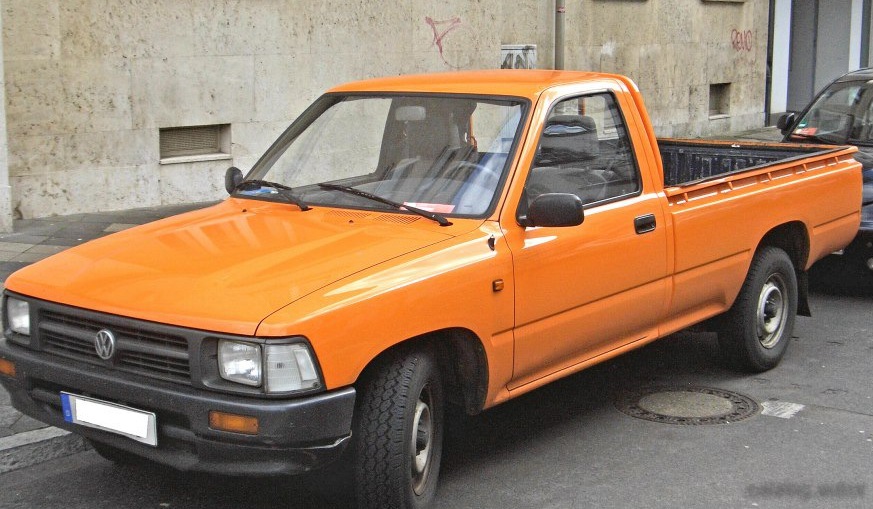
The Volkswagen Taro 2.4 D, produced between 1994 and 1997, represents Volkswagen’s foray into the compact pickup truck segment, primarily aimed at the European and Asian markets. This variant, powered by a naturally aspirated 2.4-liter diesel engine producing 79 horsepower, occupied the base trim level within the Taro lineup. The Taro itself was a rebadged version of the Toyota Hilux, a result of a cooperative agreement between the two manufacturers. This collaboration allowed Volkswagen to offer a pickup truck without the substantial investment required for independent development, while Toyota benefited from increased production volumes and access to the European market. The Taro, while not a massive sales success for Volkswagen, provided a utilitarian vehicle option for those needing a small, durable pickup.
Technical Specifications
| Brand | Volkswagen |
| Model | Taro |
| Generation | Taro |
| Type (Engine) | 2.4 D (79 Hp) |
| Start of production | 1994 |
| End of production | 1997 |
| Powertrain Architecture | Internal Combustion engine |
| Body type | Pick-up |
| Fuel Type | Diesel |
| Power | 79 Hp |
| Engine Model/Code | 2L |
| Engine aspiration | Naturally aspirated engine |
| Engine oil capacity | 5.8 l / 6.13 US qt / 5.1 UK qt |
Powertrain & Engine Architecture
The Volkswagen Taro 2.4 D utilized a 2.4-liter (2446 cc) inline-four cylinder diesel engine, designated the 2L engine code. This engine, sourced directly from Toyota as part of the collaborative agreement, was a robust and relatively simple design. It featured indirect injection, a common characteristic of diesel engines of that era, utilizing a pre-combustion chamber system. This system improved combustion efficiency and reduced engine noise compared to direct injection systems. The engine employed a naturally aspirated configuration, meaning it did not utilize a turbocharger or supercharger to force air into the cylinders. This resulted in a more modest power output of 79 horsepower (59 kW) and approximately 140 Nm (103 lb-ft) of torque. The engine was mated to a five-speed manual transmission as standard, although a four-speed automatic transmission was offered as an option, though less common. The automatic transmission was a conventional hydraulic unit, prioritizing durability and simplicity over outright performance. The engine’s mechanical fuel injection system, while reliable, lacked the precision and efficiency of later electronic systems.
Driving Characteristics
The Taro 2.4 D, with its 79 horsepower and relatively low torque output, was not designed for rapid acceleration or high speeds. Its performance was best described as adequate for its intended purpose – hauling moderate loads and navigating urban or rural environments. The five-speed manual transmission allowed drivers to keep the engine within its optimal operating range, maximizing fuel efficiency and providing a degree of control. The optional four-speed automatic, while offering convenience, noticeably dulled acceleration and increased fuel consumption. The gear ratios were geared towards utility, prioritizing low-end torque for hauling and towing rather than high-speed cruising. Compared to potential higher-output versions (which weren’t offered by Volkswagen in the Taro), the 2.4 D prioritized fuel economy and longevity over outright performance. The vehicle’s unladen ride quality was somewhat firm, typical of a body-on-frame pickup truck, and the steering lacked the precision of more modern vehicles. However, the Taro’s simple mechanicals and robust construction made it a dependable workhorse.
Equipment & Trim Levels
The Volkswagen Taro 2.4 D, as the base trim level, was equipped with a fairly basic set of features. Standard equipment typically included a vinyl or cloth-trimmed interior, a simple dashboard layout with analog gauges, and manual windows and door locks. Power steering was often included, but air conditioning and central locking were typically optional extras. The interior was designed for practicality and durability, with hard-wearing materials and a focus on ease of cleaning. The exterior featured steel wheels, black plastic bumpers, and a relatively unadorned appearance. Optional extras included upgraded audio systems, alloy wheels, and a more comprehensive trim package. The overall aesthetic was functional and utilitarian, reflecting the Taro’s intended role as a work vehicle.
Chassis & Braking
The Volkswagen Taro utilized a traditional body-on-frame construction, providing a robust and durable chassis. The suspension consisted of independent double wishbones at the front and leaf springs at the rear. This configuration was common for pickup trucks of the era, offering a good balance of load-carrying capacity and ride comfort. The rear leaf springs were particularly well-suited for handling heavy payloads. The braking system featured disc brakes at the front and drum brakes at the rear. While adequate for the vehicle’s weight and performance, the drum brakes on the rear wheels offered less stopping power and fade resistance compared to disc brakes. The Taro did not typically feature advanced braking technologies such as ABS (Anti-lock Braking System). Stabilizer bars were often omitted on the base trim level, contributing to a slightly more pronounced body roll during cornering.
Market Reception & Comparison
The Volkswagen Taro 2.4 D received mixed reviews from automotive critics. While praised for its reliability and durability, it was often criticized for its lack of refinement and relatively low performance. Compared to other compact pickup trucks available in Europe at the time, such as the Fiat Strada and the Ford Courier, the Taro offered a more rugged and utilitarian experience. However, it lacked the more sophisticated features and modern styling of some of its competitors. Fuel economy was a strong point, with the 2.4-liter diesel engine returning respectable mileage for its class. Reliability was generally good, owing to the proven Toyota Hilux underpinnings. However, maintenance costs could be higher than some competitors due to the sourcing of parts from Toyota. The Taro’s target audience was primarily small business owners, farmers, and individuals needing a dependable and affordable pickup truck for light-duty work.
Legacy
The Volkswagen Taro, while a relatively short-lived model, has gained a modest following among enthusiasts and collectors. The 2.4 D variant, with its simple mechanicals and robust construction, is particularly valued for its reliability and ease of maintenance. The engine, while not particularly powerful, is known for its longevity and ability to withstand heavy use. In the used car market, Taros in good condition command reasonable prices, particularly those with low mileage and a well-documented service history. The Taro’s legacy lies in its demonstration of Volkswagen’s willingness to collaborate with other manufacturers and its attempt to enter the competitive pickup truck market. While it didn’t achieve widespread success, it provided a unique and dependable option for those seeking a small, durable pickup truck during the mid-1990s.
