
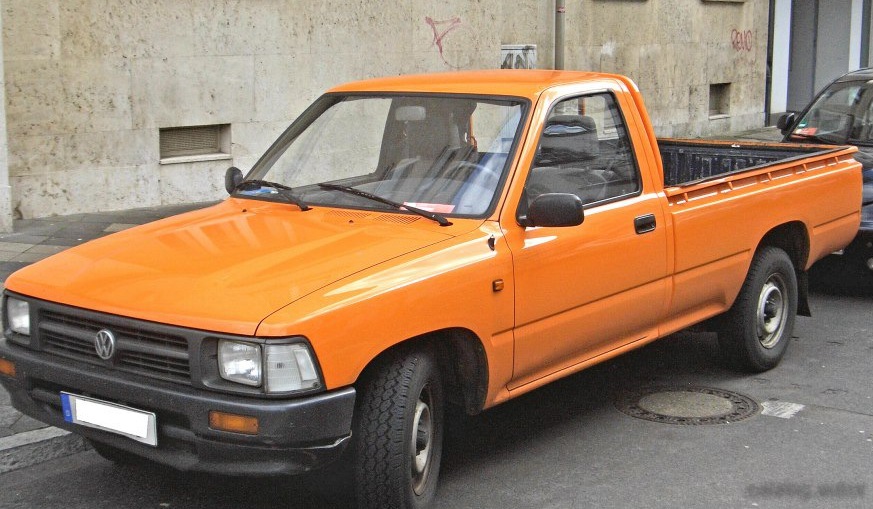
The Volkswagen Taro 2.4 D, produced between 1991 and 1994, represents a relatively short-lived but interesting chapter in Volkswagen’s commercial vehicle history. This diesel-powered pickup truck was essentially a rebadged Toyota Hilux, born from a cooperative agreement between the two manufacturers. The Taro was Volkswagen’s entry into the compact pickup segment, primarily aimed at the European market where demand for such vehicles was growing. It filled a niche for a practical, robust workhorse, offering a Volkswagen badge and dealer network to buyers who might otherwise have opted for the Toyota directly. This particular 2.4 D variant, producing 80 horsepower, was the mainstay of the Taro lineup during its production run.
Technical Specifications
| Brand | Volkswagen |
| Model | Taro |
| Generation | Taro |
| Type (Engine) | 2.4 D (80 Hp) |
| Start of production | 1991 |
| End of production | 1994 |
| Powertrain Architecture | Internal Combustion engine |
| Body type | Pick-up |
| Fuel Type | Diesel |
| Power | 80 Hp |
| Engine Model/Code | 2L |
| Engine aspiration | Naturally aspirated engine |
| Engine oil capacity | 5.8 l (6.13 US qt | 5.1 UK qt) |
Powertrain & Engine Architecture
The Volkswagen Taro 2.4 D utilized a naturally aspirated, 2.4-liter inline-four diesel engine, designated the 2L engine code. This engine was sourced directly from Toyota, reflecting the collaborative nature of the Taro project. It’s a relatively simple, robust design, prioritizing durability and fuel efficiency over outright performance. The engine features indirect injection, a common characteristic of diesel engines of that era. Indirect injection involves injecting fuel into a pre-chamber before it enters the main combustion chamber, resulting in quieter operation but typically lower peak power compared to direct injection systems. The engine employs a mechanical fuel injection pump, a hallmark of its time, and a conventional valvetrain with a single overhead camshaft. The 80 horsepower output is achieved at a relatively low engine speed, emphasizing torque delivery for hauling and towing. The engine is known for its reliability, though it lacks the refinement of more modern diesel designs.
Driving Characteristics
The driving experience in the Taro 2.4 D is decidedly utilitarian. The 80 horsepower engine, while adequate for general use, doesn’t offer brisk acceleration. The focus is on providing sufficient torque for carrying loads and navigating challenging terrain. The Taro’s transmission is a five-speed manual, as an automatic transmission was not offered in this configuration. The gear ratios are geared towards maximizing fuel economy and providing usable power at lower speeds. Compared to potential higher-output versions (had Volkswagen offered them, which they didn’t), the 2.4 D prioritizes fuel efficiency and longevity. The Taro isn’t a vehicle designed for spirited driving; it excels as a workhorse, capable of handling demanding tasks without complaint. The steering is typically vague by modern standards, and the suspension, while robust, is tuned for load-carrying rather than comfort.
Equipment & Trim Levels
The Volkswagen Taro 2.4 D was offered with a fairly basic level of equipment, reflecting its intended purpose as a commercial vehicle. Standard features typically included a vinyl interior, basic instrumentation (speedometer, fuel gauge, temperature gauge), and a robust heating system. Power steering was often an optional extra, as were features like a radio or upgraded interior trim. The dashboard layout is functional and straightforward, prioritizing ease of use over aesthetic appeal. The Taro was available in single cab and double cab configurations, with the double cab offering increased passenger capacity. Trim levels were minimal; the 2.4 D represented the core offering, with options primarily focused on adding functionality (e.g., a bed liner, tow hitch) rather than luxury.
Chassis & Braking
The Taro’s chassis is based directly on the Toyota Hilux platform, providing a solid and durable foundation. It features a body-on-frame construction, typical of pickup trucks of that era. The suspension consists of independent double wishbones at the front and leaf springs at the rear. The leaf spring rear suspension is designed to handle heavy loads and provide a stable ride when the bed is loaded. Braking is typically accomplished with disc brakes at the front and drum brakes at the rear. The braking system is adequate for the vehicle’s weight and performance, but lacks the sophistication of more modern systems. Stabilizer bars were not typically fitted as standard equipment, contributing to a somewhat pronounced body roll during cornering.
Market Reception & Comparison
The Volkswagen Taro received a mixed reception in the European market. While it offered a practical and reliable alternative to other compact pickups, it was often criticized for its relatively high price compared to the Toyota Hilux it was based on. Critics also noted that the Taro didn’t offer any significant advantages over the Hilux in terms of performance or features, making the Volkswagen badge alone insufficient justification for the price premium. Fuel economy was generally considered good for a diesel pickup of that era, and reliability was a strong point, benefiting from the Hilux’s proven track record. Compared to potential gasoline-powered alternatives, the 2.4 D offered significantly better fuel economy, making it a popular choice for commercial users.
Legacy
The Volkswagen Taro, despite its short production run, remains a relatively sought-after vehicle among enthusiasts and collectors. Its rarity and connection to both Volkswagen and Toyota contribute to its appeal. The 2.4 D engine is known for its durability and relatively simple maintenance requirements, making it a practical choice for those seeking a classic pickup truck. However, finding parts can sometimes be challenging, as many components are specific to the Toyota Hilux. In the used car market today, well-maintained Taros command a premium, particularly those with low mileage and original features. The Taro serves as a reminder of Volkswagen’s brief foray into the compact pickup segment and a testament to the enduring quality of the Toyota Hilux platform.
