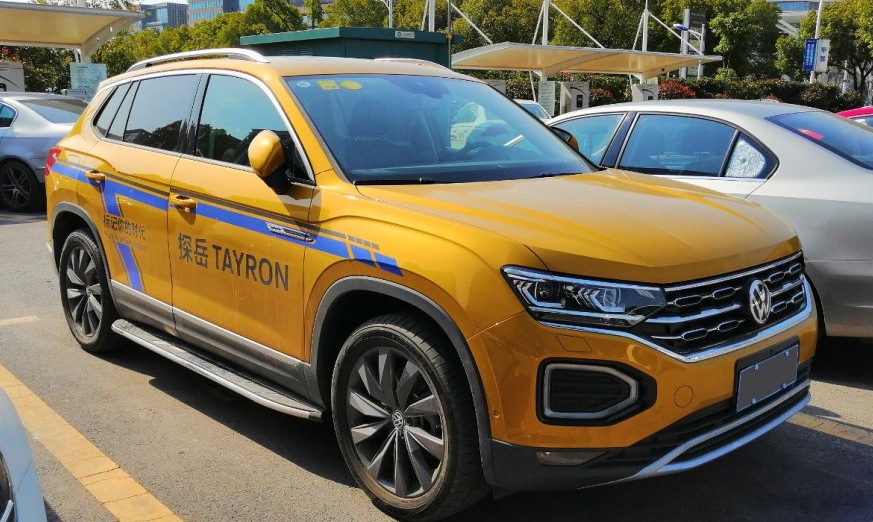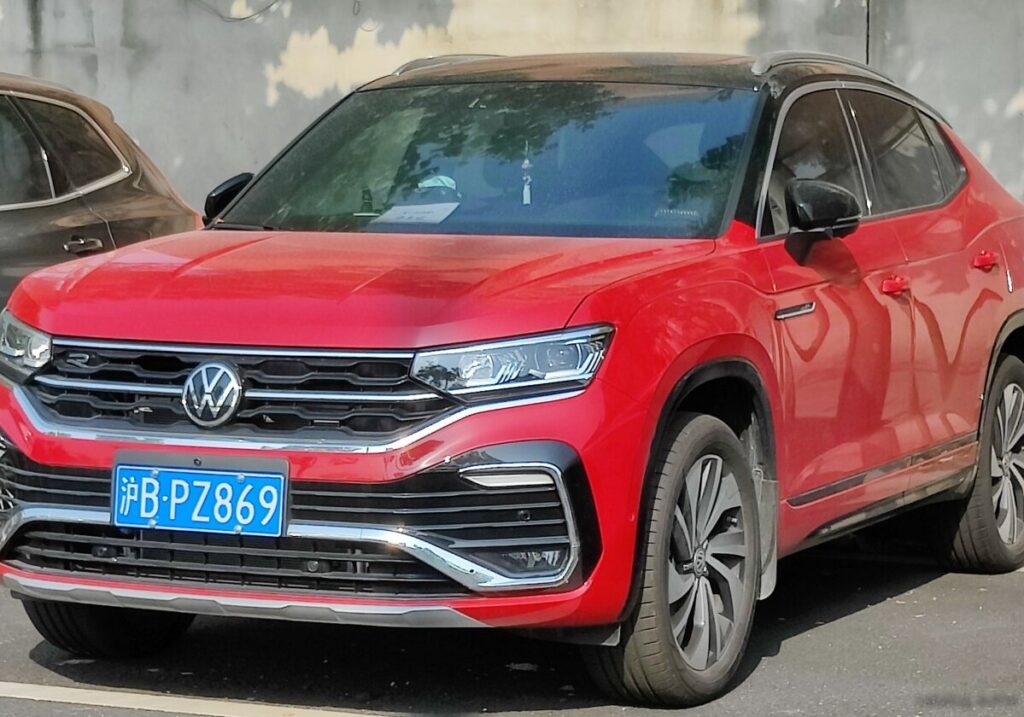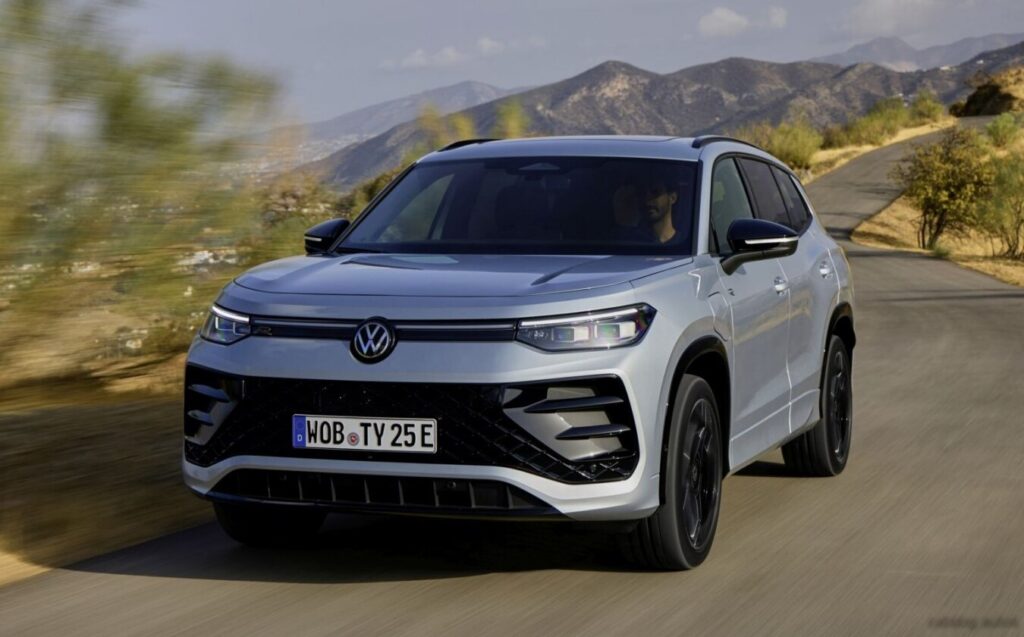
The Volkswagen Tayron II 1.5 eTSI, introduced in November 2024, represents the second generation of Volkswagen’s mid-size SUV designed primarily for the Chinese market. Positioned as a mainstream offering within the Tayron II lineup, the 1.5 eTSI variant utilizes a mild hybrid powertrain paired with a 7-speed dual-clutch transmission (DSG). This configuration aims to balance fuel efficiency with acceptable performance for everyday driving, appealing to a broad customer base seeking a practical and modern SUV. The Tayron II is built on the MQB Evo platform, offering a blend of space, technology, and contemporary styling.
Technical Specifications
| Brand | Volkswagen |
| Model | Tayron |
| Generation | Tayron II |
| Type (Engine) | 1.5 eTSI (150 Hp) Mild Hybrid DSG |
| Start of production | November, 2024 |
| Powertrain Architecture | MHEV (Mild Hybrid Electric Vehicle) |
| Body type | SUV |
| Seats | 5-7 |
| Doors | 5 |
| Combined fuel consumption (WLTP) | 6.2-6.9 l/100 km (37.9 – 34.1 US mpg, 45.6 – 40.9 UK mpg, 16.1 – 14.5 km/l) |
| CO2 emissions (WLTP) | 142-156 g/km |
| Fuel Type | Petrol (Gasoline) |
| Acceleration 0 – 100 km/h | 9.4 sec |
| Acceleration 0 – 62 mph | 9.4 sec |
| Acceleration 0 – 60 mph | 8.9 sec |
| Maximum speed | 204 km/h (126.76 mph) |
| Emission standard | Euro 6e |
| Weight-to-power ratio | 10.7 kg/Hp, 93.3 Hp/tonne |
| Weight-to-torque ratio | 6.4 kg/Nm, 155.6 Nm/tonne |
| Battery voltage | 48 V |
| Battery technology | Lithium nickel manganese cobalt oxides (Li-NMC) |
| Electric motor power | 19 Hp |
| Electric motor Torque | 56 Nm (41.3 lb.-ft.) |
| Electric motor location | Front, Transverse |
| Power | 150 Hp @ 5000 rpm |
| Torque | 250 Nm @ 1500-3500 rpm (184.39 lb.-ft. @ 1500-3500 rpm) |
| Engine layout | Front, Transverse |
| Engine Model/Code | EA211 evo2 |
| Engine displacement | 1498 cm3 (91.41 cu. in.) |
| Number of cylinders | 4 |
| Engine configuration | Inline |
| Cylinder Bore | 74.5 mm (2.93 in.) |
| Piston Stroke | 85.9 mm (3.38 in.) |
| Number of valves per cylinder | 4 |
| Fuel injection system | Direct injection |
| Engine aspiration | Turbocharger, Intercooler |
| Valvetrain | DOHC |
| Kerb Weight | 1607 kg (3542.83 lbs.) |
| Max. weight | 2210 kg (4872.22 lbs.) |
| Max load | 603 kg (1329.39 lbs.) |
| Trunk (boot) space – minimum | 345 l (12.18 cu. ft.) |
| Trunk (boot) space – maximum | 2090 l (73.81 cu. ft.) |
| Fuel tank capacity | 55 l (14.53 US gal | 12.1 UK gal) |
| Permitted trailer load with brakes (8%) | 2000 kg (4409.25 lbs.) |
| Permitted trailer load with brakes (12%) | 1800 kg (3968.32 lbs.) |
| Permitted trailer load without brakes | 750 kg (1653.47 lbs.) |
| Permitted towbar download | 100 kg (220.46 lbs.) |
| Length | 4792 mm (188.66 in.) |
| Width | 1853 mm (72.95 in.) |
| Width including mirrors | 2151 mm (84.69 in.) |
| Height | 1668 mm (65.67 in.) |
| Wheelbase | 2788 mm (109.76 in.) |
| Front track | 1584-1588 mm (62.36 – 62.52 in.) |
| Rear (Back) track | 1575-1579 mm (62.01 – 62.17 in.) |
| Drag coefficient (Cd) | 0.28 |
| Minimum turning circle | 12.1 m (39.7 ft.) |
| Front suspension | Independent, type McPherson with coil spring and anti-roll bar |
| Rear suspension | Independent multi-link spring suspension with stabilizer |
| Front brakes | Ventilated discs |
| Gearbox | 7 gears, automatic transmission DSG |
| Tires size | 215/65 R17; 235/55 R18; 235/50 R19; 235/45 R20 |
| Wheel rims size | 7J x 17; 7.5J x 18; 7.5J x 19; 8J x 20 |
INTRODUCTION
The Volkswagen Tayron II 1.5 eTSI represents a key offering in Volkswagen’s SUV range, specifically tailored for the Chinese automotive market. Launched in late 2024, it builds upon the foundation of the original Tayron, offering updated styling, enhanced technology, and a focus on fuel efficiency. The “eTSI” designation signifies the inclusion of a 48V mild hybrid system, designed to improve fuel economy and reduce emissions. This variant slots into the middle of the Tayron II range, providing a balance between affordability and features, making it a competitive option in the crowded mid-size SUV segment.
Powertrain & Engine Architecture
At the heart of the Tayron II 1.5 eTSI lies the EA211 evo2 1.5-liter turbocharged four-cylinder gasoline engine. This engine, a staple in the Volkswagen Group’s modern lineup, benefits from direct fuel injection and a sophisticated turbocharging system. The engine produces 150 horsepower at 5000 rpm and 250 Nm (184 lb-ft) of torque between 1500 and 3500 rpm. The mild hybrid system incorporates a 48V electric motor and a small lithium-ion battery, enabling features like start-stop functionality, regenerative braking, and a limited degree of electric assistance during acceleration. The 7-speed dual-clutch transmission (DSG) provides quick and smooth gear changes, contributing to both performance and efficiency. The engine utilizes a DOHC valvetrain and benefits from technologies like cylinder deactivation to further optimize fuel consumption.
Driving Characteristics
The Tayron II 1.5 eTSI delivers a comfortable and composed driving experience. While not overtly sporty, the 150 hp engine and DSG transmission provide adequate acceleration for everyday driving situations. The 0-100 km/h (0-62 mph) sprint takes approximately 9.4 seconds. The mild hybrid system provides a subtle boost during acceleration, smoothing out power delivery. Compared to higher-output Tayron II variants, such as those with larger engines, the 1.5 eTSI prioritizes fuel economy over outright performance. The DSG transmission is well-tuned for smooth shifts in normal driving modes, and offers a sport mode for more aggressive acceleration. The steering is light and precise, making the Tayron II easy to maneuver in urban environments.
Equipment & Trim Levels
The Tayron II 1.5 eTSI typically comes well-equipped, reflecting the expectations of the Chinese market. Standard features generally include automatic climate control, a touchscreen infotainment system with smartphone integration (Apple CarPlay and Android Auto), a digital instrument cluster, and a suite of safety features such as ABS, electronic stability control, and multiple airbags. Interior upholstery is typically cloth or leatherette, depending on the specific trim level. Optional extras can include a panoramic sunroof, premium sound system, adaptive cruise control, lane keeping assist, and a 360-degree camera system. Higher trim levels offer more luxurious interior appointments and advanced technology features.
Chassis & Braking
The Tayron II utilizes an independent suspension setup, with McPherson struts at the front and a multi-link system at the rear. This configuration provides a comfortable ride quality and good handling characteristics. Stabilizer bars are fitted to both axles to reduce body roll during cornering. The braking system consists of ventilated discs at the front and solid discs at the rear. ABS (Anti-lock Braking System) is standard, along with electronic brake-force distribution and brake assist. The Tayron II’s chassis is tuned to prioritize comfort and stability, rather than outright sportiness.
Market Reception & Comparison
The Tayron II 1.5 eTSI has been well-received in the Chinese market, where it competes with a wide range of domestic and international SUVs. Critics have praised its modern styling, spacious interior, and fuel-efficient powertrain. Compared to other Tayron II variants, the 1.5 eTSI offers a more affordable entry point into the range, making it attractive to budget-conscious buyers. Its fuel economy of 6.2-6.9 l/100 km is competitive within its segment. Reliability reports are still emerging, but the EA211 engine family has a generally good reputation for durability.
Legacy
The long-term reliability of the Tayron II 1.5 eTSI remains to be seen, as it is a relatively new model. However, the underlying EA211 engine architecture has been proven in numerous Volkswagen Group vehicles, suggesting a reasonable expectation of durability. The inclusion of a mild hybrid system is a positive step towards improving fuel efficiency and reducing emissions. In the used car market, the Tayron II 1.5 eTSI is likely to appeal to buyers seeking a practical, well-equipped, and fuel-efficient SUV. Its position as a mainstream offering within the Tayron II range should ensure continued demand in the years to come.