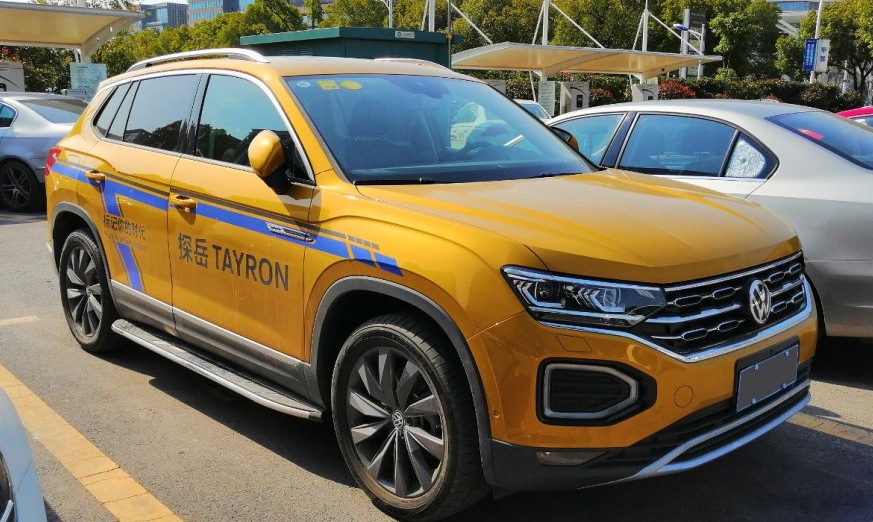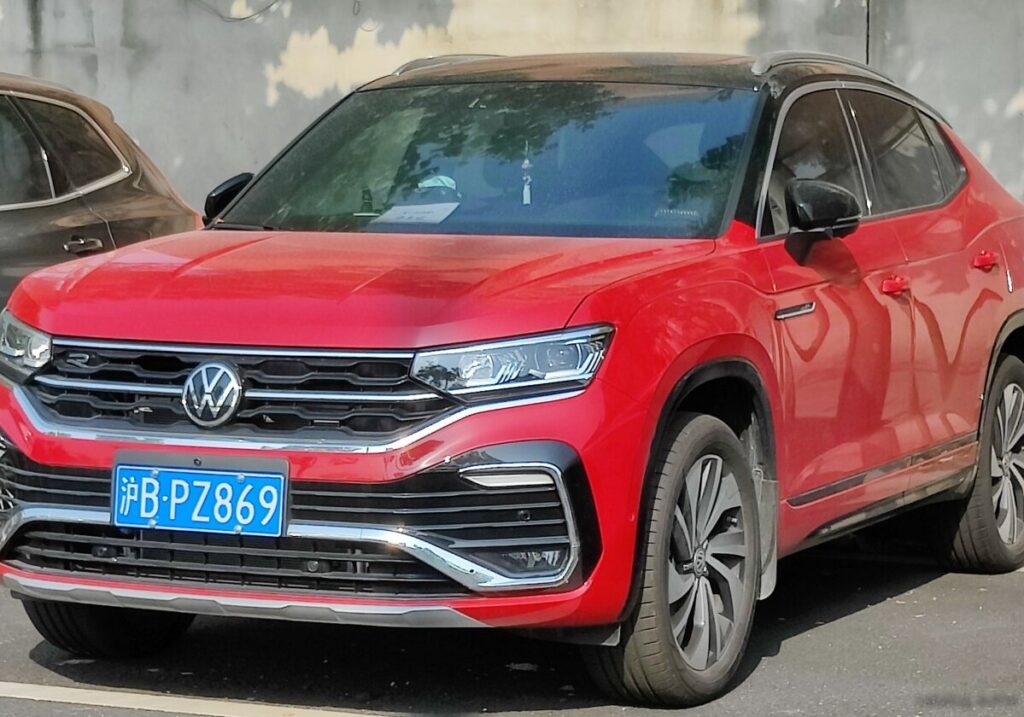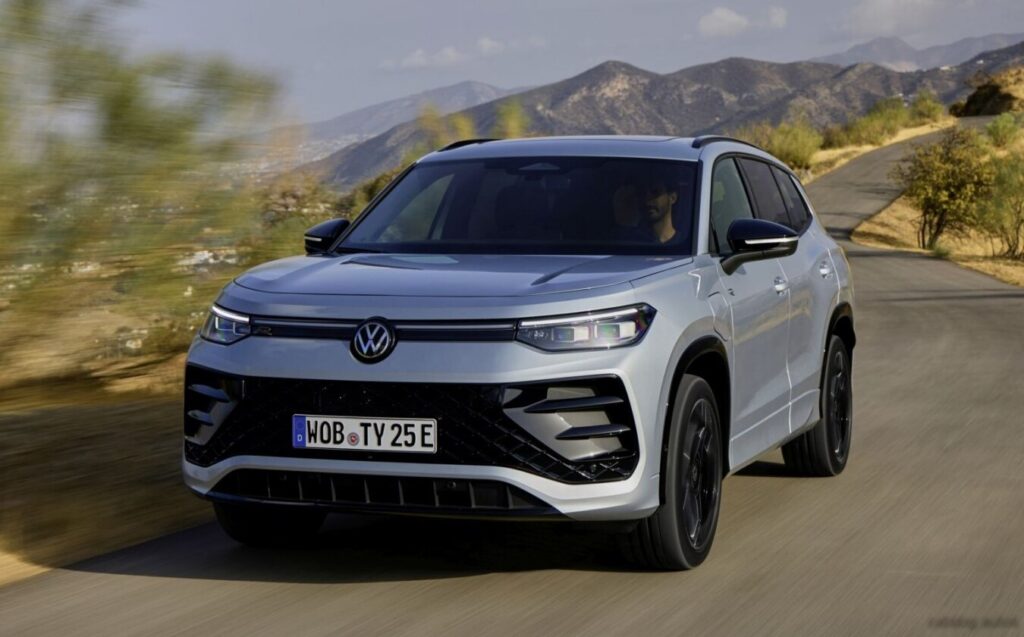
The Volkswagen Tayron II 2.0 TSI (265 Hp) 4MOTION DSG represents the higher-performance end of the second-generation Tayron lineup, launched in November 2024. Positioned as a mid-to-upper trim level, this variant caters to buyers seeking a blend of practicality, space, and spirited driving dynamics within the compact SUV segment. The Tayron II, designed primarily for the Chinese market, builds upon the foundation of the MQB Evo platform, offering a more refined and technologically advanced package compared to its predecessor. This specific configuration combines a turbocharged four-cylinder engine with a sophisticated all-wheel-drive system and a dual-clutch transmission, aiming to deliver a compelling driving experience.
Technical Specifications
| Brand | Volkswagen |
| Model | Tayron |
| Generation | Tayron II |
| Type (Engine) | 2.0 TSI (265 Hp) 4MOTION DSG |
| Start of production | November, 2024 |
| Powertrain Architecture | Internal Combustion engine |
| Body type | SUV |
| Seats | 5-7 |
| Doors | 5 |
| Combined fuel consumption (WLTP) | 8.6 l/100 km |
| Combined fuel consumption (US mpg) | 27.4 US mpg |
| Combined fuel consumption (UK mpg) | 32.8 UK mpg |
| Combined fuel consumption (km/l) | 11.6 km/l |
| CO2 emissions (WLTP) | 195 g/km |
| Fuel Type | Petrol (Gasoline) |
| Acceleration 0 – 100 km/h | 6.1 sec |
| Acceleration 0 – 62 mph | 6.1 sec |
| Acceleration 0 – 60 mph | 5.8 sec |
| Maximum speed | 240 km/h (149.13 mph) |
| Emission standard | Euro 6e |
| Weight-to-power ratio | 6.5 kg/Hp, 152.8 Hp/tonne |
| Weight-to-torque ratio | 4.3 kg/Nm, 230.7 Nm/tonne |
| Power | 265 Hp @ 5000 rpm |
| Power per litre | 133.6 Hp/l |
| Torque | 400 Nm @ 1650-4350 rpm (295.02 lb.-ft. @ 1650-4350 rpm) |
| Engine layout | Front, Transverse |
| Engine displacement | 1984 cm3 (121.07 cu. in.) |
| Number of cylinders | 4 |
| Engine configuration | Inline |
| Cylinder Bore | 82.5 mm (3.25 in.) |
| Piston Stroke | 92.8 mm (3.65 in.) |
| Number of valves per cylinder | 4 |
| Fuel injection system | Direct injection |
| Engine aspiration | Turbocharger, Intercooler |
| Valvetrain | DOHC |
| Engine systems | Start & Stop System, Particulate filter |
| Kerb Weight | 1734 kg (3822.82 lbs.) |
| Max. weight | 2310 kg (5092.68 lbs.) |
| Max load | 576 kg (1269.86 lbs.) |
| Trunk (boot) space – minimum | 345 l (12.18 cu. ft.) |
| Trunk (boot) space – maximum | 2090 l (73.81 cu. ft.) |
| Fuel tank capacity | 58 l (15.32 US gal | 12.76 UK gal) |
| Permitted trailer load with brakes (12%) | 2300 kg (5070.63 lbs.) |
| Permitted trailer load without brakes | 750 kg (1653.47 lbs.) |
| Permitted towbar download | 100 kg (220.46 lbs.) |
| Length | 4792 mm (188.66 in.) |
| Width | 1866 mm (73.46 in.) |
| Width including mirrors | 2151 mm (84.69 in.) |
| Height | 1666 mm (65.59 in.) |
| Wheelbase | 2790 mm (109.84 in.) |
| Front track | 1584-1588 mm (62.36 – 62.52 in.) |
| Rear (Back) track | 1574-1578 mm (61.97 – 62.13 in.) |
| Minimum turning circle (turning diameter) | 12.1 m (39.7 ft.) |
| Approach angle | 16.8° |
| Departure angle | 18.5° |
| Ramp-over (brakeover) angle | 16.8° |
| Drivetrain Architecture | The Internal combustion engine (ICE) drives the front wheels permanently, and the rear wheels are driven through an electrically or mechanically operated clutch if necessary. |
| Drive wheel | All wheel drive (4×4) |
| Number of gears and type of gearbox | 7 gears, automatic transmission DSG |
| Front suspension | Independent, type McPherson with coil spring and anti-roll bar |
| Rear suspension | Independent multi-link spring suspension with stabilizer |
| Front brakes | Ventilated discs |
| Assisting systems | ABS (Anti-lock braking system) |
| Steering type | Steering rack and pinion |
| Power steering | Electric Steering |
| Tires size | 255/40 R20 |
| Wheel rims size | 8.5J x 20 |
Powertrain & Engine Architecture
At the heart of the Tayron II 2.0 TSI 4MOTION DSG lies the EA888 2.0-liter turbocharged inline-four engine. This engine, a staple in the Volkswagen Group’s portfolio, is known for its robust performance and relatively good fuel efficiency. The specific variant in the Tayron II produces 265 horsepower at 5000 rpm and 400 Nm (295 lb-ft) of torque between 1650 and 4350 rpm. It utilizes direct fuel injection and a sophisticated turbocharging system with an intercooler to maximize power output and minimize turbo lag. The engine also incorporates a start-stop system and a particulate filter to meet stringent emission standards. The engine is transversely mounted, contributing to a more compact engine bay and improved packaging. The seven-speed dual-clutch transmission (DSG) is integral to the driving experience, offering quick and seamless gear changes. The 4MOTION all-wheel-drive system employs a multi-plate clutch to distribute torque between the front and rear axles as needed, enhancing traction and stability, particularly in adverse weather conditions.
Driving Characteristics
The 2.0 TSI 4MOTION DSG configuration delivers a noticeably more engaging driving experience compared to lower-powered Tayron variants. Acceleration from 0 to 100 km/h (0-62 mph) takes approximately 6.1 seconds, and 0-60 mph is achieved in around 5.8 seconds. The DSG transmission contributes to this performance, providing rapid shifts and keeping the engine within its optimal power band. The 4MOTION system provides excellent grip and stability, inspiring confidence in various driving conditions. While not a sports SUV, the Tayron II 2.0 TSI offers ample power for overtaking and highway cruising. The gear ratios are tuned for a balance between performance and fuel economy, with taller gears for relaxed cruising and shorter gears for quicker acceleration. Compared to a manual transmission, the DSG offers convenience and efficiency, but some enthusiasts may miss the direct control of a traditional manual gearbox.
Equipment & Trim Levels
The 2.0 TSI 4MOTION DSG trim typically includes a generous array of standard features. Interior appointments generally include premium cloth or leather upholstery, a multi-function steering wheel, and a modern infotainment system with a large touchscreen display. Standard safety features include ABS, electronic stability control, multiple airbags, and driver-assistance systems such as lane-keeping assist and adaptive cruise control. Optional extras may include a panoramic sunroof, upgraded sound system, heated and ventilated seats, and a 360-degree camera system. The dashboard layout is typically clean and modern, with a focus on user-friendliness and intuitive controls.
Chassis & Braking
The Tayron II utilizes an independent suspension setup at all four corners, with McPherson struts at the front and a multi-link system at the rear. This configuration provides a comfortable ride quality while maintaining good handling characteristics. Stabilizer bars are fitted to both axles to reduce body roll during cornering. The braking system consists of ventilated discs at the front and solid discs at the rear, providing adequate stopping power for the vehicle’s weight and performance. ABS (Anti-lock Braking System) is standard, enhancing braking performance and stability in emergency situations.
Market Reception & Comparison
The Tayron II 2.0 TSI 4MOTION DSG has been generally well-received in the Chinese market, where it is primarily sold. Critics have praised its spacious interior, comfortable ride, and strong performance. Fuel economy is respectable for a vehicle of this size and performance, averaging around 8.6 l/100 km (27.4 US mpg). Compared to lower-powered Tayron variants, the 2.0 TSI offers a significant performance upgrade, but it also comes at a higher price point. Compared to competitors like the Honda CR-V or Toyota RAV4, the Tayron II offers a more European driving experience and a more premium interior, but may not have the same brand recognition or established reputation for reliability.
Legacy
The long-term reliability of the EA888 engine and DSG transmission is generally good, although some owners have reported issues with oil consumption and DSG mechatronic unit failures. Regular maintenance, including oil changes and DSG fluid replacements, is crucial to ensure the longevity of these components. As a relatively new model, the Tayron II is still establishing its reputation in the used car market. However, its strong performance, spacious interior, and advanced features are likely to make it a desirable option for buyers seeking a practical and capable SUV.