
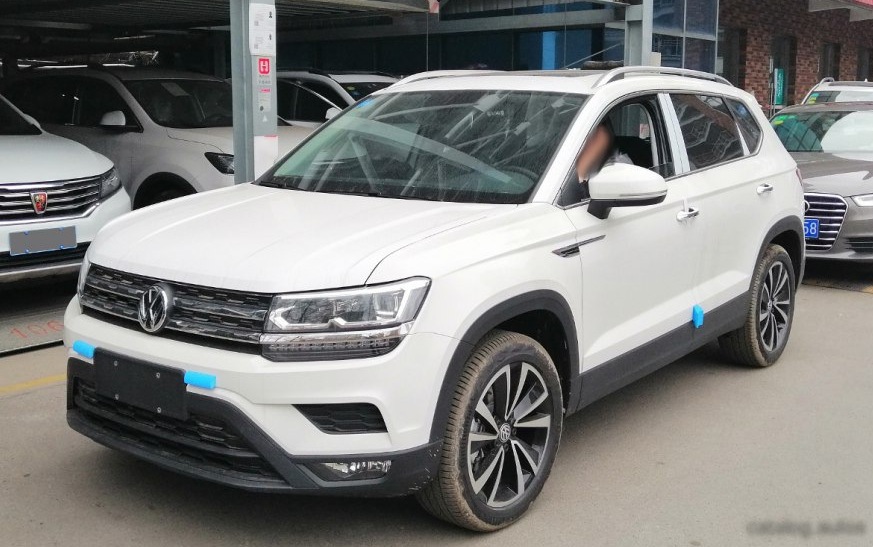
The Volkswagen Tharu 280TSI, equipped with a 1.4-liter turbocharged engine and a 7-speed dual-clutch transmission (DSG), represents a key offering in Volkswagen’s compact SUV lineup. Introduced in 2018, the Tharu was primarily aimed at markets outside of North America, particularly China and South America, filling a niche between the smaller T-Cross and the larger Tiguan. This specific 280TSI variant, producing 150 horsepower, served as a popular mid-range option, balancing performance with fuel efficiency and affordability. It’s built on the Volkswagen Group’s MQB platform, shared with models like the Audi Q3 and SEAT Ateca.
Technical Specifications
| Brand | Volkswagen |
| Model | Tharu |
| Type (Engine) | 280TSI (150 Hp) DSG |
| Start of production | 2018 |
| Powertrain Architecture | Internal Combustion engine |
| Body type | SUV |
| Seats | 5 |
| Doors | 5 |
| Fuel consumption (economy) – extra urban | 5.1 l/100 km (46.1 US mpg, 55.4 UK mpg, 19.6 km/l) |
| Fuel consumption (economy) – combined | 5.9 l/100 km (39.9 US mpg, 47.9 UK mpg, 16.9 km/l) |
| Fuel Type | Petrol (Gasoline) |
| Acceleration 0 – 100 km/h | 9.1 sec |
| Acceleration 0 – 62 mph | 9.1 sec |
| Acceleration 0 – 60 mph | 8.6 sec |
| Weight-to-power ratio | 9.4 kg/Hp, 106.8 Hp/tonne |
| Weight-to-torque ratio | 5.6 kg/Nm, 177.9 Nm/tonne |
| Power | 150 Hp @ 5000 rpm |
| Power per litre | 107.5 Hp/l |
| Torque | 250 Nm @ 1750-3000 rpm (184.39 lb.-ft. @ 1750-3000 rpm) |
| Engine layout | Front, Transverse |
| Engine Model/Code | EA211 |
| Engine displacement | 1395 cm3 (85.13 cu. in.) |
| Number of cylinders | 4 |
| Engine configuration | Inline |
| Number of valves per cylinder | 4 |
| Fuel injection system | Direct injection |
| Engine aspiration | Turbocharger, Intercooler |
| Engine systems | Particulate filter |
| Kerb Weight | 1405 kg (3097.49 lbs.) |
| Trunk (boot) space – minimum | 455 l (16.07 cu. ft.) |
| Trunk (boot) space – maximum | 1543 l (54.49 cu. ft.) |
| Fuel tank capacity | 50 l (13.21 US gal | 11 UK gal) |
| Length | 4453 mm (175.31 in.) |
| Width | 1841 mm (72.48 in.) |
| Height | 1632 mm (64.25 in.) |
| Wheelbase | 2680 mm (105.51 in.) |
| Drivetrain Architecture | The Internal combustion engine (ICE) drives the front wheels of the vehicle. |
| Drive wheel | Front wheel drive |
| Number of gears and type of gearbox | 7 gears, automatic transmission DSG |
| Front suspension | Independent type McPherson |
| Rear suspension | Independent multi-link suspension |
| Front brakes | Ventilated discs |
| Rear brakes | Disc |
| Assisting systems | ABS (Anti-lock braking system) |
| Steering type | Steering rack and pinion |
| Power steering | Electric Steering |
| Wheel rims size | 16 |
Powertrain & Engine Architecture
The heart of the Tharu 280TSI is the EA211 engine family, a 1.4-liter inline-four cylinder gasoline engine. This engine utilizes direct fuel injection and a turbocharger with an intercooler to boost power and efficiency. The EA211 is known for its compact design and relatively lightweight construction, contributing to the Tharu’s overall handling. The engine’s code is often found as CJSA or similar variations depending on the specific market. The 7-speed DSG (Direct-Shift Gearbox) is a dual-clutch transmission that offers quick and smooth gear changes. It operates similarly to two manual transmissions in one, allowing for both automatic and manual shifting via paddle shifters or the gear selector. The DSG contributes significantly to the Tharu’s fuel economy and responsiveness.
Driving Characteristics
The 150 horsepower and 250 Nm (184 lb-ft) of torque delivered by the 1.4 TSI engine and DSG transmission provide adequate performance for everyday driving. Acceleration from 0-60 mph takes approximately 8.6 seconds, which is competitive within its class. The DSG transmission is programmed for efficiency, with taller gear ratios in the higher gears to maximize fuel economy. However, it can quickly downshift when needed for overtaking or climbing hills. Compared to higher-output versions of the Tharu, such as those with a 2.0-liter engine, the 280TSI feels less powerful, particularly at higher speeds. However, the lower power output also results in better fuel economy and a more relaxed driving experience. The front-wheel-drive configuration provides predictable handling, but it lacks the all-weather capability of all-wheel-drive variants.
Equipment & Trim Levels
The Tharu 280TSI typically came equipped with a respectable level of standard features. These often included air conditioning, power windows and locks, a touchscreen infotainment system with Bluetooth connectivity, and basic safety features like ABS and airbags. Higher trim levels added features such as alloy wheels, a panoramic sunroof, leather upholstery, and advanced driver-assistance systems like adaptive cruise control and lane-keeping assist. Interior upholstery was typically cloth on the base models, with leather options available on higher trims. Dashboard configurations were generally straightforward and functional, with a focus on ease of use.
Chassis & Braking
The Tharu utilizes an independent McPherson strut suspension in the front and an independent multi-link suspension in the rear. This setup provides a comfortable ride quality and good handling characteristics. The front brakes are ventilated discs, while the rear brakes are solid discs. ABS (Anti-lock Braking System) is standard, providing enhanced braking performance in emergency situations. Stabilizer bars are fitted to both the front and rear axles to reduce body roll during cornering. The suspension tuning is geared towards comfort rather than outright sportiness, making it well-suited for everyday driving conditions.
Market Reception & Comparison
The Tharu 280TSI was generally well-received by automotive critics, who praised its fuel efficiency, comfortable ride, and well-equipped interior. However, some critics noted that the 1.4-liter engine could feel underpowered, especially when fully loaded or driving uphill. Compared to other trims in the Tharu lineup, the 280TSI offered a more affordable entry point, making it attractive to budget-conscious buyers. Its fuel economy was notably better than the more powerful 2.0-liter variants, making it a good choice for those who prioritize efficiency. Reliability reports have been generally positive, with the EA211 engine proving to be a durable and dependable unit.
Legacy
The Volkswagen Tharu 280TSI has established itself as a reliable and practical compact SUV in the used car market. The EA211 engine, coupled with the DSG transmission, has proven to be a relatively trouble-free powertrain when properly maintained. Regular servicing, including oil changes and DSG fluid replacements, is crucial for ensuring long-term reliability. As a used vehicle, the Tharu 280TSI offers a good value proposition, providing a comfortable and well-equipped driving experience at an affordable price point. Its compact size and fuel efficiency make it a suitable choice for urban commuters and small families.
