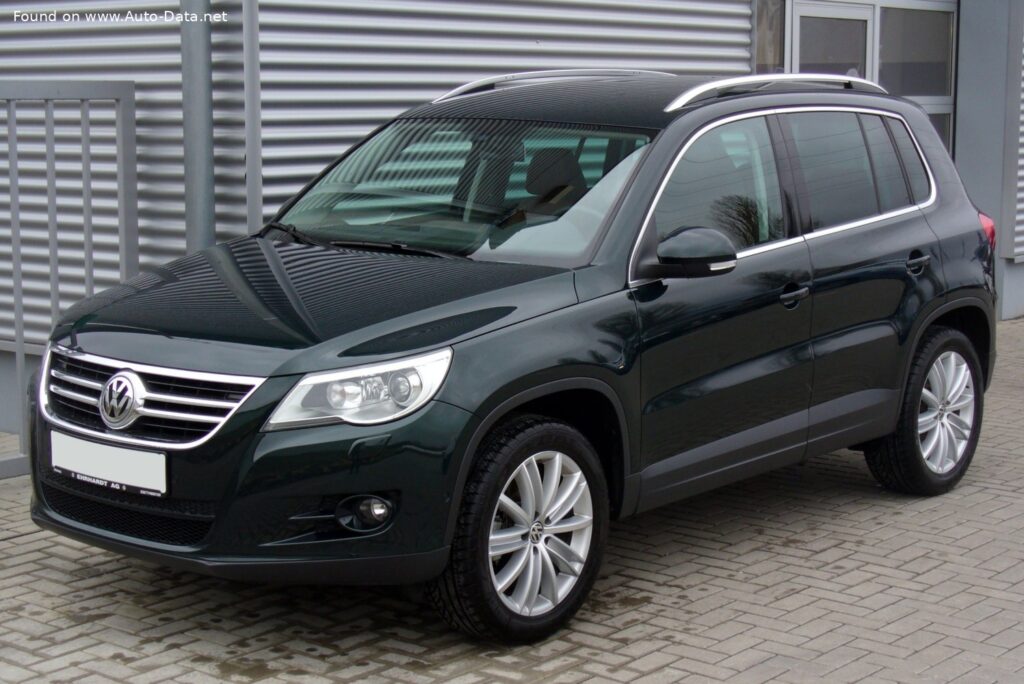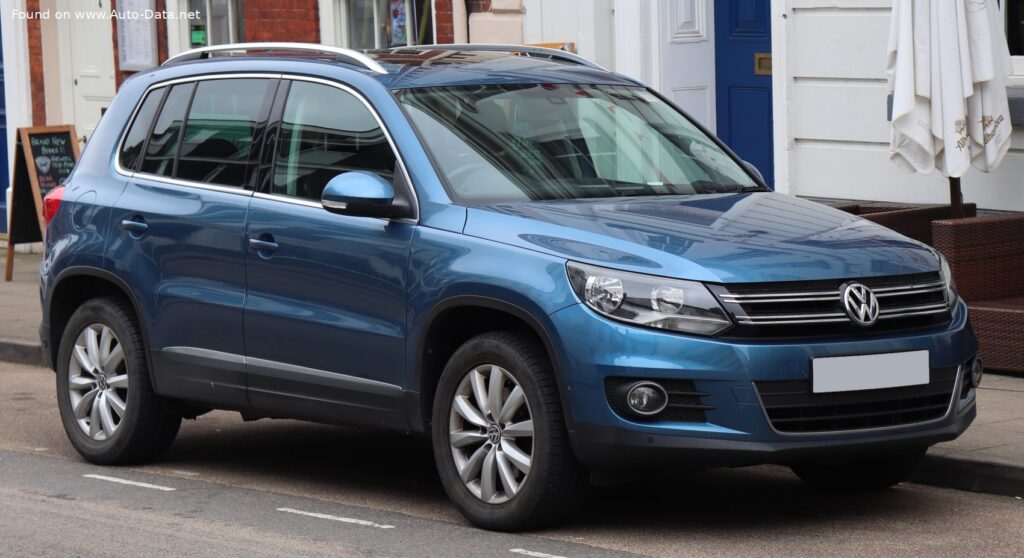
The Volkswagen Tiguan I (facelift 2011) 1.4 TSI BMT (122 Hp) represents a mid-cycle refresh of Volkswagen’s compact SUV, originally launched in 2007. Positioned as a competitor to vehicles like the Honda CR-V and Toyota RAV4, the Tiguan aimed to offer a more European driving experience with a focus on refinement and practicality. While not initially a major seller in the US market – Volkswagen’s focus was more on the larger Touareg – the Tiguan found a niche among buyers seeking a smaller, more fuel-efficient SUV. The facelift introduced in 2011 brought styling updates, improved interior materials, and refinements to the engine lineup, including the 1.4 TSI BMT engine detailed here. This model was primarily sold in Europe and other international markets, offering a blend of efficiency and usability in a relatively compact package.
Volkswagen Tiguan I (Facelift 2011) 1.4 TSI BMT: An Overview
The Tiguan I, even after the 2011 facelift, remained a relatively conservative design, prioritizing functionality over radical styling. The updates included a revised front fascia with new headlights and a redesigned grille, along with tweaks to the rear bumper and taillights. The interior received attention with improved trim materials and updated infotainment options. The 1.4 TSI BMT engine, a key component of this iteration, was designed to balance performance with fuel economy, utilizing direct injection and turbocharging technology. The “BMT” designation stands for “BlueMotion Technology,” indicating the inclusion of fuel-saving features like a start/stop system.
Engine & Performance
The heart of the Tiguan I (facelift 2011) 1.4 TSI BMT is a 1.4-liter inline-four cylinder gasoline engine. This engine, identified by the code CAXA, produces 122 horsepower at 5000 rpm and 200 Nm (147.51 lb.-ft.) of torque between 1500 and 4000 rpm. The engine utilizes direct fuel injection and a turbocharger with an intercooler to enhance power output and efficiency. The power-to-weight ratio is 11.7 kg/Hp, and the torque-to-weight ratio is 7.1 kg/Nm. This engine is coupled with a 6-speed manual transmission, driving the front wheels. Acceleration from 0 to 100 km/h (0-62 mph) takes 10.9 seconds, while 0-60 mph is achieved in approximately 10.4 seconds. The top speed is electronically limited to 185 km/h (114.95 mph). The engine’s relatively small displacement and turbocharging contribute to respectable fuel economy figures, particularly in combined driving cycles.
Design & Features
The Tiguan I (facelift 2011) is a five-door SUV with a practical and functional design. It offers seating for five passengers and a versatile cargo area. The rear seats can be folded down to increase cargo capacity from a minimum of 470 liters (16.6 cu. ft.) to a maximum of 1510 liters (53.33 cu. ft.). The vehicle’s dimensions are 4426 mm (174.25 in.) in length, 1809 mm (71.22 in.) in width, and 1703 mm (67.05 in.) in height. The wheelbase measures 2604 mm (102.52 in.). Standard features included ABS (Anti-lock braking system), electric power steering, and a McPherson strut front suspension with a multi-link rear suspension. The inclusion of a Start & Stop system, part of the BlueMotion Technology package, further enhances fuel efficiency by automatically shutting off the engine when the vehicle is stationary. Safety features were typical for the era, including driver and passenger airbags, and stability control. The ride height (ground clearance) is 200 mm (7.87 in), providing adequate capability for light off-road conditions.
Technical Specifications
| Brand | Volkswagen |
| Model | Tiguan |
| Generation | Tiguan I (facelift 2011) |
| Type (Engine) | 1.4 TSI BMT (122 Hp) |
| Start of production | 2011 |
| End of production | 2015 |
| Powertrain Architecture | Internal Combustion engine |
| Body type | SUV |
| Seats | 5 |
| Doors | 5 |
| Fuel consumption (economy) – urban (NEDC) | 8.3 l/100 km (28.3 US mpg, 34 UK mpg, 12 km/l) |
| Fuel consumption (economy) – extra urban (NEDC) | 5.5 l/100 km (42.8 US mpg, 51.4 UK mpg, 18.2 km/l) |
| Fuel consumption (economy) – combined (NEDC) | 6.5 l/100 km (36.2 US mpg, 43.5 UK mpg, 15.4 km/l) |
| CO2 emissions (NEDC) | 152 g/km |
| Fuel Type | Petrol (Gasoline) |
| Acceleration 0 – 100 km/h | 10.9 sec |
| Acceleration 0 – 62 mph | 10.9 sec |
| Acceleration 0 – 60 mph | 10.4 sec |
| Maximum speed | 185 km/h (114.95 mph) |
| Emission standard | Euro 5 |
| Weight-to-power ratio | 11.7 kg/Hp |
| Weight-to-torque ratio | 7.1 kg/Nm |
| Power | 122 Hp @ 5000 rpm |
| Torque | 200 Nm @ 1500-4000 rpm (147.51 lb.-ft. @ 1500-4000 rpm) |
| Engine layout | Front, Transverse |
| Engine Model/Code | EA111 / CAXA |
| Engine displacement | 1390 cm3 (84.82 cu. in.) |
| Number of cylinders | 4 |
| Engine configuration | Inline |
| Cylinder Bore | 76.5 mm (3.01 in.) |
| Piston Stroke | 75.6 mm (2.98 in.) |
| Number of valves per cylinder | 4 |
| Fuel injection system | Direct injection |
| Engine aspiration | Turbocharger, Intercooler |
| Valvetrain | DOHC |
| Engine oil capacity | 4 l (4.23 US qt | 3.52 UK qt) |
| Kerb Weight | 1426 kg (3143.79 lbs.) |
| Max. weight | 2080 kg (4585.62 lbs.) |
| Max load | 654 kg (1441.82 lbs.) |
| Trunk (boot) space – minimum | 470 l (16.6 cu. ft.) |
| Trunk (boot) space – maximum | 1510 l (53.33 cu. ft.) |
| Fuel tank capacity | 64 l (16.91 US gal | 14.08 UK gal) |
| Max. roof load | 75 kg (165.35 lbs.) |
| Permitted trailer load with brakes (8%) | 1800 kg (3968.32 lbs.) |
| Permitted trailer load with brakes (12%) | 1600 kg (3527.4 lbs.) |
| Permitted trailer load without brakes | 750 kg (1653.47 lbs.) |
| Permitted towbar download | 100 kg (220.46 lbs.) |
| Length | 4426 mm (174.25 in.) |
| Width | 1809 mm (71.22 in.) |
| Width including mirrors | 2041 mm (80.35 in.) |
| Height | 1703 mm (67.05 in.) |
| Wheelbase | 2604 mm (102.52 in.) |
| Front track | 1569 mm (61.77 in.) |
| Rear (Back) track | 1571 mm (61.85 in.) |
| Ride height (ground clearance) | 200 mm (7.87 in.) |
| Minimum turning circle (turning diameter) | 12 m (39.37 ft.) |
| Number of gears and type of gearbox | 6 gears, manual transmission |
| Front brakes | Ventilated discs |
| Rear brakes | Disc |
| Tires size | 215/65 R16; 215/60 R17; 235/55 R17; 235/50 R18; 255/40 R19 |
The Volkswagen Tiguan I (facelift 2011) 1.4 TSI BMT offered a compelling package for buyers seeking a compact and efficient SUV. While not a high-performance vehicle, it provided a comfortable driving experience and a practical interior, making it a popular choice in European markets.