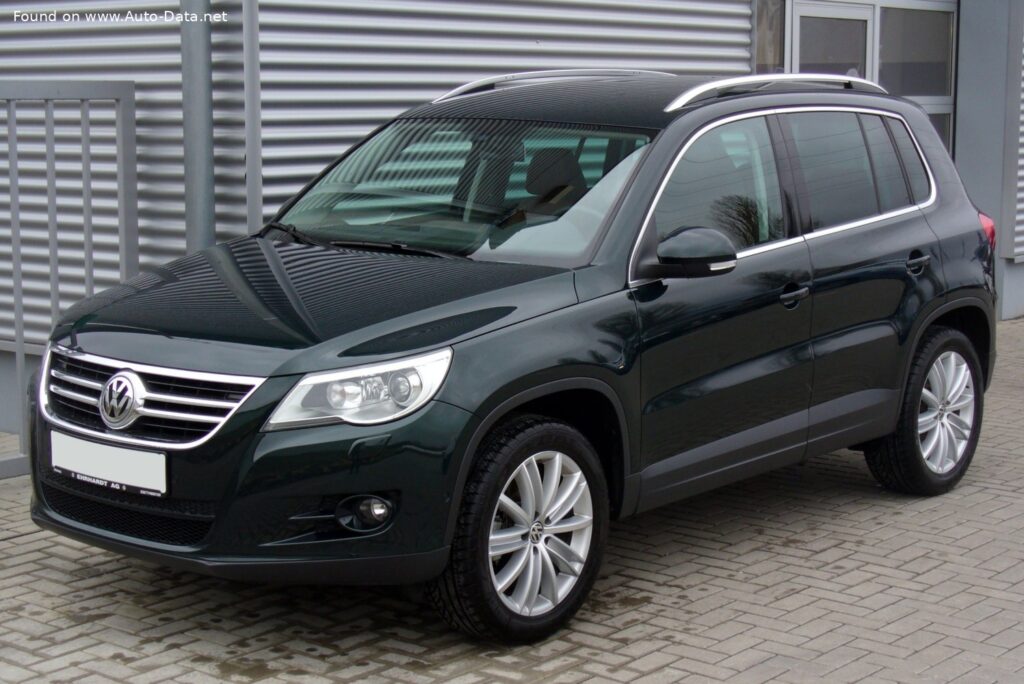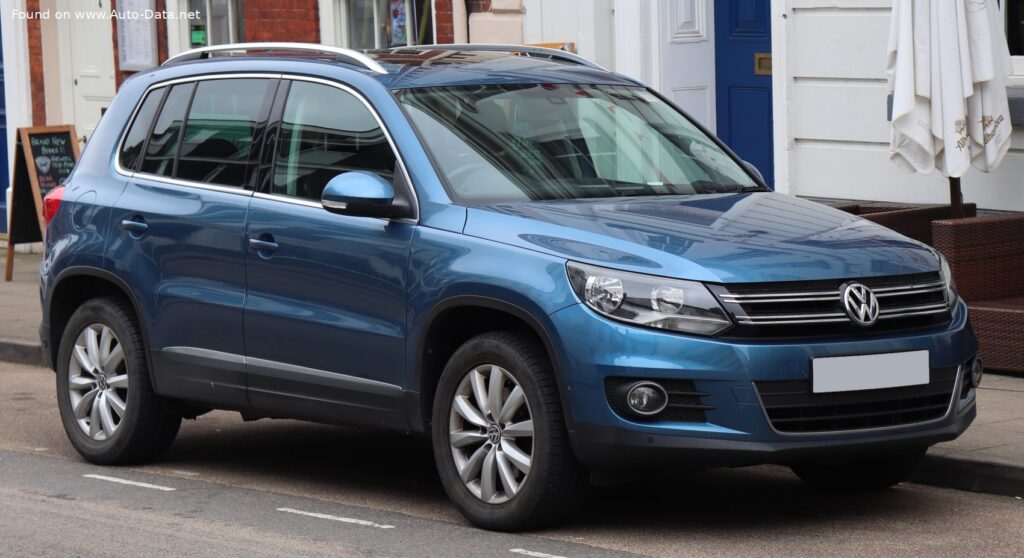
The Volkswagen Tiguan I, specifically the facelifted model produced between 2011 and 2015, represents a pivotal point in Volkswagen’s expansion into the increasingly popular compact crossover SUV segment. While the Tiguan eventually reached North American shores, the initial generation and this particular facelift were primarily aimed at the European market, where demand for smaller, more fuel-efficient SUVs was high. The 1.4 TSI BMT (160 Hp) variant showcased Volkswagen’s engineering capabilities, offering a blend of performance, economy, and practicality that resonated with buyers seeking a versatile vehicle for both urban and long-distance driving. This model distinguished itself through innovative engine technology and a focus on reducing environmental impact, aligning with evolving consumer preferences and stricter emissions regulations.
Volkswagen Tiguan I (Facelift 2011): A Detailed Overview
The Tiguan I, launched in 2007, was Volkswagen’s first foray into the compact SUV market. It was designed to appeal to customers who wanted the practicality of an SUV but didn’t want to sacrifice the driving experience associated with Volkswagen’s more traditional passenger cars. The 2011 facelift brought significant cosmetic and technological updates, refining the Tiguan’s appearance and enhancing its features. The facelift included revised front and rear styling, updated interior materials, and the introduction of new driver-assistance systems. The 1.4 TSI BMT engine option was a key component of this update, offering a compelling balance of power and efficiency. The Tiguan I competed with vehicles like the Nissan Qashqai, Kia Sportage, and Hyundai ix35 in the European market, offering a more premium feel and a more refined driving experience than many of its rivals.
Engine & Performance
The heart of the 2011-2015 Volkswagen Tiguan I (facelift) 1.4 TSI BMT is its sophisticated 1.4-liter turbocharged four-cylinder engine. The “TSI” designation signifies Volkswagen’s Turbocharged Stratified Injection technology, a direct-injection system that optimizes fuel combustion for improved power and efficiency. The “BMT” (BlueMotion Technology) label indicates the inclusion of features designed to further reduce fuel consumption and emissions. A key element of the BMT package is the Start & Stop system, which automatically shuts off the engine when the vehicle is stationary – at traffic lights, for example – and restarts it instantly when the driver engages the clutch. This system significantly reduces idling fuel consumption, particularly in urban environments.
What sets this engine apart is its unique twin-charging system. It employs both a supercharger and a turbocharger to deliver a broad and responsive power band. The supercharger provides immediate boost at low engine speeds, eliminating the turbo lag often associated with turbocharged engines. This ensures strong acceleration from a standstill and smooth power delivery during initial acceleration. As engine speed increases, the turbocharger takes over, providing sustained power at higher RPMs. This combination results in a remarkably flat torque curve, with a peak torque of 240 Nm (177.01 lb.-ft.) available from 1500 to 4500 rpm. This accessible torque makes the Tiguan feel effortless to drive in a variety of situations, from navigating city streets to overtaking on the highway.
The engine produces 160 HP (118 kW) at 5800 rpm, giving it a power-per-liter ratio of 115.1 hp/l. This power is delivered to the front wheels through a precise six-speed manual transmission. The Tiguan 1.4 TSI BMT can accelerate from 0 to 60 mph (0-97 km/h) in approximately 8.5 seconds, and from 0 to 100 km/h in 8.9 seconds, reaching a top speed of 126.14 mph (203 km/h). Despite its respectable performance, the Tiguan 1.4 TSI BMT achieves commendable fuel economy, with combined fuel consumption figures of around 6.2 liters per 100 kilometers (approximately 38.2 mpg) according to the New European Driving Cycle (NEDC) standards.
Design & Features
The Volkswagen Tiguan I (facelift) is a compact crossover SUV characterized by its relatively conservative and understated styling. The 2011 facelift brought subtle but noticeable changes to the exterior, including a revised front grille, redesigned headlights, and updated bumpers. These changes gave the Tiguan a more modern and refined appearance. The vehicle’s body is a five-door configuration, offering easy access to both front and rear seats. The interior of the Tiguan is well-built and functional, with a focus on ergonomics and practicality. The dashboard is logically laid out, and the materials used are of a good quality for its class.
Key features of the 2011-2015 Tiguan I include a spacious interior for its size, a versatile cargo area, and a comfortable ride. The rear seats can be folded down to create a larger cargo space, making it suitable for carrying larger items. Safety features were also a priority, with standard equipment including ABS brakes, electronic stability control, and multiple airbags. Optional features included parking sensors, a navigation system, and climate control. The Tiguan’s suspension is tuned to provide a balance between comfort and handling, making it a pleasant vehicle to drive on both smooth and rough roads. The overall design philosophy of the Tiguan I was to create a vehicle that was both practical and enjoyable to drive, appealing to a wide range of customers.
Technical Specifications
| Engine Type | Inline-4, Turbocharged & Supercharged |
| Displacement | 1390 cc (84.82 cu in) |
| Fuel Type | Gasoline |
| Maximum Power | 160 HP (118 kW) @ 5800 rpm |
| Maximum Torque | 240 Nm (177.01 lb-ft) @ 1500-4500 rpm |
| Transmission | 6-speed Manual |
| Drive Type | Front-Wheel Drive |
| 0-60 mph (0-97 km/h) | 8.5 seconds |
| 0-100 km/h | 8.9 seconds |
| Top Speed | 203 km/h (126.14 mph) |
| Fuel Consumption (NEDC Combined) | 6.2 L/100km (38.2 mpg) |
| CO2 Emissions | 143 g/km |