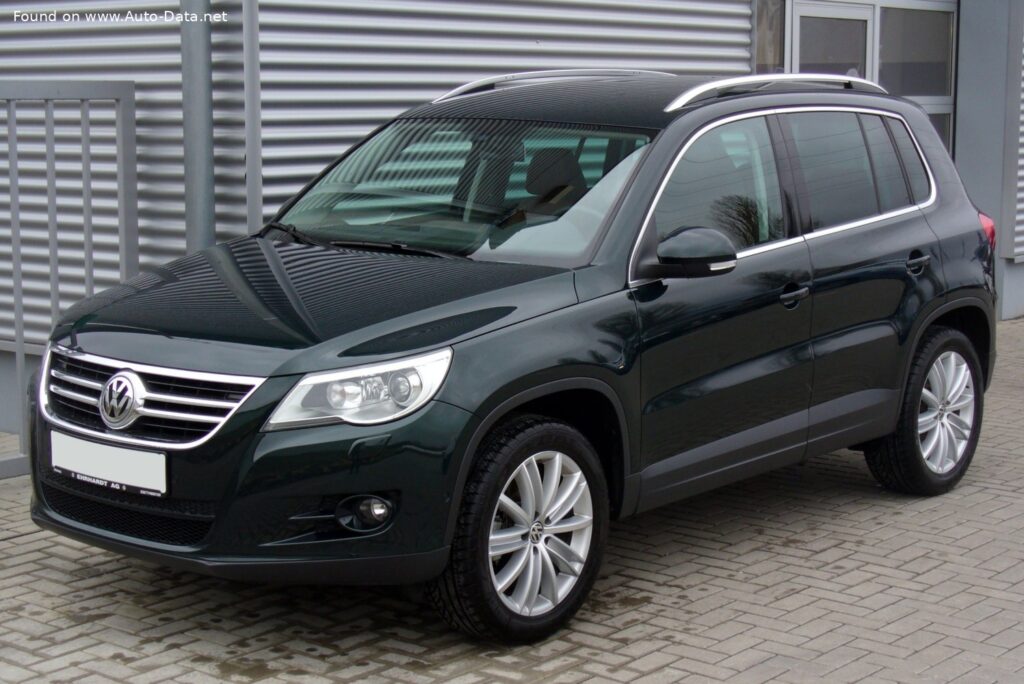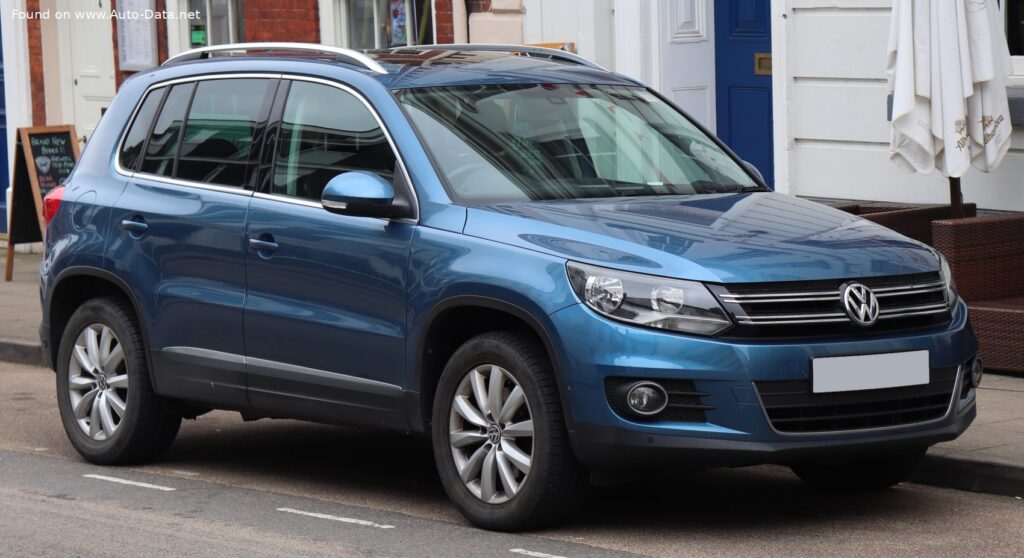
The Volkswagen Tiguan I (facelift 2011) 2.0 TSI (211 Hp) 4MOTION DSG represents a pivotal moment in the evolution of the compact SUV segment, showcasing Volkswagen’s commitment to combining practicality, refined driving dynamics, and sophisticated powertrain technology. Introduced in 2011 as a refreshed iteration of the first-generation Tiguan, this particular variant, equipped with the potent 2.0-liter TSI engine, advanced 4MOTION all-wheel-drive, and the seamless DSG automatic transmission, carved out a significant niche in global markets, particularly in Europe where it was celebrated for its blend of performance and efficiency. While the Tiguan was a globally recognized model, this specific configuration underscored Volkswagen’s engineering prowess, offering a compelling package for discerning buyers seeking a versatile and capable vehicle for both urban commutes and adventurous excursions. It solidified the Tiguan’s reputation as a premium contender in a highly competitive class, bridging the gap between mainstream and luxury offerings with its robust build quality, intelligent design, and engaging driving experience.
The Volkswagen Tiguan I (facelift 2011) 2.0 TSI (211 Hp) 4MOTION DSG: Powertrain and Performance
At the heart of the Volkswagen Tiguan I (facelift 2011) 2.0 TSI (211 Hp) 4MOTION DSG lies a highly acclaimed powertrain combination, engineered for both spirited performance and remarkable efficiency. This model features Volkswagen’s renowned EA888 / CCZB engine, a 2.0-liter (1984 cm³, or 121.07 cu. in.) inline four-cylinder unit. This engine utilizes a sophisticated DOHC valvetrain with four valves per cylinder and benefits from both direct fuel injection and a turbocharger with an intercooler, optimizing power delivery across a broad RPM range. The result is a robust output of 211 horsepower, available between 5300 and 6200 rpm, and a substantial 206.52 lb.-ft. of torque, accessible from a low 1700 rpm all the way up to 5200 rpm. This wide torque band ensures responsive acceleration and strong pulling power in various driving conditions, making the Tiguan feel agile and capable.
Performance figures for this Tiguan variant are impressive for a compact SUV. It can accelerate from 0 to 60 mph in a brisk 6.9 seconds, with 0 to 100 km/h achieved in 7.3 seconds. The top speed is rated at 132.35 mph (213 km/h), demonstrating its capability on highways. Power is efficiently managed by a 7-speed automatic DSG (Direct-Shift Gearbox) transmission, which provides rapid and smooth gear changes, contributing significantly to both performance and fuel economy. The innovative 4MOTION all-wheel-drive system further enhances the vehicle’s dynamics and safety. This drivetrain architecture primarily powers the front wheels, with the rear wheels engaging automatically via an electrically or mechanically operated clutch when additional traction is required, ensuring optimal grip on challenging surfaces or during dynamic driving maneuvers. This adaptive system offers confidence-inspiring stability and control, whether navigating slippery roads or light off-road trails.
Fuel efficiency, while not the primary focus of a performance-oriented SUV, is competently handled by this Tiguan model, especially considering its power output and all-wheel-drive system. According to NEDC standards, combined fuel consumption is between 27.4 and 28 US mpg (8.4-8.6 l/100 km). Urban driving yields 19.9 to 21 US mpg (11.2-11.8 l/100 km), while extra-urban cycles achieve a more economical 35.1 US mpg (6.7 l/100 km). These figures are commendable for a vehicle of its class and power. The Tiguan also meets Euro 5 emission standards, with CO2 emissions ranging from 195 to 199 g/km, reflecting Volkswagen’s efforts towards environmental compliance. Furthermore, the inclusion of a Start & Stop System helps reduce fuel consumption and emissions during city driving by automatically shutting off the engine when the vehicle is stationary.
Chassis and Dynamics
The Tiguan I (facelift 2011) 2.0 TSI (211 Hp) 4MOTION DSG benefits from a well-engineered chassis designed to deliver a comfortable yet engaging ride. The front suspension employs an independent McPherson strut setup with coil springs and an anti-roll bar, providing precise steering and excellent road holding. At the rear, an independent multi-link spring suspension with a stabilizer ensures superior ride comfort and stability, particularly when cornering or carrying a load. Braking performance is robust, with ventilated discs at the front and disc brakes at the rear, complemented by an Anti-lock Braking System (ABS) for enhanced safety and control during emergency stops. The electric power steering system, featuring a rack and pinion design, offers precise feedback and easy maneuverability, making the Tiguan a pleasure to drive in various conditions. The vehicle’s weight-to-power ratio stands at 7.6 kg/Hp (130.7 Hp/tonne), and its weight-to-torque ratio is 5.8 kg/Nm (173.5 Nm/tonne), indicating a well-balanced power delivery relative to its curb weight of 3558.26 lbs (1614 kg).
Design and Features
The Volkswagen Tiguan I (facelift 2011) presented a refined and understated aesthetic that has become synonymous with Volkswagen’s design philosophy. As an SUV body type with five doors and seating for five occupants, it offered a practical and versatile package. The facelift introduced subtle yet effective changes, including redesigned headlights, a revised grille, and updated bumpers, giving the Tiguan a more contemporary and upscale appearance while maintaining its familiar, robust stance. Its exterior dimensions – a length of 174.25 inches (4426 mm), a width of 71.22 inches (1809 mm), and a height of 67.05 inches (1703 mm) – allowed for a compact footprint that was easy to maneuver in urban environments, yet spacious enough for family use. The wheelbase of 102.52 inches (2604 mm) contributed to a stable ride and generous interior volume.
Inside, the Tiguan offered a typical Volkswagen experience: high-quality materials, logical ergonomics, and a functional layout. The five-seat configuration provided comfortable accommodation for passengers, while the cargo area was highly adaptable. With the rear seats in place, the trunk offered a respectable 16.6 cu. ft. (470 liters) of space, which could be expanded to a substantial 53.33 cu. ft. (1510 liters) by folding down the rear seats, making it highly practical for hauling luggage, groceries, or sports equipment. The vehicle’s maximum load capacity was 1358.05 lbs (616 kg), and it could handle a maximum roof load of 220.46 lbs (100 kg).
Beyond its practicality, the Tiguan was also engineered for capability. Its ground clearance of 7.87 inches (200 mm), combined with an approach angle of 18 degrees, a departure angle of 25 degrees, and a ramp-over angle of 20 degrees, provided sufficient capability for light off-road excursions and navigating challenging terrain. The minimum turning circle of 39.37 feet (12 meters) further underscored its maneuverability. Moreover, the Tiguan was a capable hauler, boasting an impressive permitted trailer load with brakes of 5511.56 lbs (2500 kg) and a permitted trailer load without brakes of 1653.47 lbs (750 kg), making it suitable for towing boats, small campers, or utility trailers. The standard tire sizes ranged from 215/60 R17 to 255/40 R19, mounted on corresponding wheel rims, allowing owners to choose between comfort-oriented or sportier setups. The Volkswagen Tiguan I (facelift 2011) 2.0 TSI (211 Hp) 4MOTION DSG truly embodied a well-rounded approach, offering a blend of sophisticated engineering, practical design, and robust performance that appealed to a broad spectrum of drivers.
Technical Specifications
| Brand | Volkswagen |
| Model | Tiguan |
| Generation | Tiguan I (facelift 2011) |
| Type (Engine) | 2.0 TSI (211 Hp) 4MOTION DSG |
| Start of production | 2011 year |
| End of production | 2015 year |
| Powertrain Architecture | Internal Combustion engine |
| Body type | SUV |
| Seats | 5 |
| Doors | 5 |
| Fuel consumption (economy) – urban (NEDC) | 11.2-11.8 l/100 km (21 – 19.9 US mpg) |
| Fuel consumption (economy) – extra urban (NEDC) | 6.7 l/100 km (35.1 US mpg) |
| Fuel consumption (economy) – combined (NEDC) | 8.4-8.6 l/100 km (28 – 27.4 US mpg) |
| CO2 emissions (NEDC) | 195-199 g/km |
| Fuel Type | Petrol (Gasoline) |
| Acceleration 0 – 100 km/h | 7.3 sec |
| Acceleration 0 – 62 mph | 7.3 sec |
| Acceleration 0 – 60 mph | 6.9 sec |
| Maximum speed | 213 km/h (132.35 mph) |
| Emission standard | Euro 5 |
| Weight-to-power ratio | 7.6 kg/Hp (130.7 Hp/tonne) |
| Weight-to-torque ratio | 5.8 kg/Nm (173.5 Nm/tonne) |
| Power | 211 Hp @ 5300-6200 rpm |
| Power per liter | 106.4 Hp/l |
| Torque | 280 Nm @ 1700-5200 rpm (206.52 lb.-ft.) |
| Engine layout | Front, Transverse |
| Engine Model/Code | EA888 / CCZB |
| Engine displacement | 1984 cm3 (121.07 cu. in.) |
| Number of cylinders | 4 |
| Engine configuration | Inline |
| Cylinder Bore | 82.5 mm (3.25 in.) |
| Piston Stroke | 92.8 mm (3.65 in.) |
| Number of valves per cylinder | 4 |
| Fuel injection system | Direct injection |
| Engine aspiration | Turbocharger, Intercooler |
| Valvetrain | DOHC |
| Engine oil capacity | 4.7 l (4.97 US qt) |
| Engine systems | Start & Stop System |
| Kerb Weight | 1614 kg (3558.26 lbs.) |
| Max. weight | 2230 kg (4916.31 lbs.) |
| Max load | 616 kg (1358.05 lbs.) |
| Trunk (boot) space – minimum | 470 l (16.6 cu. ft.) |
| Trunk (boot) space – maximum | 1510 l (53.33 cu. ft.) |
| Fuel tank capacity | 64 l (16.91 US gal) |
| Max. roof load | 100 kg (220.46 lbs.) |
| Permitted trailer load with brakes (8%) | 2500 kg (5511.56 lbs.) |
| Permitted trailer load with brakes (12%) | 2500 kg (5511.56 lbs.) |
| Permitted trailer load without brakes | 750 kg (1653.47 lbs.) |
| Permitted towbar download | 100 kg (220.46 lbs.) |
| Length | 4426 mm (174.25 in.) |
| Width | 1809 mm (71.22 in.) |
| Width including mirrors | 2041 mm (80.35 in.) |
| Height | 1703 mm (67.05 in.) |
| Wheelbase | 2604 mm (102.52 in.) |
| Front track | 1569 mm (61.77 in.) |
| Rear (Back) track | 1571 mm (61.85 in.) |
| Ride height (ground clearance) | 200 mm (7.87 in.) |
| Minimum turning circle (turning diameter) | 12 m (39.37 ft.) |
| Approach angle | 18° |
| Departure angle | 25° |
| Ramp-over (brakeover) angle | 20° |
| Drivetrain Architecture | ICE drives front wheels permanently, rear wheels driven through clutch if necessary. |
| Drive wheel | All wheel drive (4×4) |
| Number of gears and type of gearbox | 7 gears, automatic transmission DSG |
| Front suspension | Independent, type McPherson with coil spring and anti-roll bar |
| Rear suspension | Independent multi-link spring suspension with stabilizer |
| Front brakes | Ventilated discs |
| Rear brakes | Disc |
| Assisting systems | ABS (Anti-lock braking system) |
| Steering type | Steering rack and pinion |
| Power steering | Electric Steering |
| Tires size | 215/60 R17; 235/55 R17; 235/50 R18; 255/40 R19 |
| Wheel rims size | 6.5J x 17; 7J x 17; 7J x 18; 8J x 18; 9J x 19 |