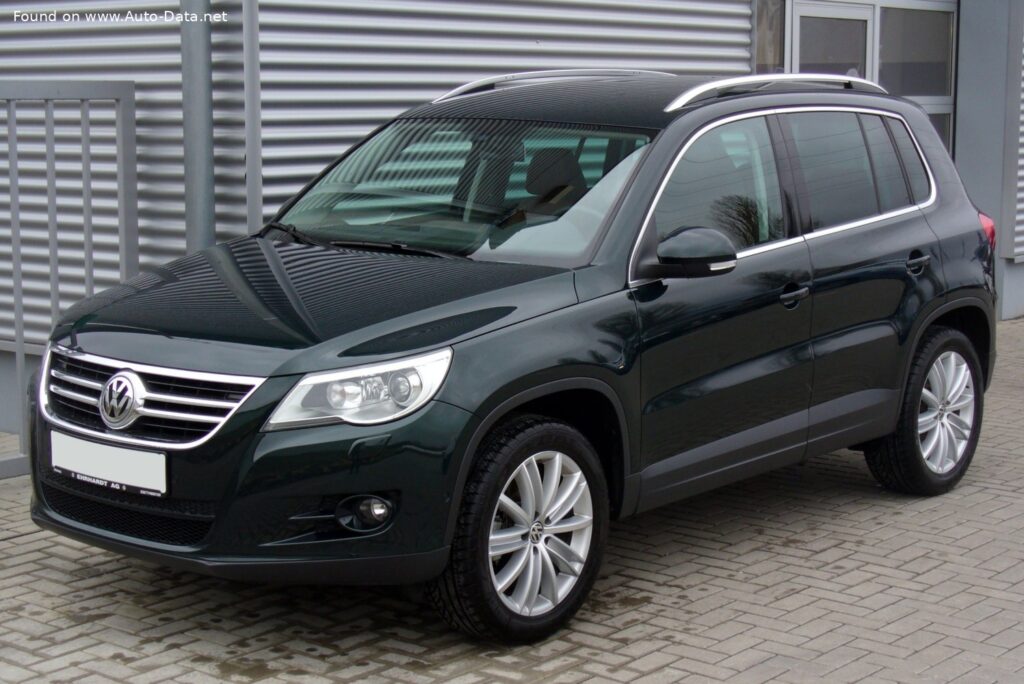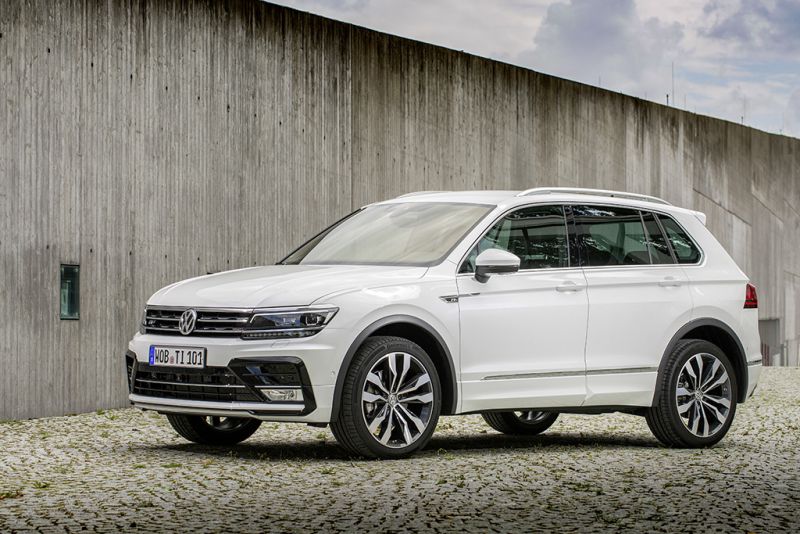
The second-generation Volkswagen Tiguan, specifically the Volkswagen Tiguan II 1.4 TSI (150 Hp) 4MOTION ACT variant, represents a significant evolution in the compact SUV segment. Introduced in June 2016 and produced until August 2018, this particular model combined Volkswagen’s renowned engineering prowess with a focus on efficiency, versatility, and all-weather capability. Positioned as a practical and sophisticated choice for families and individuals alike, the Tiguan II built upon the success of its predecessor by offering a more mature design, enhanced technology, and a refined driving experience. While the 1.4 TSI engine with Active Cylinder Technology (ACT) and 4MOTION all-wheel-drive might not have been the primary powertrain for the North American market, it played a crucial role in Europe and other global markets, showcasing Volkswagen’s commitment to balancing performance with fuel economy and reduced emissions.
Engine and Performance of the Volkswagen Tiguan II 1.4 TSI (150 Hp) 4MOTION ACT
At the heart of this particular Tiguan variant lies a sophisticated 1.4-liter TSI (Turbocharged Stratified Injection) inline-four engine, delivering a respectable 150 horsepower at 5000-6000 rpm and 184.39 lb.-ft. of torque across a broad range from 1500-3500 rpm. This engine, identifiable by codes such as CZDA, CZEA, CHPB, or DJVA, exemplifies modern powertrain engineering, combining direct fuel injection with turbocharging and an intercooler to achieve a high power-per-liter output of 107.5 Hp/l. The result is a responsive and engaging driving experience, capable of propelling the Tiguan from 0 to 60 mph in a brisk 8.7 seconds, with a top speed reaching 124.27 mph.
A standout feature of this powertrain is Volkswagen’s innovative Active Cylinder Technology (ACT). This system intelligently deactivates two of the engine’s four cylinders under light loads, such as when cruising at a constant speed or during gentle acceleration. By running on fewer cylinders, the engine operates more efficiently, significantly reducing fuel consumption and CO2 emissions. This technology works seamlessly and imperceptibly to the driver, ensuring that power is always available when needed while maximizing efficiency during less demanding situations. Complementing the ACT system is a standard Start/Stop system, further enhancing fuel economy by shutting off the engine when the vehicle is stationary and restarting it instantly when the driver intends to move.
Power is delivered to all four wheels via a precise 6-speed manual transmission and Volkswagen’s advanced 4MOTION all-wheel-drive system. The 4MOTION architecture in this Tiguan II variant is a part-time all-wheel-drive system, primarily driving the front wheels for optimal efficiency. However, when road conditions dictate, or wheel slip is detected, an electrically or mechanically operated clutch instantaneously engages the rear wheels, providing enhanced traction and stability. This intelligent system ensures confident handling in various driving scenarios, from slippery roads to light off-road excursions, without the constant parasitic drag of a full-time AWD system. The combined effect of the efficient 1.4 TSI engine with ACT and the adaptive 4MOTION system results in commendable fuel economy figures: a combined 34.1 US mpg, with urban consumption at 28.3 US mpg and extra-urban at 39.2 US mpg. With CO2 emissions rated at 155 g/km, the vehicle meets the stringent Euro 6 emission standard, underscoring its environmental responsibility.
Design and Features of the Volkswagen Tiguan II
The Volkswagen Tiguan II, as a five-door, five-seat SUV, embodies a contemporary and purposeful design philosophy. Its exterior styling is characterized by sharp lines, a bold grille, and distinct LED lighting signatures (depending on trim), reflecting Volkswagen’s modern aesthetic. The Tiguan II’s dimensions contribute to its commanding presence and practical interior space: a length of 176.61 inches, a width of 72.4 inches (82.64 inches including mirrors), and a height of 65.87 inches. A generous wheelbase of 105.39 inches translates directly into a spacious cabin, offering ample legroom and comfort for all five occupants.
Inside, the Tiguan II prioritizes functionality and user-friendliness. While the specific trim levels and optional features would vary by market, the standard design emphasized high-quality materials, ergonomic controls, and intelligent storage solutions. The SUV body type inherently offers a versatile cargo area, and the Tiguan II excels in this regard. With the rear seats in place, it provides a substantial minimum trunk space of 21.72 cubic feet (615 liters), which expands significantly to a cavernous 58.45 cubic feet (1655 liters) when the rear seats are folded down. This impressive cargo capacity makes the Tiguan an ideal companion for family trips, hauling luggage, or transporting larger items.
Beyond its utilitarian aspects, the Tiguan II also incorporates advanced safety and driving dynamics. The vehicle features a robust braking system with ventilated discs at the front and solid discs at the rear, complemented by an Anti-lock Braking System (ABS) for assured stopping power. Steering is managed by an electric power steering rack and pinion system, providing precise control and effortless maneuverability, especially in urban environments. The ride height of 7.87 inches (200 mm) offers a good balance between on-road stability and the ability to tackle light off-road conditions, further enhancing its SUV credentials. Standard tire sizes range from 215/65 R17 to 235/55 R18, mounted on 7J x 17 or 7J x 18 wheel rims, contributing to both aesthetics and handling performance. The maximum roof load capacity of 165.35 lbs. and impressive towing capacities (up to 4850.17 lbs. with brakes) further underscore its utility as a versatile family vehicle.
Technical Specifications
| Brand | Volkswagen |
| Model | Tiguan |
| Generation | Tiguan II |
| Type (Engine) | 1.4 TSI (150 Hp) 4MOTION ACT |
| Start of production | June, 2016 year |
| End of production | August, 2018 year |
| Powertrain Architecture | Internal Combustion engine |
| Body type | SUV |
| Seats | 5 |
| Doors | 5 |
| Fuel consumption (economy) – urban | 28.3 US mpg (8.3 l/100 km) |
| Fuel consumption (economy) – extra urban | 39.2 US mpg (6 l/100 km) |
| Fuel consumption (economy) – combined | 34.1 US mpg (6.9 l/100 km) |
| CO2 emissions | 155 g/km |
| Fuel Type | Petrol (Gasoline) |
| Acceleration 0 – 60 mph | 8.7 sec |
| Acceleration 0 – 100 km/h | 9.2 sec |
| Maximum speed | 124.27 mph (200 km/h) |
| Emission standard | Euro 6 |
| Weight-to-power ratio | 10 kg/Hp, 100.3 Hp/tonne |
| Weight-to-torque ratio | 6 kg/Nm, 167.2 Nm/tonne |
| Power | 150 Hp @ 5000-6000 rpm. |
| Power per liter | 107.5 Hp/l |
| Torque | 184.39 lb.-ft. @ 1500-3500 rpm. (250 Nm) |
| Engine layout | Front, Transverse |
| Engine Model/Code | CZDA, CZEA, CHPB, DJVA |
| Engine displacement | 1.4 liters (1395 cm3 / 85.13 cu. in.) |
| Number of cylinders | 4 |
| Engine configuration | Inline |
| Number of valves per cylinder | 4 |
| Fuel injection system | Direct injection |
| Engine aspiration | Turbocharger, Intercooler |
| Engine oil capacity | 4.23 US qt (4 liters) |
| Engine systems | Start & Stop System, Cylinder deactivation system |
| Kerb Weight | 3295.91 – 3776.52 lbs. (1495-1713 kg) |
| Max. weight | 4784.03 lbs. (2170 kg) |
| Max load | 1007.51 – 1488.12 lbs. (457-675 kg) |
| Trunk (boot) space – minimum | 21.72 cu. ft. (615 l) |
| Trunk (boot) space – maximum | 58.45 cu. ft. (1655 l) |
| Fuel tank capacity | 15.85 US gal (60 l) |
| Max. roof load | 165.35 lbs. (75 kg) |
| Permitted trailer load with brakes (8%) | 4850.17 lbs. (2200 kg) |
| Permitted trailer load with brakes (12%) | 4409.25 lbs. (2000 kg) |
| Permitted trailer load without brakes | 1653.47 lbs. (750 kg) |
| Permitted towbar download | 220.46 lbs. (100 kg) |
| Length | 176.61 in. (4486 mm) |
| Width | 72.4 in. (1839 mm) |
| Width including mirrors | 82.64 in. (2099 mm) |
| Height | 65.87 in. (1673 mm) |
| Wheelbase | 105.39 in. (2677 mm) |
| Front track | 62.05 – 62.44 in. (1576-1586 mm) |
| Rear (Back) track | 61.65 – 62.05 in. (1566-1576 mm) |
| Ride height (ground clearance) | 7.87 in. (200 mm) |
| Minimum turning circle (turning diameter) | 37.73 ft. (11.5 m) |
| Drivetrain Architecture | Internal combustion engine drives front wheels permanently; rear wheels driven through an electrically or mechanically operated clutch if necessary. |
| Drive wheel | All wheel drive (4×4) |
| Number of gears and type of gearbox | 6 gears, manual transmission |
| Front brakes | Ventilated discs |
| Rear brakes | Disc |
| Assisting systems | ABS (Anti-lock braking system) |
| Steering type | Steering rack and pinion |
| Power steering | Electric Steering |
| Tires size | 215/65 R17; 235/55 R18 |
| Wheel rims size | 7J x 17; 7J x 18 |