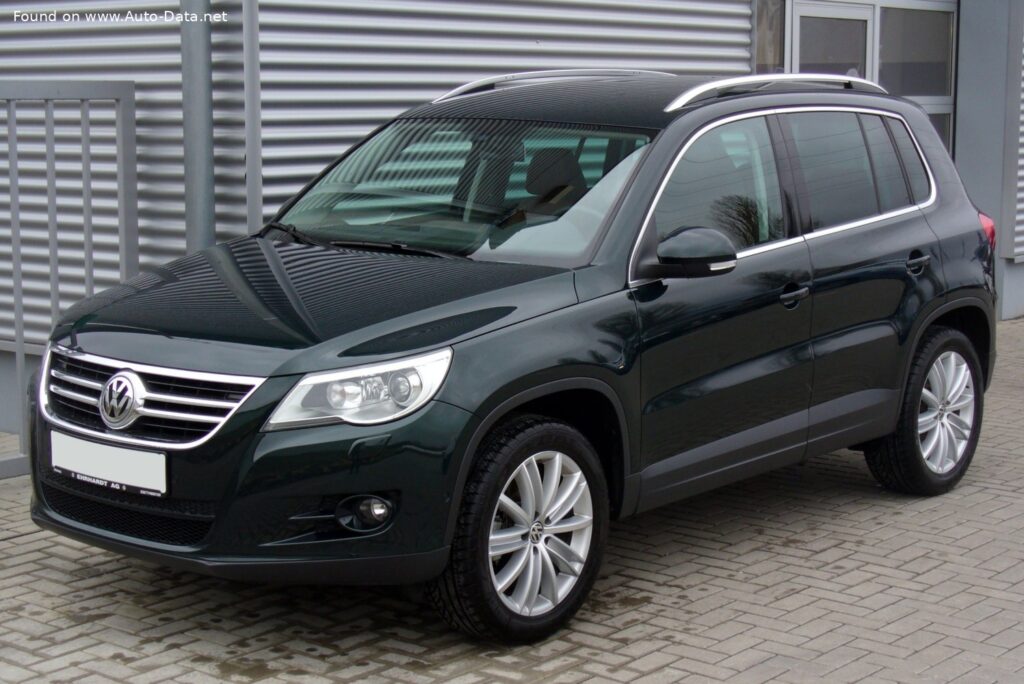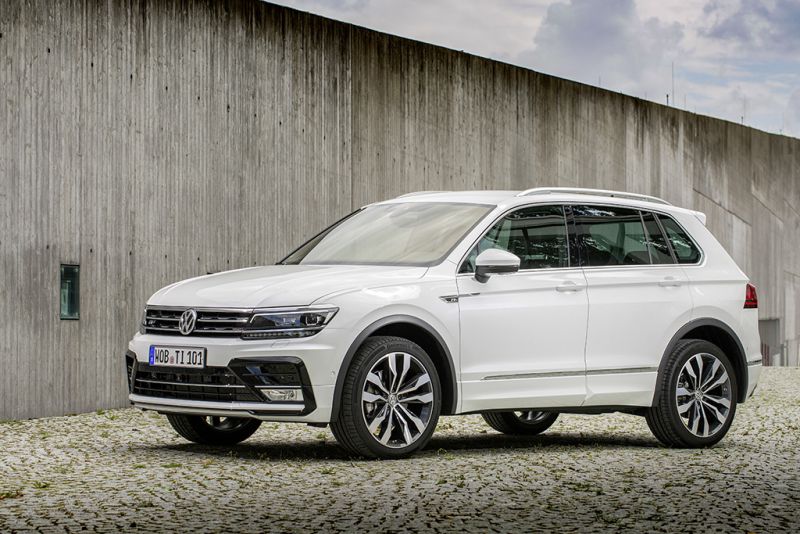
The Volkswagen Tiguan II 2.0 TDI (150 Hp) 4MOTION SCR represents a significant iteration in the evolution of Volkswagen’s highly successful compact SUV line. Launched in 2016 and produced through 2018, this second-generation Tiguan model, often referred to as the AD/BW series, built upon the strengths of its predecessor while introducing a more refined design, enhanced technology, and improved efficiency. Primarily targeted at the robust European and Asian markets, where diesel powertrains remain a popular choice for their fuel economy and torque characteristics, this specific variant combined a potent turbodiesel engine with Volkswagen’s advanced 4MOTION all-wheel-drive system and Selective Catalytic Reduction (SCR) technology. It positioned itself as a versatile and capable vehicle, offering a compelling blend of practicality, comfort, and dynamic performance within the competitive compact SUV segment, catering to families and individuals seeking a sophisticated and efficient daily driver with off-road capability.
Engine and Performance of the Volkswagen Tiguan II 2.0 TDI (150 Hp) 4MOTION SCR
At the heart of the Volkswagen Tiguan II 2.0 TDI (150 Hp) 4MOTION SCR lies a meticulously engineered 2.0-liter inline four-cylinder turbodiesel engine, identified by internal codes such as DBGA, DBGC, DCYA, and DFGA. This powerplant is a testament to modern diesel technology, delivering a robust 150 horsepower (Hp) across a broad rev range of 3500-4000 rpm. More impressively, it generates a substantial 250.77 lb.-ft. (340 Nm) of torque, available from a low 1750 rpm up to 3000 rpm. This wide torque band is crucial for both effortless highway cruising and confident low-speed maneuverability, especially when paired with the 4MOTION all-wheel-drive system.
The engine’s architecture features an inline configuration with four cylinders, each equipped with four valves, totaling 16 valves for optimized airflow and combustion efficiency. Fuel delivery is managed by a sophisticated Diesel Commonrail injection system, ensuring precise fuel atomization and combustion for improved performance and reduced emissions. Further enhancing its power delivery and efficiency is a turbocharger coupled with an intercooler, which forces cool, dense air into the engine, maximizing power output while maintaining thermal stability. Despite its robust performance, the engine boasts a respectable power per liter figure of 76.2 Hp/l, showcasing its efficient design.
Performance metrics underscore the Tiguan’s capabilities. It accelerates from 0 to 60 mph in a swift 8.8 seconds (calculated by Auto-Data.net, while 0-100 km/h is 9.3 seconds), making it agile enough for everyday driving scenarios. Its maximum speed of 124.9 mph (201 km/h) ensures confident highway travel. Crucially, the Tiguan II 2.0 TDI excels in fuel economy, a primary draw for diesel powertrains. The combined fuel consumption is an impressive 42 US mpg (5.6 l/100 km), translating to approximately 47 US mpg (5 l/100 km) on extra-urban cycles and 35.1 US mpg (6.7 l/100 km) in urban settings. This efficiency is complemented by a CO2 emissions rating of 146 g/km, adhering to the stringent Euro 6 emission standard, thanks in part to the integrated Selective Catalytic Reduction (SCR) system and a particulate filter. The vehicle also features a Start & Stop system, further contributing to fuel savings and reduced emissions in stop-and-go traffic.
Power is transmitted through a precise 6-speed manual transmission, offering engaging control for the driver. The 4MOTION all-wheel-drive architecture is a key highlight, providing enhanced traction and stability. This system intelligently drives the front wheels permanently, with the rear wheels engaging through an electrically or mechanically operated clutch only when necessary, such as during slippage or in challenging road conditions. This adaptive system optimizes both traction and fuel efficiency, ensuring the Tiguan is prepared for diverse driving environments. The weight-to-power ratio stands at 10.6 kg/Hp (94.6 Hp/tonne), and the weight-to-torque ratio at 4.7 kg/Nm (214.5 Nm/tonne), indicating a well-balanced power delivery for its segment.
Design and Features of the Volkswagen Tiguan II
The second-generation Volkswagen Tiguan, specifically the 2.0 TDI (150 Hp) 4MOTION SCR variant, debuted with a more assertive and contemporary design compared to its predecessor. Adopting Volkswagen’s modular transverse matrix (MQB) platform, it presented a longer, wider, and lower stance, contributing to a more dynamic visual appeal and improved interior packaging. As a classic compact SUV, it features a practical 5-door body with seating for five occupants, making it an ideal family vehicle.
From a dimensional perspective, the Tiguan II measures 176.61 inches (4486 mm) in length, 72.4 inches (1839 mm) in width (extending to 82.64 inches or 2099 mm including mirrors), and stands 65.87 inches (1673 mm) tall. Its wheelbase stretches 105.39 inches (2677 mm), which significantly contributes to a stable ride and generous interior volume. The front track ranges from 62.05 to 62.44 inches (1576-1586 mm), while the rear track is between 61.65 and 62.05 inches (1566-1576 mm). A ground clearance of 7.87 inches (200 mm) further enhances its SUV credentials, allowing it to comfortably tackle light off-road trails or uneven urban terrain.
Inside, the Tiguan offers remarkable practicality and comfort. The trunk capacity is exceptionally versatile, starting at a generous 21.72 cubic feet (615 liters) with all seats in place, and expanding to a cavernous 58.45 cubic feet (1655 liters) when the rear seats are folded down. This flexibility makes it highly suitable for hauling luggage, sports equipment, or larger items. The kerb weight of the vehicle ranges from 3494.33 to 4023.44 lbs. (1585-1825 kg), with a maximum permissible weight of 5092.68 lbs. (2310 kg), allowing for a substantial maximum load capacity of 1069.24 to 1598.35 lbs. (485-725 kg). Furthermore, its towing capabilities are impressive, rated for a permitted trailer load with brakes (8% or 12%) of 4850.17 to 5511.56 lbs. (2200-2500 kg), and 1653.47 lbs. (750 kg) without brakes, solidifying its utility for active lifestyles.
The driving dynamics are supported by a well-tuned chassis. The front suspension features an independent multi-link design, while the rear utilizes an independent coil spring setup, both contributing to a refined ride quality and precise handling. Braking performance is handled by ventilated discs at the front and solid discs at the rear, complemented by an Anti-lock Braking System (ABS) for enhanced safety and control during emergency stops. Steering is managed by an electric power steering system with a rack and pinion setup, offering effortless maneuverability and a minimum turning circle of 37.73 feet (11.5 meters), making it agile in urban environments. The vehicle is equipped with tire sizes such as 215/65 R17 or 235/55 R18, mounted on 7J x 17 or 7J x 18 wheel rims, respectively, providing a balance of grip and ride comfort. The combination of its robust build, thoughtful interior design, and advanced mechanical features positions the Volkswagen Tiguan II 2.0 TDI (150 Hp) 4MOTION SCR as a highly competent and desirable compact SUV in its segment.
Technical Specifications
| Brand | Volkswagen |
| Model | Tiguan |
| Generation | Tiguan II |
| Type (Engine) | 2.0 TDI (150 Hp) 4MOTION SCR |
| Start of production | 2016 year |
| End of production | 2018 year |
| Powertrain Architecture | Internal Combustion engine |
| Body type | SUV |
| Seats | 5 |
| Doors | 5 |
| Fuel consumption (economy) – urban | 35.1 US mpg (6.7 l/100 km) |
| Fuel consumption (economy) – extra urban | 47 US mpg (5 l/100 km) |
| Fuel consumption (economy) – combined | 42 US mpg (5.6 l/100 km) |
| CO2 emissions | 146 g/km |
| Fuel Type | Diesel |
| Acceleration 0 – 60 mph (Calculated) | 8.8 sec |
| Acceleration 0 – 100 km/h | 9.3 sec |
| Maximum speed | 124.9 mph (201 km/h) |
| Emission standard | Euro 6 |
| Weight-to-power ratio | 10.6 kg/Hp, 94.6 Hp/tonne |
| Weight-to-torque ratio | 4.7 kg/Nm, 214.5 Nm/tonne |
| Power | 150 Hp @ 3500-4000 rpm |
| Power per liter | 76.2 Hp/l |
| Torque | 250.77 lb.-ft. (340 Nm) @ 1750-3000 rpm |
| Engine layout | Front, Transverse |
| Engine Model/Code | DBGA, DBGC, DCYA, DFGA |
| Engine displacement | 120.09 cu. in. (1968 cm3) |
| Number of cylinders | 4 |
| Engine configuration | Inline |
| Number of valves per cylinder | 4 |
| Fuel injection system | Diesel Commonrail |
| Engine aspiration | Turbocharger, Intercooler |
| Engine oil capacity | 4.97 US qt (4.7 l) |
| Engine systems | Start & Stop System, Particulate filter |
| Kerb Weight | 3494.33 – 4023.44 lbs. (1585-1825 kg) |
| Max. weight | 5092.68 lbs. (2310 kg) |
| Max load | 1069.24 – 1598.35 lbs. (485-725 kg) |
| Trunk (boot) space – minimum | 21.72 cu. ft. (615 l) |
| Trunk (boot) space – maximum | 58.45 cu. ft. (1655 l) |
| Fuel tank capacity | 15.85 US gal (60 l) |
| Max. roof load | 165.35 lbs. (75 kg) |
| Permitted trailer load with brakes (8%) | 4850.17 – 5511.56 lbs. (2200-2500 kg) |
| Permitted trailer load with brakes (12%) | 4850.17 – 5511.56 lbs. (2200-2500 kg) |
| Permitted trailer load without brakes | 1653.47 lbs. (750 kg) |
| Permitted towbar download | 220.46 lbs. (100 kg) |
| Length | 176.61 in. (4486 mm) |
| Width | 72.4 in. (1839 mm) |
| Width including mirrors | 82.64 in. (2099 mm) |
| Height | 65.87 in. (1673 mm) |
| Wheelbase | 105.39 in. (2677 mm) |
| Front track | 62.05 – 62.44 in. (1576-1586 mm) |
| Rear (Back) track | 61.65 – 62.05 in. (1566-1576 mm) |
| Ride height (ground clearance) | 7.87 in. (200 mm) |
| Minimum turning circle (turning diameter) | 37.73 ft. (11.5 m) |
| Drivetrain Architecture | Internal combustion engine (ICE) drives front wheels permanently, rear wheels driven through electrically or mechanically operated clutch if necessary. |
| Drive wheel | All wheel drive (4×4) |
| Number of gears and type of gearbox | 6 gears, manual transmission |
| Front suspension | Independent multi-link suspension |
| Rear suspension | Independent coil spring |
| Front brakes | Ventilated discs |
| Rear brakes | Disc |
| Assisting systems | ABS (Anti-lock braking system) |
| Steering type | Steering rack and pinion |
| Power steering | Electric Steering |
| Tires size | 215/65 R17; 235/55 R18 |
| Wheel rims size | 7J x 17; 7J x 18 |