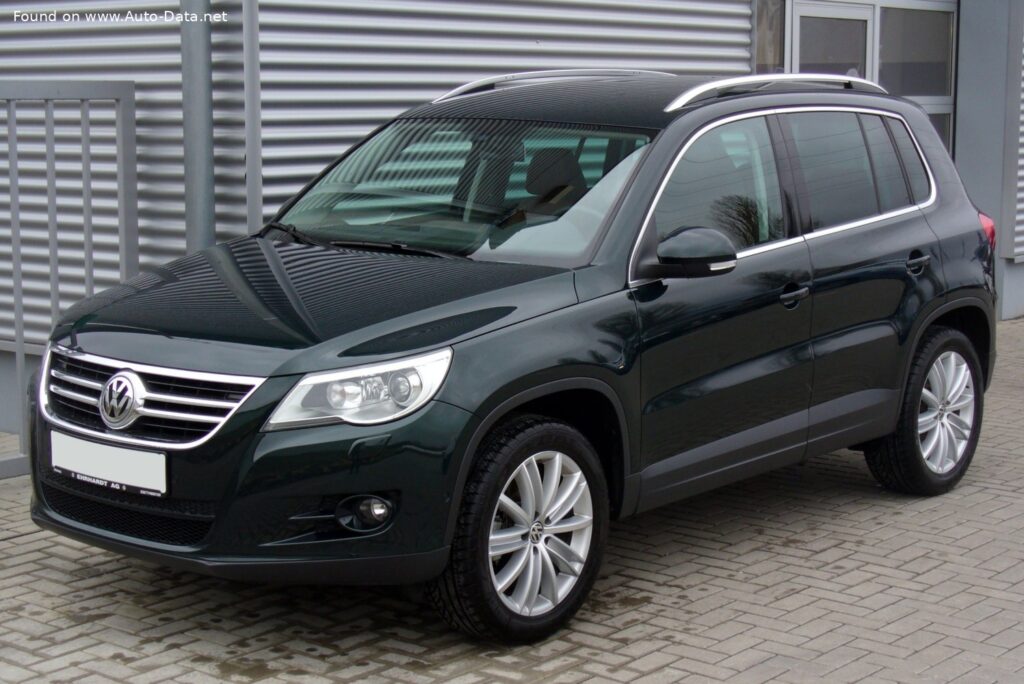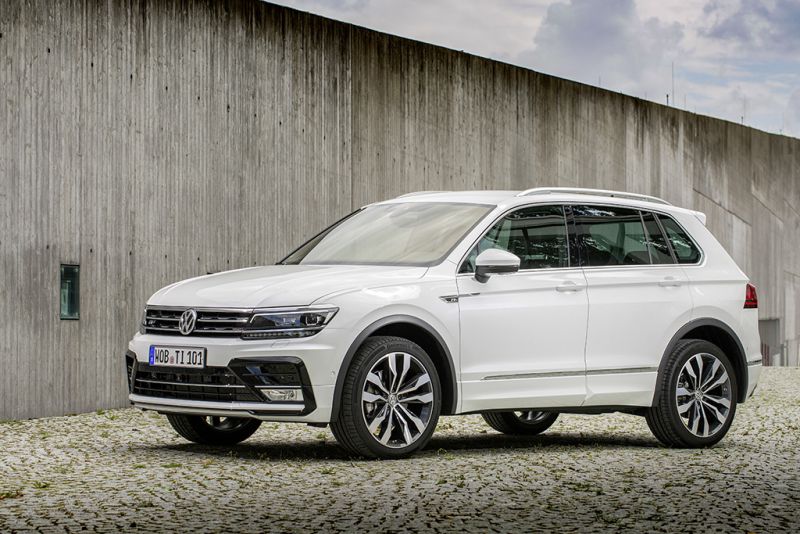
The Volkswagen Tiguan II 2.0 TDI (150 Hp) DSG SCR represents a significant iteration in the evolution of Volkswagen’s popular compact SUV, specifically tailored for markets where diesel powertrains and efficiency are highly valued, such as Europe. Launched in 2016 as part of the second generation Tiguan, this particular variant, identified by its 2.0-liter Turbo Diesel Injection engine, 150 horsepower output, Direct-Shift Gearbox (DSG), and Selective Catalytic Reduction (SCR) system, quickly established itself as a versatile and economical choice in the fiercely competitive SUV segment. While the US market predominantly received gasoline-powered Tiguan models, this diesel iteration highlights Volkswagen’s global engineering prowess, focusing on robust performance, exceptional fuel economy, and adherence to stringent European emission standards. The Tiguan II marked a departure from its predecessor with a more sophisticated design, enhanced interior space, and a suite of advanced technologies, solidifying its reputation as a practical yet refined family vehicle.
Powertrain and Performance of the Volkswagen Tiguan II 2.0 TDI (150 Hp) DSG SCR
At the heart of the Volkswagen Tiguan II 2.0 TDI (150 Hp) DSG SCR lies a highly efficient and potent 2.0-liter, four-cylinder, inline turbo-diesel engine. This powerplant generates a respectable 150 horsepower at a broad range of 3500-4000 revolutions per minute (rpm), making it responsive across various driving conditions. Crucially, its torque output is a robust 340 Newton-meters (250.77 lb.-ft.) available from a low 1750 rpm up to 3000 rpm, providing excellent pulling power and effortless acceleration. This substantial low-end torque is a hallmark of diesel engines and contributes significantly to the vehicle’s lively feel and capability for hauling. The engine features a sophisticated Diesel Commonrail fuel injection system, combined with a turbocharger and intercooler, ensuring optimal combustion, power delivery, and thermal management. With an engine displacement of 1968 cubic centimeters (120.09 cu. in.), it achieves a power per liter rating of 76.2 Hp/l, showcasing its engineering efficiency.
Power is seamlessly transmitted to the front wheels via a state-of-the-art 7-speed automatic DSG (Direct-Shift Gearbox). This dual-clutch transmission is renowned for its rapid and smooth gear changes, contributing to both the vehicle’s performance and its impressive fuel economy. The front-wheel-drive architecture is typical for many compact SUVs, offering a balance of efficiency and traction for everyday driving. In terms of outright performance, the Tiguan II 2.0 TDI (150 Hp) DSG SCR is capable of accelerating from 0 to 60 miles per hour in a swift 8.8 seconds, reaching a maximum speed of 125.52 mph (202 km/h). These figures underscore its ability to comfortably handle highway speeds and provide confident overtaking maneuvers.
Fuel efficiency is a major highlight of this diesel variant. The combined fuel consumption is rated at an impressive 4.9 liters per 100 kilometers, which translates to approximately 48 US miles per gallon (57.6 UK mpg). Even in urban environments, it achieves 41.3 US mpg (5.7 l/100 km), and on extra-urban cycles, it reaches an outstanding 52.3 US mpg (4.5 l/100 km). These figures are complemented by relatively low CO2 emissions of 129 grams per kilometer, allowing it to meet the stringent Euro 6 emission standard. Further contributing to its environmental credentials and efficiency, the vehicle incorporates a Start & Stop System and a Particulate Filter, which actively reduce emissions and optimize fuel usage during stops. The engine oil capacity is 4.7 liters (4.97 US qt), ensuring proper lubrication for this advanced powertrain.
Design and Features
The Volkswagen Tiguan II, produced between 2016 and 2018 for this specific configuration, embodies a contemporary and purposeful design language characteristic of Volkswagen’s modern era. As a compact SUV, it features a five-door body type and comfortably accommodates five occupants. Its overall dimensions are well-proportioned for both urban maneuverability and highway stability: a length of 176.61 inches (4486 mm), a width of 72.4 inches (1839 mm) (or 82.64 inches / 2099 mm including mirrors), and a height of 65.12 inches (1654 mm). The wheelbase measures 105.39 inches (2677 mm), which contributes significantly to the car’s stable ride and generous interior space.
Practicality is a cornerstone of the Tiguan’s design. The vehicle boasts a substantial trunk (boot) space, offering a minimum of 21.72 cubic feet (615 liters) with all seats in place, expandable to a cavernous 58.45 cubic feet (1655 liters) when the rear seats are folded down. This flexibility makes it highly suitable for families, cargo transport, and recreational activities. The kerb weight ranges from 3395.12 to 3869.11 pounds (1540-1755 kg), with a maximum permissible weight of 4916.31 pounds (2230 kg), allowing for a maximum load of 1047.2 to 1521.19 pounds (475-690 kg). Furthermore, its towing capabilities are impressive, rated at 4850.17 pounds (2200 kg) with brakes (8% gradient) and 4409.25 pounds (2000 kg) with brakes (12% gradient), making it a capable companion for trailers or caravans. A maximum roof load of 165.35 pounds (75 kg) and a towbar download of 220.46 pounds (100 kg) further enhance its utility.
Underneath, the Tiguan II is equipped with a robust chassis designed for comfort and confident handling. It features ventilated disc brakes at the front and disc brakes at the rear, complemented by an Anti-lock Braking System (ABS) to ensure effective and safe stopping power. The steering system is a rack and pinion type, utilizing electric power steering, which provides precise control and ease of maneuvering, particularly in tight spaces. Its minimum turning circle is 37.73 feet (11.5 meters), highlighting its agility. The ride height (ground clearance) of 7.52 inches (191 mm) allows it to comfortably tackle light off-road conditions or navigate challenging urban obstacles. The Tiguan II comes standard with tire sizes such as 215/65 R17 or 235/55 R18, mounted on 7J x 17 or 7J x 18 wheel rims, respectively, offering a blend of ride comfort and grip.
Market Context and Legacy
The Volkswagen Tiguan II 2.0 TDI (150 Hp) DSG SCR, in its production run from 2016 to 2018, played a crucial role in Volkswagen’s strategy for the global compact SUV market. While the Tiguan nameplate is well-known in the United States, this specific diesel powertrain variant was primarily aimed at European and other international markets where diesel engines historically held a significant market share due to their superior fuel economy and torque characteristics. In these regions, the Tiguan II quickly became a benchmark for its segment, celebrated for its blend of German engineering, premium interior feel, and practical versatility.
This second-generation Tiguan was built on Volkswagen’s highly adaptable MQB platform, which allowed for greater interior space, improved driving dynamics, and the integration of advanced technologies. Its sharp, angular styling was a departure from the softer lines of the first generation, giving it a more assertive and sophisticated presence on the road. The emphasis on efficiency, epitomized by the 2.0 TDI engine with its SCR system, was a direct response to evolving environmental regulations and consumer demand for lower running costs. The SCR system, which uses AdBlue, effectively reduces nitrogen oxide emissions, ensuring compliance with the stringent Euro 6 standards.
The Tiguan II’s success was not just about its technical specifications; it was also about its ability to cater to a broad audience, from young families seeking a safe and spacious vehicle to individuals desiring a comfortable and capable daily driver. Its robust build quality, refined ride, and comprehensive list of available features—even in this specific powertrain configuration—contributed to its strong market position. The combination of a powerful yet economical diesel engine and the smooth 7-speed DSG transmission offered a compelling package that balanced performance with practicality, making the Volkswagen Tiguan II 2.0 TDI (150 Hp) DSG SCR a highly regarded and enduring model in its class.
Technical Specifications
| Brand | Volkswagen |
| Model | Tiguan |
| Generation | Tiguan II |
| Type (Engine) | 2.0 TDI (150 Hp) DSG SCR |
| Start of production | 2016 year |
| End of production | 2018 year |
| Powertrain Architecture | Internal Combustion engine |
| Body type | SUV |
| Seats | 5 |
| Doors | 5 |
| Fuel consumption (economy) – urban | 41.3 US mpg (5.7 l/100 km) |
| Fuel consumption (economy) – extra urban | 52.3 US mpg (4.5 l/100 km) |
| Fuel consumption (economy) – combined | 48 US mpg (4.9 l/100 km) |
| CO2 emissions | 129 g/km |
| Fuel Type | Diesel |
| Acceleration 0 – 60 mph | 8.8 sec |
| Maximum speed | 125.52 mph (202 km/h) |
| Emission standard | Euro 6 |
| Weight-to-power ratio | 10.3 kg/Hp, 97.4 Hp/tonne |
| Weight-to-torque ratio | 4.5 kg/Nm, 220.8 Nm/tonne |
| Power | 150 Hp @ 3500-4000 rpm |
| Power per liter | 76.2 Hp/l |
| Torque | 250.77 lb.-ft. @ 1750-3000 rpm (340 Nm) |
| Engine layout | Front, Transverse |
| Engine Model/Code | DBGA, DBGC, DCYA, DFGA |
| Engine displacement | 120.09 cu. in. (1968 cm3) |
| Number of cylinders | 4 |
| Engine configuration | Inline |
| Number of valves per cylinder | 4 |
| Fuel injection system | Diesel Commonrail |
| Engine aspiration | Turbocharger, Intercooler |
| Engine oil capacity | 4.97 US qt (4.7 l) |
| Engine systems | Start & Stop System, Particulate filter |
| Kerb Weight | 3395.12 – 3869.11 lbs. (1540-1755 kg) |
| Max. weight | 4916.31 lbs. (2230 kg) |
| Max load | 1047.2 – 1521.19 lbs. (475-690 kg) |
| Trunk (boot) space – minimum | 21.72 cu. ft. (615 l) |
| Trunk (boot) space – maximum | 58.45 cu. ft. (1655 l) |
| Fuel tank capacity | 15.32 US gal (58 l) |
| Max. roof load | 165.35 lbs. (75 kg) |
| Permitted trailer load with brakes (8%) | 4850.17 lbs. (2200 kg) |
| Permitted trailer load with brakes (12%) | 4409.25 lbs. (2000 kg) |
| Permitted trailer load without brakes | 1653.47 lbs. (750 kg) |
| Permitted towbar download | 220.46 lbs. (100 kg) |
| Length | 176.61 in. (4486 mm) |
| Width | 72.4 in. (1839 mm) |
| Width including mirrors | 82.64 in. (2099 mm) |
| Height | 65.12 in. (1654 mm) |
| Wheelbase | 105.39 in. (2677 mm) |
| Front track | 62.17 – 62.56 in. (1579-1589 mm) |
| Rear (Back) track | 61.81 – 62.2 in. (1570-1580 mm) |
| Ride height (ground clearance) | 7.52 in. (191 mm) |
| Minimum turning circle (turning diameter) | 37.73 ft. (11.5 m) |
| Drivetrain Architecture | The Internal combustion engine (ICE) drives the front wheels of the vehicle. |
| Drive wheel | Front wheel drive |
| Number of gears and type of gearbox | 7 gears, automatic transmission DSG |
| Front brakes | Ventilated discs |
| Rear brakes | Disc |
| Assisting systems | ABS (Anti-lock braking system) |
| Steering type | Steering rack and pinion |
| Power steering | Electric Steering |
| Tires size | 215/65 R17; 235/55 R18 |
| Wheel rims size | 7J x 17; 7J x 18 |