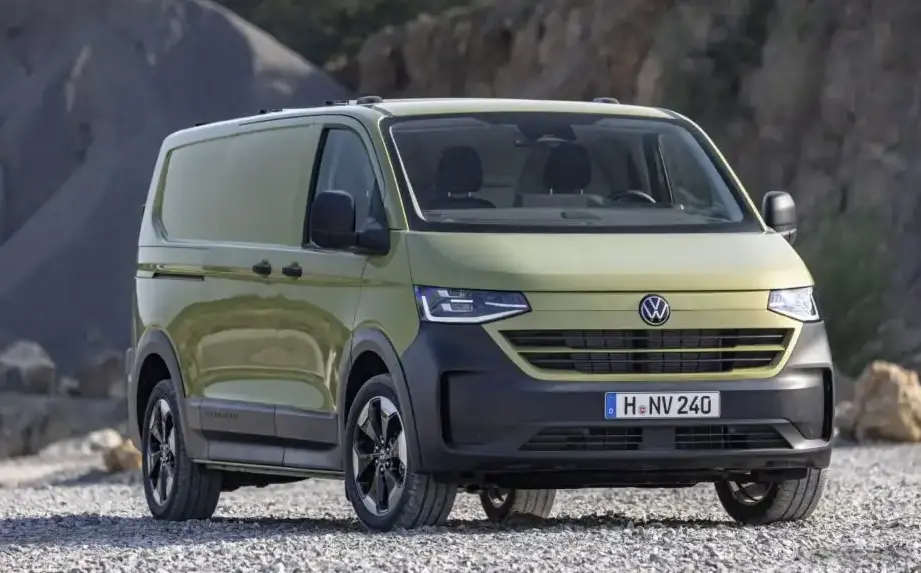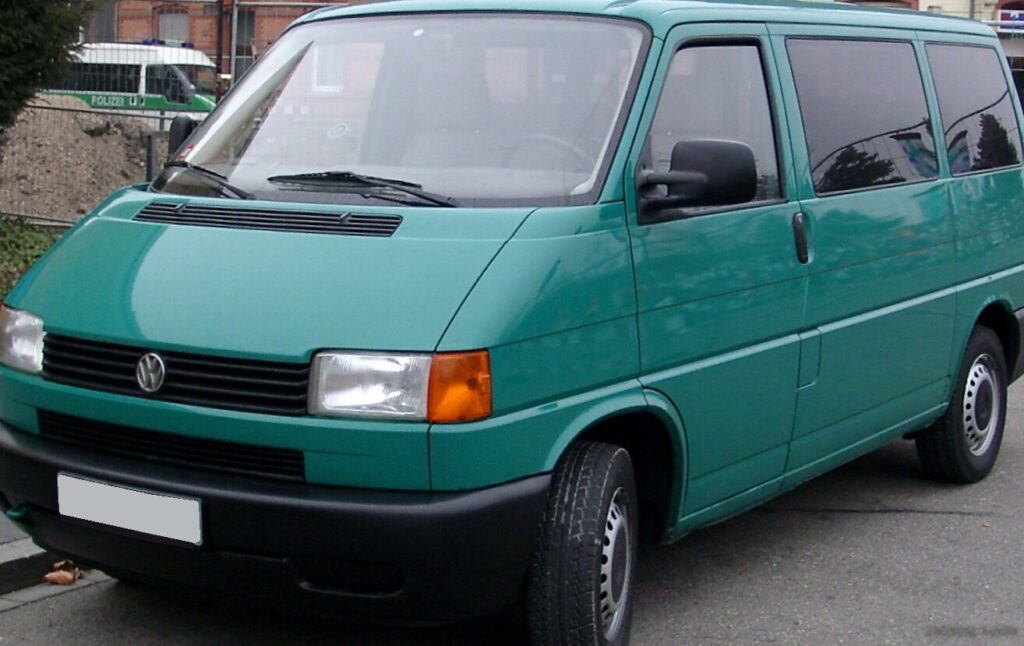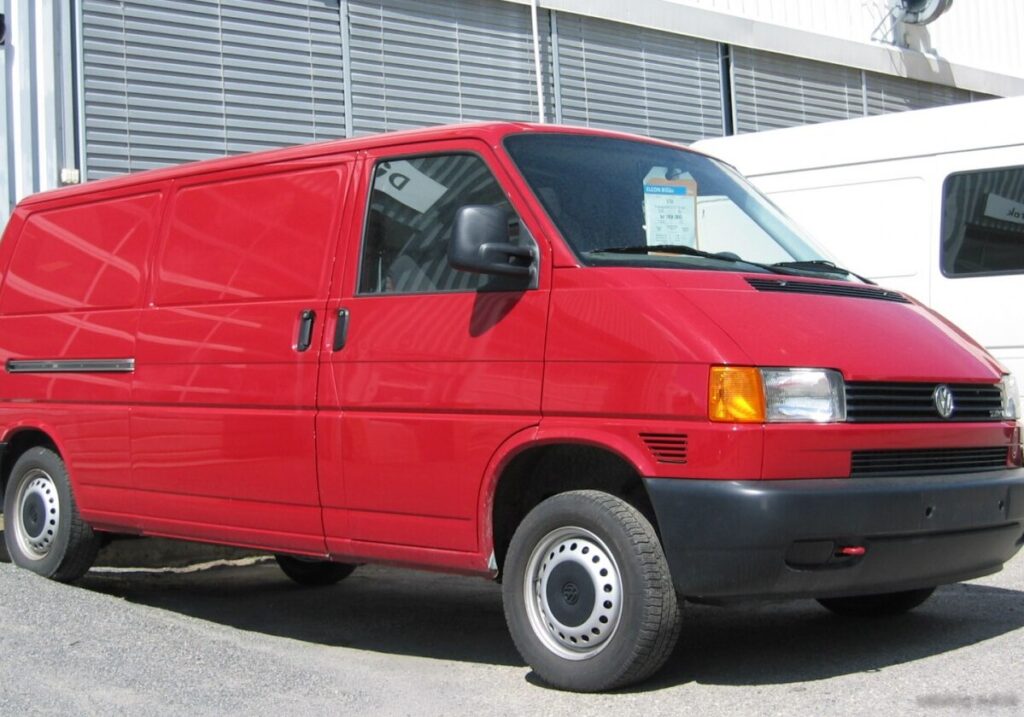
The Volkswagen Transporter, specifically the T4 generation with the 1996 facelift, represented a significant evolution for the iconic van. Produced from 1990 to 2003, the T4 brought a more modern approach to the commercial vehicle segment, offering improved comfort, safety, and driving dynamics. The 2.0-liter (1968 cc) 84 horsepower variant, designated with engine code AAC, was a popular choice, particularly in European markets, offering a balance between affordability and usability. This configuration, typically found in the L1H1 (short wheelbase, low roof) body style, served as a workhorse for small businesses, tradespeople, and those needing a versatile cargo solution. It occupied a mid-range position in the T4 lineup, slotting below the more powerful 2.5 TDI and VR6 options, but above the base 1.9-liter gasoline engine.
Technical Specifications
| Brand | Volkswagen |
| Model | Transporter |
| Generation | Transporter (T4, facelift 1996) Panel Van |
| Type (Engine) | 2.0 (84 Hp) L1H1 |
| Start of production | 1996 |
| End of production | 2003 |
| Powertrain Architecture | Internal Combustion engine |
| Body type | Van |
| Seats | 2 |
| Doors | 4-5 |
| Fuel consumption (combined) | 13.5 l/100 km (17.4 US mpg, 20.9 UK mpg, 7.4 km/l) |
| Fuel Type | Petrol (Gasoline) |
| Maximum speed | 144 km/h (89.48 mph) |
| Weight-to-power ratio | 18.8 kg/Hp, 53.2 Hp/tonne |
| Weight-to-torque ratio | 9.9 kg/Nm, 100.6 Nm/tonne |
| Power | 84 Hp @ 4300 rpm |
| Power per litre | 42.7 Hp/l |
| Torque | 159 Nm @ 2200 rpm (117.27 lb.-ft. @ 2200 rpm) |
| Engine layout | Front, Transverse |
| Engine Model/Code | AAC |
| Engine displacement | 1968 cm3 (120.09 cu. in.) |
| Number of cylinders | 4 |
| Engine configuration | Inline |
| Cylinder Bore | 81 mm (3.19 in.) |
| Piston Stroke | 95.5 mm (3.76 in.) |
| Compression ratio | 8.5:1 |
| Number of valves per cylinder | 2 |
| Fuel injection system | Multi-port manifold injection |
| Engine aspiration | Naturally aspirated engine |
| Valvetrain | SOHC |
| Engine oil capacity | 5 l (5.28 US qt | 4.4 UK qt) |
| Coolant | 9 l (9.51 US qt | 7.92 UK qt) |
| Kerb Weight | 1580 kg (3483.3 lbs.) |
| Max. weight | 2380-2785 kg (5247 – 6139.87 lbs.) |
| Max load | 800-1205 kg (1763.7 – 2656.57 lbs.) |
| Trunk (boot) space – maximum | 5400 l (190.7 cu. ft.) |
| Fuel tank capacity | 80 l (21.13 US gal | 17.6 UK gal) |
| Max. roof load | 100 kg (220.46 lbs.) |
| Permitted trailer load with brakes (12%) | 2000 kg (4409.25 lbs.) |
| Permitted trailer load without brakes | 700 kg (1543.24 lbs.) |
| Permitted towbar download | 100 kg (220.46 lbs.) |
| Length | 4707 mm (185.31 in.) |
| Width | 1840 mm (72.44 in.) |
| Width including mirrors | 2175 mm (85.63 in.) |
| Height | 1940 mm (76.38 in.) |
| Wheelbase | 2920 mm (114.96 in.) |
| Front track | 1589 mm (62.56 in.) |
| Rear (Back) track | 1554 mm (61.18 in.) |
| Front overhang | 886 mm (34.88 in.) |
| Rear overhang | 901 mm (35.47 in.) |
| Ride height (ground clearance) | 180 mm (7.09 in.) |
| Minimum turning circle (turning diameter) | 11.7 m (38.39 ft.) |
| Wading depth | 350 mm (13.78 in.) |
| Drivetrain Architecture | The Internal combustion engine (ICE) drives the front wheels of the vehicle. |
| Drive wheel | Front wheel drive |
| Number of gears and type of gearbox | 5 gears, manual transmission |
| Front suspension | Independent torsion bar, double wishbone, Transverse stabilizer |
| Rear suspension | Independent coil spring, Trailing arm |
| Front brakes | Disc |
| Rear brakes | Disc |
| Assisting systems | ABS (Anti-lock braking system) |
| Steering type | Steering rack and pinion |
| Power steering | Hydraulic Steering |
| Tires size | 195/70 R15; 205/65 R15 |
| Wheel rims size | 6J x 15 |
Powertrain & Engine Architecture
The heart of this Transporter variant is the Volkswagen AAC engine, a 1.968-liter inline-four cylinder gasoline engine. This engine utilized a single overhead camshaft (SOHC) valvetrain operating two valves per cylinder. Fuel delivery was managed by a multi-port fuel injection system, a common setup for the era, providing a reasonable balance between efficiency and performance. The AAC engine was known for its relative simplicity and durability, though it lacked the sophistication of more modern engines. The engine’s 84 horsepower output at 4300 rpm and 159 Nm (117.27 lb-ft) of torque at 2200 rpm were adequate for everyday use, but didn’t offer particularly brisk acceleration, especially when fully loaded. The engine was typically paired with a five-speed manual transmission, although a four-speed automatic transmission was also available, impacting performance and fuel economy.
Driving Characteristics
The 2.0-liter 84 hp Transporter with the automatic transmission offered a comfortable, if not exhilarating, driving experience. Acceleration was modest, and overtaking required careful planning. The automatic transmission, while convenient, further reduced performance compared to the manual version. Gear ratios were optimized for fuel efficiency and usability rather than outright speed. The van felt stable and predictable, thanks to its relatively long wheelbase and well-tuned suspension. However, the weight of the vehicle, even unladen, was noticeable, particularly when climbing hills or carrying a load. Compared to the more powerful VR6 or TDI versions, this variant prioritized economy and ease of driving over performance.
Equipment & Trim Levels
The 2.0-liter automatic Transporter typically came with a fairly basic level of equipment. Standard features included power steering, central locking, and a basic audio system. Interior upholstery was typically cloth, and the dashboard was constructed from durable plastics. Optional extras included air conditioning, electric windows, and upgraded audio systems. The L1H1 configuration, with its shorter wheelbase and lower roof, made it easier to maneuver in urban environments and offered a lower loading height. This trim level was often chosen by businesses seeking a practical and affordable work van.
Chassis & Braking
The T4 Transporter featured an independent suspension setup on both the front and rear axles. The front suspension utilized torsion bars and double wishbones, while the rear employed coil springs and trailing arms. This configuration provided a reasonable level of ride comfort and handling. Braking duties were handled by disc brakes on all four wheels, supplemented by an Anti-lock Braking System (ABS) for improved stopping power and stability. The steering was rack and pinion, providing precise and responsive control. The van’s relatively narrow tires (typically 195/70 R15 or 205/65 R15) contributed to its fuel efficiency but limited grip in wet or slippery conditions.
Market Reception & Comparison
The 2.0-liter automatic Transporter was generally well-received as a practical and affordable work van. Critics praised its versatility and durability, but noted its lack of performance. Compared to the more expensive VR6 and TDI models, it offered a lower entry price and simpler mechanicals. Fuel economy was reasonable for a vehicle of its size and weight, but not exceptional. The automatic transmission, while convenient, was often criticized for its sluggishness and impact on fuel consumption. The manual transmission version was generally preferred by drivers seeking better performance and efficiency.
Legacy
The Volkswagen T4 Transporter, including the 2.0-liter 84 hp variant, has proven to be a durable and reliable vehicle. Many examples are still on the road today, testament to their robust construction. The AAC engine, while not particularly powerful, is known for its longevity and relatively low maintenance costs. However, age-related issues such as rust and wear and tear on suspension components are common. In the used car market, these vans are often sought after by tradespeople, camper van enthusiasts, and those seeking a classic Volkswagen workhorse. Their simplicity and affordability make them an attractive option for those who prioritize practicality over performance.