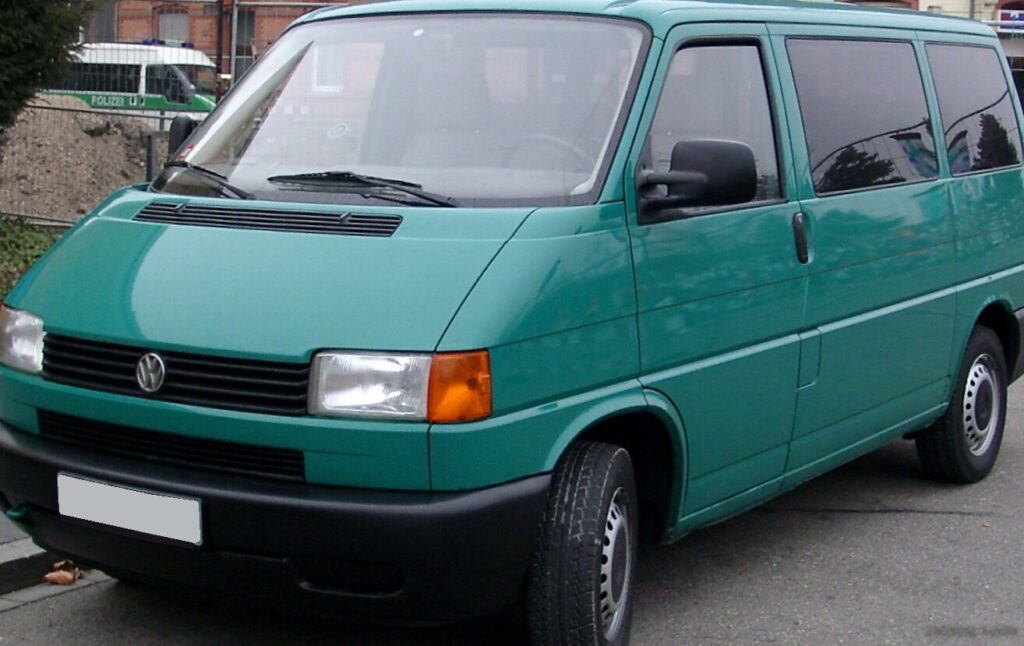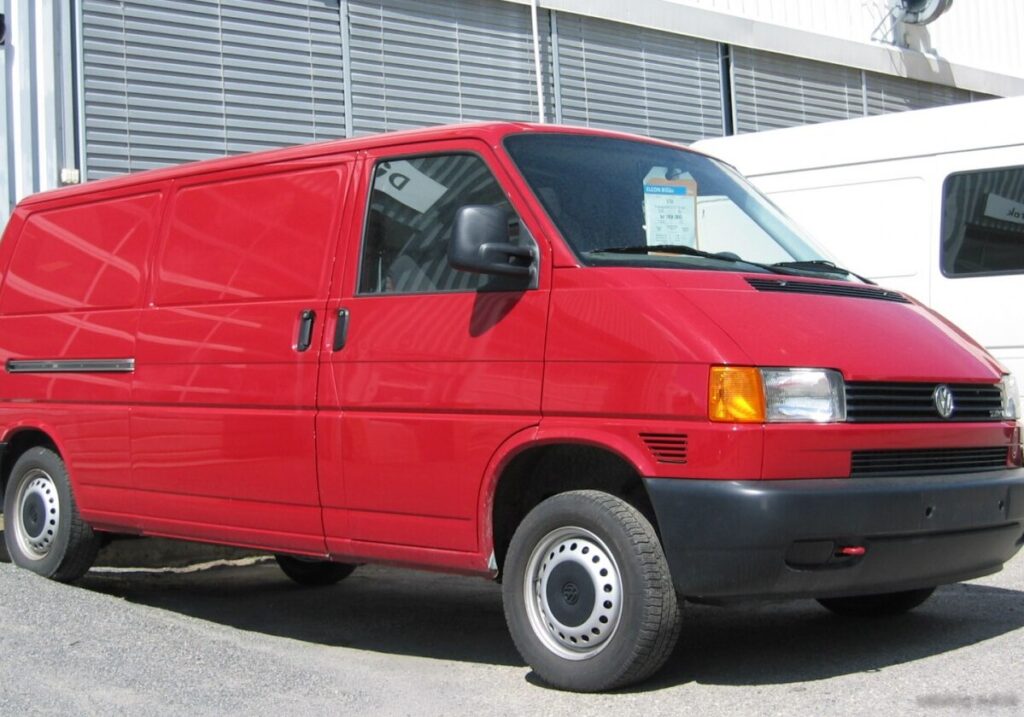
The Volkswagen Transporter, specifically the T4 generation facelift produced from 1996 to 1998, offered a diverse range of engine and transmission options to cater to various commercial and personal needs. Among these, the 2.4 D (78 hp) Automatic L1H1 variant represented an entry-level offering focused on practicality and fuel efficiency. This configuration, powered by the naturally aspirated 2.4-liter diesel engine paired with a four-speed automatic transmission, was a common sight in Europe, where the Transporter served as a workhorse for businesses and tradespeople. The L1H1 designation refers to the short wheelbase and low roof height, making it a relatively compact and maneuverable van.
Technical Specifications
| Brand | Volkswagen |
| Model | Transporter |
| Generation | Transporter (T4, facelift 1996) Panel Van |
| Type (Engine) | 2.4 D (78 Hp) Automatic L1H1 |
| Start of production | 1996 |
| End of production | 1998 |
| Powertrain Architecture | Internal Combustion engine |
| Body type | Van |
| Seats | 2 |
| Doors | 4-5 |
| Fuel consumption (combined) | 10.8 l/100 km (21.8 US mpg, 26.2 UK mpg, 9.3 km/l) |
| Fuel Type | Diesel |
| Maximum speed | 133 km/h (82.64 mph) |
| Weight-to-power ratio | 21.6 kg/Hp, 46.3 Hp/tonne |
| Weight-to-torque ratio | 10.3 kg/Nm, 97.3 Nm/tonne |
| Power | 78 Hp @ 3700 rpm |
| Power per litre | 32.9 Hp/l |
| Torque | 164 Nm @ 1800-2500 rpm (120.96 lb.-ft. @ 1800-2500 rpm) |
| Engine layout | Front, Transverse |
| Engine Model/Code | AAB |
| Engine displacement | 2370 cm3 (144.63 cu. in.) |
| Number of cylinders | 5 |
| Engine configuration | Inline |
| Cylinder Bore | 79.5 mm (3.13 in.) |
| Piston Stroke | 95.5 mm (3.76 in.) |
| Compression ratio | 22.5:1 |
| Number of valves per cylinder | 2 |
| Fuel injection system | Precombustion chamber injection |
| Engine aspiration | Naturally aspirated engine |
| Valvetrain | SOHC |
| Engine oil capacity | 5.5 l (5.81 US qt | 4.84 UK qt) |
| Coolant | 9 l (9.51 US qt | 7.92 UK qt) |
| Kerb Weight | 1685 kg (3714.79 lbs.) |
| Max. weight | 2455-2800 kg (5412.35 – 6172.94 lbs.) |
| Max load | 770-1115 kg (1697.56 – 2458.15 lbs.) |
| Trunk (boot) space – maximum | 5400 l (190.7 cu. ft.) |
| Fuel tank capacity | 80 l (21.13 US gal | 17.6 UK gal) |
| Max. roof load | 100 kg (220.46 lbs.) |
| Permitted trailer load with brakes (12%) | 2000 kg (4409.25 lbs.) |
| Permitted trailer load without brakes | 700 kg (1543.24 lbs.) |
| Permitted towbar download | 100 kg (220.46 lbs.) |
| Length | 4707 mm (185.31 in.) |
| Width | 1840 mm (72.44 in.) |
| Width including mirrors | 2175 mm (85.63 in.) |
| Height | 1940 mm (76.38 in.) |
| Wheelbase | 2920 mm (114.96 in.) |
| Front track | 1589 mm (62.56 in.) |
| Rear (Back) track | 1554 mm (61.18 in.) |
| Front overhang | 886 mm (34.88 in.) |
| Rear overhang | 901 mm (35.47 in.) |
| Ride height (ground clearance) | 180 mm (7.09 in.) |
| Minimum turning circle (turning diameter) | 11.7 m (38.39 ft.) |
| Wading depth | 350 mm (13.78 in.) |
| Drivetrain Architecture | The Internal combustion engine (ICE) drives the front wheels of the vehicle. |
| Drive wheel | Front wheel drive |
| Number of gears and type of gearbox | 4 gears, automatic transmission |
| Front suspension | Independent torsion bar, double wishbone, Transverse stabilizer |
| Rear suspension | Independent coil spring, Trailing arm |
| Front brakes | Disc |
| Rear brakes | Disc |
| Assisting systems | ABS (Anti-lock braking system) |
| Steering type | Steering rack and pinion |
| Power steering | Hydraulic Steering |
| Tires size | 195/70 R15; 205/65 R15 |
| Wheel rims size | 6J x 15 |
INTRODUCTION
The Volkswagen Transporter T4, launched in 1990 and receiving a significant facelift in 1996, continued the legacy of the iconic Type 2 bus. The facelift brought updated styling, improved safety features, and refinements to the engine range. The 2.4 D Automatic L1H1, produced from 1996-1998, was positioned as a practical and economical choice for commercial users. It offered the convenience of an automatic transmission, appealing to drivers who spent considerable time in stop-and-go traffic, while the 2.4-liter diesel engine prioritized fuel efficiency over outright performance. This variant was particularly popular in European markets where diesel engines were favored for their economy and durability.
Powertrain & Engine Architecture
The heart of this Transporter variant is the AAB engine code, a 2.4-liter inline five-cylinder diesel engine. This engine utilized a precombustion chamber injection system, a common technology for diesel engines of the era. This system involved injecting fuel into a precombustion chamber connected to the main cylinder, promoting more complete combustion and reducing emissions. The engine produced 78 horsepower at 3700 rpm and 164 Nm (120.96 lb.-ft.) of torque between 1800 and 2500 rpm. The four-speed automatic transmission, while providing convenience, was a relatively simple unit designed for durability rather than rapid shifting. It featured a torque converter and traditional planetary gearsets. The transmission’s gear ratios were optimized for fuel economy and load-carrying capability, rather than sporty acceleration.
Driving Characteristics
The 2.4 D Automatic combination delivered a utilitarian driving experience. Acceleration was modest, and the automatic transmission prioritized smooth operation over quick gear changes. The relatively low horsepower and torque figures meant that the van felt strained when fully loaded or climbing steep hills. Compared to the more powerful 2.5 TDI or even the gasoline-powered variants, the 2.4 D Automatic was noticeably slower. However, the automatic transmission made it easier to navigate congested urban environments. The gear ratios were spaced to provide adequate pulling power at low speeds, but the engine lacked the responsiveness of manual transmission versions or those equipped with more powerful engines. Fuel economy was a strong point, making it a cost-effective option for businesses with high mileage requirements.
Equipment & Trim Levels
The 2.4 D Automatic L1H1 typically came with a basic level of equipment, reflecting its commercial focus. Standard features included power steering, central locking, and a basic audio system. The interior was functional and durable, with hard-wearing plastic trim and cloth upholstery. Optional extras included air conditioning, electric windows, and upgraded audio systems. The L1H1 configuration provided a generous cargo space of 5400 liters (190.7 cu. ft.), making it suitable for a wide range of commercial applications. The van’s interior was designed for practicality, with minimal frills and a focus on durability.
Chassis & Braking
The T4 Transporter featured an independent suspension system on both the front and rear axles. The front suspension utilized a torsion bar setup with double wishbones and a transverse stabilizer bar, while the rear suspension employed coil springs and trailing arms. This configuration provided a reasonable balance between ride comfort and handling. The braking system consisted of disc brakes on all four wheels, supplemented by an Anti-lock Braking System (ABS) for improved stopping power and stability. The relatively simple suspension and braking systems were designed for reliability and ease of maintenance.
Market Reception & Comparison
The 2.4 D Automatic L1H1 was generally well-received by commercial operators who prioritized fuel economy and practicality over performance. Critics noted its modest power output and somewhat sluggish automatic transmission, but acknowledged its affordability and durability. Compared to the more expensive and powerful TDI variants, the 2.4 D Automatic offered a lower initial cost and simpler mechanicals, potentially reducing maintenance expenses. However, the TDI models provided significantly better performance and fuel economy, making them a more attractive option for those who could afford the premium. The 1.9D manual was also a popular alternative, offering better fuel economy than the 2.4D and a more engaging driving experience.
Legacy
The AAB 2.4-liter diesel engine, while not known for its refinement or power, proved to be remarkably durable. Many examples of the 2.4 D Transporter are still on the road today, testament to the engine’s robust construction. The four-speed automatic transmission, while simple, is also relatively reliable. In the used car market, these vans are often sought after by budget-conscious buyers who need a practical and affordable workhorse. However, potential buyers should be aware of the age-related issues common to older vehicles, such as rust and wear and tear on suspension components. Overall, the 2.4 D Automatic L1H1 represents a solid and dependable choice for those seeking a classic Volkswagen Transporter with a focus on practicality and economy.