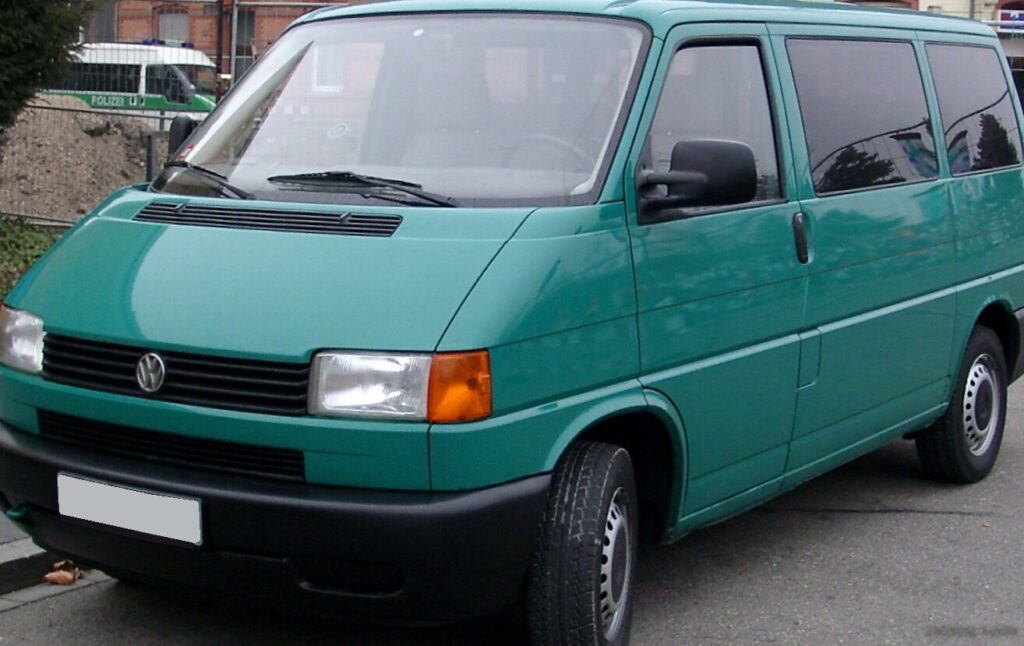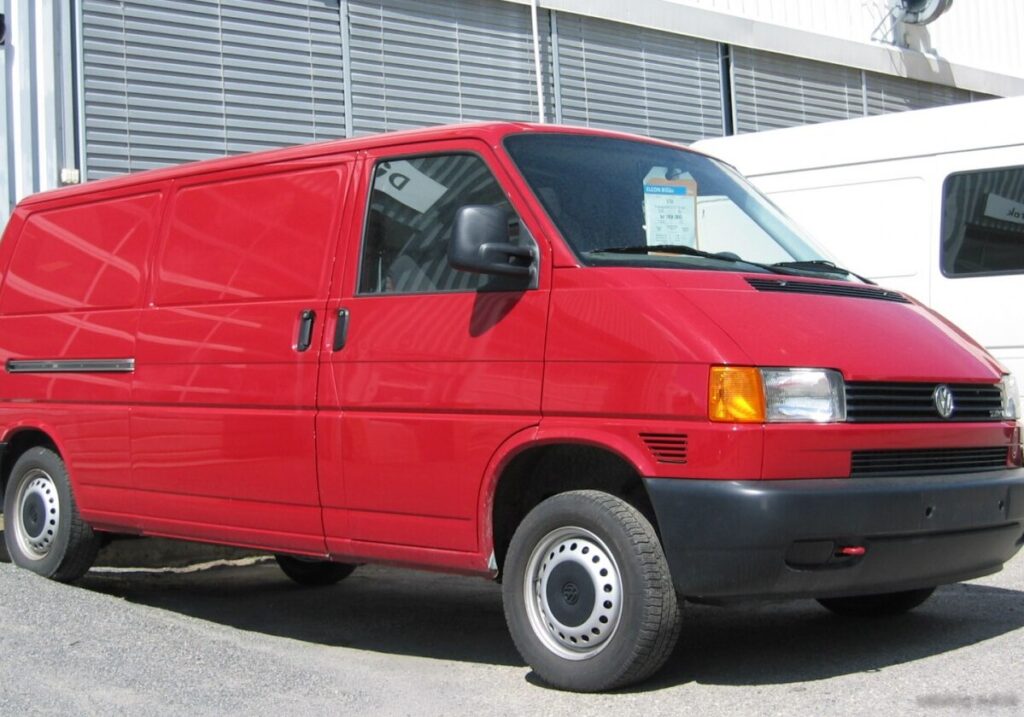
The Volkswagen Transporter (T4), particularly the facelifted version introduced in 1996, represented a significant evolution in the popular van lineage. Produced from 1996 through 2003, the T4 offered a blend of practicality, reliability, and increasingly modern features. The 2.5 TDI variant, generating 102 horsepower, was a common sight in European markets, positioned as a workhorse solution for businesses and tradespeople. This configuration, often found in the L2H1 body style (long wheelbase, low roof), provided a balance between cargo capacity and maneuverability. It served as a crucial model within the T4 range, bridging the gap between the more economical, lower-powered engines and the more expensive, higher-performance options.
Technical Specifications
| Brand | Volkswagen |
| Model | Transporter |
| Generation | Transporter (T4, facelift 1996) Panel Van |
| Type (Engine) | 2.5 TDI (102 Hp) L2H1 |
| Start of production | 1996 |
| End of production | 2003 |
| Powertrain Architecture | Internal Combustion engine |
| Body type | Van |
| Seats | 2 |
| Doors | 4-5 |
| Fuel consumption (combined) | 10.1 l/100 km (23.3 US mpg, 28 UK mpg, 9.9 km/l) |
| Fuel Type | Diesel |
| Maximum speed | 157 km/h (97.56 mph) |
| Weight-to-power ratio | 17 kg/Hp, 58.8 Hp/tonne |
| Weight-to-torque ratio | 6.9 kg/Nm, 144.1 Nm/tonne |
| Power | 102 Hp @ 3500 rpm |
| Power per litre | 41.4 Hp/l |
| Torque | 250 Nm @ 1900-2300 rpm (184.39 lb.-ft. @ 1900-2300 rpm) |
| Engine layout | Front, Transverse |
| Engine Model/Code | ACV |
| Engine displacement | 2461 cm3 (150.18 cu. in.) |
| Number of cylinders | 5 |
| Engine configuration | Inline |
| Cylinder Bore | 81 mm (3.19 in.) |
| Piston Stroke | 95.5 mm (3.76 in.) |
| Compression ratio | 19.5:1 |
| Number of valves per cylinder | 2 |
| Fuel injection system | Direct injection |
| Engine aspiration | Turbocharger, Intercooler |
| Valvetrain | SOHC |
| Engine oil capacity | 5.5 l (5.81 US qt, 4.84 UK qt) |
| Coolant | 9 l (9.51 US qt, 7.92 UK qt) |
| Kerb Weight | 1735 kg (3825.02 lbs.) |
| Max. weight | 2730 kg (6018.62 lbs.) |
| Max load | 995 kg (2193.6 lbs.) |
| Trunk (boot) space – maximum | 6300 l (222.48 cu. ft.) |
| Fuel tank capacity | 80 l (21.13 US gal, 17.6 UK gal) |
| Max. roof load | 100 kg (220.46 lbs.) |
| Permitted trailer load with brakes (12%) | 2000 kg (4409.25 lbs.) |
| Permitted trailer load without brakes | 700 kg (1543.24 lbs.) |
| Permitted towbar download | 100 kg (220.46 lbs.) |
| Length | 5107 mm (201.06 in.) |
| Width | 1840 mm (72.44 in.) |
| Width including mirrors | 2175 mm (85.63 in.) |
| Height | 1940 mm (76.38 in.) |
| Wheelbase | 3320 mm (130.71 in.) |
| Front track | 1589 mm (62.56 in.) |
| Rear (Back) track | 1554 mm (61.18 in.) |
| Front overhang | 886 mm (34.88 in.) |
| Rear overhang | 901 mm (35.47 in.) |
| Ride height (ground clearance) | 180 mm (7.09 in.) |
| Minimum turning circle (turning diameter) | 12.9 m (42.32 ft.) |
| Wading depth | 350 mm (13.78 in.) |
| Drivetrain Architecture | Front wheel drive |
| Drive wheel | Front wheel drive |
| Number of gears and type of gearbox | 5 gears, manual transmission |
| Front suspension | Independent torsion bar, double wishbone, Transverse stabilizer |
| Rear suspension | Independent coil spring, Trailing arm |
| Front brakes | Disc |
| Rear brakes | Disc |
| Assisting systems | ABS (Anti-lock braking system) |
| Steering type | Steering rack and pinion |
| Power steering | Hydraulic Steering |
| Tires size | 195/70 R15; 205/65 R15 |
| Wheel rims size | 6J x 15 |
INTRODUCTION
The Volkswagen Transporter T4, launched in 1990 and receiving a significant facelift in 1996, continued the legacy of the iconic Type 2 (Bus). The 2.5 TDI 102 hp variant, produced from 1996 to 2003, was a mainstay of the T4 lineup, particularly in Europe. It was designed to meet the demands of commercial users while offering a degree of comfort and refinement previously unseen in this segment. The L2H1 configuration – a long wheelbase and low roof – maximized cargo volume while maintaining a relatively manageable height for access and parking. This model was a common sight as a panel van, shuttle, or even a basic camper conversion.
Powertrain & Engine Architecture
The heart of the 2.5 TDI was the ACV engine code, a 2.5-liter, five-cylinder diesel engine. This engine utilized a direct injection system, a key feature for improving fuel efficiency and reducing emissions compared to older indirect injection diesels. The engine employed a single overhead camshaft (SOHC) valvetrain, operating two valves per cylinder. A turbocharger with an intercooler was standard, boosting power output to 102 horsepower at 3500 rpm and 250 Nm (184 lb-ft) of torque between 1900 and 2300 rpm. The engine’s robust construction and relatively simple design contributed to its reputation for durability. The 2.5 TDI was typically paired with a five-speed manual transmission, although a four-speed automatic transmission was also available, albeit less common. The automatic transmission, while offering convenience, generally resulted in slightly reduced fuel economy and performance.
Driving Characteristics
The 2.5 TDI 102 hp T4 offered a practical, if not exhilarating, driving experience. The engine provided adequate power for everyday use, including carrying a full load. However, it wasn’t particularly quick, with a 0-60 mph time estimated around 14-16 seconds. The five-speed manual transmission allowed drivers to keep the engine in its optimal torque band, providing reasonable acceleration and hill-climbing ability. The automatic transmission, while smooth, felt somewhat sluggish, requiring more frequent downshifts to maintain speed, especially when loaded. The T4’s front-wheel-drive layout provided predictable handling, but it wasn’t designed for sporty driving. The focus was on stability and load-carrying capacity.
Equipment & Trim Levels
The 2.5 TDI L2H1 Panel Van was typically offered in a fairly basic trim level, reflecting its commercial focus. Standard equipment generally included power steering, central locking, and a driver’s airbag. Interior upholstery was typically hard-wearing cloth or vinyl. Optional extras included air conditioning, electric windows, and upgraded audio systems. Higher trim levels, often seen in passenger-oriented versions of the T4, offered more luxurious features like upgraded seating, wood trim, and more comprehensive sound insulation. The panel van version prioritized functionality over luxury.
Chassis & Braking
The T4 utilized an independent suspension system on both the front and rear axles. The front suspension featured a torsion bar setup with double wishbones and a transverse stabilizer bar, while the rear employed independent coil springs and trailing arms. This configuration provided a comfortable ride, even when the van was loaded. Braking duties were handled by disc brakes on all four wheels, supplemented by an Anti-lock Braking System (ABS) as standard. The ABS system enhanced braking performance and stability, particularly on slippery surfaces. The T4’s chassis was designed to handle substantial payloads, with a maximum load capacity of around 995 kg (2193.6 lbs).
Market Reception & Comparison
The 2.5 TDI 102 hp T4 was well-received in the European market as a reliable and practical work van. Critics praised its fuel efficiency, durability, and spacious interior. Compared to the lower-powered 1.9 TDI variants, the 2.5 TDI offered noticeably more power and torque, making it better suited for heavier loads and longer distances. However, it was more expensive to purchase and maintain than the 1.9 TDI. Compared to the more powerful 2.5 TDI 150 hp version, the 102 hp model offered a more economical option, albeit with reduced performance. The 102 hp version was often favored by businesses looking for a balance between cost and capability.
Legacy
The Volkswagen Transporter T4 2.5 TDI 102 hp has proven to be a remarkably durable vehicle. Many examples are still on the road today, testament to the engine’s robust construction and the overall build quality of the T4. While age and mileage inevitably lead to wear and tear, the 2.5 TDI engine is generally considered reliable, provided it receives regular maintenance. In the used car market, these vans remain popular as affordable workhorses, camper conversions, and classic vehicles. Parts availability is generally good, although some components may be becoming increasingly difficult to find. The T4 2.5 TDI continues to hold a respected place in the history of commercial vehicles, representing a significant step forward in terms of comfort, reliability, and performance.