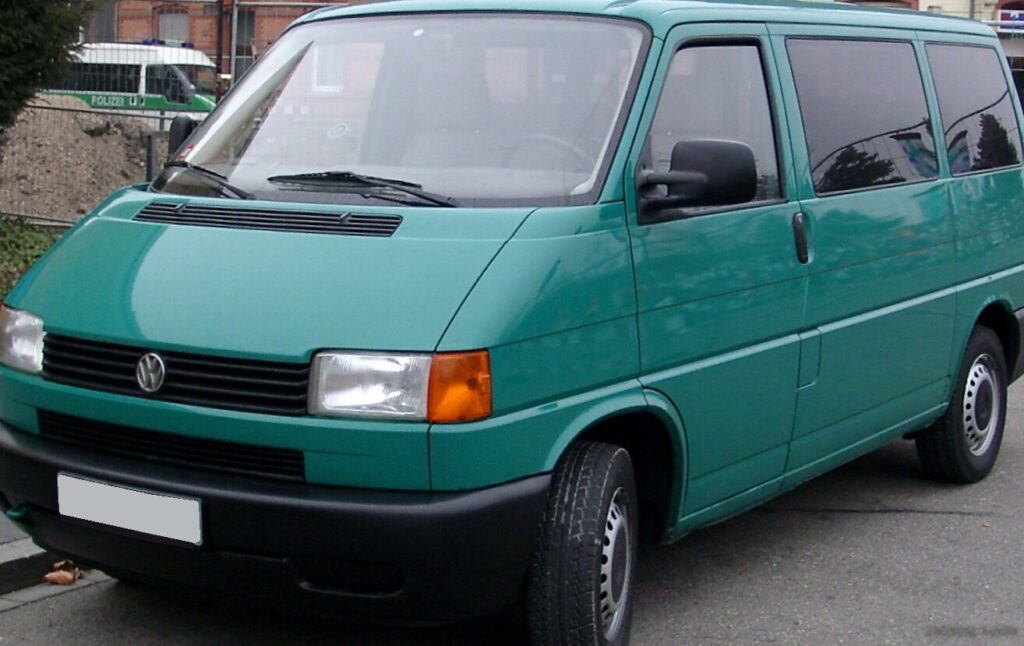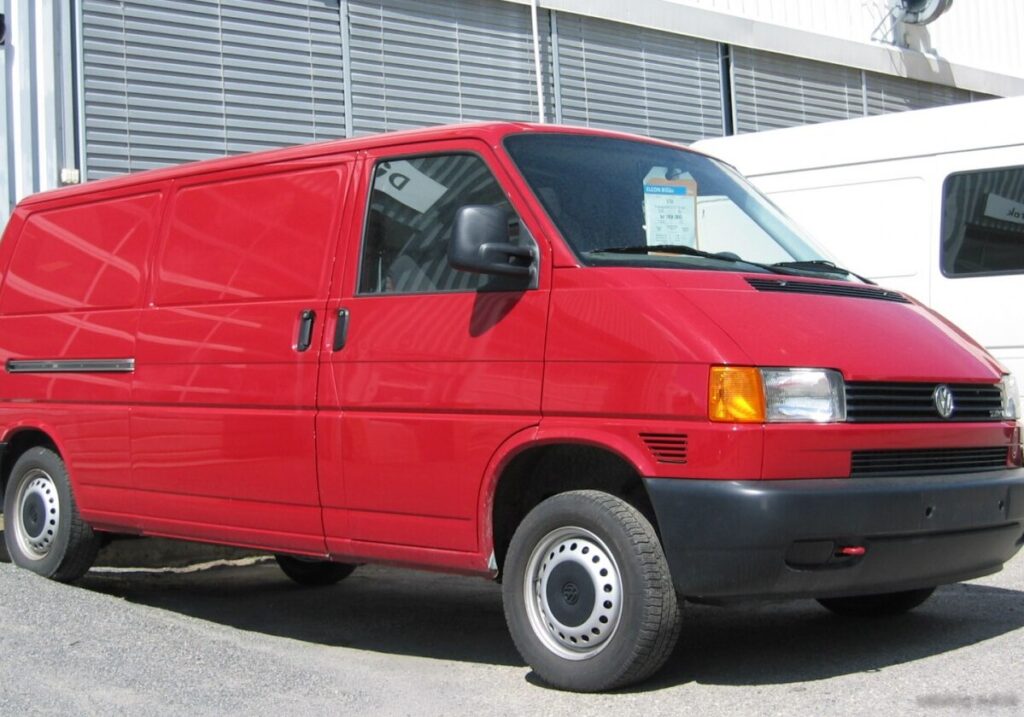
The Volkswagen Transporter (T4), particularly the facelifted version introduced in 1996, represented a significant evolution in the popular van lineage. Produced from 1996 through 2003, the T4 offered a blend of practicality, reliability, and increasingly modern features. The 2.5 TDI variant, generating 102 horsepower, in the L2H2 configuration (long wheelbase, high roof) was a common sight across Europe, serving as a workhorse for businesses and tradespeople. This version occupied a middle ground in the T4 lineup, offering a balance between affordability, fuel efficiency, and usable power. It was positioned below the more powerful TDI variants and above the naturally aspirated diesel options.
Technical Specifications
| Brand | Volkswagen |
| Model | Transporter |
| Generation | Transporter (T4, facelift 1996) Panel Van |
| Type (Engine) | 2.5 TDI (102 Hp) L2H2 |
| Start of production | 1996 |
| End of production | 2003 |
| Powertrain Architecture | Internal Combustion engine |
| Body type | Van |
| Seats | 2 |
| Doors | 4-5 |
| Fuel consumption (combined) | 9.9 l/100 km (23.8 US mpg, 28.5 UK mpg, 10.1 km/l) |
| Fuel Type | Diesel |
| Maximum speed | 150 km/h (93.21 mph) |
| Weight-to-power ratio | 17.5 kg/Hp, 57.1 Hp/tonne |
| Weight-to-torque ratio | 7.1 kg/Nm, 140.1 Nm/tonne |
| Power | 102 Hp @ 3500 rpm |
| Power per litre | 41.4 Hp/l |
| Torque | 250 Nm @ 1900-2300 rpm (184.39 lb.-ft. @ 1900-2300 rpm) |
| Engine layout | Front, Transverse |
| Engine Model/Code | ACV |
| Engine displacement | 2461 cm3 (150.18 cu. in.) |
| Number of cylinders | 5 |
| Engine configuration | Inline |
| Cylinder Bore | 81 mm (3.19 in.) |
| Piston Stroke | 95.5 mm (3.76 in.) |
| Compression ratio | 19.5:1 |
| Number of valves per cylinder | 2 |
| Fuel injection system | Direct injection |
| Engine aspiration | Turbocharger, Intercooler |
| Valvetrain | SOHC |
| Engine oil capacity | 5.5 l (5.81 US qt | 4.84 UK qt) |
| Coolant | 9 l (9.51 US qt | 7.92 UK qt) |
| Kerb Weight | 1785 kg (3935.25 lbs.) |
| Max. weight | 2730 kg (6018.62 lbs.) |
| Max load | 945 kg (2083.37 lbs.) |
| Trunk (boot) space – maximum | 7800 l (275.45 cu. ft.) |
| Fuel tank capacity | 80 l (21.13 US gal | 17.6 UK gal) |
| Max. roof load | 100 kg (220.46 lbs.) |
| Permitted trailer load with brakes (12%) | 2000 kg (4409.25 lbs.) |
| Permitted trailer load without brakes | 700 kg (1543.24 lbs.) |
| Permitted towbar download | 100 kg (220.46 lbs.) |
| Length | 5107 mm (201.06 in.) |
| Width | 1840 mm (72.44 in.) |
| Width including mirrors | 2175 mm (85.63 in.) |
| Height | 2430 mm (95.67 in.) |
| Wheelbase | 3320 mm (130.71 in.) |
| Front track | 1589 mm (62.56 in.) |
| Rear (Back) track | 1554 mm (61.18 in.) |
| Front overhang | 886 mm (34.88 in.) |
| Rear overhang | 901 mm (35.47 in.) |
| Ride height (ground clearance) | 180 mm (7.09 in.) |
| Minimum turning circle (turning diameter) | 12.9 m (42.32 ft.) |
| Wading depth | 350 mm (13.78 in.) |
| Drivetrain Architecture | The Internal combustion engine (ICE) drives the front wheels of the vehicle. |
| Drive wheel | Front wheel drive |
| Number of gears and type of gearbox | 5 gears, manual transmission |
| Front suspension | Independent torsion bar, double wishbone, Transverse stabilizer |
| Rear suspension | Independent coil spring, Trailing arm |
| Front brakes | Disc |
| Rear brakes | Disc |
| Assisting systems | ABS (Anti-lock braking system) |
| Steering type | Steering rack and pinion |
| Power steering | Hydraulic Steering |
| Tires size | 195/70 R15; 205/65 R15 |
| Wheel rims size | 6J x 15 |
INTRODUCTION
The Volkswagen Transporter T4, launched in 1990 and facelifted in 1996, continued the legacy of the iconic Type 2 (Bus) and its successors. The 1996 facelift brought cosmetic updates, improved safety features, and refinements to the engine range. The 2.5 TDI with 102 horsepower, in the L2H2 body style, was a popular choice for commercial operators and those needing a versatile vehicle with substantial cargo capacity. The L2H2 designation signifies a long wheelbase and a high roof, maximizing interior space. This variant was primarily sold in Europe, where the demand for panel vans and cargo carriers was high. It represented a practical and relatively affordable option within the T4 range.
Powertrain & Engine Architecture
The heart of this Transporter is the 2.5-liter, five-cylinder diesel engine, identified by the engine code ACV. This engine is a direct-injection diesel, utilizing a Bosch VE injection pump. Direct injection, compared to indirect injection systems, improves combustion efficiency and power output. The engine features a single overhead camshaft (SOHC) operating two valves per cylinder. The turbocharger, coupled with an intercooler, forces more air into the cylinders, boosting power and torque. The intercooler cools the compressed air, further increasing density and efficiency. The 102 horsepower peak is achieved at 3500 rpm, while the 250 Nm (184 lb-ft) of torque is available between 1900 and 2300 rpm. This broad torque curve is characteristic of diesel engines and provides strong pulling power at lower engine speeds. The engine is transversely mounted, contributing to a compact engine bay and improved packaging. Typically paired with a five-speed manual transmission, the 2.5 TDI also saw availability with a four-speed automatic transmission, though the automatic was less common due to its impact on fuel economy and performance.
Driving Characteristics
The 2.5 TDI 102 hp Transporter, particularly with the manual transmission, offered a reasonably sprightly driving experience for a van of its size. While not a performance vehicle, the ample torque allowed for confident acceleration, even when fully loaded. The five-speed gearbox provided adequate ratios for both highway cruising and navigating urban environments. The automatic transmission, while offering convenience, noticeably dulled acceleration and increased fuel consumption. Gear ratios were optimized for hauling and towing, prioritizing usability over outright speed. The van’s handling was predictable, though body roll was present during cornering due to the high center of gravity. The engine was relatively refined for a diesel of its era, but still exhibited the characteristic diesel clatter, especially when cold.
Equipment & Trim Levels
The T4 Transporter, in its base panel van configuration, was typically sparsely equipped, focusing on functionality. Standard features included a driver’s airbag, central locking, and power steering. The interior was utilitarian, with durable plastic trim and cloth upholstery. The driver and passenger seats were typically adjustable for height and lumbar support. Optional extras included air conditioning, electric windows, a radio/cassette player, and upgraded interior trim. Higher trim levels, such as the “Caravelle” or “Multivan,” offered more luxurious appointments, including additional seating, upgraded upholstery, and more comprehensive equipment lists. The L2H2 configuration prioritized cargo space over passenger comfort, with minimal interior finishing in the rear.
Chassis & Braking
The T4 Transporter utilized an independent suspension system on both the front and rear axles. The front suspension employed a torsion bar setup with double wishbones and a transverse stabilizer bar, providing a comfortable ride and good handling. The rear suspension featured independent coil springs and trailing arms. Braking duties were handled by disc brakes on all four wheels, providing adequate stopping power. An Anti-lock Braking System (ABS) was standard, enhancing safety, particularly in slippery conditions. The steering system was a rack and pinion setup with hydraulic power assistance, making maneuvering easy, even with a full load. The chassis was robustly constructed, designed to withstand the rigors of commercial use.
Market Reception & Comparison
The 2.5 TDI 102 hp Transporter was generally well-received by critics and operators alike. It was praised for its reliability, fuel efficiency, and practicality. Compared to the more powerful TDI variants (such as the 150 hp version), it offered a more affordable entry point into the T4 range, albeit with a noticeable performance deficit. The 1.9 TDI models were also popular, offering a good balance of power and economy. The 2.5 TDI automatic was often criticized for its sluggish performance and higher fuel consumption compared to the manual transmission. However, it remained a viable option for drivers prioritizing convenience. Fuel economy was a strong point, averaging around 28.5 mpg (UK) or 23.8 mpg (US) in combined driving.
Legacy
The Volkswagen T4 Transporter, and specifically the 2.5 TDI 102 hp variant, has proven to be a durable and long-lasting vehicle. Many examples are still on the road today, testament to their robust construction and reliable engines. The ACV engine, while not without its potential issues (such as injector wear and turbocharger failure), is generally considered a reliable unit when properly maintained. In the used car market, these vans are sought after for their practicality and affordability. They are often used as camper vans, work vehicles, or for light commercial duties. Parts availability remains good, and a thriving aftermarket supports these vehicles, ensuring their continued usability for years to come. The T4 continues to hold a strong following among van enthusiasts and remains a popular choice for those seeking a classic and versatile workhorse.