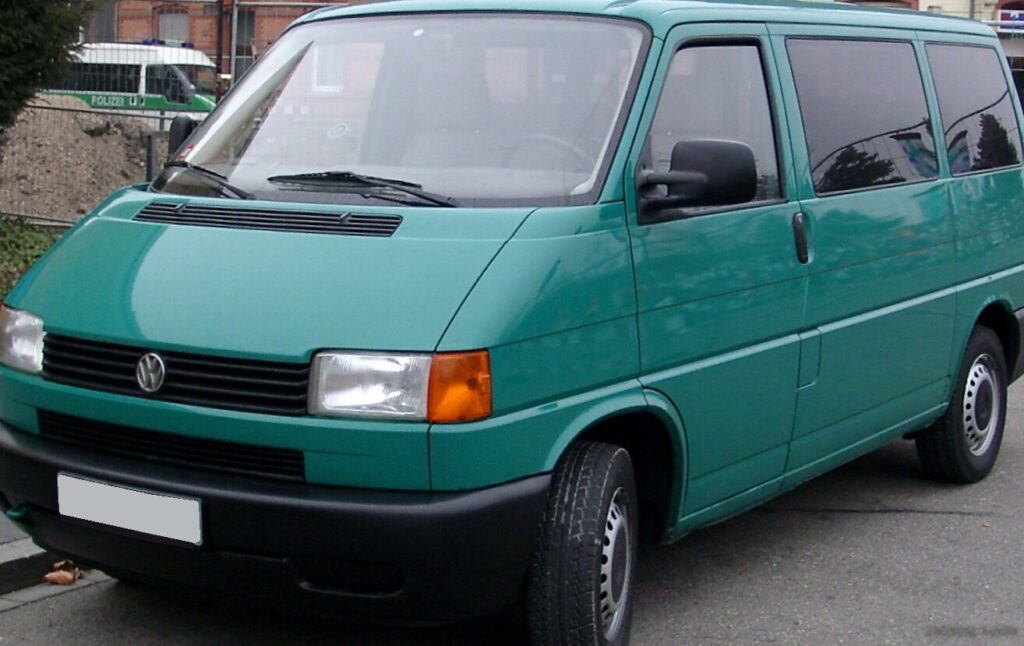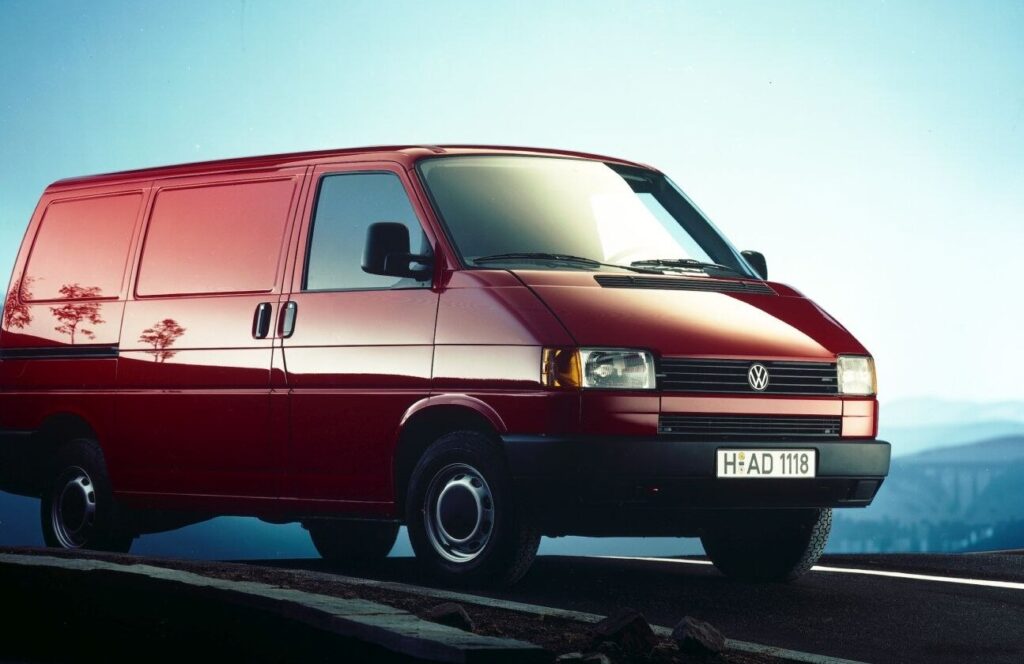
The Volkswagen Transporter (T4), launched in 1990, represented a significant leap forward for the iconic van, moving away from the rear-engine, rear-wheel-drive layout of its predecessor (the T3) to a front-engine, front-wheel-drive configuration. The T4, internally designated as the 7D, was designed to offer improved space utilization, handling, and safety. Within the T4 range, the 1.8-liter, 67 horsepower (PD engine code) L1H1 panel van occupied the entry-level position, aimed at budget-conscious commercial users and those seeking a basic, reliable workhorse. Production of this specific variant spanned from 1990 to 1992, before being superseded by updated engine options and trim levels.
Technical Specifications
| Brand | Volkswagen |
| Model | Transporter |
| Generation | Transporter (T4) Panel Van |
| Type (Engine) | 1.8 (67 Hp) L1H1 |
| Start of production | 1990 year |
| End of production | 1992 year |
| Powertrain Architecture | Internal Combustion engine |
| Body type | Van |
| Seats | 2 |
| Doors | 4-5 |
| Fuel consumption (combined) | 10 l/100 km (23.5 US mpg, 28.2 UK mpg, 10 km/l) |
| Fuel Type | Petrol (Gasoline) |
| Maximum speed | 135 km/h (83.89 mph) |
| Weight-to-power ratio | 22.7 kg/Hp, 44.1 Hp/tonne |
| Weight-to-torque ratio | 10.9 kg/Nm, 92.1 Nm/tonne |
| Power | 67 Hp @ 4000 rpm |
| Power per litre | 37.6 Hp/l |
| Torque | 140 Nm @ 2200 rpm (103.26 lb.-ft. @ 2200 rpm) |
| Engine layout | Front, Transverse |
| Engine Model/Code | PD |
| Engine displacement | 1781 cm3 (108.68 cu. in.) |
| Number of cylinders | 4 |
| Engine configuration | Inline |
| Cylinder Bore | 81 mm (3.19 in.) |
| Piston Stroke | 86.4 mm (3.4 in.) |
| Compression ratio | 8.75:1 |
| Number of valves per cylinder | 2 |
| Fuel injection system | Carburettor |
| Engine aspiration | Naturally aspirated engine |
| Valvetrain | SOHC |
| Engine oil capacity | 5 l (5.28 US qt | 4.4 UK qt) |
| Coolant | 9 l (9.51 US qt | 7.92 UK qt) |
| Kerb Weight | 1520 kg (3351.03 lbs.) |
| Max. weight | 2320-2700 kg (5114.72 – 5952.48 lbs.) |
| Max load | 800-1180 kg (1763.7 – 2601.45 lbs.) |
| Trunk (boot) space – maximum | 5400 l (190.7 cu. ft.) |
| Fuel tank capacity | 80 l (21.13 US gal | 17.6 UK gal) |
| Max. roof load | 100 kg (220.46 lbs.) |
| Permitted trailer load with brakes (12%) | 2000 kg (4409.25 lbs.) |
| Permitted trailer load without brakes | 700 kg (1543.24 lbs.) |
| Permitted towbar download | 100 kg (220.46 lbs.) |
| Length | 4650 mm (183.07 in.) |
| Width | 1840 mm (72.44 in.) |
| Height | 1940 mm (76.38 in.) |
| Wheelbase | 2920 mm (114.96 in.) |
| Front track | 1575 mm (62.01 in.) |
| Rear (Back) track | 1540 mm (60.63 in.) |
| Ride height (ground clearance) | 180 mm (7.09 in.) |
| Drag coefficient (Cd) | 0.36 |
| Minimum turning circle (turning diameter) | 11.7 m (38.39 ft.) |
| Drivetrain Architecture | The Internal combustion engine (ICE) drives the front wheels of the vehicle. |
| Drive wheel | Front wheel drive |
| Number of gears and type of gearbox | 5 gears, manual transmission |
| Front suspension | Independent torsion bar, double wishbone, Transverse stabilizer |
| Rear suspension | Independent coil spring, Trailing arm |
| Front brakes | Disc |
| Rear brakes | Drum |
| Steering type | Steering rack and pinion |
| Tires size | 195/70 R15; 205/65 R15; 215/65 R15 |
| Wheel rims size | 6J x 15; 7J x 15 |
INTRODUCTION
The Volkswagen Transporter T4 1.8 (67 Hp) L1H1, produced between 1990 and 1992, was the base model of the fourth-generation Transporter range. The “L1H1” designation indicates a short wheelbase and a low roof height, making it a compact and practical van. This variant was primarily targeted at commercial users needing a simple, affordable, and reliable vehicle for deliveries, tradespeople, or small businesses. It represented the entry point into the T4 lineup, offering a more modern alternative to the aging T3 while maintaining Volkswagen’s reputation for build quality and durability.
Powertrain & Engine Architecture
The heart of this T4 variant is the 1.8-liter, inline-four cylinder engine, bearing the internal code designation ‘PD’. This engine, while relatively modest in output, was known for its robustness and simplicity. It utilized a single overhead camshaft (SOHC) valvetrain with two valves per cylinder. Crucially, this early version of the 1.8-liter engine employed a carburetor for fuel delivery, rather than the fuel injection systems that would become commonplace in later T4 models. This carburetor setup contributed to its lower cost but also resulted in slightly lower fuel efficiency and emissions compared to injected counterparts. The engine produced 67 horsepower at 4000 rpm and 140 Nm (103.26 lb-ft) of torque at 2200 rpm. The engine was transversely mounted, driving the front wheels through a five-speed manual transmission. The transmission was chosen for its cost-effectiveness and suitability for light commercial duties.
Driving Characteristics
The 1.8-liter, 67 hp engine in the T4 L1H1 provided adequate, but not exhilarating, performance. Acceleration was leisurely, and overtaking required careful planning. The carburetor-equipped engine delivered a somewhat flat power curve, with usable torque available from relatively low engine speeds. The five-speed manual transmission helped to keep the engine within its optimal operating range, but the van felt noticeably slower when fully loaded. Compared to the later 2.5-liter TDI diesel or the more powerful 1.9-liter gasoline engines, the 1.8L felt underpowered, particularly on inclines or when carrying heavy loads. However, the lighter weight of the L1H1 configuration helped to mitigate some of the performance deficit. The front-wheel-drive layout provided predictable handling, but lacked the all-weather capability of four-wheel-drive versions.
Equipment & Trim Levels
As the entry-level model, the T4 1.8 L1H1 was sparsely equipped. Standard features typically included basic steel wheels, vinyl upholstery, a simple dashboard layout, and minimal sound insulation. Power steering was often an optional extra, as were features like electric windows and a radio. The interior was functional and durable, designed to withstand the rigors of commercial use. The focus was on practicality rather than luxury. Optional extras included upgraded seating, additional interior lighting, and a basic ventilation system. The van’s interior was designed to maximize cargo space, with a relatively flat load floor and minimal obstructions.
Chassis & Braking
The T4 chassis featured independent suspension all around, with a torsion bar setup at the front and coil springs at the rear. This provided a reasonably comfortable ride, even when the van was unladen. The front brakes were discs, offering adequate stopping power, while the rear brakes were drums, a cost-saving measure for the base model. A transverse stabilizer bar was fitted to the front suspension to reduce body roll during cornering. The steering was a rack-and-pinion system, providing precise and responsive steering feel. The T4’s suspension was tuned to prioritize load-carrying capacity and stability over sporty handling.
Market Reception & Comparison
The T4 1.8 L1H1 was generally well-received as a practical and affordable work van. Critics acknowledged its improved space utilization and handling compared to the T3, but noted its modest performance. Compared to the diesel-powered T4s, the 1.8-liter gasoline engine offered quieter operation but suffered from significantly lower fuel economy. The 1.9-liter gasoline engine, while more expensive, provided a noticeable performance boost. The 1.8L appealed to those who prioritized low purchase price and simplicity over outright performance and fuel efficiency. Its reliability was generally good, although the carburetor required periodic maintenance.
Legacy
The Volkswagen T4 1.8 L1H1, while not the most powerful or refined version of the fourth-generation Transporter, remains a popular choice among classic van enthusiasts and those seeking a simple, reliable work vehicle. The PD engine, while carburetor-equipped, proved to be durable and relatively easy to maintain. Today, these vans are increasingly sought after as project vehicles or for retro-inspired camper conversions. Parts availability is generally good, although some specific components may be becoming scarce. The T4 1.8 L1H1 represents a significant step forward in van design, offering a blend of practicality, reliability, and affordability that continues to appeal to a wide range of users.