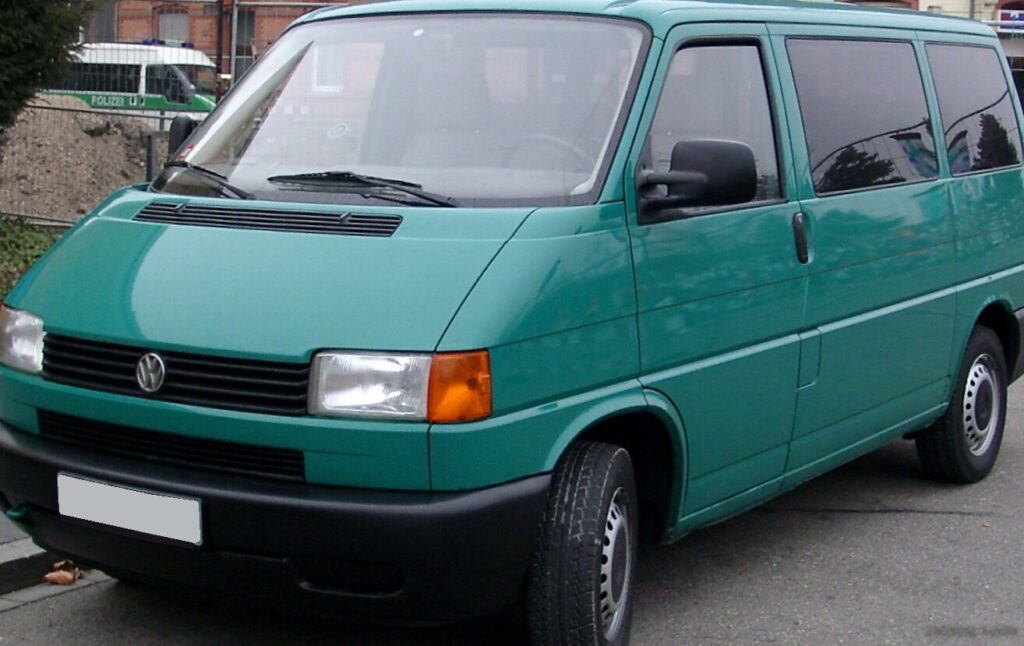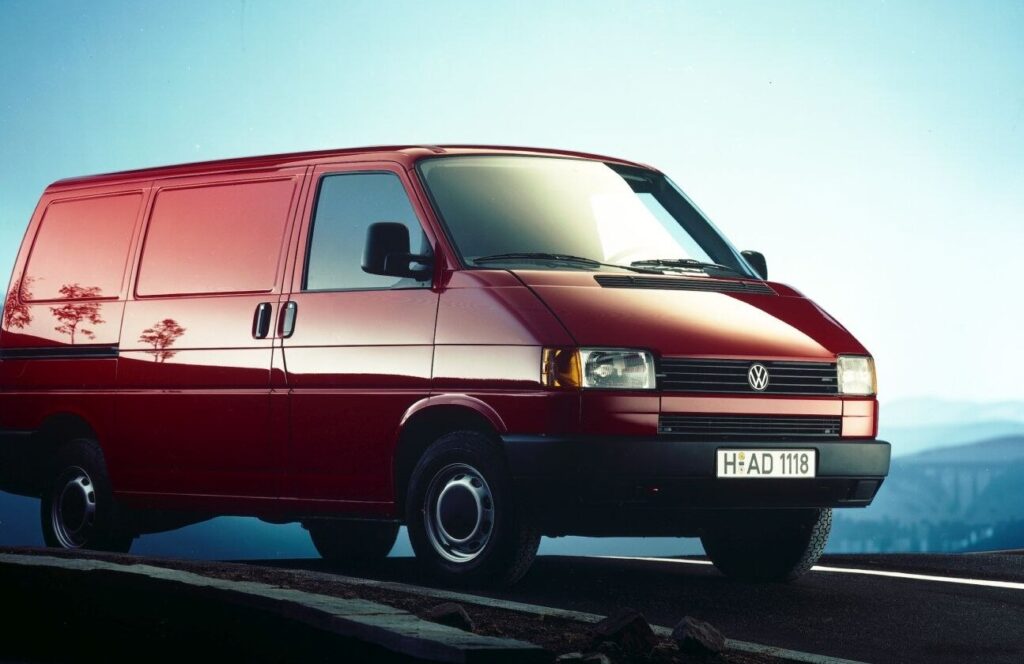
The Volkswagen Transporter (T4), launched in 1990, represented a significant leap forward for the iconic van, moving away from the rear-engine, rear-wheel-drive layout of its predecessor (the T3) to a front-engine, front-wheel-drive configuration. The T4, internally designated as the 7D series, was designed to offer improved space utilization, handling, and safety. Within the T4 range, the 1.8-liter petrol engine variant, producing 67 horsepower, offered an entry-level option primarily aimed at commercial users and those prioritizing affordability over outright performance. This particular configuration, often found in the L2H1 body style (long wheelbase, high roof), was produced from 1990 to 1992, serving as a foundational model within the broader T4 lineup.
Technical Specifications
| Brand | Volkswagen |
| Model | Transporter |
| Generation | Transporter (T4) Panel Van |
| Type (Engine) | 1.8 (67 Hp) L2H1 |
| Start of production | 1990 year |
| End of production | 1992 year |
| Powertrain Architecture | Internal Combustion engine |
| Body type | Van |
| Seats | 2 |
| Doors | 4-5 |
| Fuel consumption (combined) | 10 l/100 km (23.5 US mpg, 28.2 UK mpg, 10 km/l) |
| Fuel Type | Petrol (Gasoline) |
| Maximum speed | 135 km/h (83.89 mph) |
| Weight-to-power ratio | 23.4 kg/Hp, 42.7 Hp/tonne |
| Weight-to-torque ratio | 11.2 kg/Nm, 89.2 Nm/tonne |
| Power | 67 Hp @ 4000 rpm |
| Power per litre | 37.6 Hp/l |
| Torque | 140 Nm @ 2200 rpm (103.26 lb.-ft. @ 2200 rpm) |
| Engine layout | Front, Transverse |
| Engine Model/Code | PD |
| Engine displacement | 1781 cm3 (108.68 cu. in.) |
| Number of cylinders | 4 |
| Engine configuration | Inline |
| Cylinder Bore | 81 mm (3.19 in.) |
| Piston Stroke | 86.4 mm (3.4 in.) |
| Compression ratio | 8.75:1 |
| Number of valves per cylinder | 2 |
| Fuel injection system | Carburettor |
| Engine aspiration | Naturally aspirated engine |
| Valvetrain | SOHC |
| Engine oil capacity | 5 l (5.28 US qt | 4.4 UK qt) |
| Coolant | 9 l (9.51 US qt | 7.92 UK qt) |
| Kerb Weight | 1570 kg (3461.26 lbs.) |
| Max. weight | 2565-2750 kg (5654.86 – 6062.71 lbs.) |
| Max load | 995-1180 kg (2193.6 – 2601.45 lbs.) |
| Trunk (boot) space – maximum | 6300 l (222.48 cu. ft.) |
| Fuel tank capacity | 80 l (21.13 US gal | 17.6 UK gal) |
| Max. roof load | 100 kg (220.46 lbs.) |
| Permitted trailer load with brakes (12%) | 2000 kg (4409.25 lbs.) |
| Permitted trailer load without brakes | 700 kg (1543.24 lbs.) |
| Permitted towbar download | 100 kg (220.46 lbs.) |
| Length | 5055 mm (199.02 in.) |
| Width | 1840 mm (72.44 in.) |
| Height | 1940 mm (76.38 in.) |
| Wheelbase | 3320 mm (130.71 in.) |
| Front track | 1575 mm (62.01 in.) |
| Rear (Back) track | 1540 mm (60.63 in.) |
| Front overhang | 860 mm (33.86 in.) |
| Rear overhang | 875 mm (34.45 in.) |
| Ride height (ground clearance) | 180 mm (7.09 in.) |
| Drag coefficient (Cd) | 0.36 |
| Minimum turning circle (turning diameter) | 12.9 m (42.32 ft.) |
| Drivetrain Architecture | The Internal combustion engine (ICE) drives the front wheels of the vehicle. |
| Drive wheel | Front wheel drive |
| Number of gears and type of gearbox | 5 gears, manual transmission |
| Front suspension | Independent torsion bar, double wishbone, Transverse stabilizer |
| Rear suspension | Independent coil spring, Trailing arm |
| Front brakes | Disc |
| Rear brakes | Drum |
| Steering type | Steering rack and pinion |
| Tires size | 195/70 R15; 205/65 R15; 215/65 R15 |
| Wheel rims size | 6J x 15; 7J x 15 |
Powertrain & Engine Architecture
The 1.8-liter PD engine was a naturally aspirated, inline-four cylinder unit. Its relatively modest 67 horsepower output was achieved through a simple carbureted fuel injection system, a design choice reflecting the cost-conscious nature of this base-level trim. The engine featured a single overhead camshaft (SOHC) valvetrain operating two valves per cylinder. This configuration prioritized simplicity and reliability over high-performance breathing. The engine’s 8.75:1 compression ratio was typical for the era, balancing efficiency and power. The engine was transversely mounted, driving the front wheels. The five-speed manual transmission was the standard offering, providing a relatively long-legged gearing setup designed for economy rather than rapid acceleration.
Driving Characteristics
The 1.8-liter, 67 hp Transporter T4 was not known for its blistering performance. Acceleration was leisurely, and overtaking required careful planning. The engine’s torque peak of 140 Nm (103.26 lb-ft) at 2200 rpm provided adequate pulling power for everyday driving and moderate loads. However, compared to the more powerful 1.9-liter diesel or the 2.5-liter petrol variants, the 1.8 felt noticeably underpowered, especially when fully loaded. The manual transmission’s gear ratios were spaced to maximize fuel efficiency, meaning the engine often needed to be revved to maintain speed on inclines. The front-wheel-drive configuration offered predictable handling, but lacked the stability of the rear-wheel-drive T3, particularly in slippery conditions.
Equipment & Trim Levels
The 1.8-liter variant typically represented the base trim level. Standard equipment was sparse, focusing on functionality rather than luxury. Typically, it included basic steel wheels, vinyl upholstery, and a simple dashboard layout. Power steering was often an optional extra, as were features like electric windows and central locking. The interior was designed for durability and ease of cleaning, reflecting its commercial vehicle roots. The L2H1 body style offered a generous cargo capacity of 6300 liters (222.48 cu. ft.), making it suitable for a wide range of commercial applications.
Chassis & Braking
The T4 chassis featured independent suspension all around, utilizing torsion bars and double wishbones at the front and a trailing arm setup at the rear. This provided a reasonably comfortable ride, although the suspension was tuned for carrying loads rather than sporty handling. Braking was accomplished via disc brakes at the front and drum brakes at the rear. The braking system was adequate for the vehicle’s weight and performance, but lacked the stopping power of the larger disc brake setups found on higher-spec models. A transverse stabilizer bar was fitted to the front suspension to reduce body roll.
Market Reception & Comparison
The 1.8-liter Transporter T4 was generally viewed as a practical and affordable workhorse. Critics acknowledged its lack of performance but praised its fuel efficiency and reliability. Compared to the 1.9 TDI diesel, the 1.8 offered a smoother, quieter driving experience but significantly less torque and fuel economy. The petrol engine was also more prone to maintenance issues than the robust diesel. Against the more powerful petrol variants, the 1.8 was clearly outmatched in terms of performance, but it offered a lower purchase price and potentially lower insurance costs.
Legacy
The 1.8-liter PD engine, while not renowned for its power, proved to be a relatively durable unit when properly maintained. Today, surviving examples of the T4 1.8 are often found in the hands of enthusiasts or used for light commercial duties. Parts availability is generally good, although some trim-specific components can be difficult to source. The T4, in general, has gained a reputation as a reliable and versatile van, and the 1.8-liter variant remains a viable option for those seeking an affordable and practical classic transporter. Its simplicity makes it relatively easy to maintain for those with basic mechanical skills, and its lower initial cost continues to make it an attractive option in the used vehicle market.